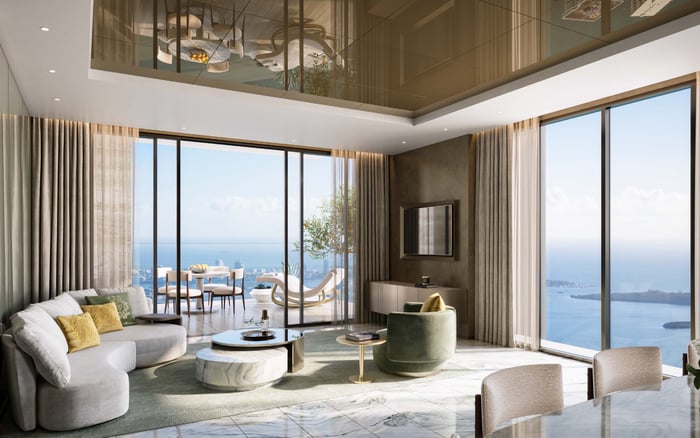
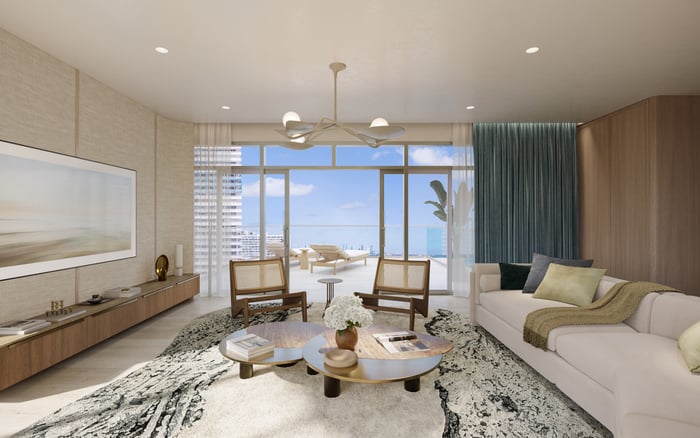
Seasonal buyers should evaluate terrace wind through comfort, use, and ritual, not simply through a building’s technical resilience or visual appeal.
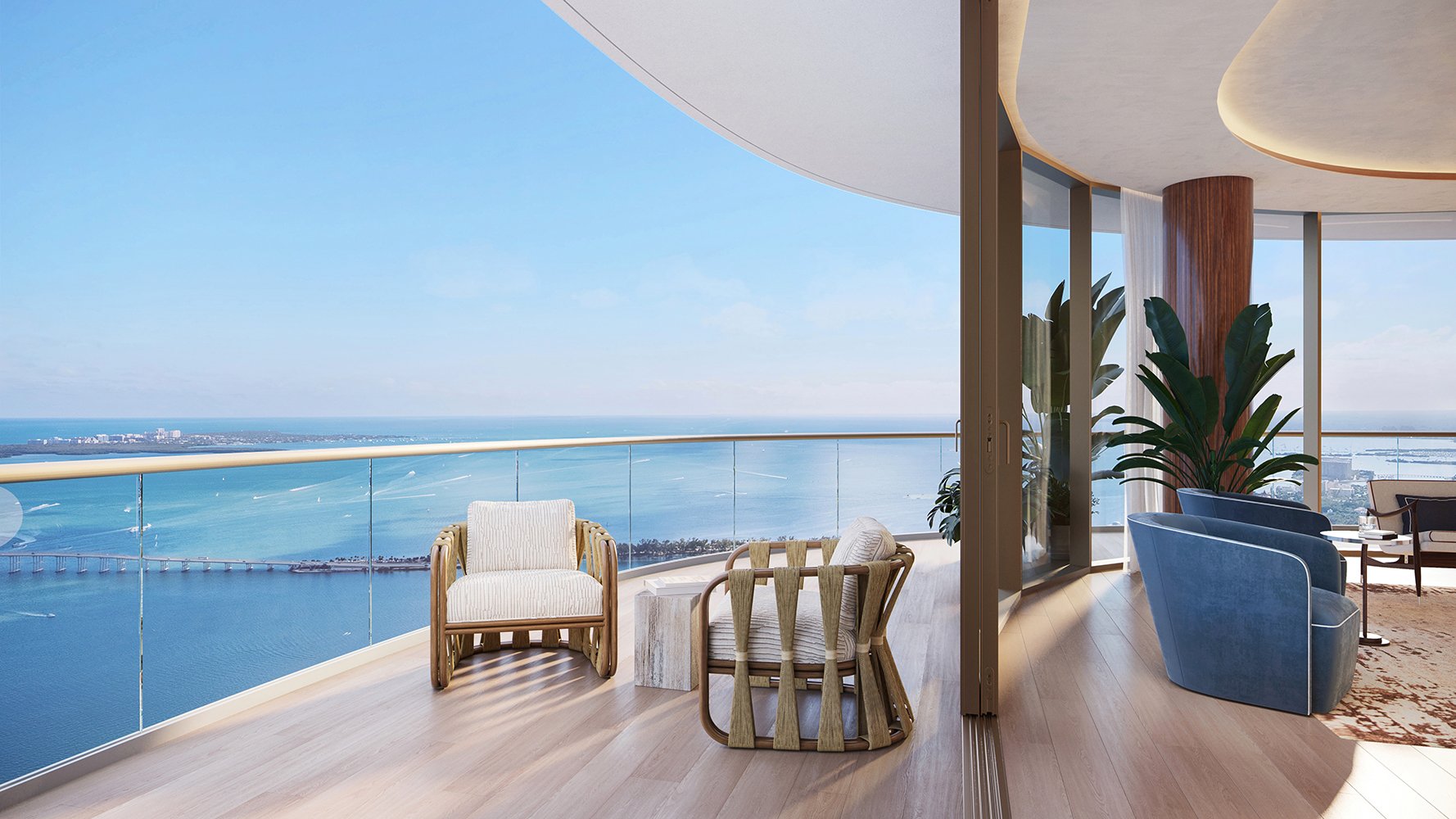
For a seasonal buyer, a terrace is not a decorative bonus. It is often the most emotionally charged room in the residence: the place for the first coffee after arrival, the pre-dinner drink, the quiet hour after the beach, the long view that justifies the flight south. That is why terrace wind deserves a more exacting standard than a quick walkthrough or a glance at the floor plan.
A year-round resident may learn the personality of a balcony over time. A seasonal owner has a narrower window. The home must feel ready the moment the doors open. If the terrace is too gusty for dining, too loud for conversation, or too exposed for comfortable lounging, the residence can still be beautiful, but it will not live the way the buyer imagined.
This is especially true in South Florida, where outdoor living is not a side feature of luxury ownership. In Brickell, along oceanfront corridors, and in Miami Beach settings, the premium is frequently tied to air, light, water, and skyline. The question is not simply whether the view is exceptional. The question is whether the terrace can be used with ease when the owner is actually in residence.
A common mistake is to treat a structurally sophisticated building as proof that every outdoor space will feel comfortable. Structural performance and human comfort are related, but they are not the same standard. A building can be designed to withstand serious wind conditions while a specific terrace still feels too brisk for a candlelit dinner or too turbulent for lightweight furniture.
Seasonal buyers should separate resilience from livability. Resilience asks whether the building is engineered appropriately. Livability asks whether a person can sit outside, read, host, eat, hear, and relax without constantly negotiating the elements. Luxury buyers tend to be fluent in finishes, ceiling heights, private elevators, and kitchen brands. Terrace wind belongs in that same tier of scrutiny.
The distinction matters because a terrace is an experiential space. It does not perform on paper. It performs at breakfast, at sunset, during a breezy afternoon, and when guests gather near the railing. A seasonal residence should be evaluated not only as an asset, but as a sequence of rituals.
Wind affects more than comfort. It changes how a terrace can be furnished, planted, shaded, and serviced. A wide terrace may appear generous, but if only one corner feels calm, the usable area is smaller than it first appears. A slim terrace may feel surprisingly intimate if the exposure, wall placement, and overhang create a protected pocket.
Furniture is the first clue. Dining chairs, cushions, umbrellas, planters, and loose accessories reveal whether the space is designed for real use or only for photography. A terrace that requires constant rearranging becomes labor. A terrace that accommodates heavier seating, integrated planters, and sheltered lounging begins to feel like an outdoor salon.
Sound is another overlooked factor. Wind can make a terrace feel louder than expected, particularly when it interacts with railings, corners, or neighboring structures. The buyer may love the view and still avoid the space because conversation becomes strained. For second-home ownership, avoidance is costly in a subtler way: the owner loses the very pleasure the property was meant to provide.
High floors often offer dramatic views, but elevation can intensify exposure. That does not make high-floor living undesirable. It means the buyer should read the terrace as an architectural condition, not just as a line item. Orientation, depth, neighboring towers, building shape, railing type, overhangs, and the location of sliding doors all influence how the outdoor room feels.
A corner terrace may deliver cinematic panorama, yet the same openness can create cross-breezes that are invigorating on one day and inconvenient on another. A more recessed terrace may sacrifice a degree of drama, but gain usability. Neither is inherently superior. The right choice depends on how the owner intends to live.
The floor plan is equally important. If the primary suite opens directly to the terrace, morning wind comfort matters. If the great room is designed around indoor-outdoor entertaining, evening usability becomes central. If the terrace is connected only to a secondary bedroom, it may function more as a view ledge than a true outdoor room. The best buyers ask where the doors are, where the table would go, where guests would stand, and where the quiet chair belongs.
A disciplined buyer should walk the terrace slowly. Open and close the doors. Stand near the railing, then near the wall. Speak at normal volume. Imagine a seated dinner, not just a cocktail moment. Look for areas where air accelerates around corners and where it calms near architectural edges.
The most useful question is simple: what would I do here on my first evening in residence? If the answer is immediate and specific, the terrace is supporting the life the buyer wants. If the answer requires compromises, accessories, or repeated workarounds, the buyer should understand that before making an offer.
This is not about avoiding wind. In South Florida, a moving breeze is often part of the pleasure. The goal is proportion. A terrace should feel fresh without feeling unmanaged, open without feeling harsh, and elevated without becoming ceremonial rather than usable.
Before purchase, ask how the terrace has been furnished in similar lines, whether outdoor dining is realistic, and how door operation feels during breezy conditions. Ask whether planters, screens, or heavier furniture are permitted. Ask how privacy treatments, shades, and exterior accessories are governed. These are not minor lifestyle questions. They determine whether the terrace can become a finished outdoor room.
Buyers should also compare units at different elevations when possible. The same building can offer distinct terrace personalities from one stack to another. A lower residence may feel more sheltered. A higher residence may feel more dramatic. A waterfront exposure may behave differently from an inland-facing one. The serious buyer does not assume. The serious buyer stands outside and listens.
Seasonal buyers often purchase with a compressed emotional calendar. They want arrival to feel seamless. They want the residence to be intuitive for family and guests. They want maintenance to be discreet, not a recurring negotiation with outdoor cushions and wind-sensitive accessories.
That is why terrace wind is a luxury issue, not merely a technical issue. A residence that invites repeated outdoor use delivers daily value. A residence with a terrace that is admired but avoided delivers only visual value. In the ultra-premium market, that difference is significant.
The finest seasonal homes are not simply impressive. They are calm, legible, and easy to inhabit. Their outdoor rooms do not ask the owner to adapt constantly. They receive the owner gracefully, which is the quietest form of luxury.
Why should seasonal buyers think differently about terrace wind? They use the home during concentrated periods, so the terrace must feel comfortable immediately rather than becoming a space they learn to manage over time.
Is a wind-rated building enough to guarantee terrace comfort? No. Structural resilience and daily terrace livability are different questions, and both deserve attention.
Are high floors always windier? Higher elevation can increase exposure, but design, orientation, and nearby structures also shape the experience.
Can an oceanfront terrace still feel sheltered? Yes. Depth, recesses, overhangs, and furniture placement can help create calmer outdoor zones.
What is the best time to test a terrace? Visit when you would naturally use it, such as morning coffee, afternoon reading, or early evening entertaining.
Should buyers test the sliding doors? Yes. Door operation is part of real terrace use, especially when indoor-outdoor living is central to the plan.
Does terrace depth matter? It can. A deeper terrace may offer more options for protected seating, dining, and circulation.
Can furniture solve a windy terrace? Furniture can help, but it should not be the only solution. The terrace itself should have a usable comfort zone.
Is terrace wind more important than the view? For many seasonal owners, the two are inseparable. A remarkable view has greater value when the outdoor space is genuinely usable.
What is the best way to shortlist comparable options for touring? Start with location fit, delivery status, and daily lifestyle priorities, then compare stacks and elevations to validate views and privacy.
If you'd like a private walkthrough and a curated shortlist, connect with MILLION.
If branded residences are on your mind — as a home or as an allocation — we would be glad to share what we are seeing, privately.
Begin a quiet conversation