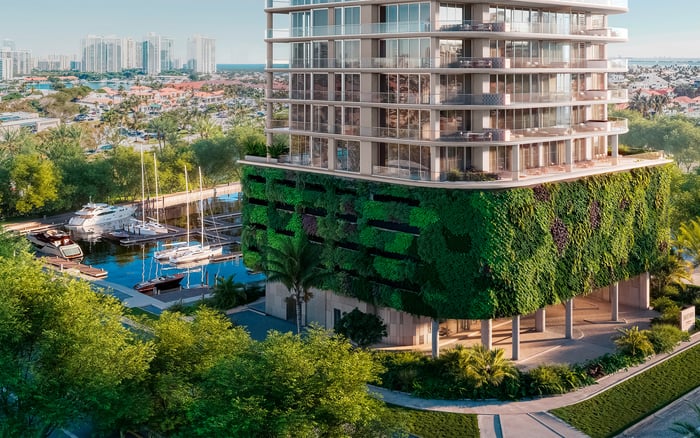
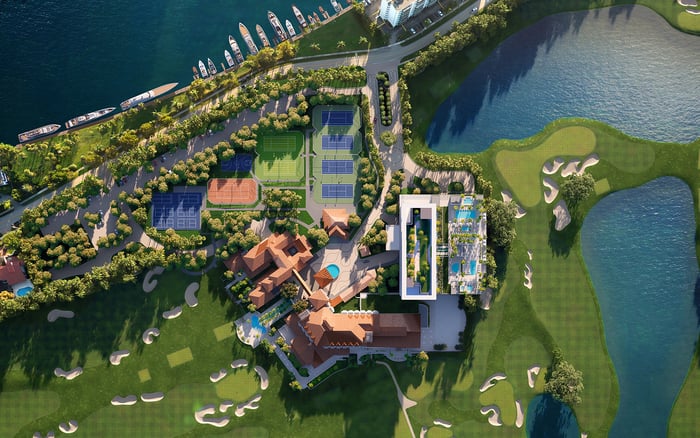
In South Florida’s waterfront lifestyle economy, dockage is more than a convenience. It is a practical utility, a time-saver, and often a liquidity catalyst at resale. When dockage is not deeded, but waitlisted, buyers have to underwrite the promise rather than the asset. This editorial looks at how to assess waitlisted dockage at Avenia Aventura versus the boating proposition implied by Shell Bay by Auberge in Hallandale. With no single, verified set of slip counts, terms, or delivery timelines provided here, the right approach is decision architecture: what questions to ask, what documents to request, and how to price the difference between guaranteed access and aspirational access.
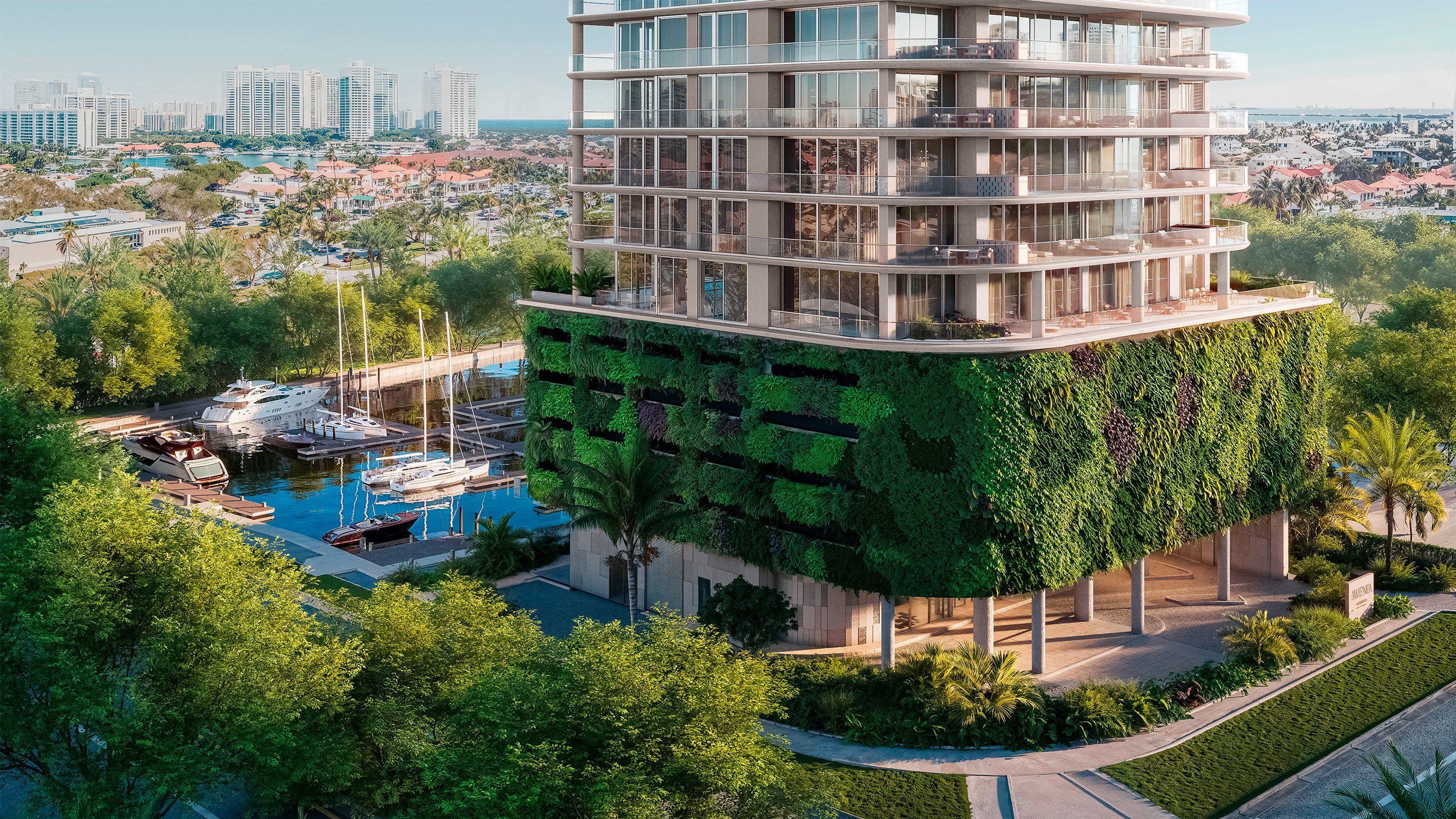
For the South Florida buyer who truly boats, “dockage” is not a bullet point next to the pool or fitness studio. It is a living logistics system-shaping how often you use your vessel, how spontaneous weekends feel, and how predictable your carrying costs remain.
Once dockage becomes “waitlisted,” the analysis changes. You are no longer acquiring a defined right; you are buying into a process. That can be entirely rational-even elegant-when governance is disciplined and operating rules are explicit. It can also become a persistent friction point when policies are vague, transferability is constrained, or the waitlist operates more like a courtesy roster than a durable obligation.
Avenia Aventura and Shell Bay by Auberge Hallandale both attract buyers who value water access and resort-level living. The smarter distinction is not which project sounds more nautical; it is which one offers a dockage pathway you can actually underwrite.
Begin with a simple, high-stakes question: is dockage deeded, assigned, leased, or merely requested?
A deeded or appurtenant slip right generally behaves like an asset. It can be financed more cleanly, valued more consistently at resale, and defended more clearly in governance disputes. Managed access-including a waitlist-behaves more like a service. Excellent outcomes are possible, but the “value” hinges on rules, administration, and consistency.
For buyers evaluating waitlisted dockage at Avenia Aventura, viability comes down to the allocation framework. The practical questions are straightforward: who controls the marina relationship, what determines priority, and what causes you to lose your position.
By contrast, a buyer considering Shell Bay by Auberge Hallandale is often underwriting a broader resort ecosystem and service-led expectations-then pressure-testing how boating fits: is it integrated into the ownership experience, or simply adjacent.
In both cases, the right mental model is not “Will I get a slip?” It is: “What is the probability-adjusted timeline, and what rules govern the outcome?”
Waitlists can be transparent and rules-based-or opaque and political. A high-net-worth buyer should treat dockage like any scarce resource: require documentation, define contingencies, and price uncertainty.
Key underwriting levers:
Governance and control Is dockage controlled by the condominium association, a master association, a third-party marina operator, or a related entity? The more layers, the more policy risk you carry. Clarity matters because policies can change, fees can be restructured, and priorities can be rewritten.
Priority rules Ask what determines rank. Is it first-come, first-served? Is it tied to unit size? Does owner-occupancy outrank leasing? Are certain vessel types preferred? If the rules are not written and consistently applied, you are underwriting discretion.
Eligibility and compliance Waitlists often include practical gatekeeping: insurance requirements, vessel documentation, size limits, seasonal restrictions, or minimum term commitments. These are not inherently negative, but they can turn “I’m on the list” into “I’m not eligible for what I own.”
Transferability at resale The most consequential economic question is whether waitlist position, slip access, or lease terms transfer to a buyer. If they do not, dockage becomes a personal convenience rather than a marketable feature-and resale value becomes less predictable.
True all-in cost Slip fees may be only the starting point. Shore power, pump-out, dockmaster services, security, storage policies, and special assessments for marina repairs can sit outside the brochure conversation. A waitlist can also conceal future price discovery: you cannot fully price a service you do not yet have.
This is where sophisticated buyers separate good uncertainty from bad uncertainty. Good uncertainty has rules, timelines, and remedies. Bad uncertainty has promises.
Luxury buyers may love the romance of the water, but experienced owners know friction compounds. A “boating-friendly” address can still underperform if day-to-day egress is slow, shallow, or constrained.
When comparing Aventura and Hallandale, the real assessment is not a postcard-it is a routing exercise.
Consider:
Time-to-open-water: How long from slip to a comfortable cruising line, in real weekend conditions.
Bridge constraints: Fixed bridges and schedules shape how often you use the boat, particularly for taller vessels.
Tide and draft sensitivity: If you operate with meaningful draft, the margin matters.
No-wake zones and traffic density: Congestion is not just an inconvenience; it can change the texture of ownership.
Even if you plan to keep a vessel offsite initially, these constraints still matter. They influence whether you ever convert from aspirational boating into routine boating.
Dockage decisions get emotional because they touch identity. The cleaner approach is behavioral.
If your boating is:
Spontaneous and frequent, certainty should outrank optionality. A waitlist can feel like a tax on your free time.
Seasonal and planned, a waitlist can be workable-particularly if you are comfortable with interim solutions such as third-party marina arrangements.
Entertaining-oriented, prioritize privacy, guest logistics, and ease of provisioning.
Fishing-forward, focus on early departures, storage, and cleaning policies that reduce friction.
If Avenia Aventura’s dockage is waitlisted, the lifestyle question is whether you can tolerate a period where boating remains an offsite activity. That can be a perfectly refined arrangement, especially if your day-to-day life is centered on Aventura convenience and you prefer to separate residence from vessel operations.
If Shell Bay by Auberge is your anchor, the lifestyle question becomes whether you want your real estate to function as a resort platform, with boating as part of a curated South Florida rhythm. Many buyers in Hallandale value the ability to move between beach, dining, and leisure with minimal planning, and they seek the same ease with water access.
Without verified terms in hand, the disciplined way to price waitlisted dockage is to assign conservative value today and reserve upside for later.
A useful framework:
Base case: Assume you will not have on-site dockage for a defined period and budget for an offsite slip. If the economics still work, you are protected.
Upside case: If dockage becomes available, treat it as an upgrade in lifestyle and, depending on transferability, a potential resale advantage.
Downside case: If rules change or access becomes more constrained, ensure your core reason for purchase still holds.
For ultra-premium buyers, the mistake is rarely that they cannot afford the slip. The mistake is paying today as if certainty is already guaranteed.
Ask for clarity in writing, not reassurance in conversation. The goal is not to “win the list.” The goal is to understand what you are buying.
Request and review:
The written dockage policy and any marina rules incorporated by reference.
A description of the waitlist process, including how priority is established and maintained.
Any limits on vessel size, type, liveaboard status, chartering, and guest usage.
Fee schedule, deposit requirements, and escalation mechanisms.
Transferability rules on sale, and whether access can be suspended during leasing.
Insurance and liability provisions, including responsibility for damage and storm protocols.
If any of these items are not clearly articulated, the right response is not panic. It is to underwrite more conservatively-and negotiate accordingly.
Across South Florida, waterfront living has increasingly become a two-part equation: the residence and the access. As luxury inventory expands, truly frictionless boating remains scarce. That scarcity is why dockage terms can influence liquidity, especially when buyers compare like-for-like residences.
This is also why many buyers keep a short list of alternatives in mind when they want the water lifestyle but prefer different neighborhoods. Aventura buyers who prioritize vertical luxury and a more central Miami rhythm may also consider product in Edgewater such as Aria Reserve Miami. These comparisons are not always about switching locations. They are about clarifying what you truly value: marina certainty, open-water proximity, or resort density.
Waitlisted dockage at Avenia Aventura can be viable when:
Your primary value is the residence itself, and boating is a secondary layer.
You are comfortable securing interim dockage nearby.
The rules are written, stable, and administered predictably.
Transferability is clear enough to support resale narratives.
A Shell Bay by Auberge Hallandale comparison becomes compelling when:
You want your ownership experience to feel fully programmed and service-led.
You place a premium on the broader resort ecosystem and the ease of entertaining.
You want the market to immediately understand the lifestyle proposition at resale.
In both cases, the most elegant purchase is the one where dockage is not a lingering question mark. Even if you accept a waitlist, do it with eyes open, conservative assumptions, and a plan that preserves optionality.
Is waitlisted dockage the same as guaranteed dockage? A waitlist is an access pathway governed by written rules and administration; it is not a deeded right.
What documents should I request to evaluate a dockage waitlist? Request the dockage policy, any marina rules incorporated by reference, and a written description of how priority is set and maintained.
Who typically controls dockage allocation in a condominium setting? Control may sit with a condo association, master association, or a third-party operator; the controlling party determines how much policy risk you carry.
Can a waitlist position or slip access transfer to a future buyer? Sometimes, but it may reset at resale; confirm transferability in writing before pricing dockage into value.
What factors can cause an owner to lose waitlist priority? Common triggers include non-compliance with rules, missed deadlines, insurance or documentation gaps, or policy-driven reprioritization.
Do marina rules usually limit vessel size or usage? Yes-programs often restrict size and may regulate activities such as chartering, liveaboard use, or guest access.
How should I value a residence if on-site dockage is uncertain? Underwrite a conservative base case assuming offsite dockage, and treat on-site access as upside only after terms are confirmed.
What costs should I consider beyond a published slip fee? Budget for utilities, service requirements, insurance, and any marina-specific charges that may not appear in initial marketing.
Does leasing out a unit affect dockage access? It can-some policies prioritize owner-occupants or change eligibility when a unit is leased, so verify the rule set.
What is the best way to shortlist comparable options for touring? Start with location fit, delivery status, and daily lifestyle priorities, then compare stacks and elevations to validate views and privacy.
To compare the best-fit options with clarity, connect with MILLION Luxury.
If branded residences are on your mind — as a home or as an allocation — we would be glad to share what we are seeing, privately.
Begin a quiet conversation