A discreet buyer’s guide to South Florida neighborhoods where private space, quieter daily rhythm and a more selective amenity culture can matter as much as views or finishes.
For years, the South Florida amenity conversation centered on abundance: larger pools, deeper wellness menus, layered lounges, screening rooms, dining rooms, coworking suites and family spaces. That still matters, especially for buyers who want a resort-style home base. Yet a more discreet question is increasingly shaping decisions at the top of the market: how many people will be using those spaces at the same time?
Lower amenity crowding is not only a building issue. It is also a neighborhood issue. The surrounding pace, density, visitor pattern, parking rhythm, beach-access culture and resident profile all influence whether daily life feels composed or over-scheduled. A serene residence in the wrong setting can still feel busy. Conversely, a more restrained building in the right enclave can deliver a private-club cadence without announcing itself.
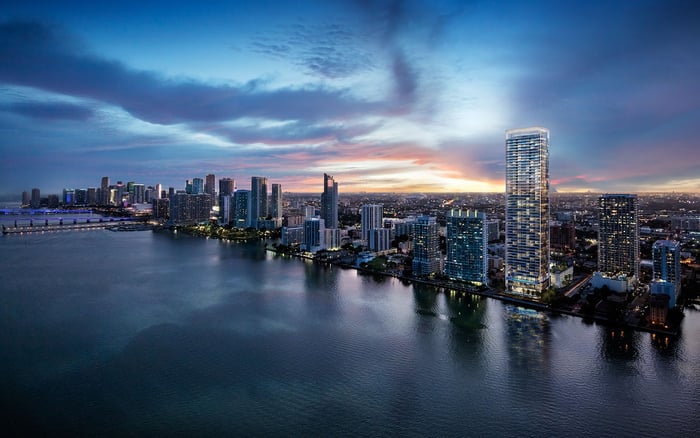
The strongest choices tend to share several traits: a residential character, limited through-traffic, access to outdoor space beyond the building itself and a buyer base that values discretion over spectacle. This is especially relevant for owners comparing the energy of Brickell, Downtown and Aventura with quieter luxury enclaves nearby.
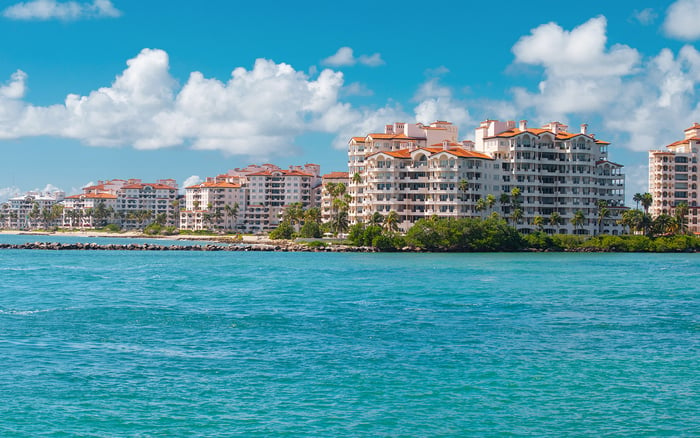
1. Fisher Island - private-island separation
Fisher Island is the clearest expression of separation as luxury. Its appeal is not based on a single amenity, but on the broader choreography of arrival, privacy and controlled daily movement. For buyers who want fewer casual encounters, less transient energy and a stronger sense of enclosure, it sits in a category of its own.
The tradeoff is intentionality. Life here is best suited to owners who value privacy more than spontaneous urban access. Amenity crowding can feel less acute because the entire environment is structured around a more selective residential rhythm.
2. Key Biscayne - island calm with family-scale ease
Key Biscayne attracts buyers who want a softer version of island living, with residential streets, open-air routines and a sense of distance from the mainland’s busiest luxury corridors. Its appeal is less about being hidden and more about feeling removed.
For amenity-sensitive buyers, the advantage is balance. A building’s pool, fitness room or lounge is not the only outlet for daily life because the neighborhood itself supports outdoor routines. That reduces the pressure placed on shared spaces within a single residential tower.
3. Coral Gables - estate-minded residential composure
Coral Gables is compelling for buyers who define lower crowding through streetscape, privacy and everyday order. It is not an amenity-first neighborhood in the high-rise resort sense. Its luxury is grounded in architecture, landscaping, private homes, boutique residential buildings and a more established civic rhythm.
For condo and townhouse buyers, the key is selecting buildings where the amenity program is proportional rather than theatrical. Coral Gables works best for those who prefer clubby understatement, access to dining and culture, and a quieter return home.
4. Coconut Grove - lush, village-like discretion
Coconut Grove appeals to buyers who want a softer, more organic Miami lifestyle. The neighborhood’s strongest luxury signal is not scale, but texture: trees, bay breezes, walkable pockets and a residential cadence that feels removed from the most visible tower corridors.
Amenity crowding can be moderated here because buyers often use the neighborhood as part of their daily living room. Parks, marinas, cafés and shaded streets give owners alternatives to gathering only in a building’s shared spaces. The best fits are residences where private terraces, thoughtful circulation and limited-feeling common areas support that sense of ease.
5. Surfside - oceanfront life with a quieter residential scale
Surfside offers a refined coastal option for buyers who want the ocean without the constant intensity associated with larger resort districts. It can feel more residential, more edited and more walkable, while still placing owners close to significant dining, shopping and beach life.
For the lower-crowding buyer, the appeal is restraint. Buildings and homes that emphasize privacy, direct outdoor access and a calm arrival sequence can feel especially compelling here. Surfside is often most attractive to those who want beachfront access without turning every shared space into a social stage.
The first question is not how many amenities a property offers. It is whether the amenity program matches the number and behavior of residents likely to use it. A dramatic spa may be less valuable than a quiet lap pool if every owner wants the same peak-hour ritual. A glamorous lounge can become underwhelming if it is designed for photographs rather than recurring private use.
Buyers should pay close attention to circulation. Separate arrival points, intuitive elevator banks, private outdoor areas and well-placed service access can materially change how crowded a residence feels. The best luxury buildings often manage privacy before the owner has to request it.
Also consider the neighborhood’s role as an amenity. If the surrounding area offers walking, dining, waterfront access or green space, the building does not have to absorb every lifestyle need. That is why quieter enclaves can outperform more amenity-heavy districts for buyers who prioritize calm.
Investment value in this niche is tied to scarcity and lived experience. Buyers who prize lower amenity crowding are often willing to pay for privacy that cannot be easily replicated. The most durable properties usually combine a strong address with a sensible resident-to-amenity relationship and private space inside the home.
Resale appeal also depends on clarity. A residence should communicate its privacy advantage immediately: calm arrival, generous terrace, thoughtful exposures, low-friction parking and amenities that feel usable rather than merely impressive. In South Florida, where luxury inventory can be visually persuasive, the quieter property often wins after the second visit.
This does not make high-energy districts less desirable. Brickell, Downtown and Aventura remain powerful choices for buyers who want convenience, skyline energy and extensive services. The point is alignment. A buyer seeking lower amenity crowding should choose a neighborhood that supports that preference beyond the lobby.
What does lower amenity crowding mean in luxury real estate? It means shared spaces feel usable, private and calm rather than busy during the times owners actually want them.
Is a smaller building always better for lower crowding? Not always. Layout, resident behavior, amenity design and neighborhood alternatives can matter as much as size.
Which neighborhood is the most private on this list? Fisher Island is the strongest choice for buyers who want the clearest sense of separation and controlled access.
Can beachfront neighborhoods still feel uncrowded? Yes, especially when the setting is more residential and the building emphasizes privacy over constant programming.
Is Coral Gables a good fit for condo buyers? Yes, if the buyer values established surroundings, quieter streets and a more understated luxury rhythm.
Why does Key Biscayne appeal to amenity-sensitive buyers? Its outdoor lifestyle reduces dependence on a building’s shared spaces for daily recreation and relaxation.
How should I compare two buildings in the same neighborhood? Compare arrival sequence, elevator experience, terrace quality, amenity scale and how residents are likely to use each space.
Does lower crowding mean fewer services? No. The best properties offer attentive service without making the experience feel public or over-programmed.
Are high-energy districts wrong for privacy-focused buyers? Not necessarily, but the building must work harder to create calm, separation and usable private space.
What is the best way to shortlist comparable options for touring? Start with location fit, delivery status, and daily lifestyle priorities, then compare stacks and elevations to validate views and privacy.
When you're ready to tour or underwrite the options, connect with MILLION.
If branded residences are on your mind — as a home or as an allocation — we would be glad to share what we are seeing, privately.
Begin a quiet conversation