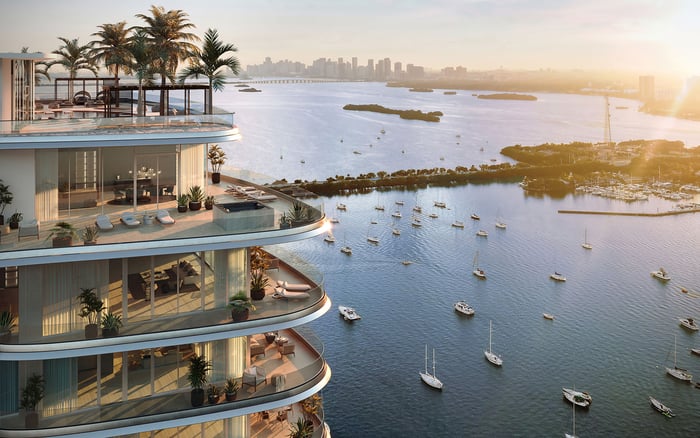
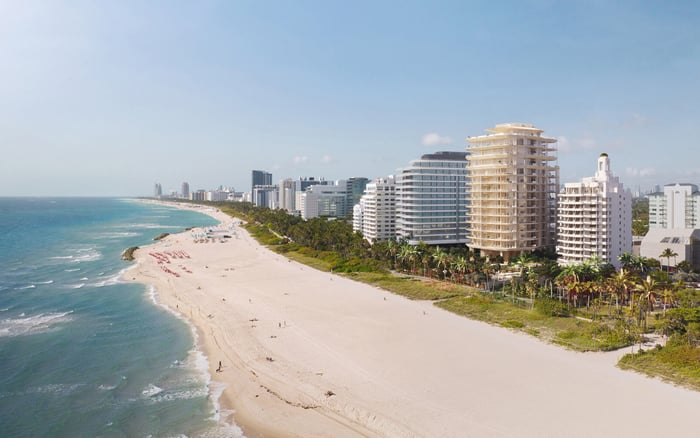
For yacht-forward buyers, “marina access” is not an amenity. It is a daily operational system: approach depth, bridge constraints, wake protection, tender strategy, provisioning flow, and the time it takes to go from parking to pilothouse. In North Bay Village, two names repeatedly surface in those conversations: Pagani and Continuum Club & Residences. This MILLION Luxury editorial frames the due-diligence questions that separate lifestyle marketing from workable, repeatable marina logistics.
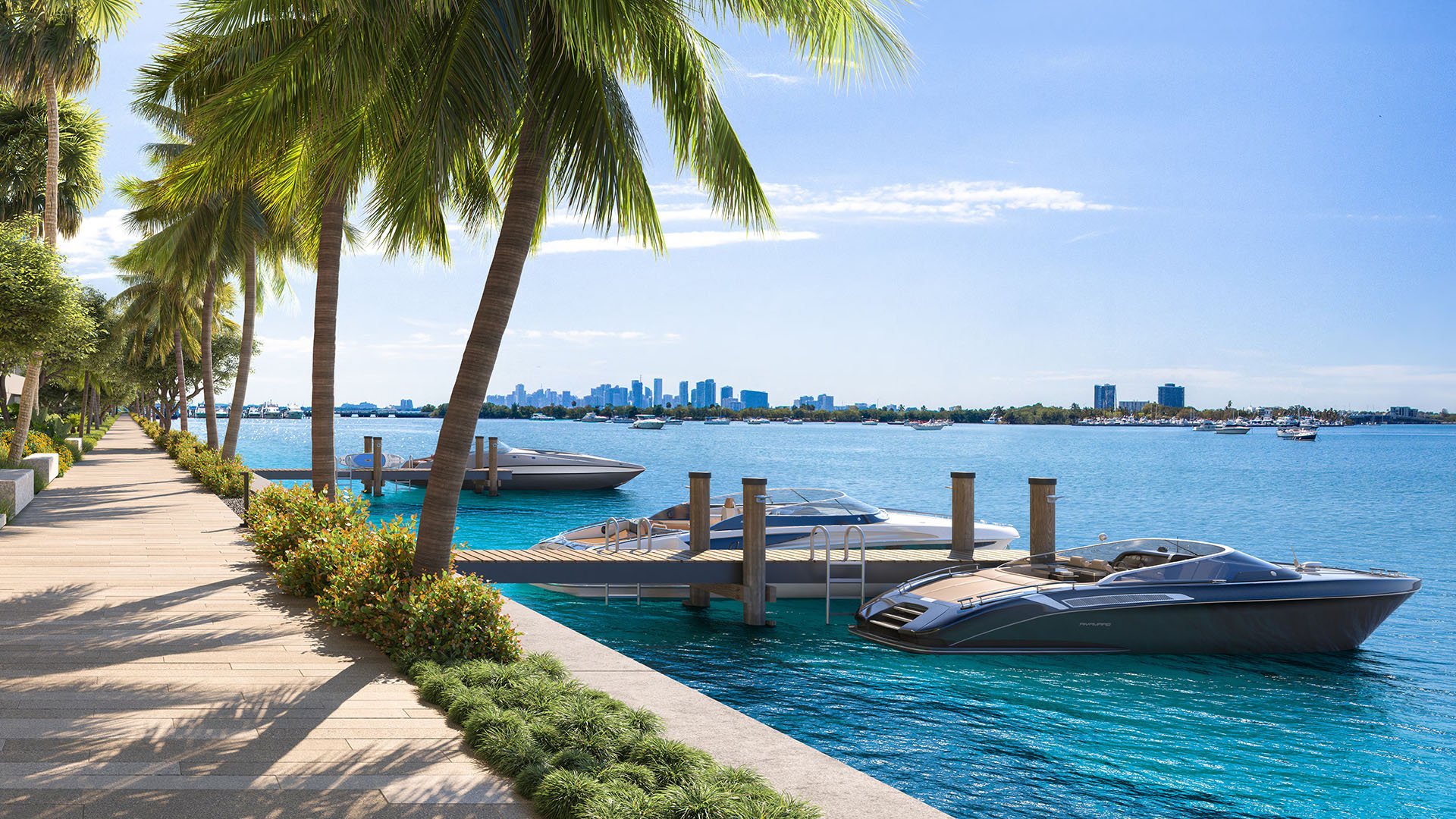
In ultra-premium waterfront living, deep water is the starting point-not the finish line. Marina logistics is the full operational chain between a residence and open water, executed with minimal friction: the route from building to dock, discreet gear staging, clear dock rules, predictable electrical and water service, a practical plan for weather and wake, and the real-world process of bringing guests aboard.
Viewed through that lens, comparing Pagani North Bay Village with Continuum Club & Residences North Bay Village becomes less about brand aura and more about operational certainty. Before finishes, staffing, or social programming enter the conversation, the marina questions tend to be the same-and they are consistent for a reason.
A deep-water claim is only as valuable as the constraints that come with it. A buyer who intends to run a yacht regularly should evaluate, in sequence:
Approach and maneuvering: Turning basin, fairway width, and how forgiving ingress feels in wind or current.
Clearances and choke points: Any bridge, restricted channel, or no-wake corridor that turns a casual departure into a timed exercise.
Exposure and protection: How docks perform in busy traffic and seasonal weather, including wake management and wave attenuation.
Utility reliability: Shore power capacity, water, and policies for generators or temporary equipment during outages.
Rules, staffing, and responsibility: Who can handle lines, accept deliveries, or coordinate services-and what hours the system actually supports.
Framed this way, you stop asking, “Does it have a marina?” and start asking, “Is the marina a true extension of the residence, with a workflow I can trust?”
Within North Bay Village, both Pagani and Continuum recur in buyer conversations because they align with a profile that often includes boating, entertaining, and a preference for curated service. The meaningful differences, however, typically reveal themselves in how each project translates a waterfront promise into day-to-day marina logistics.
With Pagani North Bay Village, the due diligence is to confirm that the boating experience is fully integrated into resident life: how you move from residence to dock without crossing public circulation, how equipment is stored, and whether marina operations feel like a private extension of the building.
With Continuum Club & Residences North Bay Village, the task is similar, but the emphasis often shifts toward the operational discipline expected in a club-style environment: how policies are enforced, how guest arrivals are managed, and whether service and security procedures support yacht use at the same level as the residential experience.
In both cases, avoid assumptions based on naming alone. Anchor your decision in what has been publicly disclosed, what is contractually described, and what you can verify through a site visit and direct conversations with the management team.
For a yacht-forward purchase, the decisive “showing” is not the lobby. It is a trial run.
Schedule an on-water arrival and departure during a normal traffic window. Track the time from the main channel to the slip, the ease of line handling, and whether visibility and maneuvering feel intuitive. Then run the land-side sequence: parking to elevator, elevator to dock, dock to vessel-and back again with a guest group.
This is where luxury becomes measurable. If building-to-boat movement requires multiple key exchanges, circuitous hallways, or a confusing security protocol, that friction will compound over time.
A useful benchmark is how naturally the experience compares with legacy yachting environments nearby. Even when your focus is North Bay Village, it helps to keep a broader waterfront standard in mind-such as the arrival choreography expected in South of Fifth at Apogee South Beach.
Many owners don’t rely on a single vessel for every purpose. A larger yacht, a center console, and a tender can serve different use-cases-and impose different scheduling demands. The strongest marina logistics anticipate this with clear rules and a flexible, workable plan.
Evaluate:
Slip assignment and transferability: Whether slips are deeded, assigned, or managed through a usage policy-and how changes are handled.
Tender storage and launch: Where a tender lives, how quickly it can be deployed, and whether launching becomes an “event” that requires staff coordination.
Guest boarding: Whether there is sufficient dock width and stability for comfortable boarding in dress shoes and evening wear.
For buyers splitting time between island living and mainland convenience, it can also help to compare how other boutique waterfront projects address the “quick departure” concept, such as La Baia North Bay Harbor Islands. The objective isn’t equivalency; it’s refining your expectations for circulation, privacy, and ease.
On paper, the marina is about water. In practice, it’s about land-side service.
A frequently used yacht needs a reliable provisioning path: cold-storage considerations, box deliveries, florals, catering, and occasional last-minute equipment. The highest-functioning residences reduce the number of touchpoints between delivery and vessel while maintaining discretion.
Ask directly how the building handles:
Deliveries intended for the yacht, not the unit.
Vendor access for detailing, light maintenance, and specialized technicians.
Waste removal and recycling after onboard entertaining.
If the answers feel vague, treat that as a prompt to go deeper. When logistics are truly designed, the team can explain them clearly-because the workflow exists and is practiced.
A serious marina conversation includes resilience. Seasonal weather is not a surprise in South Florida; the real question is whether the building’s marina plan is operationally mature.
Confirm-ideally in writing-the protocols for:
Securing vessels and dock hardware.
Restricted access windows before and after storm events.
Electrical reliability and any policies around temporary power solutions.
Resident communication during closures.
Even without numeric guarantees, a clear, rehearsed plan can be more valuable than optimistic language. This is also where some buyers calibrate what “operational readiness” looks like by comparing the culture of preparedness in other high-service waterfront environments, including newer mixed-use contexts like Aston Martin Residences Downtown Miami.
A discreet luxury purchase still benefits from direct questions. For Pagani and for Continuum, prioritize these themes:
Who controls marina operations day-to-day? Get clarity on whether the system is resident-first, club-first, or shared with outside users.
What is the real security posture at the dock? Waterfront access is inherently porous. Confirm how guests, crew, and vendors are verified-and how privacy is preserved without creating friction.
How are conflicts resolved? Dock life has predictable pressure points: guest docking, noise, timing, wake, and etiquette. Mature management has a defined process.
What is the insurance and liability framework? You are not seeking legal advice in a casual conversation; you are looking for signs that the building is structured for maritime realities.
Does the building make boating easy at night? Lighting, sightlines, and staffing are operational necessities when you’re returning after dinner.
Ultimately, the happiest buyer is the one who treats marina access as a core building system-comparable to elevators or security-rather than a lifestyle accent.
If your boating is frequent, time-sensitive, and guest-driven, lean toward the option that delivers the clearest operational chain: controlled circulation, predictable staffing, and rules that match your use.
If your boating is periodic and primarily personal, your preference may pivot to whichever project best integrates waterfront living into the broader residential experience. In that case, the “marina logistics” test becomes less about peak capability and more about everyday convenience: a smooth dock arrival, clean storage, and management that communicates proactively.
In either scenario, the most sophisticated move is to simulate ownership: run the on-water approach, walk the service route, and test building-to-boat timing with the same seriousness you would apply to a private aviation routine.
What does “deep water” guarantee for a residential marina? It suggests better draft tolerance, but you still must verify approach constraints, clearances, and policies.
Is marina access more valuable than waterfront views for some buyers? Yes. For active boaters, daily usability can outweigh a marginally better view line.
How do I compare Pagani North Bay Village and Continuum Club & Residences fairly? Use the same checklist: route, protection, utilities, staffing, rules, and resilience planning.
Should I assume slips are included with ownership? No. Confirm whether slips are deeded, assigned, leased, or governed by a separate usage policy.
What is the biggest hidden friction point in marina living? Land-side workflow: deliveries, gear storage, guest boarding, and vendor access often matter most.
How important is dock security in North Bay Village? Critical. Waterfront access requires deliberate procedures for guests, crew, and service providers.
What should I look for in storm protocols? Clear timelines, responsibility assignments, communication standards, and a proven closure process.
Does a “club” concept change marina operations? It can. Club environments may introduce additional guest flow and stricter operating procedures.
Can I evaluate marina logistics before a project is completed? You can evaluate the plan, policies, and surrounding route, but confirm final operations before closing.
What is the best final step before committing? Perform an on-water arrival and a full building-to-dock walk-through at a realistic time of day.
When you're ready to tour or underwrite the options, connect with MILLION Luxury.
If branded residences are on your mind — as a home or as an allocation — we would be glad to share what we are seeing, privately.
Begin a quiet conversation