A discreet buyer’s guide to evaluating owner-only amenity floors through privacy, design, operations, access, governance, and daily livability rather than brochure drama.
A tourist reads an amenity floor by counting features. A luxury buyer reads it by understanding how the building will feel at 7 a.m., at sunset, during a holiday weekend, and after five years of ownership. The difference is not snobbery. It is discipline.
Owner-only amenity floors have become one of the most important signals in South Florida residential real estate. They promise privacy, wellness, entertaining, work, children’s space, pet convenience, and retreat without leaving the building. Yet even the most polished renderings can conceal an awkward plan, weak circulation, understaffed service, or amenities that photograph beautifully and live poorly.
The sophisticated buyer asks a quieter question: does this floor protect my time, my privacy, and my sense of ease? If the answer is unclear, the amenity package may be decoration rather than value.
Owner-only should mean more than a locked door. It should mean a composed sequence of arrival. Study how residents enter the floor, where guests are received, whether staff circulation is discreet, and whether heavily used spaces interrupt quieter ones. In a serious building, the amenity floor should not feel like a hotel lobby that wandered upstairs.
Privacy is also about sightlines. Can someone in the lounge see directly into the fitness studio? Does the spa corridor run past a party room? Are children, pets, deliveries, and catered events routed through the same thresholds? A luxury buyer studies the plan as if already living there, because daily choreography matters more than marketing vocabulary.
In dense markets such as Brickell, the best amenity floors offer release from intensity. They do not simply add more spectacle. They create separation from traffic, office energy, and street-level movement, allowing the residence to feel elevated in more than the literal sense.
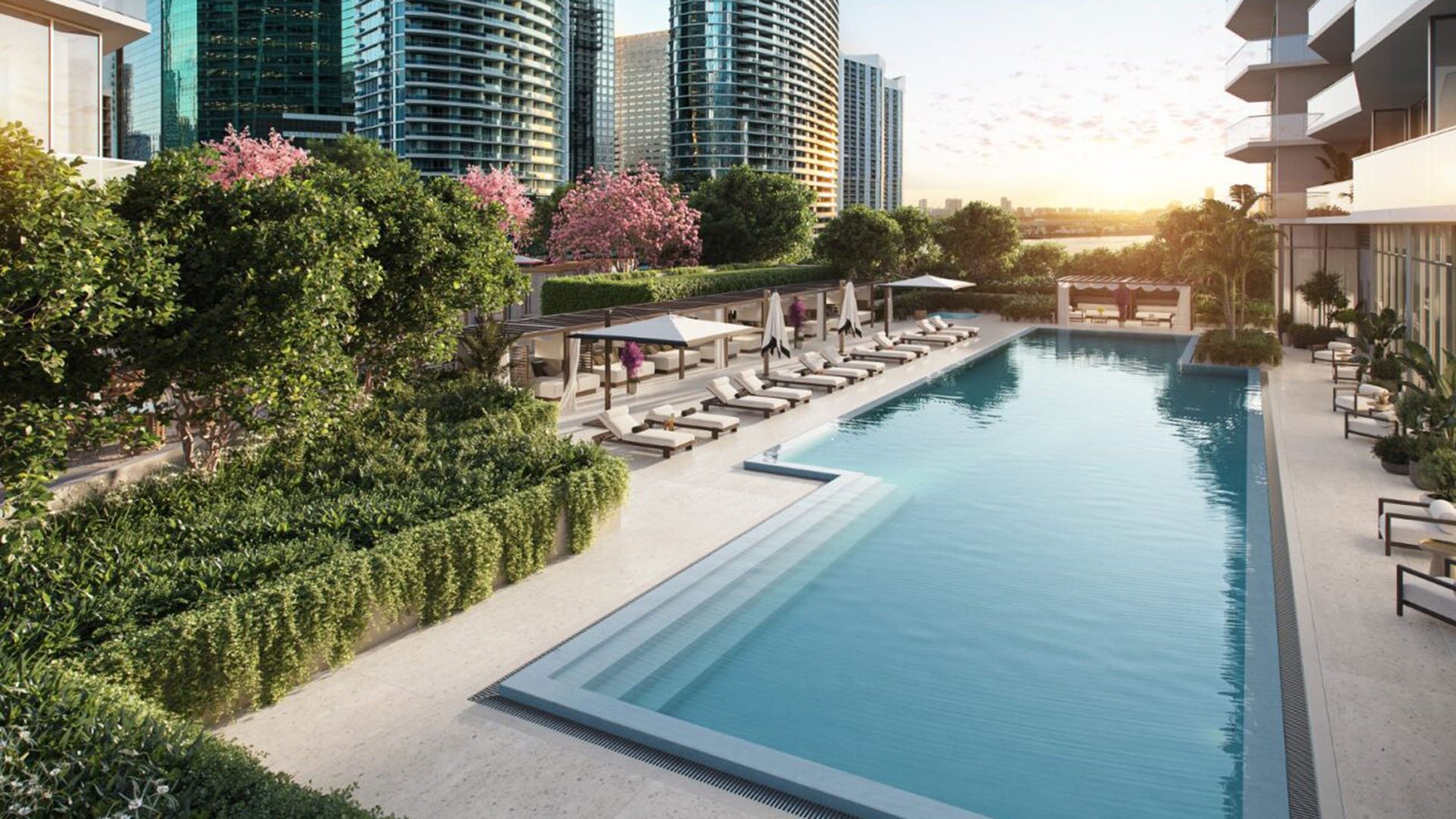
The pool is often the emotional centerpiece, but its real value depends on scale, sun, wind, service, furniture, and adjacency. A pool deck can appear cinematic in a rendering and still feel exposed, crowded, or impractical in use. Ask where the morning sun falls, where towels are stored, how food and beverage service is handled, and whether shaded seating is plentiful enough for peak use.
The better question is not whether a building has a pool. It is whether the pool can support the way owners actually live. Can a resident swim quietly before work? Can a family spend an afternoon without feeling in the way? Can an owner host a guest without turning the deck into a scene? True luxury comes from proportion and restraint.
Also consider sound. Water, music, conversation, service carts, and children’s play all travel differently depending on materials and layout. If pool activity sits directly beside a meditation room or private dining suite, the conflict may become obvious only after occupancy.
Wellness amenities deserve both skepticism and respect. A beautiful gym is valuable only if the equipment mix, ceiling heights, ventilation, locker areas, and recovery spaces support real routines. A treatment room is meaningful only if access, scheduling, and privacy are handled with care. A sauna or steam area should feel serene, not like an afterthought beside mechanical doors.
Luxury buyers should walk through their week. Where would you train? Where would you stretch? Could you leave a session without crossing a busy social lounge? Is there a quiet place to reset before returning upstairs? The most successful wellness floors feel less like a showroom and more like a private club scaled to residential life.
Do not confuse abundance with excellence. Three underused rooms may be less valuable than one exceptional studio, one calm treatment suite, and one well-planned changing area.
Private dining rooms, wine rooms, lounges, screening rooms, and chef’s kitchens can be meaningful extensions of a residence, especially for owners who prefer to entertain beyond the walls of the apartment. But the host test is unforgiving.
Where do guests arrive? Is there a coat area? Is catering supported without crossing the main lounge? Are restrooms close but not intrusive? Can the room be reserved without creating tension among residents? Is there enough acoustic separation for a dinner to feel private?
A tourist sees a glamorous table. A buyer imagines a birthday dinner, a board conversation, a holiday gathering, or a quiet evening with visiting family. If the room cannot support those moments gracefully, it is not an amenity. It is furniture.
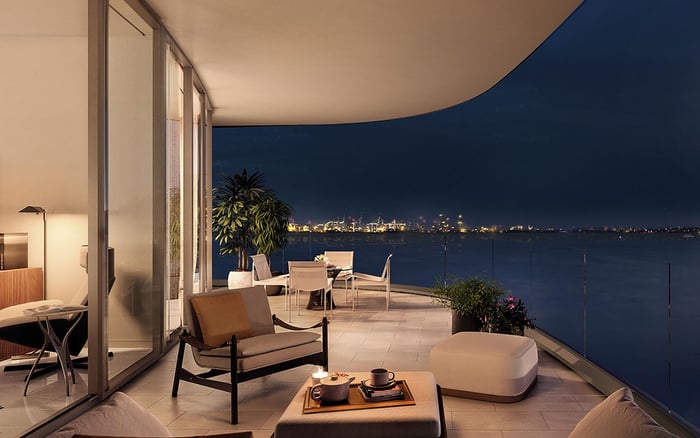
The balcony attached to an amenity lounge can be more valuable than another decorated interior if it offers real outdoor relief, comfortable depth, and usable furniture. In South Florida, outdoor space is not a novelty. It is a lifestyle requirement, and its success depends on shade, breeze, privacy, and ease of access.
Pets also reveal whether a building understands daily life. Pets need thoughtful transitions, practical surfaces, cleaning protocols, and spaces that do not embarrass owners or inconvenience others. A pet amenity that is hidden, cramped, or awkwardly located may become a daily irritation rather than a convenience.
Look at the overlooked details: package rooms, stroller storage, bike access, service elevators, restroom placement, and back-of-house areas. These practical zones are rarely glamorous, but they often determine whether a building feels effortless or strained.
A penthouse buyer often evaluates amenities differently from a buyer focused on square footage alone. The question becomes: what does the building provide that the residence should not have to duplicate? If the private home already offers a grand terrace, a gym, a bar, and staff areas, the shared amenity floor must deliver something more refined: service, scale, privacy, and optionality.
This is where owner-only becomes especially important. The most valuable amenity floors extend the private residence without compromising it. They allow owners to host larger gatherings, maintain routines, welcome family, and access wellness or leisure space without increasing the complexity of the home itself.
Investment is also part of the reading. A well-conceived amenity floor can support long-term desirability because it solves real problems for residents. A trend-driven package may feel impressive at launch but less persuasive when tastes change.
Every amenity floor is governed by rules, staffing, maintenance, and culture. Before being seduced by finishes, ask how spaces are reserved, how guest access is controlled, how private events are managed, and how wear will be addressed. The best marble, millwork, and upholstery will not compensate for unclear policies.
A building’s amenity culture should match its price point. If owners expect privacy, the policies should protect it. If families are a meaningful part of the community, the plan should accommodate them without letting every space become casual. If wellness is central, hours and staffing should support serious use.
Luxury is not merely access. Luxury is confidence that the space will be cared for, respected, and available when it matters.
What does owner-only really mean? It means the amenity floor is intended for residents rather than the general public, but buyers should still examine guest policies, reservations, and access control.
Should I prioritize the number of amenities? No. Prioritize layout, privacy, staffing, maintenance, and whether the spaces fit your actual daily life.
How do I evaluate an amenity pool? Study sun exposure, wind, shade, seating, service flow, acoustics, and whether the deck feels calm during peak use.
Are wellness amenities always valuable? They are valuable when they support real routines with privacy, proper equipment, good circulation, and thoughtful recovery spaces.
What makes a private dining room successful? It needs discreet guest arrival, catering support, acoustic separation, nearby restrooms, and reservation rules that feel fair.
Why is circulation so important? Circulation determines whether residents, guests, staff, children, and service functions move gracefully or collide throughout the day.
Should pet amenities matter to non-pet owners? Yes. Well-planned pet areas protect cleanliness, reduce friction, and improve the daily experience of the entire building.
How should buyers think about guest access? Guest access should be generous enough for entertaining but controlled enough to preserve privacy and owner comfort.
Can amenity floors influence resale appeal? Yes. Spaces that remain useful, elegant, and well governed can strengthen a building’s long-term desirability.
What is the biggest mistake buyers make? They admire the rendering instead of testing the plan, rules, staffing, acoustics, and real-life use cases.
To compare the best-fit options with clarity, connect with MILLION.
If branded residences are on your mind — as a home or as an allocation — we would be glad to share what we are seeing, privately.
Begin a quiet conversation