A refined buyer guide to selecting Miami luxury condominiums through the lens of serious collecting, from lighting and wall proportions to privacy, storage, and long-term stewardship.
For the serious collector, a Miami condominium is more than an address. It is a private gallery, a conservation environment, a social setting, and often a long-term planning asset. The best Miami luxury condos for art collectors are not defined by view, brand, or height alone. They are defined by how intelligently a residence can hold, protect, display, and move important works.
That distinction changes the search. A dramatic glass wall may be beautiful, but it may not suit a light-sensitive work. A large terrace may be ideal for entertaining, but the interior plan still needs uninterrupted walls, balanced lighting, and enough space for pieces to breathe. A collector should read a floor plan the way a curator reads a room: circulation, proportion, sightline, and control all matter.
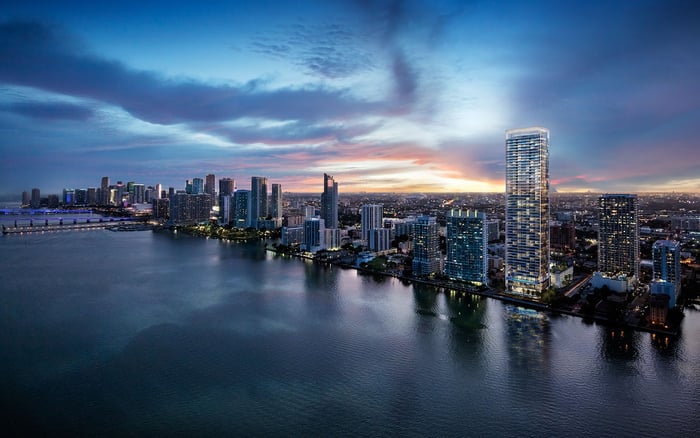
In Miami, buyers often begin with neighborhood preference, then refine by architecture and building operations. Brickell may appeal to those who want an urban setting with direct access to business, dining, and private entertaining. Edgewater can offer a more residential city rhythm with water-oriented living. Wynwood may speak to buyers who want proximity to a creative atmosphere, even as the residence itself must still be judged by privacy and finish. Surfside often enters the conversation for those who prefer a quieter coastal sensibility. Boutique buildings can be especially compelling when discretion, fewer neighbors, and more intimate service are priorities.
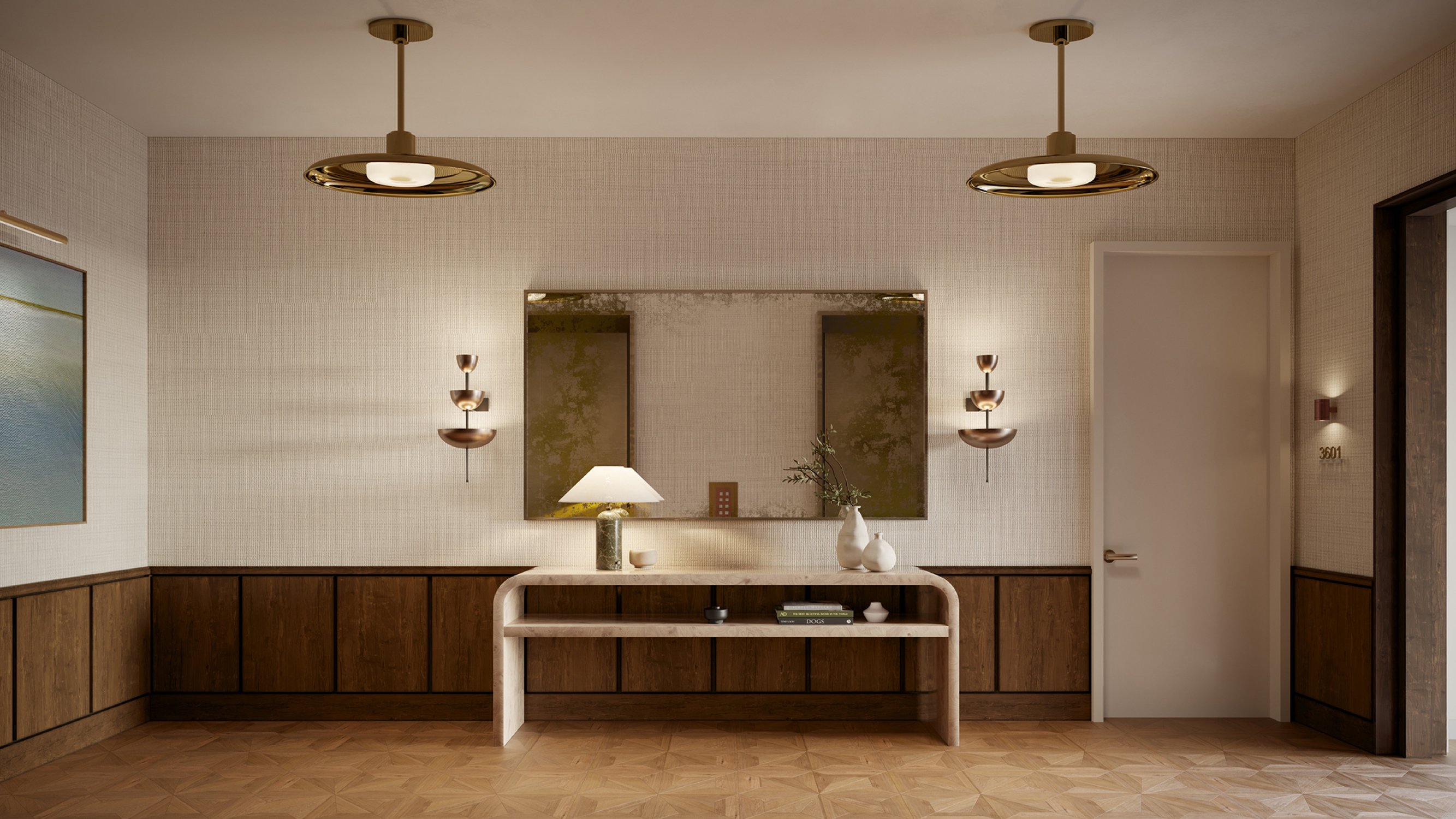
The first test is wall quality. Collectors should look for rooms with generous, uninterrupted surfaces and logical hanging zones. Corner units with extensive glazing can be visually seductive, but they may reduce usable wall space. A more restrained plan, with fewer fragmented corners and cleaner interior elevations, can be more valuable to a collector than a layout that photographs well but leaves little room for major works.
Ceiling height is equally important. Higher ceilings allow larger pieces to sit comfortably without overwhelming the room. They also create better proportions for sculpture, lighting tracks, and layered installations. In a Penthouse, volume can become a defining advantage, particularly when the owner wants to combine a home, salon, and display environment within one highly personal space.
Lighting should be considered early, not after closing. A collector will want to understand how natural light moves through the residence, where direct exposure may be strongest, and whether the electrical plan can support thoughtful art lighting. The goal is not theatrical brightness. It is controlled, adjustable illumination that allows each work to be seen without compromise.
Collectors should be especially attentive to how art enters and leaves the building. Service elevator dimensions, loading procedures, security protocols, and the path of travel from arrival to residence all deserve close review. A beautiful lobby is less important than a discreet, well-managed route for a crated work, a large canvas, or a delicate object.
Privacy is not merely social. It is operational. The fewer people involved in moving, installing, and maintaining a collection, the more controlled the experience becomes. Buildings with disciplined staff culture, careful access management, and clear service procedures can be more attractive than louder addresses with less predictability.
For buyers who entertain around art, the floor plan should separate public and private zones gracefully. A foyer or gallery corridor can create a moment of arrival. A living room with one dominant wall may anchor a significant piece. Secondary rooms can support works on paper, photography, or smaller objects. Bedrooms should not feel like afterthought galleries unless the owner intends them to function that way.
The best setting depends on how the collector lives. Brickell is suited to buyers who want a polished urban base and may host dinners, client gatherings, or private viewings within a high-rise environment. In this context, the residence should balance skyline energy with acoustic comfort and a controlled interior mood.
Edgewater appeals to buyers who want city proximity with a softer residential cadence. For collectors, the advantage is often the ability to think in terms of light, views, and room depth while remaining connected to Miami’s central neighborhoods. A thoughtful buyer will compare not only amenities, but also how each plan accommodates wall-hung work away from intense exposure.
Wynwood may be part of the lifestyle map for collectors who value creative adjacency, studio visits, and an art-centered social rhythm. Still, the residence itself should be evaluated with discipline. A collector’s home must do more than signal taste. It must protect the collection, support the owner’s routines, and remain elegant when the room is not staged for guests.
Surfside can serve buyers who prefer privacy, coastal calm, and a more residential feeling. In that setting, art often becomes part of a quieter domestic language: fewer distractions, more emphasis on texture, scale, and serenity. Boutique residences may enhance that feeling when the buyer prefers discretion over spectacle.
A collector-grade condominium should allow for professional intervention. That may include specialized lighting, reinforced hanging areas, climate considerations, security planning, and insurance documentation. Buyers should not assume that a beautiful new residence is ready for an important collection without additional review.
Storage is another overlooked issue. Not every work belongs on view at all times. A collector may need secure space for rotation, archives, packing materials, or conservation-related equipment. If the residence cannot handle those needs internally, the buyer should plan for external support and understand how that affects convenience.
Terraces and views should be considered in relation to the art, not in competition with it. A panoramic view can become the room’s dominant artwork. That may be desirable, but it changes how paintings, sculpture, and design pieces will read. The most successful residences create dialogue between view and collection rather than forcing one to overpower the other.
A standard showing often moves too quickly for an art-focused buyer. Walk slowly. Stand where major works might hang. Notice reflections, glare, ceiling conditions, outlets, vents, and door swings. Ask how deliveries are handled. Consider where installers would stage materials. Imagine the home at night, when artificial lighting becomes the entire visual environment.
It is also wise to bring the right advisers before a decision is final. An art consultant, lighting designer, installer, or insurance specialist may see constraints that are invisible during a glamorous tour. The best purchase is not necessarily the most dramatic residence. It is the one that can be adapted without fighting the architecture.
The ideal Miami condo is both expressive and restrained. It allows the owner’s collection to lead. It welcomes guests without becoming a showroom. It supports privacy, care, and continuity. Above all, it recognizes that serious collecting is not decoration. It is stewardship.
What should art collectors look for first in a Miami luxury condo? Start with wall space, light control, ceiling height, privacy, and logistics for moving art safely into the residence.
Is a glassy waterfront condo always a good choice for art? Not always. Expansive glass can reduce hanging walls and create light-management challenges, so the interior plan matters as much as the view.
Why is Brickell relevant for collectors? Brickell may suit collectors who want an urban base with access to dining, business, and private entertaining within a high-rise setting.
Can Edgewater work well for a private collection? Yes, if the floor plan provides usable walls, controlled light, and enough depth to let works be viewed with proper distance.
Why would a collector consider Wynwood when buying a residence? Wynwood may appeal to buyers who value creative adjacency, while the actual condo should still be judged on privacy, protection, and livability.
Is Surfside better for a discreet collecting lifestyle? Surfside can appeal to buyers seeking a quieter coastal setting, especially when paired with a residence that emphasizes privacy and calm.
Are Boutique buildings attractive to art collectors? Boutique buildings may appeal when fewer residences, quieter circulation, and a more intimate service culture are priorities.
Is a Penthouse ideal for displaying large works? A Penthouse can be compelling when it offers greater ceiling height, volume, and control, but the plan must still provide strong walls.
Should buyers involve an art adviser before purchasing? Yes. An adviser, installer, or lighting specialist can identify practical issues before they become expensive limitations.
What is the biggest mistake collectors make when choosing a condo? The most common mistake is prioritizing spectacle over stewardship, especially when a residence lacks proper walls, light control, or delivery access.
When you're ready to tour or underwrite the options, connect with MILLION.
If branded residences are on your mind — as a home or as an allocation — we would be glad to share what we are seeing, privately.
Begin a quiet conversation