Rising reinsurance costs are reshaping the economics of coastal Miami ownership, flowing directly into condo and HOA operating budgets, reserves, and ultimately monthly dues. For luxury buyers, the question is less whether dues rise and more how a building’s governance, insurance posture, and capital plan translate that volatility into predictable ownership costs. This editorial outlines why reinsurance matters, where the pressure shows up inside association budgets, and how to diligence a building like a portfolio asset before you wire.
Reinsurance is the insurance insurers buy to manage their own exposure. When that backstop becomes more expensive or more restrictive, the impact doesn’t stay in boardroom spreadsheets. It shows up in the master property and wind policies condominium and homeowner associations must carry-and then cascades into operating budgets, reserve strategy, and special assessments.
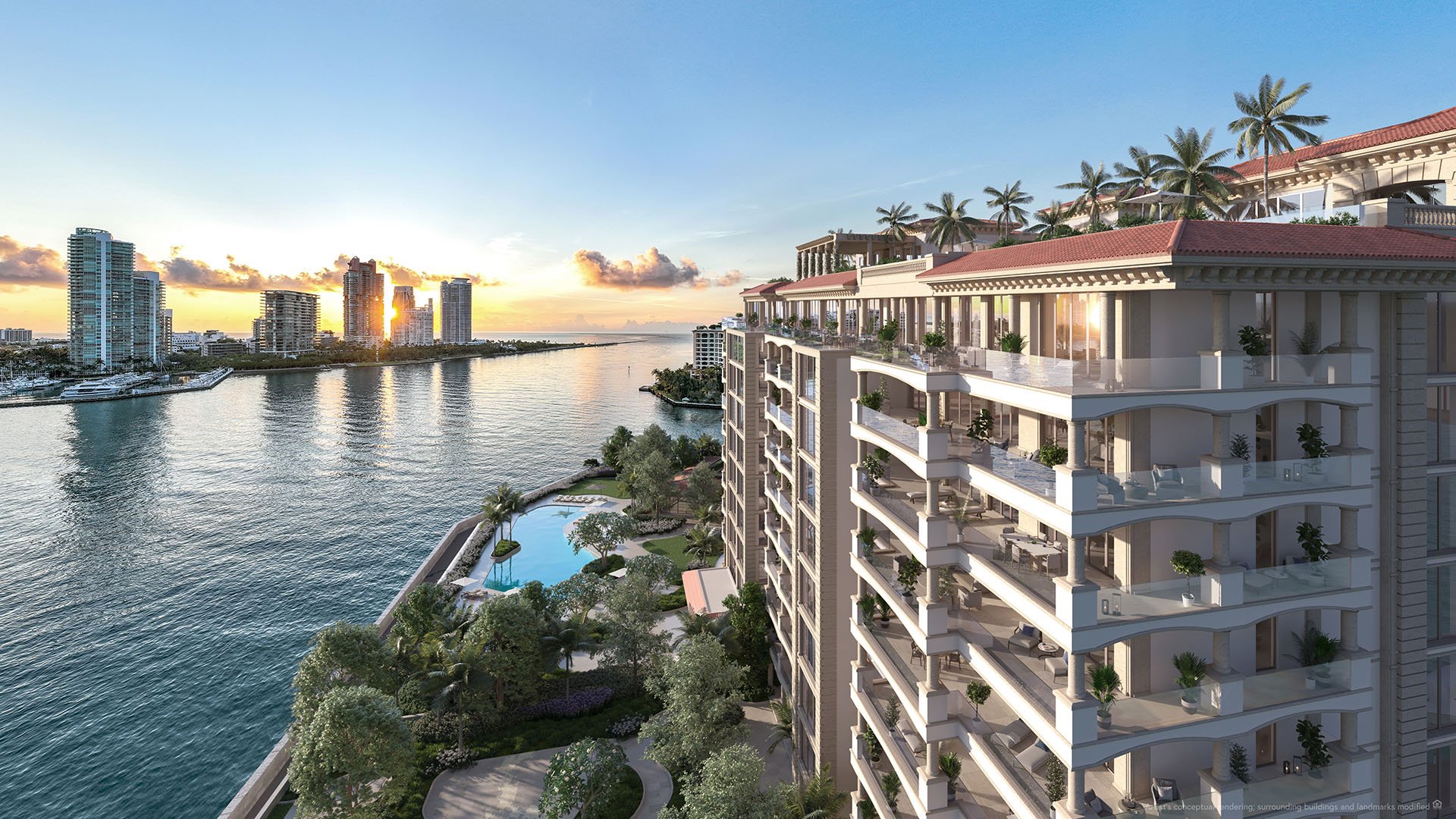
In coastal Miami, the stakes are higher because the most coveted inventory is also the most exposed: waterfront towers, low-lying communities, and properties where salt, wind, and water are constant realities. In a luxury market, it’s easy to focus on design, services, and view corridors. Increasingly, the sharper lens is the financial architecture: how a building transfers risk, what it retains through deductibles, and whether the association can absorb volatility without compromising service levels.
Even in impeccably managed properties, reinsurance pressure can surface as annual premium shocks, mid-cycle adjustments, and tighter coverage language. The practical outcome is straightforward: dues can feel less like a stable subscription and more like a variable rate tethered to a global risk market.
An association’s insurance program isn’t a single bill-it’s a layered stack: property coverage, windstorm coverage, liability, flood (where applicable), directors and officers coverage, and, in some cases, specialized lines tied to building operations. Reinsurance influences both the cost and availability of these layers, especially those designed to respond to catastrophic loss.
When upstream costs rise, associations generally pull four levers:
Pass-through pricing. The most direct approach is increasing monthly dues to fund higher premiums.
Higher deductibles. If premiums become unworkable, renewals may come with larger deductibles-meaning the building effectively self-insures a greater share of any loss. That can reduce premiums, but it increases the association’s exposure. Owners feel that shift through higher reserve allocations or post-event assessments.
Coverage changes and exclusions. Some associations accept more restrictive terms, which can later translate into owner-paid repairs or uninsured gaps.
Operational trade-offs. Boards can hold dues flatter by trimming services, deferring maintenance, or squeezing staffing and vendor contracts. In luxury assets, those choices can quietly dilute the living experience-and, just as importantly, the resale narrative.
In best-in-class properties, the objective isn’t simply to “buy insurance.” It’s to structure a durable risk program: appropriate limits, clear deductibles, and a reserve posture that can realistically absorb the deductible if the worst happens.
Insurance math isn’t uniform across Miami. Several variables can magnify the reinsurance effect:
Proximity to the ocean and elevation. Salt air and wind-driven rain accelerate wear, and storm exposure can invite tighter underwriting.
Building age and construction profile. Older envelopes, legacy mechanical systems, and dated glazing can increase perceived risk.
Replacement-cost sensitivity. Luxury finishes, custom common areas, and high-end mechanical systems can push replacement values higher, influencing premiums.
Claims history. Even a well-run building can be penalized for a history of water intrusion claims, roof issues, or repeated losses.
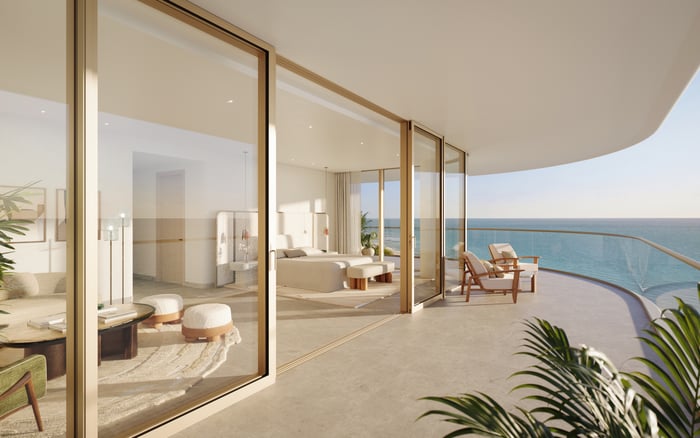
This is where buyers should separate “oceanfront” as a lifestyle from “oceanfront” as a balance-sheet reality. A residence at The Perigon Miami Beach may represent a highly curated beachfront experience, but any ocean-adjacent ownership should be evaluated with a disciplined review of insurance structure and budget assumptions.
Luxury associations are increasingly operating like asset managers. The strongest boards and management teams tend to focus on a few consistent themes:
Budgeting for volatility.
Rather than assuming modest annual increases, many associations run scenarios-a base case and a stress case for insurance renewals. That can mean higher baseline dues today in exchange for fewer shocks later.
Engineering and maintenance as risk mitigation.
Underwriters respond to verifiable upgrades: roof systems, façade repairs, flood barriers, generators, fire systems, and documented preventive maintenance. These aren’t merely capex projects; they function as risk-reduction instruments.
Reserve strategy aligned to deductibles.
As deductibles rise, reserves may need to cover not only long-term capital replacement but also near-term loss retention. Owners should ask whether the reserve schedule reflects today’s deductible environment.
Governance discipline.
Prompt financial reporting, competitive bidding, and transparent owner communication help a building navigate a hard insurance market without fracturing trust.
In Brickell and adjacent urban waterfront corridors, the insurance conversation intersects with tower operations: high-rise systems, staffing, and sophisticated amenities. In that context, a buyer evaluating 2200 Brickell should view the HOA not as a passive fee, but as a signal of how the building funds service standards while absorbing insurance variability.
Insurance premium increases are the obvious headline. The subtler impacts often require a more experienced read:
1) Deferred maintenance risk.
When dues are politically constrained, boards may postpone envelope work. That can increase the probability of future claims, creating a feedback loop that damages insurability.
2) Vendor repricing.
After storms, labor and material inflation can push up maintenance contracts and repair costs. Even without a claim, maintaining a coastal asset can become more expensive.
3) Special assessments by another name.
Some buildings use “one-time” contributions or reserve catch-up measures to absorb insurance spikes. Functionally, that’s an assessment-even if the label is gentler.
4) Unit-owner insurance displacement.
If master policies narrow, owners may need stronger HO-6 coverage, higher personal deductibles, or additional endorsements. Total cost of ownership becomes the sum of HOA dues plus unit-level insurance.
In Miami Beach, where the market prizes privacy and service as much as proximity to the water, the financial narrative should support the lifestyle narrative. A residence at Apogee South Beach, for example, is often evaluated through the lens of exclusivity and views. It should also be evaluated through the lens of predictable building operations and the association’s ability to withstand insurance-driven budget swings.
In a rising reinsurance environment, sophisticated buyers treat HOA review as underwriting. The goal is to understand what you’re truly buying: a home plus a proportional interest in a complex operating system.
Focus on these diligence categories:
Insurance structure.
Request a plain-language summary of current coverages, deductibles (especially wind), and any meaningful exclusions. Confirm whether deductibles are expressed as a percentage and how that would translate into real dollars at the building level.
Renewal history.
Look for patterns: repeated mid-cycle changes, sudden shifts in deductibles, or sharp premium moves. The trend matters as much as the current figure.
Reserve funding and reserve study posture.
Evaluate whether the reserve schedule appears consistent with the building’s age, exposure, and amenity set. Underfunded reserves tend to surface as assessments at the least convenient time.
Capital plan realism.
A credible multi-year plan signals governance maturity. If the plan is vague-or if critical envelope items are routinely deferred-assume future costs will be higher.
Collections and delinquency.
In a dues-increase cycle, delinquency can rise, forcing remaining owners to absorb cash-flow strain.
For buyers looking north to newer waterfront lifestyles with a resort sensibility, the same diligence applies. Consider how amenity scale and coastal exposure interact at properties like 57 Ocean Miami Beach: the experience can be exceptional, but the ownership structure must be equally well engineered.
Luxury buyers have long understood that Miami’s carrying costs are part of the equation. What’s shifting is dispersion: two similarly priced residences can carry materially different total ownership costs based on insurance outcomes and reserve discipline.
Expect several behavioral shifts:
Greater price sensitivity to HOA trajectory. Buyers may discount units in buildings with unstable dues histories or recurring assessments.
A premium for governance. Well-run associations with transparent financials, proactive maintenance, and stable reserves can command stronger liquidity.
More conservative leverage decisions. Owners who finance may prioritize predictable monthly obligations; volatile dues can complicate underwriting comfort.
Amenity scrutiny. In a dues-up environment, owners increasingly ask whether every service is essential. Buildings that align amenities with year-round utilization tend to justify costs more convincingly.
In short, reinsurance isn’t merely an insurance story. It’s a valuation story.
For current owners, the most productive posture isn’t alarm-it’s engagement. Attend meetings, read budgets, and insist on clarity around deductibles and reserves. Know what’s being funded now versus what’s being deferred.
For boards, the mandate is equally direct: treat insurance as a strategic program, not an annual purchase. Document mitigation work, begin renewal timelines early, and communicate in plain language. Owners can often accept higher dues; what they struggle with are surprises.
For buyers, the most luxurious position is optionality. The residence may be emotional, but the decision should remain analytical. When reinsurance costs rise, the best buildings don’t escape the market-they translate it into a more predictable ownership experience.
Why would reinsurance affect my HOA dues in coastal Miami? When insurers pay more for reinsurance, that cost can flow into the building’s master premiums and increase the HOA’s operating budget.
Is a premium increase always the main issue? Not necessarily. Higher deductibles and narrower coverage can be more disruptive because they shift more risk back to the association.
What is the biggest red flag in an HOA budget right now? A pattern of deferred maintenance or chronically underfunded reserves can set the stage for future assessments, especially after a loss event.
How can I estimate my real risk from a wind deductible? Ask how the deductible is calculated and whether reserves can cover it; if not, owners may face a post-event assessment.
Do newer luxury buildings avoid these insurance pressures? They may be better positioned due to modern systems, but they are not immune to market-wide repricing and underwriting shifts.
Can a well-managed association materially improve insurance outcomes? Yes. Documented maintenance, risk-mitigation upgrades, and strong governance can improve underwriting confidence over time.
Will rising HOA dues automatically hurt resale value? Higher dues can reduce buyer demand at the margin, but predictability and strong building health often matter as much as the number.
Should I expect more special assessments? Buildings with thin reserves or large deductibles may rely on assessments more frequently when insurance costs spike or losses occur.
What documents should I review before buying? Focus on the current budget, recent financial statements, reserve information, meeting minutes, and an overview of insurance coverage.
What is one simple way to compare buildings? Compare the stability of dues and assessments over time alongside reserve strength and the credibility of the capital plan.
If you'd like a private walkthrough and a curated shortlist, connect with MILLION Luxury.
If branded residences are on your mind — as a home or as an allocation — we would be glad to share what we are seeing, privately.
Begin a quiet conversation