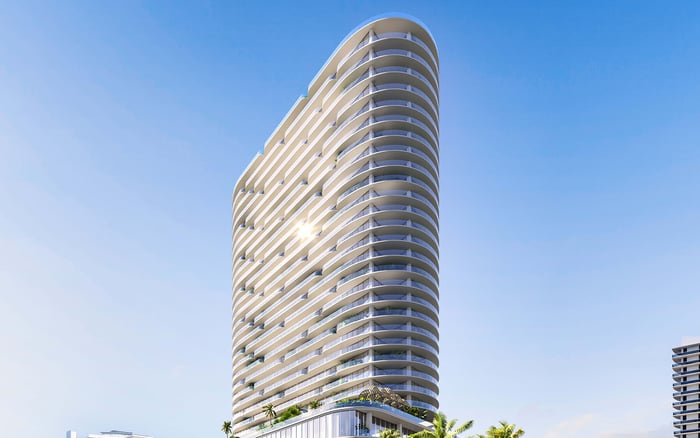
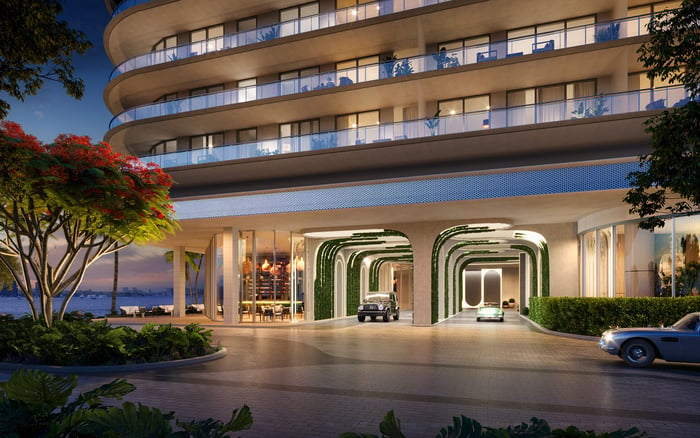
A buyer-focused MILLION Luxury editorial examining what can and cannot be responsibly inferred about subterranean parking flood resilience at Continuum Club & Residences in North Bay Village. The analysis centers on elevation, access points, code expectations, and why official plans matter more than branding when evaluating below-grade parking in a low-lying coastal setting.
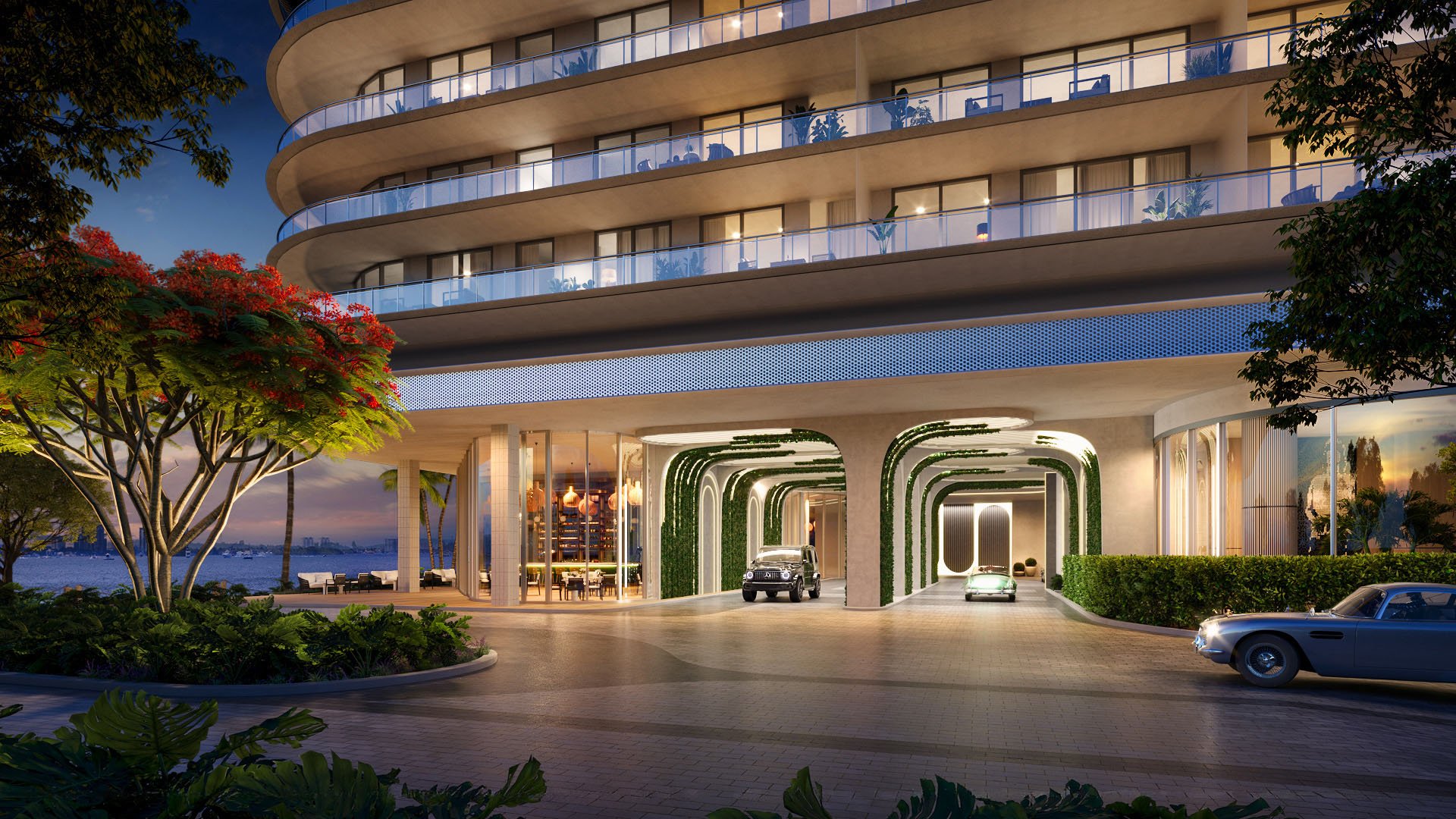
For buyers considering Continuum Club & Residences North Bay Village, the discussion around luxury finishes and bayfront living quickly leads to a more practical question: how is parking protected when the site sits within a low-lying coastal municipality? That is the right place to start. In North Bay Village, flood exposure and elevation are not secondary engineering details. They shape insurance, daily convenience, and the long-term defensibility of value.
Continuum Club & Residences is positioned as a high-end waterfront development with substantial infrastructure and amenities. Yet when subterranean or low-level parking is involved, the key issue is not branding. It is whether the garage design, access points, and critical systems are positioned and protected in a way that reflects real coastal conditions. In South Florida, enclosed parking near or below grade can be exposed not only to storm surge, but also to heavy rainfall, tidal flooding, and groundwater pressure.
For a market increasingly defined by resilience, this places the issue alongside the same level of buyer diligence one might apply when comparing other waterfront offerings such as Pagani North Bay Village, Shoma Bay North Bay Village, or The Ritz-Carlton Residences® North Bay Village. At this level, resilience is part of the product.
When evaluating subterranean parking, buyers often focus first on visible flood defenses such as barriers, gates, or pumps. Those features matter, but elevation is the organizing principle. The most important questions are straightforward: where is the lowest parking level relative to design flood benchmarks, where are the garage entries and exits set, and where are critical electrical and mechanical systems located?
In flood-prone coastal jurisdictions, building rules typically address more than the structural shell. They shape what uses are permitted below the design flood elevation, how enclosures are treated, what materials are acceptable, and how vulnerable building systems must be protected. For parking, this means a garage cannot be judged solely by whether it appears enclosed and substantial. A polished arrival court does not answer whether water can reach the ramp, whether runoff can collect at the threshold, or whether a compound flooding event could impair ingress and egress.
That is especially relevant in North-bay-village, where king tides, drainage stress, and sea-level rise are no longer abstract planning issues. The practical resilience of a garage often turns on smaller decisions: ramp slope, threshold height, stormwater routing, backflow prevention, and the placement of pumps and electrical gear.
In this segment of the market, effective parking protection is usually layered rather than singular. Buyers should think in systems. One element may reduce nuisance intrusion, another may control rainfall accumulation, and another may help protect the garage during a more serious coastal event.
A robust strategy often includes some combination of site drainage, pumping capacity, backflow controls, flood-damage-resistant materials in vulnerable areas, and careful placement of critical equipment above more exposed zones. The access sequence matters as much as the garage volume itself. If the ingress point sits too low, the entire protective logic weakens. If mechanical or electrical infrastructure is placed where water can reach it, recovery becomes slower and more expensive even if the structure itself remains sound.
This is why buyers comparing coastal product across the region, from 57 Ocean Miami Beach to Una Residences Brickell, increasingly ask not only about amenities but also where vulnerable functions sit within the building stack. In new-construction waterfront product, resilience has become part of luxury’s invisible architecture.
A disciplined assessment separates verified project identity from assumptions about unseen engineering. It is established that Continuum Club & Residences is a Continuum Company project in North Bay Village and that it is positioned as a luxury waterfront residential development. It is also fair to conclude that any subterranean or low-level parking strategy at the property would need to align with local flood-related code requirements and the broader resilience expectations that now shape coastal construction in Miami-Dade.
What should not be presumed, however, is the exact configuration of the garage or the specific flood-defense package unless those details are publicly disclosed in permit plans or official records. Exact finished-floor elevations and the lowest parking elevation are the kinds of details that typically require parcel records, permit archives, or plan review. For a prudent buyer, that distinction matters. It keeps the discussion precise.
In other words, the right reading of Continuum Club & Residences North Bay Village is not that its garage is either definitively secure or inherently vulnerable. The right reading is that the project sits in a location where garage elevation and flood protection are central to due diligence, and where the quality of the answer depends on official documentation.
At the luxury end of the market, flood resilience should be framed as part of asset quality. Buyers, family offices, and advisors reviewing Pre-construction or recently delivered inventory should want clarity on several points.
First, ask how the garage entry elevation relates to the project’s governing flood benchmarks. Second, ask whether critical building systems serving the garage are elevated or otherwise protected. Third, ask how drainage and pumping are designed to manage the combination of intense rainfall, high tides, and coastal surge pressure. Finally, ask what the recovery pathway looks like if an intrusion event occurs. A building that returns to normal operations quickly is often better positioned than one whose systems are more difficult to restore.
That same discipline applies well beyond North Bay Village. Buyers evaluating New-construction waterfront residences in nearby enclaves, including Onda Bay Harbor, are increasingly attentive to the relationship between architecture, access, and water management. In South Florida, resilience is no longer a technical sidebar for engineers alone. It is a front-end buying criterion.
Flood maps and flood-zone classifications shape more than compliance. They can influence insurance outcomes, reserve planning, and future buyer perception. If a garage’s classification, elevation, or access geometry creates higher exposure, that can affect both ownership experience and the way the market prices risk over time.
For a trophy waterfront address, the durability of value is tied to how convincingly the building addresses coastal realities. That is why the most sophisticated buyers now consider garage resilience alongside views, amenity programming, and finish quality. A well-conceived parking strategy protects convenience, supports building operations, and contributes to confidence in the asset during both seasonal flooding and major storm scenarios.
In that sense, Continuum Club & Residences North Bay Village sits within one of the most important conversations in South Florida luxury real estate: not whether waterfront living remains desirable, but which projects are planned and documented in ways that respect shoreline realities.
Is subterranean parking inherently risky in North Bay Village? It is more exposure-sensitive than elevated habitable floors because surge, tides, rain, and groundwater can affect enclosed low-level space.
Can a luxury project fully eliminate flood risk in a garage? No. The goal is usually risk reduction through elevation, drainage, barriers, pumping, and protected systems.
What matters more, waterproofing or elevation? Elevation is the primary framework. Waterproofing and other defenses are most effective when paired with sound height and access design.
Why are garage ramps so important? The ramp is often a key point of vulnerability because water can collect or enter through the lowest access route.
Should buyers assume strong protection because the building is new? No. New-construction helps, but the real test is the actual design, code compliance, and placement of vulnerable systems.
Do flood rules affect parking design directly? Yes. They commonly influence allowable uses, enclosure treatment, materials, and where equipment can be located.
Can flooding come from rain even without storm surge? Yes. Heavy rainfall combined with high tides can create compound flooding conditions that stress enclosed parking areas.
Where should a buyer verify exact parking elevation? The most reliable path is through official property records, permit archives, and plan documentation tied to the parcel.
Is insurance affected by parking elevation and flood classification? Yes. Flood-zone classification and elevation can influence risk treatment and insurance-related considerations.
What is the smartest takeaway for evaluating this project? Treat garage resilience as a documentation question, not a branding question, and underwrite confidence only after reviewing official records.
For a confidential assessment and a building-by-building shortlist, connect with MILLION Luxury.
If branded residences are on your mind — as a home or as an allocation — we would be glad to share what we are seeing, privately.
Begin a quiet conversation