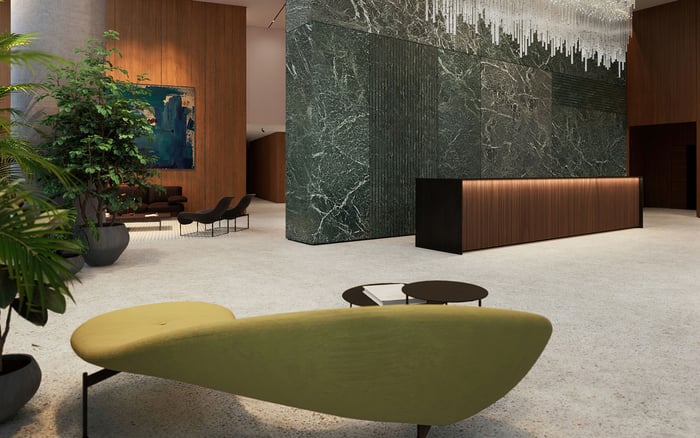
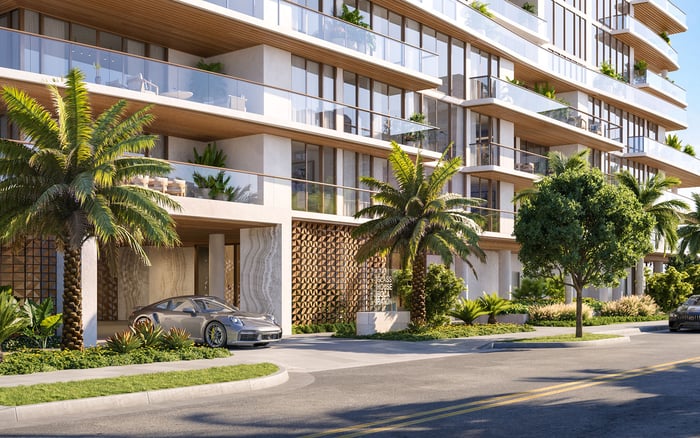
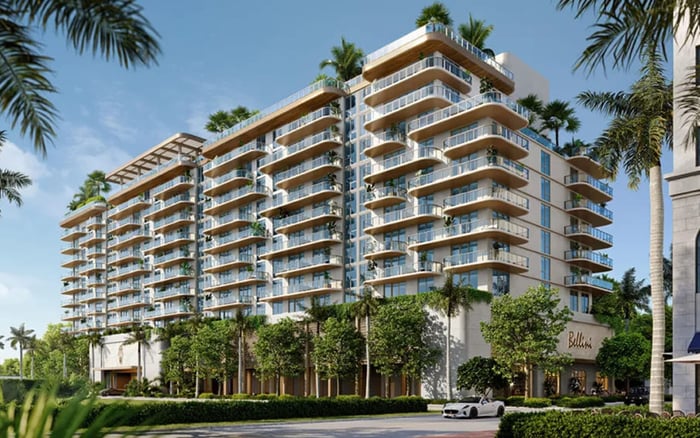
A buyer-focused comparison of three ownership models for discreet handling of art, wine, and luxury deliveries: hospitality-forward, design-led residential, and privacy-first boutique living.
For buyers moving art, wine, couture, jewelry, and one-of-one design objects through a residence, the decisive question is rarely whether a building feels luxurious. It is whether the building’s operating model matches the buyer’s tolerance for visibility, staff reliance, and private vendor coordination.
That makes the comparison between 619 Residences by Foster + Partners + Nobu Hospitality, Casa Bella by B&B Italia Downtown Miami, and Glass House Boca Raton more nuanced than a simple brand hierarchy. Each speaks to a different owner psychology. One is the most hospitality-forward. One is best understood as design-led and residentially balanced. One is the quietest, most privacy-oriented fit for buyers who already run their homes like private estates.
For art and wine, the building is not merely a backdrop. It becomes part of the chain of custody. Arrival sequence, staff touchpoints, elevator use, security posture, loading exposure, and coordination with private handlers all matter. A buyer receiving crates, controlled-temperature wine shipments, archival furniture, or museum-grade objects should think less like a tourist checking into a suite and more like a collector selecting an operating ecosystem.
The 619 Residences by Foster + Partners + Nobu Hospitality model will naturally appeal to buyers who want a more service-intensive residential experience. The pairing of an architecture name with a hospitality identity points to a buyer mindset that values polish, responsiveness, and an elevated day-to-day service cadence.
For discreet deliveries, that model can be compelling when the owner wants fewer personal frictions. A hospitality-forward residence appeals to buyers who prefer coordinated arrivals, polished staff interactions, and the sense that daily needs move through the building with professional fluency. For a second-home owner or frequent traveler, the appeal is clear: the residence should feel managed, composed, and capable even when the owner is not physically present.
Still, buyers should separate brand atmosphere from confirmed building procedures. Art, wine, and luxury deliveries require specific protocols, not just a gracious lobby. Before relying on any building team for specialized handling, an owner should confirm insurance requirements, delivery windows, loading access, service elevator procedures, climate-sensitive staging, vendor credentials, and whether private staff may supervise each handoff.
The best-fit buyer for this model wants residential ownership with a hotel-like service sensibility. They may have advisors and private vendors, but they want the building itself to feel active, polished, and service-forward. Among the three, this is the choice for the owner who wants discretion through professional coordination rather than discretion through low visibility alone.
Casa Bella by B&B Italia Downtown Miami occupies a different lane. Its differentiator is the design identity tied to B&B Italia, making it especially resonant for buyers who care about interiors, objects, architecture, and the cultural language of modern Italian design. It is not best framed as the most hotel-like platform or the most privacy-first building. Its strength is balance.
That balance matters. A buyer may want refined residential service without living in a property where hospitality is the entire premise. Casa Bella is well suited to an owner who wants the setting to feel curated and design-prestigious, while retaining the privacy and autonomy of condominium ownership. In the context of luxury deliveries, this points to a buyer who expects capable residential service, but is also comfortable relying on private art handlers, wine-storage vendors, designers, installers, or personal staff for the most specialized work.
Casa Bella’s ownership logic is particularly attractive for design collectors. The buyer who commissions custom furniture, rotates collectible lighting, receives textile shipments, or works with an interior advisor may value the B&B Italia association as part of the property’s cultural identity. The residence becomes not only a place to live, but a continuation of the buyer’s aesthetic standards.
Its limitation is also its clarity. If the owner’s highest priority is a broad hospitality apparatus, Casa Bella may not be the most direct answer. If the owner’s highest priority is maximum privacy and minimal exposure, a boutique model may feel more aligned. But for buyers who want Downtown access, branded design cachet, and elevated residential living, Casa Bella is the middle option that avoids extremes.
Glass House Boca Raton is the most privacy-oriented option in this comparison. Its appeal is less about a broad service apparatus and more about a quieter ownership environment that may reduce visibility for residents, vendors, and deliveries. For some collectors, that is the entire point.
The best-fit buyer already has a system. They may employ private staff, maintain relationships with art handlers, use wine-storage vendors, retain a security consultant, or coordinate deliveries through a family office. For that owner, a building does not need to perform like a hotel. It needs to stay discreet, predictable, and controlled.
This is where a boutique ownership model can outperform a larger service-forward environment. Fewer eyes, a quieter rhythm, and less performative luxury can be meaningful advantages when high-value objects are moving in and out. The owner receiving a rare case of wine, a significant artwork, or custom furnishings may prefer fewer touchpoints over more staff attention.
Glass House Boca Raton is therefore best understood as a privacy-first choice for buyers who value control. It is not positioned as the broadest hospitality platform. Its likely advantage for high-value deliveries is low exposure. For buyers who see discretion as the ultimate luxury, that may be more valuable than a longer amenity menu.
The right answer depends on what the owner wants the building to do. If the buyer wants the residence to absorb daily complexity with a hospitality-forward feel, 619 Residences by Foster + Partners + Nobu Hospitality is the natural first lens. If the buyer wants a design-prestige address with elevated residential service and a strong aesthetic identity, Casa Bella by B&B Italia Downtown Miami is the balanced choice. If the buyer already has private infrastructure and wants quiet control, Glass House Boca Raton is the cleaner fit.
New-construction buyers should be especially disciplined about the difference between ambiance and operations. A beautiful lobby does not automatically solve for art receiving. A recognizable brand does not automatically confirm wine logistics. A private building does not automatically mean every specialized vendor workflow has been planned. The final decision should be grounded in documents, service menus, staff policies, and walkthrough-level questions.
A practical buyer will ask: Who receives high-value deliveries? Where do crates wait if the owner is delayed? Can private handlers bypass public exposure? Are deliveries logged discreetly? Are climate-sensitive items ever staged outside conditioned areas? Can a representative supervise installation? How are after-hours deliveries treated? What is the procedure for oversized works, wine refrigeration, or fragile design pieces?
The terms buyers use to frame this decision often reveal the underlying priority: Boca Raton for quiet control, Downtown for urban access, boutique for lower exposure, and design-branded living for aesthetic identity. None is universally superior. Each is a different expression of luxury.
For the buyer who wants the building to feel like an extension of a private concierge environment, 619 Residences by Foster + Partners + Nobu Hospitality is the most intuitive match. It suits an owner who values service intensity and a polished hospitality rhythm.
For the buyer who wants design credibility without making hospitality the main event, Casa Bella by B&B Italia Downtown Miami is the strongest middle path. It belongs to the owner who appreciates a refined residential experience, but still expects art advisors, wine specialists, and private vendors to handle the most sensitive items.
For the buyer who values privacy above all, Glass House Boca Raton is the standout. It is the right answer for collectors who already have trusted teams and want a residential setting that supports discretion rather than calling attention to service.
In the most sophisticated purchases, discretion is not a slogan. It is a workflow. The best ownership model is the one that allows valuable objects, private staff, and the owner’s daily life to move through the property with the least friction and the least unnecessary visibility.
Which project is best for a hospitality-forward owner? 619 Residences by Foster + Partners + Nobu Hospitality is the strongest fit for buyers who want a more service-intensive residential rhythm.
Which project is best for design-focused buyers? Casa Bella by B&B Italia Downtown Miami is the design-led option, with B&B Italia cachet as its defining differentiator.
Which project is best for maximum discretion? Glass House Boca Raton is the privacy-first choice, especially for buyers who prefer a quieter ownership environment.
Does Casa Bella replace private art handlers? It is better viewed as elevated residential living, while specialized art and wine handling may still require private vendors.
Is a hospitality brand enough for art and wine logistics? No. Buyers should confirm actual delivery procedures, insurance expectations, staffing roles, and climate-sensitive handling.
Who is the ideal Glass House Boca Raton buyer? A collector who already uses private staff, advisors, security protocols, art handlers, or wine-storage vendors.
Why does building scale matter for discreet deliveries? A smaller or quieter environment may reduce exposure, while a larger service model may offer more coordinated touchpoints.
What should wine collectors verify before buying? They should review receiving rules, temperature exposure, delivery windows, storage pathways, and vendor access.
What should art collectors ask during due diligence? They should ask about oversized deliveries, service elevators, installation supervision, security logging, and staging areas.
Which model is most balanced overall? Casa Bella is the middle option, balancing branded design prestige with elevated residential living.
To compare the best-fit options with clarity, connect with MILLION.
If branded residences are on your mind — as a home or as an allocation — we would be glad to share what we are seeing, privately.
Begin a quiet conversation