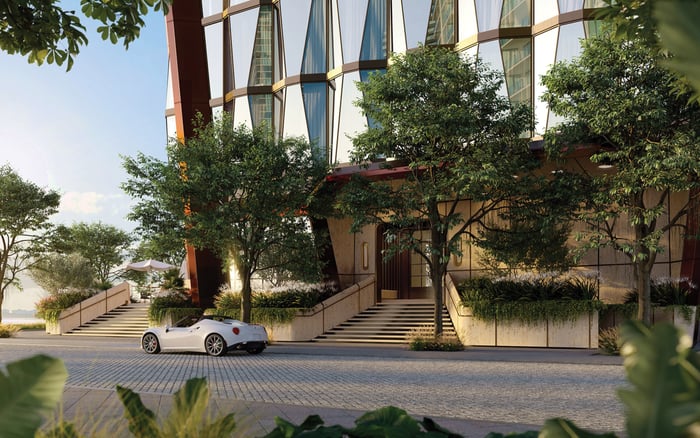
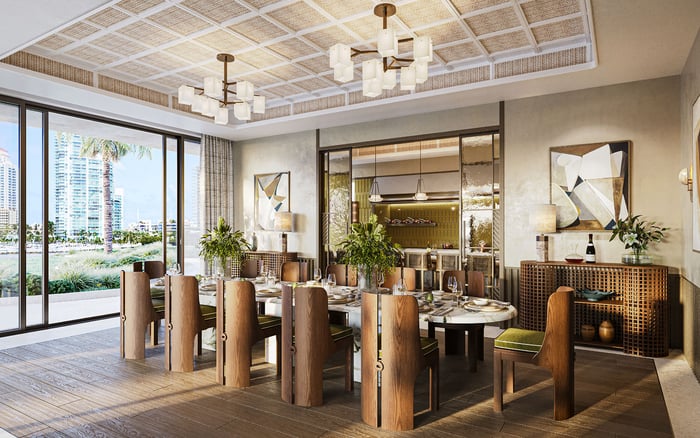
Miami’s most compelling new residences are increasingly judged like collectible objects: by authorship, composition, and how the building performs as a work of art at the scale of a skyline. In South Florida, the rise of starchitect-designed towers is reshaping buyer expectations, from the intimacy of arrival sequences to the drama of view corridors and the restraint of material palettes. This editorial looks at what “architecture as art” means in practice for ultra-premium buyers and how to evaluate design credibility, livability, and long-term desirability across Brickell, Downtown, Edgewater, and Miami-beach.
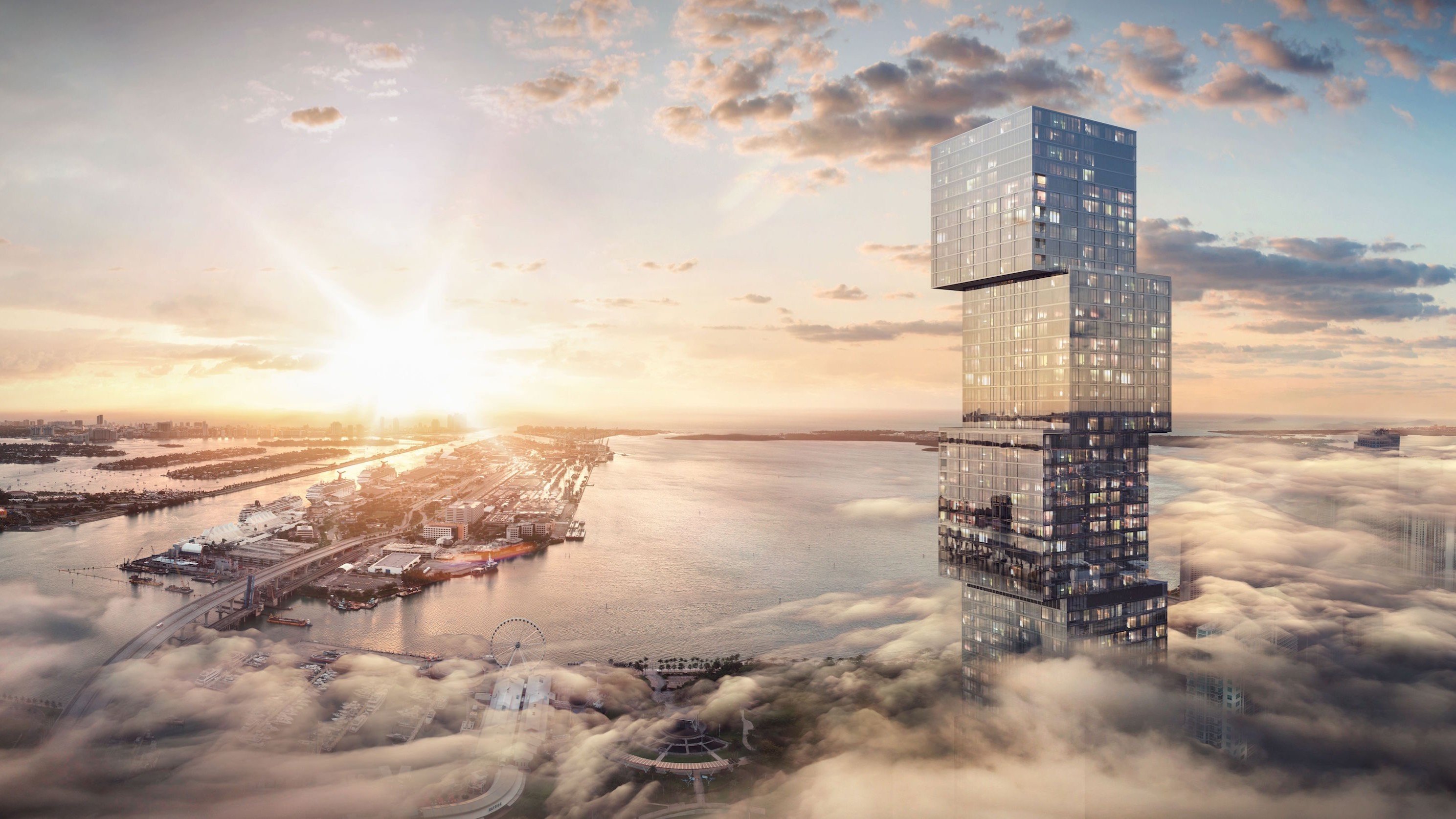
Miami has always understood spectacle, but the city’s newest towers invite a different kind of reading. The conversation is shifting away from pure height and novelty and toward authorship, proportion, and craft. In other words, the skyline is starting to behave like a curated collection: each new silhouette is judged for originality, balance, and how it contributes to the larger composition.
For the ultra-premium buyer, this is not a purely aesthetic shift. It influences how value is signaled, how resale stories are told, and how everyday life feels inside the building. A residence in a design-forward tower can read less like a commodity and more like a lived-in gallery, where the city and water become part of the installation.
In South Florida, the stakes are amplified by light. Hard sun reveals edges, joints, and surface quality, while humid air intensifies reflections and glare. A tower that is disciplined about shade, glazing, and spatial choreography reads as calm and deliberate. One that leans on spectacle alone can feel loud quickly. If architecture is treated as art, the simplest question becomes the most useful: does the building still look intentional at 8 a.m., at golden hour, and during a summer storm?
“Starchitect” is an overused label, but the underlying idea is real: a designer with a globally recognizable point of view brings market-relevant advantages in Miami.
First is narrative. Luxury is emotional, and the best towers give buyers a story that extends beyond finishes and amenity lists. Authorship becomes shorthand for taste and discernment, especially for second-home owners who want their Miami address to say something without requiring explanation.
Second is discipline. Strong designers tend to be consistent about proportion, rhythm, and material honesty. In a market where projects compete for attention, restraint reads as confidence. It signals a building that is edited rather than overstyled.
Third is an experience that is felt, not announced. The most convincing buildings do not need to insist that they are “iconic.” The lobby sequence, the softness of lighting, the scale of corridors, and the way air moves through amenity levels communicate quality more effectively than slogans.
This is why architect-led new construction continues to attract buyers who think in years, not seasons. When a building is legible as a complete idea, it can stay relevant even as tastes and competing inventory evolve.
If you approach a residence the way you would approach a piece of art, you stop asking only what is included and start asking what is intended. Renderings show atmosphere, but intention is revealed by decisions that hold up in person.
Start with massing and silhouette. From multiple angles, does the tower maintain a coherent profile, or does it feel like a stack of unrelated gestures? Coherence at the skyline level often shows up inside as more consistent view corridors, more predictable daylight, and fewer awkward interior conditions.
Then look closely at the base. Many buyers focus on upper floors, yet the base is where a building earns daily credibility. Arrival should feel composed: clear wayfinding, a considered sense of privacy, and a transition that feels designed rather than improvised.
Pay attention to thresholds. Great buildings are experienced as a sequence of calm transitions: street to porte cochere, exterior to lobby, lobby to elevator, elevator to residence. When those transitions are rushed, cluttered, or overly theatrical, the building can feel draining over time.
Finally, read the materials as you would read a gallery wall. South Florida’s climate is not gentle on finishes. Ask whether the palette is timeless, whether the building is likely to age with patina rather than visible wear, and whether “ultra-modern” is supported by disciplined material choices. Serene modernism is not about minimalism for its own sake; it is about decisions that remain convincing under bright light.
Design prestige matters, but the unit is where you live. The most elegant tower cannot compensate for a layout that fights your lifestyle.
Prioritize geometry over gimmicks. Rooms that are proportioned well, with logical furniture walls and clean circulation, outlast trends. Plans that rely on narrow corners, excessive angles, or showy partitions can limit flexibility and complicate the way a home adapts.
Look for view management, not just views. In a tower setting, vistas can be extraordinary and also exposed. Consider how glazing, balcony depth, and neighboring sightlines affect privacy, especially at night when interiors read like lanterns. Confirm how window treatments will integrate without compromising the design intent.
Think about acoustics and calm. High-rise living should feel insulated from the city’s energy. Ask how the building buffers sound at entries, along corridors, and around shared amenity zones. The goal is not silence, but a sense that the home holds its own atmosphere.
Consider service flow. A luxury home is partly defined by what you do not see. Efficient back-of-house planning, discreet deliveries, and sensible storage often separate a residence that photographs beautifully from one that lives effortlessly.
Miami’s design story is inseparable from its cultural life. A strong tower can function as a cultural address, aligning you with the city’s creative currents without requiring you to live at the center of the scene.
In a market shaped by international buyers, cultural credibility becomes a quiet kind of currency. Some owners want an address that connects naturally to art fairs, gallery openings, and collector circles. Others want to be adjacent to that energy, close enough to participate, but far enough to maintain privacy. The best architecture accommodates both, offering discretion without isolation.
This is also where the relationship between building and neighborhood matters. Brickell, Downtown, and Edgewater each deliver distinct versions of city life, while Miami-beach offers a different rhythm altogether. The right tower should amplify the lifestyle you want rather than forcing you into a mood that does not match your routines.
In Brickell, the appetite for refined vertical living is tied to walkable convenience and a polished, international sensibility. Buyers often prioritize arrival experiences that feel intentional and residences that are efficient, tailored, and quietly glamorous. In this context, design is not just visual; it is also operational, expressed through privacy, pacing, and ease.
Downtown presents a different proposition. It is more overtly urban, with a skyline that is experienced as a statement. For some buyers, Downtown delivers the most cinematic version of Miami, particularly when architecture is used to frame the city itself and elevate the day-to-night transition.
Edgewater often attracts those who want proximity to the core with a slightly more residential feel. In design terms, it can reward towers that emphasize light, openness, and a relationship to the horizon. The best experiences here tend to feel expansive without being performative.
Miami-beach is its own world. The design conversation frequently leans toward curated privacy and lifestyle convenience. The most successful towers feel less like corporate verticality and more like resort living, refined for year-round ownership.
No neighborhood is automatically “better.” The key is alignment: match the building’s energy to your daily patterns, your hosting style, and your tolerance for activity and visibility.
Luxury buyers are often told that design sells. A more accurate idea is that coherent design holds. Over time, markets tend to reward buildings that remain legible and desirable even as new inventory arrives.
Coherence is visible in small decisions. Hardware that feels intentional, corridors scaled for privacy rather than throughput, and amenity spaces designed like real rooms instead of marketing stages all suggest a building that was thought through as a complete environment.
It is also visible in how a tower integrates with its site. A building that respects street presence and creates a composed frontage tends to keep its prestige because it participates in the city rather than floating above it. A building that feels detached from its environment can lose emotional pull, even if the view remains outstanding.
There is another dimension buyers sometimes underestimate: the social identity of a building. In the ultra-premium tier, a tower becomes a micro-community. Its culture is shaped by the kind of owners it attracts, the level of discretion built into operations, and how shared spaces are used in reality. Architecture sets the tone; management and resident expectations sustain it.
For a neutral point of reference when thinking about authored skyline architecture in the core, explore One Thousand Museum Downtown Miami. Use it as a prompt for the questions you should be asking in any design-forward tower: how the building presents itself to the city, how privacy is handled in the approach, and whether the residential experience feels curated rather than merely branded.
The point is not to shop by name alone. It is to train your eye and your expectations. When you can articulate why a building feels composed, you are less likely to overpay for surface-level drama.
Luxury real estate is full of beautiful imagery. A disciplined buyer translates imagery into verifiable experience by focusing on essentials that can be tested in person.
Start with the lived-in test. Ask how spaces will feel when furnished and used daily. A rendering can hide awkward transitions, but a walk-through reveals whether the plan is calm or chaotic, whether the entry is private or exposed, and whether circulation makes sense when the home is actually in motion.
Next, focus on light control. Miami’s brightness is extraordinary, and it can also be unforgiving. Ask how the building balances glass with comfort, and whether interiors are designed for both day and night atmospheres. The right balance feels luminous in the morning and intimate after sunset.
Evaluate privacy as a design feature. Privacy is not a single amenity. It is a system that includes entry sequencing, elevator access, corridor design, and the handling of service needs. When privacy is truly designed, you feel it without being told.
Read the amenity program like a private club, not a resort brochure. Ask whether amenity rooms feel usable and appropriately scaled. Consider where noise and activity sit relative to residences, and whether shared spaces invite real use or exist primarily for photos.
Finally, consider how the building will age. Timelessness is rarely about playing it safe. It is about strong proportions and restrained materials so the architecture can remain confident as the city evolves and new towers join the skyline.
Miami has no shortage of boldness. What is changing is the market’s appreciation for quieter excellence. Many of the most coveted buildings share an ability to balance drama with restraint.
Drama is the view, the sky, the water, and the sensation of hovering above the city. Restraint is the way spaces are resolved, the way surfaces meet, and the way the building refuses to shout for attention. In truly premium buildings, the details do not compete with the view; they frame it.
For buyers who see architecture as art, the goal is to live inside a complete idea. Not a collage of upgrades, not a checklist of features, but a residence where every element feels part of a single composition. That composure is what reads as luxury, even when the aesthetic is minimal.
This version of Miami living tends to endure: authored, edited, and confident enough to feel effortless.
A strong narrative can justify a premium, but not every premium is justified. Sophisticated buyers learn to separate design integrity from hype.
Anchor your evaluation in what you can experience. How does the building handle arrivals? How does it feel in the elevator lobby? Do corridors feel private and quiet? Does the unit layout work with your furniture, your routines, and the way you host? These questions protect you from paying for language instead of performance.
Be cautious with superlatives. Words like “iconic,” “landmark,” and “timeless” are often marketing defaults. Instead, look for evidence of disciplined decisions: consistent material palettes, thoughtful lighting, and proportion that holds across both public and private spaces. If a building feels composed in the unglamorous moments, it is likely composed in the big ones, too.
Consider your exit as carefully as your entrance. Even if you plan to hold long-term, the market will eventually decide whether the architecture reads as lasting. Buildings that feel edited, not performative, tend to attract future buyers who value discretion and coherence.
If you are buying in Brickell, Downtown, or Edgewater, weigh how neighborhood evolution may affect daily experience. If you are buying in Miami-beach, pay attention to how the building balances a resort atmosphere with true residential privacy. In both cases, lifestyle alignment is not a soft factor; it is a practical one that influences satisfaction and long-term desirability.
What makes a tower feel “starchitect-designed” in daily life? It shows up less in a label and more in consistency. A strong point of view is felt in how you arrive, how you move through thresholds, how public spaces are scaled, and how details are resolved. The experience should feel intentional at every step, from lobby lighting to corridor proportions to the way amenity levels handle sound and privacy.
How can I evaluate whether a New-construction tower will age well? Look for coherence and restraint. A disciplined material palette, believable proportions, and calm transitions between spaces tend to age better than theatrical gestures. In Miami’s light, durability and finish quality matter because surfaces are continuously revealed. Ask yourself whether the building will still read as composed when the novelty fades.
Which matters more for long-term desirability, the unit layout or the building’s architecture? They work together, but layout often determines livability day to day. Architecture can elevate prestige and hold value when it is coherent, while a functional plan makes the home adaptable over time. The strongest purchases usually pair a convincing building concept with a unit that has clean geometry, sensible circulation, and privacy-aware view management.
How do Brickell, Downtown, Edgewater, and Miami-beach differ for full-time living? Brickell tends to emphasize walkable convenience and a polished pace. Downtown is more overtly urban and skyline-driven. Edgewater often feels closer to residential calm while staying near the core, with an emphasis on light and horizon. Miami-beach leans toward curated privacy and lifestyle convenience, where successful towers feel more like refined resort living than pure vertical density.
For private guidance on design-led towers and discreet opportunities across South Florida, connect with MILLION Luxury.
If branded residences are on your mind — as a home or as an allocation — we would be glad to share what we are seeing, privately.
Begin a quiet conversation