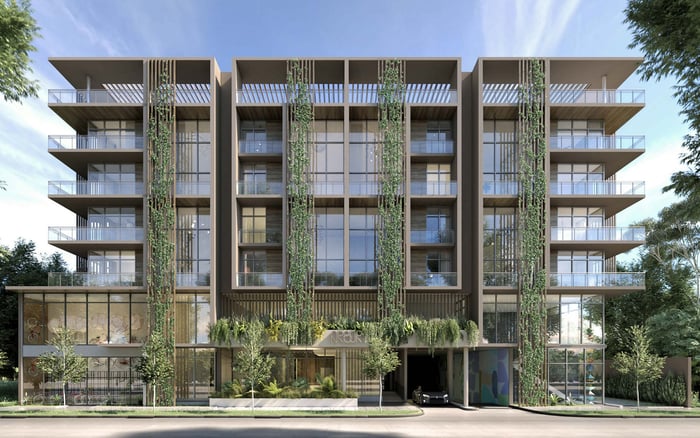
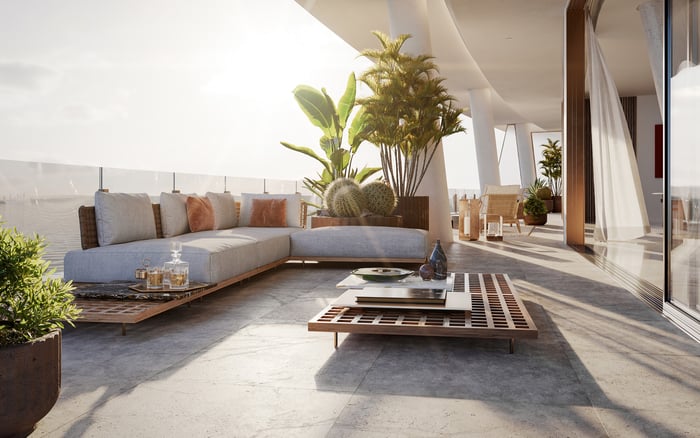
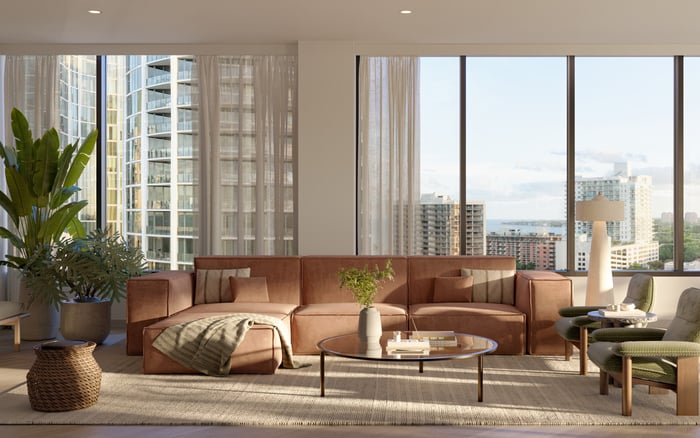
A practical buyer’s guide to treating motorized shades at Arbor Coconut Grove as a core comfort, privacy, smart-home, and resale-value system rather than a late-stage décor decision.
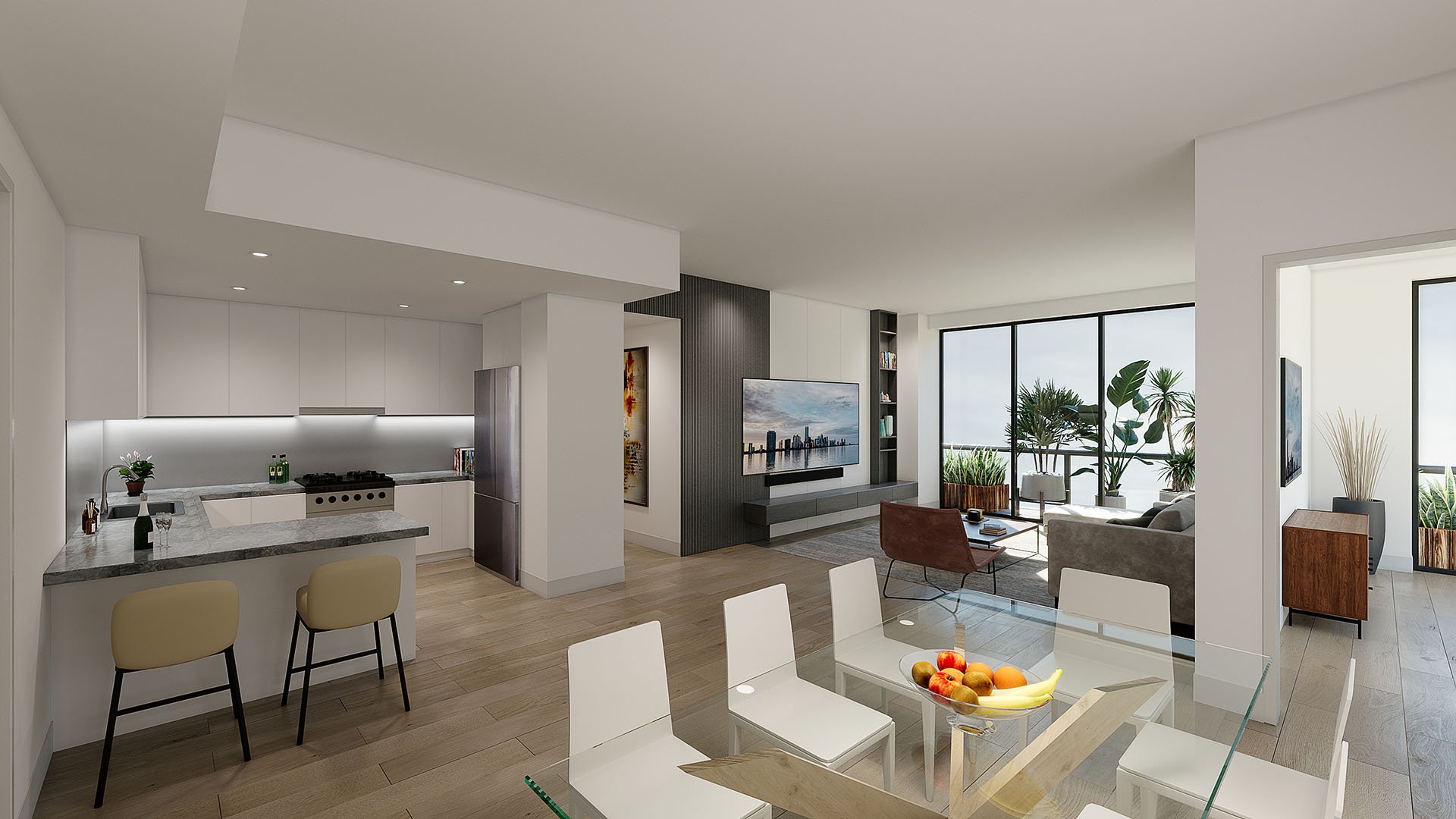
At Arbor Coconut Grove, family buyers should treat motorized shades as part of the residence’s operating system, not as a decorative layer to revisit after closing. In a glass-forward luxury condominium environment, shades influence how a home wakes up, cools down, protects furnishings, supports child sleep, and preserves privacy after sunset.
Coconut Grove adds its own nuance. The neighborhood’s strong sun, mature greenery, and indoor-outdoor residential rhythm make shade planning more than a fabric decision. Morning glare in a breakfast area, afternoon heat gain near terrace-adjacent glass, and evening visibility from neighboring viewpoints can all change how a family uses a room.
This is especially relevant for buyers early enough in the purchase process to ask the right questions before walls and ceilings are finished. A well-planned system can feel invisible, quiet, and intuitive. A late decision can become a retrofit conversation involving exposed wiring, compromised ceiling details, or limited control options.
For a Coconut Grove buyer comparing new-construction and pre-construction opportunities, the refined question is not simply whether shades are included. It is whether the residence is being prepared to accommodate them elegantly, reliably, and with enough flexibility for how a family actually lives.
The first conversation should be technical, even if the desired result is aesthetic. Buyers should ask exactly what shade-related electrical prewiring is included at Arbor Coconut Grove before walls and ceiling conditions are closed. That means clarifying where power is being delivered, how control wiring is being routed, and whether each intended shade location is being considered.
A key distinction is whether the plan accounts for low-voltage wiring, line-voltage power, or both. Different motorized-shade systems can require different infrastructure, and buyers should avoid assuming that every window or glass opening is automatically ready for the same solution. Clarifying this early helps the sales, design, electrical, and smart-home teams coordinate before the residence reaches a stage where changes become more expensive or less discreet.
Families should also ask whether the wiring plan covers all practical zones, not just the most prominent living areas. Bedrooms, nurseries, media areas, kitchen glazing, and terrace-facing openings may have different needs. If a buyer expects whole-home shade automation, each of those conditions should be reviewed before the home’s surfaces are finalized.
Luxury shade integration is as much about what is not seen as what is seen. Buyers should ask whether recessed shade pockets, ceiling details, or soffit conditions are planned to conceal rollers and hardware. This matters because the visual line at the top of a window can shape the entire architectural expression of a room.
A concealed roller can support a clean, gallery-like ceiling plane. An exposed roller may still function well, but it creates a different aesthetic and may not align with a buyer’s expectations for an ultra-modern residence. Families who value quiet minimalism should ask to review the intended shade-pocket approach in the living room, dining area, bedrooms, and any major glass openings.
The question should not be limited to whether a pocket exists. Buyers should ask whether the pocket depth, access, and alignment are suitable for the types of shades they may want, including solar shades, blackout shades, or layered treatments where appropriate. If the home will need both daytime glare control and nighttime privacy, the ceiling condition may need to support more than a single roller.
Motorized shades are inside the home, but they can still affect the building’s exterior appearance. Buyers should verify whether the condominium association or developer controls shade color, opacity, or the exterior-facing look for façade consistency. In luxury condominium living, the view from outside the building can be part of the overall design discipline.
This does not mean families cannot personalize. It means personalization may need to happen within approved ranges. A living area may call for a solar fabric that softens glare without erasing the view. A bedroom may require blackout capability. A nursery may need stronger light control for naps. Each decision should be weighed against any rules governing exterior visibility.
Families should also think about fabric by room rather than choosing one material for the entire residence. Living, dining, kitchen, terrace-adjacent, and bedroom glazing can face different exposures and serve different routines. The best solution may use varied opacity levels while maintaining a consistent exterior presentation.
A sales gallery visit often happens under curated lighting and ideal timing. Family life is less staged. A child may nap at midday, a parent may take a video call in the afternoon, and the household may want privacy while the skyline is still glowing outside. This is where motorized-shade planning becomes a daily-livability issue.
Buyers should ask whether blackout shades can be accommodated in bedrooms or nurseries. For families, this is not a luxury flourish. It can be the difference between a beautiful room and a room that supports sleep routines. Blackout planning should be discussed early because it may affect fabric selection, side gaps, layering, and the way hardware is concealed.
In main living spaces, the goal may be more balanced. Families may want glare reduction without losing greenery or sky. They may want to protect upholstery, rugs, art, and millwork from harsh light while preserving the openness that makes Coconut Grove living so appealing. The question is not only how the shades look, but how they behave at 8 a.m., 2 p.m., and 8 p.m.
Motorized shades should not require a complicated ritual. Buyers should confirm which smart-home platforms or control systems can integrate with the shade motors. If a residence will include lighting, climate, audio, or security controls, shade automation should be considered within that broader environment rather than as a separate remote-control package.
The most useful systems are organized around behavior. Buyers should ask whether shades can be grouped by room, façade exposure, time of day, or scene setting. A family might want a morning scene that lifts bedroom shades gradually, a nap scene that darkens a nursery, a movie scene that lowers living-area shades, and an evening privacy scene that closes exposed glass after sunset.
These scenes are not about novelty. They make the home easier to live in. They can also help reduce cooling load, manage privacy, and protect furnishings without requiring someone to adjust every window individually. The more intuitive the system, the more likely the family is to use it consistently.
The most elegant shade system still needs a practical service strategy. Buyers should ask how motors, wiring, and controllers will be accessed after installation. If a motor eventually needs adjustment or replacement, the answer should not involve damaging finished ceilings or guessing where critical components are hidden.
This is also a future-flexibility question. Buyers should ask whether the shade-control infrastructure can adapt to future technologies or replacement motors. Smart-home expectations evolve quickly, and a luxury residence should not feel locked into a fragile solution because the original wiring was too narrow or inaccessible.
For families, this is both a comfort issue and a resale-value consideration. A well-integrated system can support privacy, furniture protection, cooling efficiency, and daily ease. It also signals that the residence was planned with care beneath the surface, which sophisticated future buyers tend to notice.
At Arbor Coconut Grove, the smartest shade conversation starts before fabric samples. It begins with power, wiring, pockets, controls, façade rules, blackout capability, room-by-room exposure, and long-term service. Once those fundamentals are clear, the design choices become more confident and more beautiful.
The objective is not to over-engineer the home. It is to protect the serenity of the residence. In a family setting, motorized shades can help the same space move from bright breakfast to quiet nap, from open entertaining to evening privacy, without visual clutter or daily friction.
Should family buyers treat motorized shades as an upgrade or infrastructure? They should treat them as infrastructure because wiring, ceiling details, controls, and service access are easier to coordinate before finishes are complete.
What should buyers ask first at Arbor Coconut Grove? Ask exactly what shade-related electrical prewiring is included and whether each intended shade location has been planned.
Why does low-voltage versus line-voltage wiring matter? Different shade motors may require different power and control conditions, so buyers should confirm what is being provided before selecting a system.
Are recessed shade pockets important? Yes. Recessed pockets can conceal rollers and hardware, creating a cleaner architectural line and a more refined finished room.
Can the association or developer affect shade choices? Buyers should verify whether shade color, opacity, or exterior-facing appearance is controlled for façade consistency.
Should bedrooms and nurseries be treated differently? Yes. Families should ask whether blackout shades can be accommodated to support sleep routines and better light control.
Can shades be connected to smart-home controls? Buyers should confirm which smart-home platforms or control systems can integrate with the selected shade motors.
What shade scenes are useful for families? Morning, nap, movie, and evening privacy scenes can help the home adapt to daily routines with less manual adjustment.
Why ask about service access? Motors, wiring, and controllers may eventually need attention, so access should be planned without compromising finished interiors.
What is the best way to shortlist comparable options for touring? Start with location fit, delivery status, and daily lifestyle priorities, then compare stacks and elevations to validate views and privacy.
For a discreet conversation and a curated building-by-building shortlist, connect with MILLION.
If branded residences are on your mind — as a home or as an allocation — we would be glad to share what we are seeing, privately.
Begin a quiet conversation