A buyer-focused editorial guide to evaluating double-height living rooms at The Well Coconut Grove, with emphasis on climate performance, glazing, acoustics, maintenance, safety, design scale, and resale discipline.
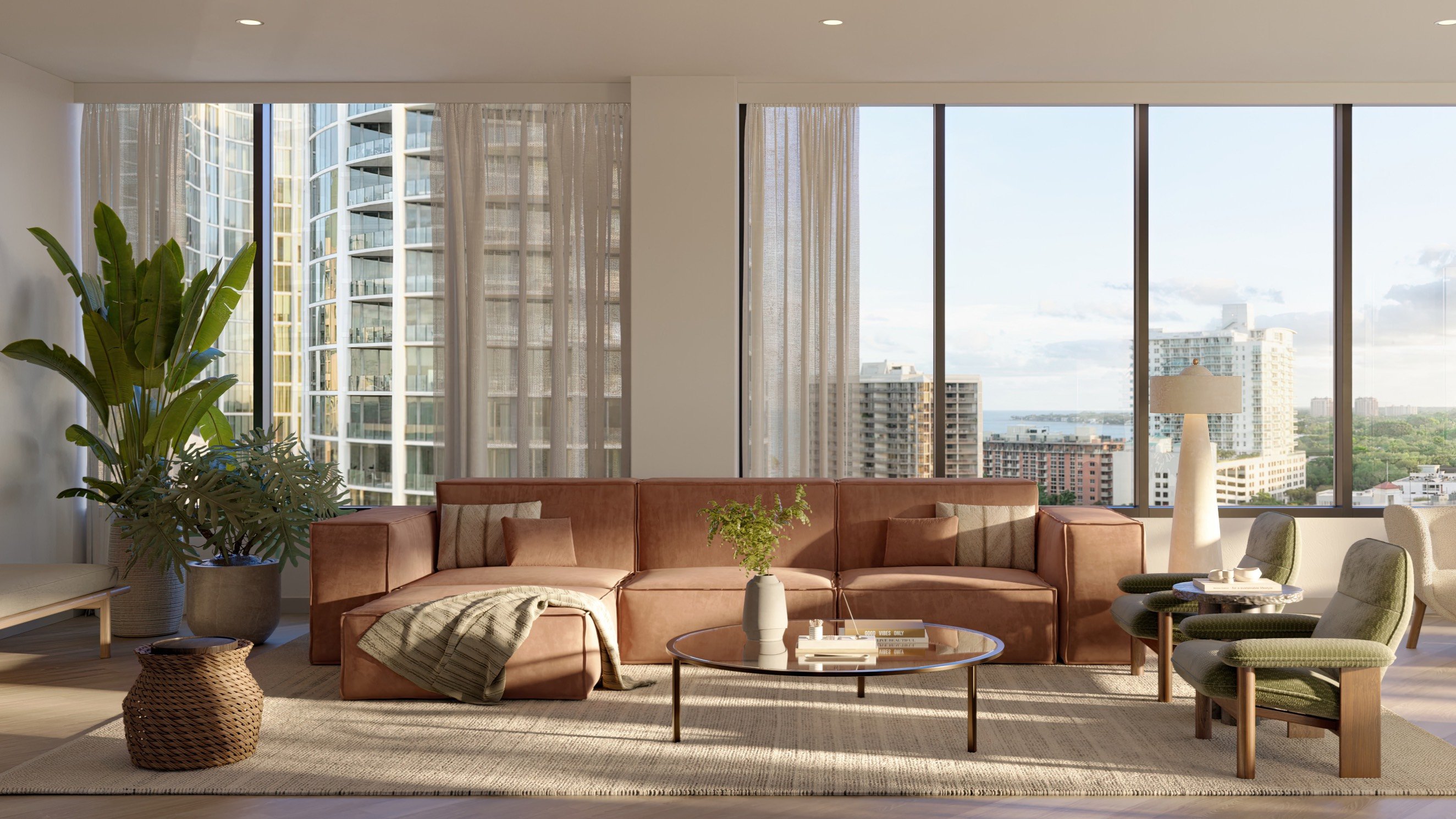
A double-height living room has an immediate emotional effect. It changes the way light enters a home, gives furniture and art a more gallery-like setting, and creates the vertical drama many luxury buyers associate with permanence. At The Well Coconut Grove, that visual appeal carries particular weight because buyers are likely to measure the architecture against a broader promise of calm, comfort, and daily livability.
Yet the best question is not whether a double-height room photographs beautifully. It is whether the space performs beautifully. In South Florida, volume, glass, heat, sound, maintenance, and safety all become part of the value equation. A buyer considering a residence with this feature should treat it as a sophisticated design decision that requires detailed answers, not as a decorative upgrade.
The Well Coconut Grove sits within a Coconut Grove conversation shaped by new-construction expectations, pre-construction decision-making, ultra-modern design ambitions, and resale discipline. In that context, the living room is not just a room. It is a test of how well the residence translates architectural aspiration into everyday comfort.
The first performance question is thermal comfort. Tall spaces can be magnificent, but they also contain more air volume than a conventional living room. That can create uneven cooling patterns, especially if warm air gathers in upper zones while seating areas below feel different throughout the day.
Buyers should ask whether the HVAC strategy was designed specifically for the double-height volume. A larger room does not simply need a larger version of a standard system. It may need careful air distribution, return placement, zoning logic, and equipment planning that anticipates peak summer conditions. The goal is not only to cool the space, but to make it feel stable during intense afternoon sun, entertaining, and daily use.
This matters because wellness is not abstract in a living room. It is felt in the body. If the room looks serene but runs warm, drafty, or uneven, the promise of comfort weakens. Buyers should ask for specific explanations rather than rely on renderings or a model-residence impression.
Glazing is central to the appeal of a double-height room. It brings in light, expands the sense of scale, and can make a residence feel connected to the outdoors. It also raises some of the most important ownership questions.
Buyers should ask about glass specifications, heat gain, glare control, UV exposure, storm resistance, and long-term replacement considerations. In a climate where sun and storms are both part of the ownership reality, glass is not merely an aesthetic surface. It is part of the home’s envelope, comfort system, safety strategy, and future cost profile.
Privacy deserves equal attention. A tall wall of glass may be beautiful in the morning and challenging at night, depending on exposures and neighboring sightlines. Ask how natural light is balanced with privacy, shade, and furniture protection. If motorized shades are anticipated, ask whether they are included, optional, association-regulated, or technically constrained by the height and framing of the room.
Luxury buyers often evaluate a living room with their eyes first. A double-height space also needs to be evaluated with the ear. Hard floors, expansive glass, tall walls, and open vertical volume can amplify echo. That may become noticeable during dinners, family gatherings, television use, or quiet evenings when sound travels farther than expected.
For a wellness-branded residence, acoustic comfort is not a secondary issue. A room that is visually impressive but acoustically sharp can feel less restful than intended. Buyers should ask whether the design team considered sound absorption, furniture planning, wall finishes, rugs, drapery, and ceiling conditions as part of the room’s livability.
The most useful question is simple: how will the room sound when it is furnished, occupied, and used? Renderings rarely answer that. A serious buyer should press for practical guidance on softening the space without diminishing its architectural clarity.
Double-height living rooms often place windows, lighting, vents, ceiling features, and shade systems far above easy reach. That height may create drama, but it can also make routine maintenance more complex.
Ask how high glass will be cleaned. Ask how light fixtures will be serviced. Ask whether vents, shade motors, ceiling details, or sensors can be accessed safely and without unusual disruption. If a ladder, lift, specialty vendor, or building coordination is required, that should be understood before purchase rather than discovered after move-in.
This is not a reason to avoid the feature. It is a reason to price and plan it intelligently. In the best luxury residences, the owner should not feel burdened by the architecture. Maintenance logistics should be anticipated, discreet, and manageable.
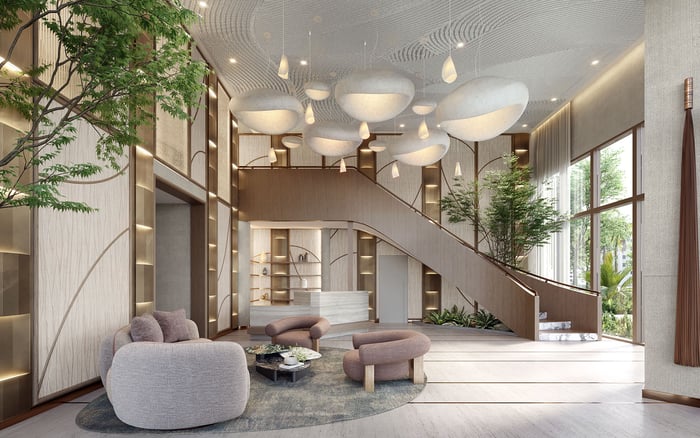
A tall living room can connect to stairs, overlooks, mezzanine-style conditions, or upper-level corridors. Buyers should ask about guardrails, child safety, stair relationships, and any code-related conditions that affect daily use. Exterior openings should also be understood in the context of hurricane-rated performance.
Association rules deserve careful review. A buyer may imagine adding a sculptural chandelier, changing window treatments, installing a ceiling fan, altering lighting, or modifying an upper-level detail. Those changes may be subject to restrictions. Before assuming that the volume is fully customizable, ask what the association, design guidelines, and building systems will allow.
This is especially important for buyers who see the double-height room as a personal design canvas. The more visible and architecturally integrated the space, the more important it is to understand what can and cannot be changed.
Standard furniture can look undersized in a tall room. Art that feels generous in a conventional space may disappear on a larger wall. Lighting that works at one ceiling height may feel weak or visually misplaced at another. Window coverings may need to be treated as architectural elements rather than accessories.
Buyers should ask whether interior design planning has accounted for scale. That includes furniture proportions, art placement, rug size, lighting temperature, shade integration, and the balance between intimacy and grandeur. The most successful double-height rooms avoid feeling like lobbies. They create volume while preserving human scale.
This is where the buyer should separate surface drama from daily life. Does the vertical volume improve how the room is used, or does it mainly create visual square footage? Does it support conversation, reading, entertaining, and rest? A beautiful room should not only impress guests. It should make ordinary hours feel better.
Resale is not only about whether a feature is rare. It is about whether the next buyer sees the feature as desirable, manageable, and worth a premium. In Coconut Grove, a double-height living room may read as an architectural signature. It may also prompt questions about cooling, glare, acoustics, maintenance, and furnishings.
The strongest resale position comes when the drama is supported by answers. If the space is comfortable, quiet, serviceable, safe, and well-scaled, it can become a defining asset. If it feels costly or complicated, future buyers may discount the visual impact.
For that reason, the due-diligence file matters. Buyers should request detailed answers from the sales team, developer, and design consultants. The goal is to understand the room as a complete system before deciding whether its grandeur aligns with the way they intend to live.
Should every buyer prioritize a double-height living room? Not necessarily. It is best for buyers who value architectural volume and are willing to evaluate comfort, upkeep, and design planning with equal seriousness.
What is the first technical question to ask? Ask how the room is cooled during peak South Florida heat, especially if the space has substantial glass or afternoon exposure.
Why is glazing so important? Glass affects heat gain, glare, UV exposure, storm resistance, privacy, and long-term replacement considerations.
Can a tall living room be harder to cool? It can be, because taller volumes may create warm upper zones and uneven air distribution if not specifically planned.
Do acoustics matter in a luxury living room? Yes. Glass, hard surfaces, and vertical space can increase echo, which may affect entertaining and everyday calm.
What maintenance questions should buyers ask? Ask how high windows, lighting, vents, motorized shades, and ceiling features will be cleaned or serviced over time.
Can association rules affect the design? Yes. Rules may limit changes to window treatments, lighting, hanging fixtures, fans, or mezzanine-level alterations.
How should furniture be approached? Furniture, art, rugs, lighting, and window coverings should be scaled to the height and volume of the room.
Is this feature always positive for resale? It depends on whether future buyers see the space as a premium architectural asset or as expensive to maintain and cool.
What should buyers request before relying on renderings? They should request detailed practical answers from the sales team, developer, and design consultants about performance and ownership.
To compare the best-fit options with clarity, connect with MILLION.
If branded residences are on your mind — as a home or as an allocation — we would be glad to share what we are seeing, privately.
Begin a quiet conversation