A buyer-focused 2026 resilience guide for three South Florida luxury projects, centered on generator scope, storm operations, documentation, and written confirmations before closing.

For South Florida’s high-end residential buyer, the question is no longer only whether a building is beautiful, discreet, and well-serviced. The sharper 2026 question is how the property is designed and operated when the power grid is stressed, access is limited, and daily life depends on systems that are usually invisible.
That is the useful lens for evaluating Arbor Coconut Grove, The Lincoln Coconut Grove, and The Ritz-Carlton Residences® Palm Beach Gardens. The first two belong to a Coconut Grove-specific conversation; the third sits in Palm Beach Gardens, a distinct market with its own physical and operational context. Coconut Grove and Palm Beach Gardens should not be treated as interchangeable diligence settings.
This is not a ranking of resilience performance. The public-facing materials available for these three projects do not establish confirmed generator capacity, fuel duration, backed-up HVAC, or binding storm-staffing protocols. A serious buyer should therefore treat resilience as a documentation exercise: what is specified, what is contractual, and what remains an assumption.
Each of the three properties occupies a legitimate place in South Florida’s luxury residential conversation. Arbor Coconut Grove and The Lincoln Coconut Grove are Coconut Grove cases, where buyers may be weighing neighborhood intimacy, tree canopy, proximity to Biscayne Bay, and boutique-scale living. The Ritz-Carlton Residences® Palm Beach Gardens belongs to a Palm Beach Gardens context, where brand association and service expectations may influence buyer perception.
But perception is not infrastructure. For a 2026 buyer, the diligence file should separate architecture, finishes, amenities, and brand promise from technical performance under stress. A lobby can be staffed in ordinary conditions without proving that personnel are contractually obligated to remain before, during, or after a storm. A generator can exist without confirming which loads it supports. A backup system can protect life-safety components without preserving ordinary residential comfort.
In new-construction purchases, this distinction matters because buyers often encounter marketing language before they receive the governing technical exhibits. The right posture is polite skepticism, not alarm. Ask for the documents, read the scope, and require written clarification where terms such as “backup power,” “emergency power,” or “storm plan” are used without detail.
Generator diligence begins with a simple principle: existence is not coverage. A buyer should not ask only whether a generator is included. The better question is what the generator is designed to carry during a sustained outage.
For Arbor Coconut Grove, the buyer checklist should identify which elevators, pumps, access-control systems, common-area lighting, refrigeration, and in-unit circuits are backed up. If in-unit power is described, buyers should ask whether that means selected outlets, refrigeration, HVAC, lighting, telecommunications, or a narrower set of emergency functions. Without the electrical one-line diagram and generator load schedule, those distinctions can remain unclear.
For The Lincoln Coconut Grove, emergency power and storm operations should be treated as open diligence questions unless the condominium documents, developer disclosures, or engineering exhibits define them. Buyers should also ask whether the mechanical and electrical systems are elevated or otherwise protected from flood exposure. Backup power is only one part of resilience. The location and vulnerability of the equipment serving the building can be just as important.
For The Ritz-Carlton Residences® Palm Beach Gardens, brand service expectations should not be confused with verified technical resilience facts. A branded residential environment may suggest a higher service culture, but a buyer still needs written confirmation of generator scope, fuel arrangements, and staffing obligations.
Luxury buyers often focus on the immediate storm event. The more revealing scenario is a multi-day outage after the storm, when the building may be intact but regional power, roads, fuel logistics, and staffing availability are uneven.
The key diligence questions are practical. How much fuel is stored on site or reserved by contract? How long is the generator expected to operate at the documented load? Is refueling contractually prioritized, or merely anticipated? Are pumps, elevators, access control, communications, and essential lighting included in the load calculations? If cooling is represented, does it apply to common areas, amenity spaces, limited residential circuits, or full in-unit HVAC?
Buyers should be careful with language that sounds reassuring but lacks specificity. “Emergency power” may mean code-required life-safety systems. “Backup power” may include selected building systems but not ordinary residential use. “Generator supported” may require a load-shedding sequence that changes what remains available as fuel or demand changes.
For a primary residence, second home, or seasonal base, these details affect more than convenience. They influence whether the home can remain occupied, whether owners can secure the unit remotely, and whether staff or family members can safely manage the property after a major weather event.
Storm readiness is partly architectural, partly mechanical, and partly human. Even the best building systems need people to operate, monitor, communicate, and recover them.
At The Ritz-Carlton Residences® Palm Beach Gardens, the service environment may be central to the buyer’s expectations. Still, the diligence question is contractual: are staff required to remain on site before, during, or after a storm, and if so, which roles? Is there a written emergency operations plan? Who communicates with owners? Who controls generator operation, access systems, elevator protocols, vendor coordination, and post-storm inspection?
The same operational questions apply to Arbor Coconut Grove and The Lincoln Coconut Grove. A boutique or neighborhood-scaled building may offer privacy and intimacy, but buyers should still verify staffing coverage during storm windows, remote management procedures, and vendor response protocols. If on-site personnel evacuate under certain conditions, that should be understood in advance rather than discovered in a crisis.
A polished concierge program is not the same as a storm operations plan. The former is daily luxury. The latter is a resilience document.
A disciplined buyer should request the resilience file before closing, especially when purchasing at the upper end of the market. The most useful materials include electrical one-line diagrams, generator load schedules, fuel supply or refueling agreements, emergency operations plans, insurance disclosures, flood elevation certificates, mechanical and electrical system locations, and property-management staffing agreements.
If any representation is important to the purchase decision, ask that it be confirmed in writing. This includes claims about backed-up elevators, in-unit circuits, HVAC coverage, refrigeration, fuel duration, storm staff, remote access, garage systems, water pressure, sump or lift pumps, and communications infrastructure.
The point is not to burden the purchase process. It is to bring luxury underwriting into alignment with the way South Florida ownership actually functions. In 2026, the most sophisticated buyers will still care about view corridors, terrace depth, interior volume, privacy, wellness, and design. They will also know that the quietest form of luxury is continuity.
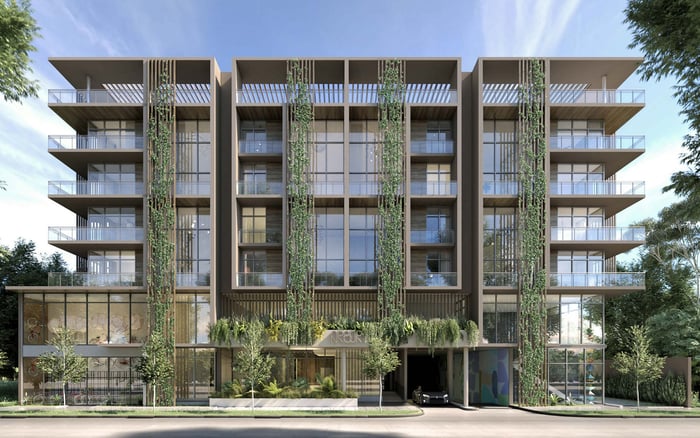
Read Arbor Coconut Grove as a Coconut Grove-specific due-diligence case. The buyer should focus on which systems remain available during outages and how the building’s essential infrastructure is protected and operated.
Read The Lincoln Coconut Grove alongside Arbor, but not as identical. Even within the same neighborhood, two buildings can differ materially in mechanical placement, generator scope, association obligations, and storm procedures.
Read The Ritz-Carlton Residences® Palm Beach Gardens as a Palm Beach Gardens case where physical resilience and operational continuity should both be reviewed. The branded context may raise service expectations, but the closing file should still contain the technical and staffing confirmations that matter.
The most prudent conclusion is also the most elegant: do not buy the adjective. Buy the document.
Is confirmed generator capacity publicly established for these three projects? The provided facts do not confirm generator capacity, fuel duration, backed-up HVAC, or in-unit circuit coverage for any of the three.
Should buyers assume a luxury residence has full backup power? No. Buyers should ask exactly which systems and circuits are supported and under what operating conditions.
What should Arbor Coconut Grove buyers ask first? They should ask which elevators, pumps, access-control systems, lighting, refrigeration, and in-unit circuits are backed up.
What is the key resilience question for The Lincoln Coconut Grove? Buyers should verify emergency power scope and whether mechanical and electrical systems are elevated or protected from flood exposure.
How should buyers evaluate The Ritz-Carlton Residences® Palm Beach Gardens? They should separate brand-service expectations from verified facts about generator scope, fuel, and storm-staffing obligations.
Are storm-staffing protocols automatically included in condominium documents? Not necessarily. Buyers should request property-management staffing agreements and written emergency operations plans.
Which documents are most useful for generator diligence? Electrical one-line diagrams, generator load schedules, fuel contracts, and emergency operations plans are central to the review.
Why does fuel duration matter? Multi-day outages can test whether a building can sustain essential services after the immediate storm has passed.
Can any of these projects be treated as a hurricane refuge? Not without formal engineering, association, or operator documentation confirming that level of performance.
When should buyers request resilience confirmations? Before closing, and preferably before contingencies expire, so important claims can be verified in writing.
For a confidential assessment and a building-by-building shortlist, connect with MILLION.
If branded residences are on your mind — as a home or as an allocation — we would be glad to share what we are seeing, privately.
Begin a quiet conversation