A design-forward buyer’s guide to three Miami residential concepts: club-oriented bayfront living in North Bay Village, branded hospitality elegance in Brickell, and boutique culinary lifestyle in Edgewater.
For the design-forward buyer, the essential question is no longer whether a residence is simply new, large, or well located. The sharper question is whether the property has a coherent point of view. Architecture, interiors, service programming, amenity culture, and neighborhood context should operate as a daily living system, not as isolated sales features.
That is why Continuum Club & Residences North Bay Village, St. Regis® Residences Brickell, and Villa Miami matter. Each expresses a distinct version of contemporary Miami ownership. One is organized around club-oriented bayfront living and island-scale placemaking. One translates branded hospitality into an urban waterfront residence. One advances a boutique, culinary-led vision of private-home intimacy in the sky.
For buyers comparing these projects, the choice is not only between North Bay Village, Brickell, and Edgewater. It is a choice between three design philosophies and three rhythms of life.
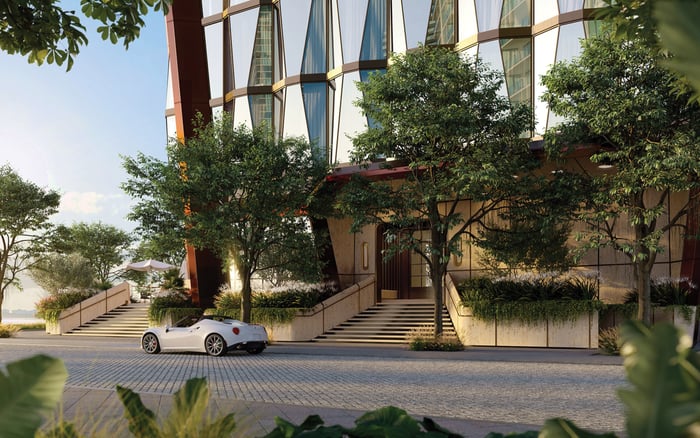
Continuum Club & Residences North Bay Village is positioned as a design-led waterfront residential concept centered on bayfront living. Its appeal to design-focused buyers begins with the idea that the bay is not merely a view corridor. It is part of the residence’s spatial and social logic.
The project’s design narrative emphasizes island-scale placemaking, giving the broader North Bay Village setting a more active role in the ownership proposition. For a buyer attuned to context, this matters. The value is not only in private interiors, but in how the building participates in a waterfront environment and how the surrounding island condition shapes arrival, gathering, and daily ritual.
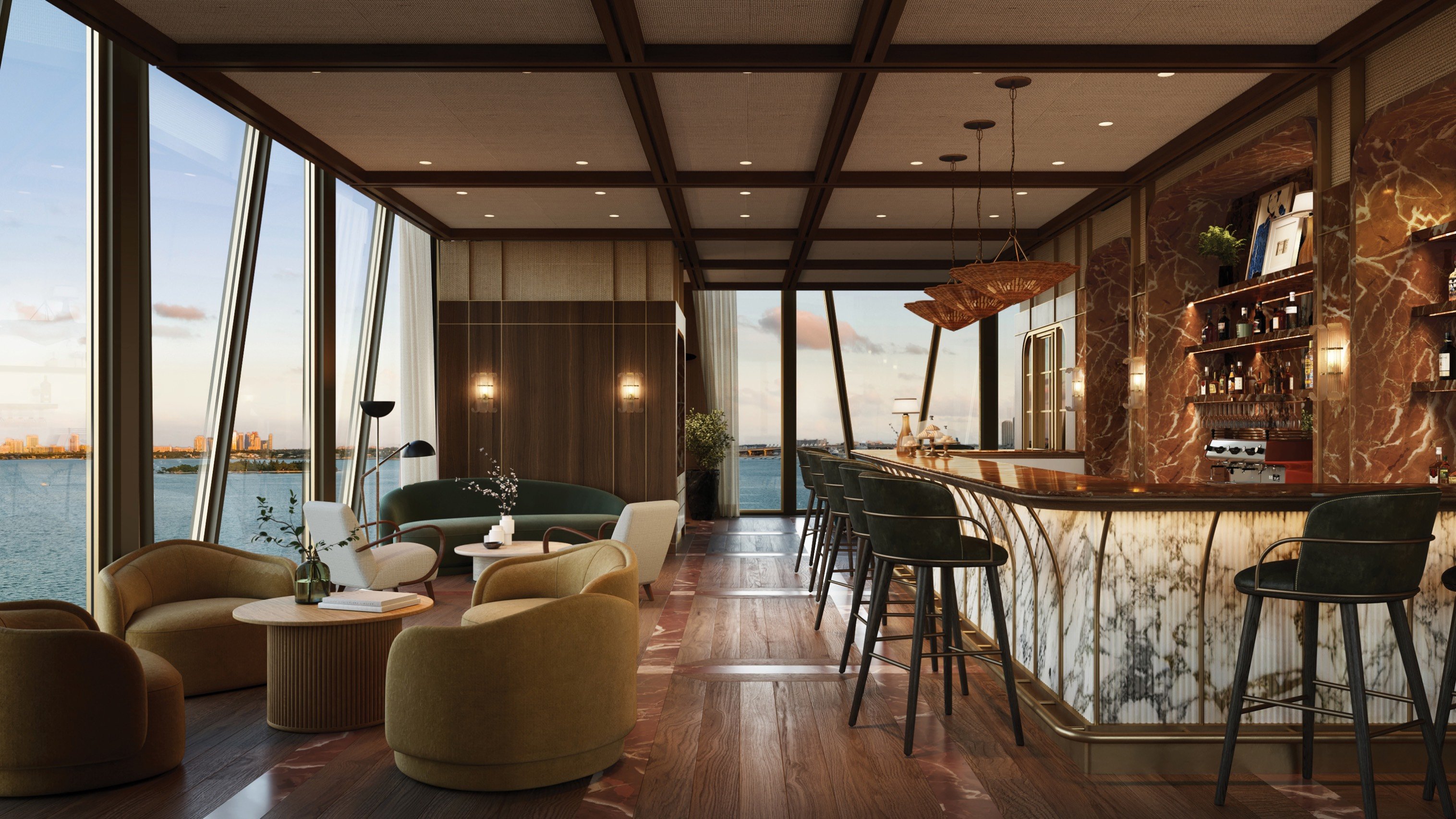
Continuum is also notable because its club culture is framed as part of the residential experience rather than as a decorative amenity layer. In design terms, that distinction is important. A club concept has to feel embedded in circulation, gathering spaces, waterfront programming, and the way residents move between public, semi-private, and private moments. When handled coherently, the result is not a tower with amenities, but lifestyle architecture with the bay as its organizing force.
For buyers who entertain, host visiting family, or want a sense of residential community without sacrificing privacy, this model has a particular appeal. It is design-forward because the social experience is treated as part of the built experience.
In Brickell, St. Regis® Residences Brickell presents a different proposition. It is tied to the St. Regis hospitality identity, and its design value rests on translating that identity into private residential life.
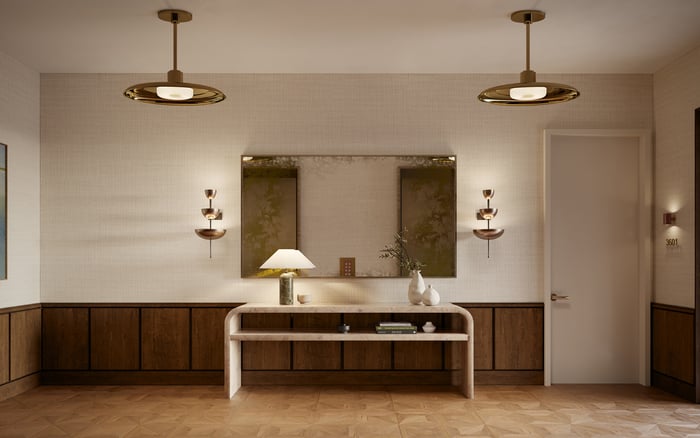
For buyers who appreciate branded residences, the central issue is not the name alone. It is whether the design supports the rituals associated with the brand. Lobbies, lounges, arrival sequences, resident spaces, and residences must create an atmosphere of formal ease. The experience should feel composed from the moment of arrival, with service and spatial planning reinforcing one another.
The project’s design proposition centers on classical, hospitality-driven elegance in an urban waterfront context. That makes it especially relevant for buyers who want Brickell’s energy without an anonymous high-rise experience. The urban setting provides proximity and intensity, while the branded residential model aims to create privacy, service continuity, and a more formal sense of arrival.
This is a distinctly different ownership model from a club-oriented bayfront concept. Here, design is measured by poise, sequence, and operational grace. The buyer is evaluating whether private life can feel both residential and hospitality-calibrated without becoming theatrical. For many international and bi-coastal owners, that balance is central to the appeal of a branded Brickell address.
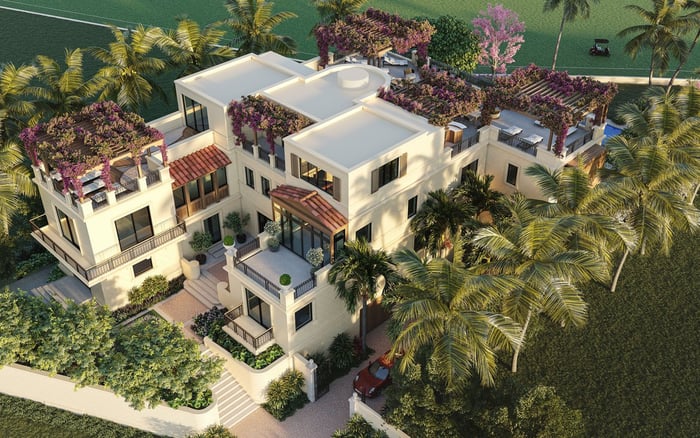
Villa Miami brings the conversation into Edgewater with a highly curated design identity. Its core concept is described as a “villa in the sky,” a phrase that signals a departure from conventional tower living. The emphasis is on intimacy, vertical private-home living, and a more personal sense of scale.
For design-forward buyers, Villa Miami matters because its ownership narrative is anchored by culinary and lifestyle design. Food, hosting, and daily ritual are not treated as secondary considerations. They are central to the identity of the project. That makes the residence especially compelling for buyers who understand luxury through how life is lived, not just how space is finished.
The boutique positioning is also part of the design value. Scale can change how a building feels. A more curated residential environment may appeal to buyers who want less anonymity, more intentionality, and a stronger connection between concept and daily experience. In this sense, Villa Miami is not competing only on views or square footage. It is competing on atmosphere.
Edgewater strengthens that narrative because the neighborhood already sits within a broader Miami pattern of waterfront living, cultural proximity, and skyline transformation. Villa Miami’s distinction is that it filters those qualities through a more intimate, lifestyle-led lens.
The most useful way to compare these projects is not as a ranking, but as three case studies in ownership design.
Continuum asks whether a buyer wants bayfront living organized around club culture and placemaking. Its design value is tied to how the waterfront setting shapes the residential experience. St. Regis® Residences Brickell asks whether branded hospitality can be translated into elegant private ownership through arrival, service, and resident spaces. Villa Miami asks whether boutique scale and culinary lifestyle can make vertical living feel more like a private home.
Each answer is valid for a different buyer. A family seeking waterfront gathering and social continuity may read Continuum differently from an owner who prioritizes formal service rituals in Brickell. A host who sees the kitchen, dining, and lifestyle programming as the center of the home may find Villa Miami especially legible.
The shared thread is that design is presented as a primary driver of value. These are not projects where architecture and interiors sit behind location as mere styling. Instead, the design narrative is part of the asset logic. For sophisticated buyers, that is where long-term emotional value often begins.
A design-forward buyer should look closely at coherence. Does the lobby support the project’s stated identity? Do resident spaces feel connected to the promise of the brand or concept? Does the amenity culture feel integral to daily life, or does it sit apart from the residences? Do private interiors, views, movement, service, and social spaces feel like one idea?
This lens is especially important in South Florida, where waterfront views can sometimes dominate the conversation. Views matter, but they do not alone create a satisfying ownership experience. The stronger question is whether the project has a durable design intelligence that will still feel specific years after the first impression fades.
For Continuum Club & Residences North Bay Village, St. Regis® Residences Brickell, and Villa Miami, the answer begins with how clearly each project defines its own world. One is about bayfront club life, one is about branded hospitality elegance, and one is about boutique culinary intimacy. For the right buyer, that clarity can be as important as the residence itself.
Why do these three projects matter to design-focused buyers? They each treat design as a core ownership value, not simply as surface styling or decoration.
How is Continuum Club & Residences North Bay Village different? Its proposition centers on bayfront living, club culture, and island-scale placemaking in North Bay Village.
What defines St. Regis® Residences Brickell for buyers? It emphasizes branded residential service, formal arrival sequences, and hospitality-driven elegance in Brickell.
What is the main design idea behind Villa Miami? Villa Miami is framed around a “villa in the sky” concept, with boutique scale and private-home intimacy.
Is this a ranked comparison? No. The projects represent different ownership models rather than a best-to-worst hierarchy.
Which project is most connected to waterfront placemaking? Continuum Club & Residences North Bay Village is most directly framed around bayfront living and placemaking.
Which project is most connected to branded hospitality? St. Regis® Residences Brickell is the clearest example of hospitality-led branded residential ownership.
Which project is most lifestyle and culinary focused? Villa Miami is most directly associated with culinary and lifestyle design as part of the ownership narrative.
Why does boutique scale matter in luxury ownership? Boutique scale can create a more curated and less anonymous residential experience.
What should buyers evaluate before choosing? Buyers should evaluate whether architecture, interiors, amenities, and service programming create one coherent daily experience.
For a tailored shortlist and next-step guidance, connect with MILLION.
If branded residences are on your mind — as a home or as an allocation — we would be glad to share what we are seeing, privately.
Begin a quiet conversation