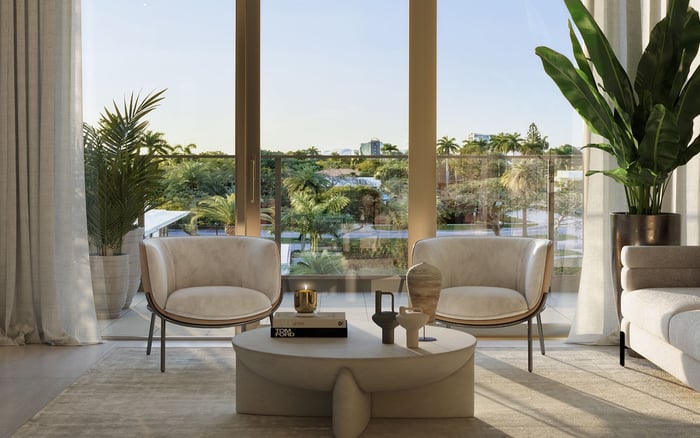
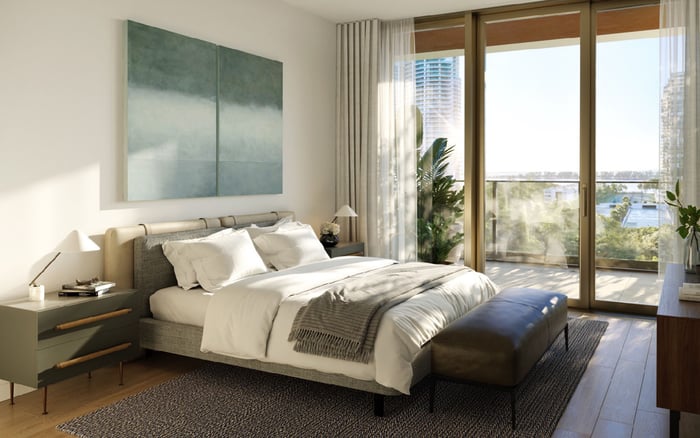
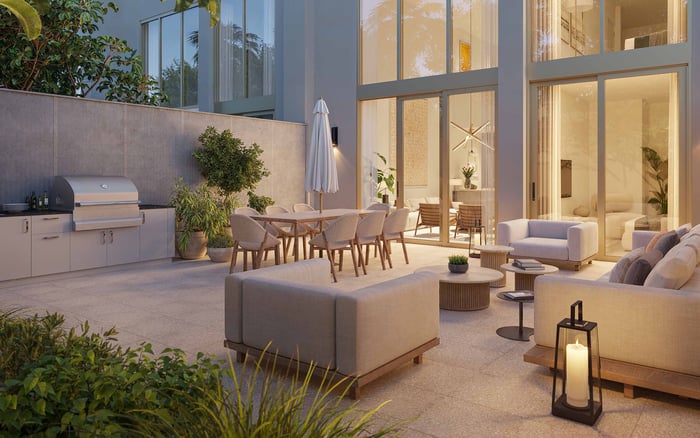
A practical ownership guide for buyers comparing Arbor Coconut Grove and 2200 Brickell through the lens of daily balcony use, terrace rules, outdoor-kitchen feasibility, and Miami weather exposure.
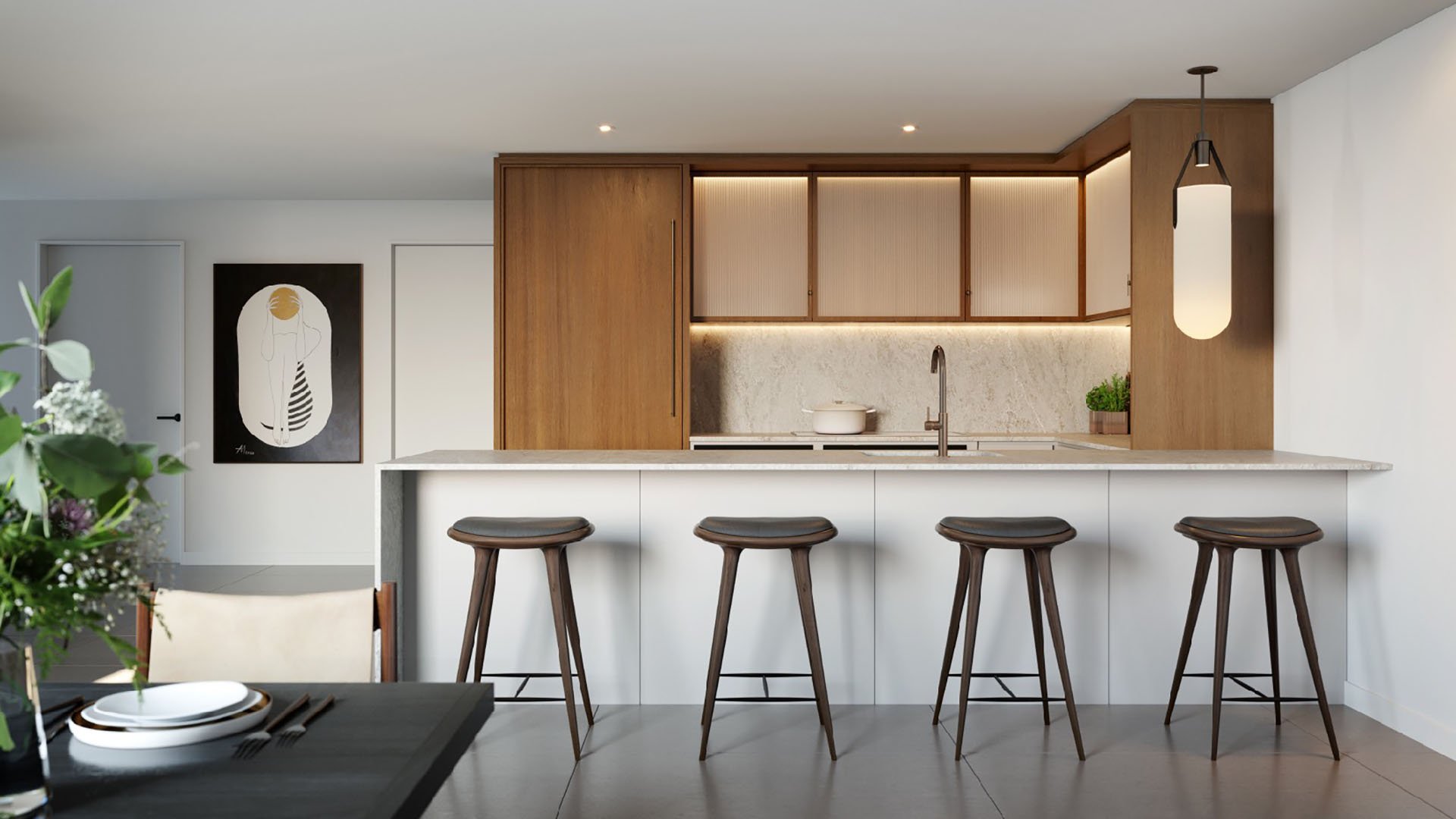
For many South Florida buyers, a balcony or terrace is the emotional close. It is where morning coffee becomes a ritual, where guests gather before dinner, where a laptop can move outside on a breezy afternoon, and where the home feels larger than its interior plan. For full-time owners, however, outdoor space is not merely a lifestyle image. It is a regulated, weather-exposed, maintenance-sensitive part of the residence.
That is why Arbor Coconut Grove and 2200 Brickell are useful case studies for buyers who plan to live in a home year-round. Arbor Coconut Grove sits within the quieter, greener rhythm associated with Grove living, while 2200 Brickell belongs to a more urban Brickell pattern of daily movement, dining, work, and entertaining. In both settings, the same principle applies: outdoor square footage matters only when it can be used comfortably, legally, and repeatedly.
A buyer should evaluate the balcony or terrace as a functional room. Can it support dining rather than only a chair? Is there enough depth for circulation after furniture is placed? Can planters, umbrellas, lighting, storage, or décor remain outside without violating association standards? These questions are not cosmetic. They determine whether the outdoor area becomes part of daily life or remains only a pleasant view corridor.
Balcony rules often shape ownership more than buyers expect. At Arbor Coconut Grove, full-time owners should confirm whether the condominium documents and association policies address grills, summer kitchens, additional flooring, planters, lighting, or other terrace modifications. The same diligence applies at 2200 Brickell, where owners should not assume they can cook, entertain, or install outdoor features before reviewing the rules that govern the exterior envelope.
The reason is straightforward: balconies are visually public and physically connected to the building. Associations may regulate what is visible from outside, what can be attached to the structure, what can be stored outdoors, and what must be removed during storms. A tasteful planter, a shade element, or a small storage piece may seem minor in a sales-gallery conversation, but the enforceable answer lives in the documents.
For a full-time buyer, the right question is not only, “How large is the balcony?” It is, “What am I allowed to do there on an ordinary Tuesday?” If the envisioned use includes dining, planting, working outside, or entertaining, those details should be tested against the actual rules before closing.
Outdoor cooking is one of the most common luxury expectations in Miami condominium living, but it is also one of the most rule-sensitive. At Arbor Coconut Grove, outdoor-kitchen feasibility should be treated as a condominium-document and code issue, not as a design preference. At 2200 Brickell, buyers should verify whether gas, electric, or built-in outdoor cooking equipment is allowed before budgeting for terrace upgrades.
This distinction matters because a designer can imagine a beautiful summer kitchen long before the building permits it. The governing documents may address grills, heat sources, utility connections, exterior penetrations, smoke, grease, fire-safety requirements, insurance limits, and alteration approvals. Even portable appliances can be subject to restrictions depending on the building’s standards.
Full-time owners should also think beyond the first installation. Who maintains the equipment? What happens during tropical weather? Are covers permitted and visually acceptable? Can the area drain properly after cleaning or rain? If the kitchen is not allowed, is there still enough terrace functionality for dining, serving, or lounging without it? Strong due diligence separates what is desirable from what is permitted.
Miami’s climate gives outdoor space its allure, but also its test. Arbor Coconut Grove’s terrace value for full-time living depends on how well the area tolerates sun, rain, wind, salt air, and storm exposure. 2200 Brickell’s outdoor areas should be assessed for year-round weather tolerance as well, including furniture durability, drainage, wind exposure, and ongoing maintenance needs.
This is where terrace quality becomes more than a measurement. Orientation, shade, overhangs, wind patterns, water management, and material choices all influence daily comfort. A deep terrace that bakes in afternoon sun may be less usable than a smaller one with better shade. A space with handsome furniture but poor wind tolerance may require constant rearranging. A planted balcony can feel lush, but only if containers, irrigation practices, and storm protocols align with the rules.
Buyers should stand outside and imagine the space in August heat, sudden rain, and pre-storm preparation, not only during a perfect showing. Where will cushions go? Can furniture be secured? Will planters be too heavy or too exposed? Is there a practical place for items that must be brought indoors? In South Florida, weather tolerance is not a seasonal afterthought. It is a core ownership cost and lifestyle condition.
Arbor Coconut Grove is especially relevant for buyers who want outdoor areas to feel like extensions of home life, with dining, planting, relaxing, and quiet daily use. The due-diligence focus should be whether the terrace can support those rituals under association rules, and whether the space remains comfortable through Miami’s mix of sun, rain, salt air, and storm preparation.
2200 Brickell, by contrast, is a strong example for buyers evaluating outdoor-living practicality in a denser urban setting. Terrace depth and layout deserve close attention because dining, lounging, and work-from-home use depend on usable dimensions. A balcony that photographs well may not support a table, chairs, plants, and circulation once real furniture is introduced.
For Brickell buyers, association rules, insurance limits, and fire-safety requirements should be reviewed before assuming how the balcony can function. For Grove buyers, the same scrutiny should be applied to grills, summer kitchens, added flooring, planters, lighting, and exterior alterations. In both cases, the goal is not to diminish the romance of outdoor living. It is to protect it by understanding the practical boundaries in advance.
Before committing, full-time owners should request and review the current condominium documents, house rules, alteration procedures, and any balcony or terrace guidelines. Ask specifically about grills, gas or electric equipment, built-in counters, flooring overlays, planters, visible décor, umbrellas, shade systems, lighting, storage, and terrace enclosures.
The conversation should also include storm preparation. Which items must be removed? How quickly must the owner act? Are there limits on what can be kept outdoors during hurricane season? If the residence will be occupied full-time, these routines are not occasional inconveniences. They become part of the household rhythm.
For new-construction buyers, it is also wise to distinguish between marketing imagery and enforceable use. A rendering can suggest atmosphere; the documents define permissions. The most successful purchase is the one where the owner’s intended lifestyle, the physical terrace design, and the building’s rules all align.
Can buyers assume Arbor Coconut Grove allows outdoor kitchens? No. Buyers should verify the condominium documents, association rules, and applicable code requirements before assuming any outdoor kitchen is permitted.
Can buyers assume 2200 Brickell permits grills on terraces? No. Owners should confirm whether gas, electric, portable, or built-in cooking equipment is allowed before budgeting or planning terrace use.
Why does balcony depth matter for full-time owners? Depth determines whether the space can support real dining, lounging, work-from-home use, and circulation after furniture is placed.
Are planters usually a due-diligence item? Yes. Buyers should ask whether planters are restricted by size, weight, visibility, drainage, wind exposure, or storm-removal requirements.
What weather factors should terrace buyers evaluate? Sun, rain, wind, salt air, drainage, furniture durability, and storm preparation all affect daily usability and maintenance.
Are shade systems and umbrellas automatically allowed? Not necessarily. Buyers should confirm whether exterior shade elements, umbrellas, or visible alterations are restricted by the association.
How should a full-time owner evaluate outdoor dining potential? Measure usable dimensions, account for chair movement, confirm rules for furniture, and consider sun, wind, and rain exposure.
Do association rules affect entertaining on a balcony? Yes. Rules may influence cooking, furniture, noise, lighting, décor, storage, and the number or type of outdoor items allowed.
Is storm preparation part of terrace ownership? Yes. Full-time owners should understand what must be secured or brought indoors and how quickly those steps may be required.
What is the main lesson from comparing these two projects? Outdoor space should be evaluated as a regulated living area, not merely as extra square footage or a visual amenity.
For a confidential assessment and a building-by-building shortlist, connect with MILLION.
If branded residences are on your mind — as a home or as an allocation — we would be glad to share what we are seeing, privately.
Begin a quiet conversation