A buyer-focused editorial on why lower and mid-level residences at Andare Residences Fort Lauderdale may appeal to quiet-luxury purchasers who value discretion, livability, privacy, and risk-adjusted ownership over maximum-height trophy positioning.
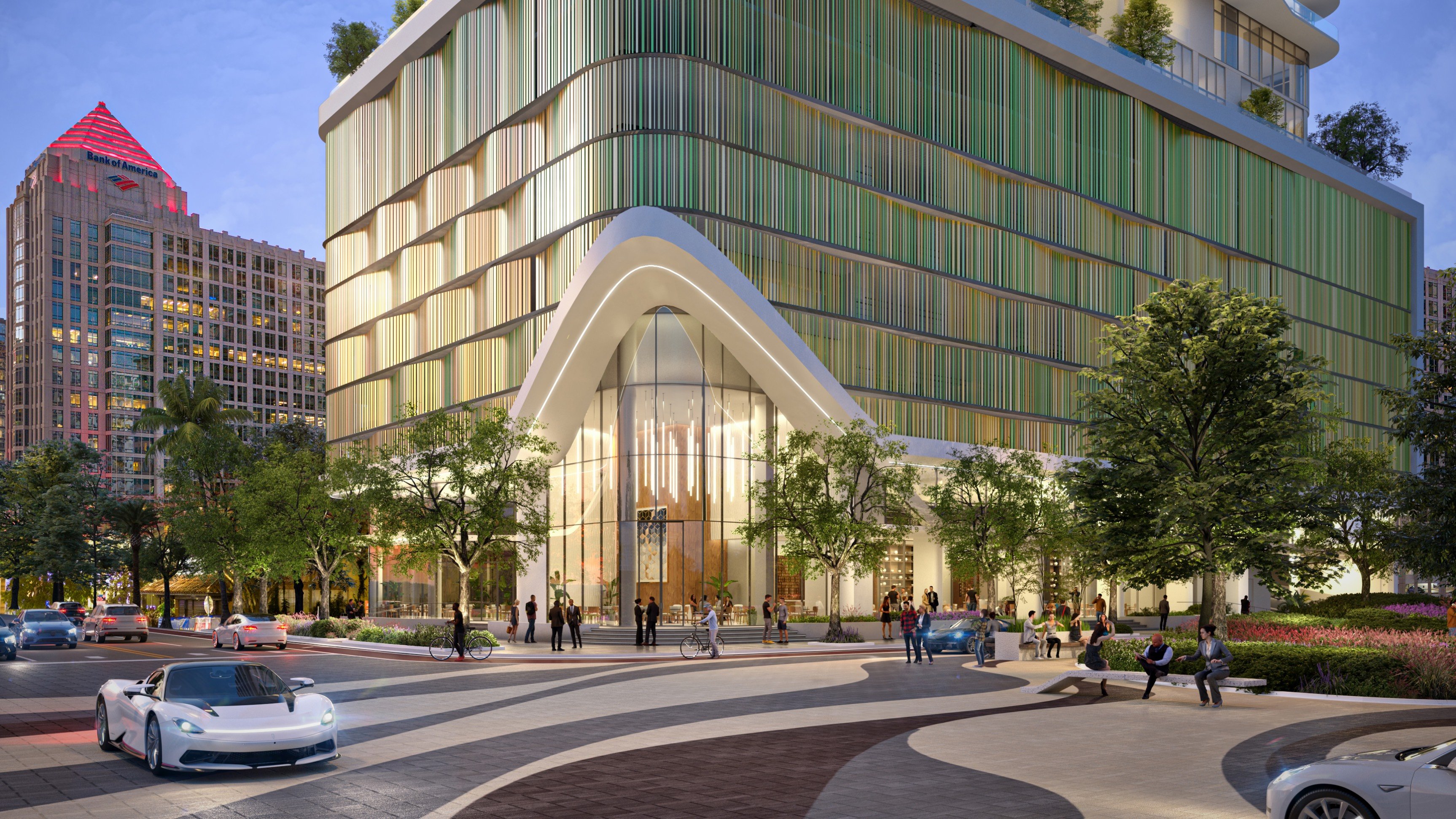
In South Florida luxury condominium culture, height often carries symbolic weight. The higher the floor, the more obvious the trophy narrative can feel: broader horizons, greater separation from the street, and a purchase that announces itself before anyone steps inside. Yet the more nuanced conversation at Andare Residences Fort Lauderdale is not only about the top of the building. It is about how lower and mid-level residences may express a quieter, more practical form of value.
For many Fort Lauderdale luxury buyers, the question is no longer simply which residence sits highest. It is how the home lives on an ordinary weekday, how private the experience feels, how the floor plan supports daily routines, and whether the premium attached to height improves ownership in a meaningful way.
That is where the quiet-luxury case begins. For a buyer who values refinement over display, the lower-floor opportunity can be less a concession than a strategy.
Quiet luxury is not anti-prestige. It is a preference for confidence without performance. In real estate terms, that often means prioritizing proportion, privacy, ease of use, and a disciplined basis over the automatic assumption that the highest available residence is the best fit.
That distinction matters in Fort Lauderdale, where buyers may be comparing city access, water-oriented lifestyle, privacy expectations, and long-term usability with the same seriousness they bring to design and finish quality. A lower or mid-level residence can still participate in the identity of a luxury building while avoiding the reflexive premium often associated with maximum elevation.
The buyer drawn to this logic is usually not trying to buy less. They are trying to buy more precisely.
The phrase lower-floor value can be misunderstood. It can sound like compromise to buyers trained to equate altitude with status. In practice, a lower or mid-level residence may offer a more balanced equation: access to the same address narrative and building environment, with a value thesis that depends more on layout, light, privacy, and usability than on being at the summit.
This is especially relevant for buyers who care about how the home functions. A residence that feels comfortable, has an intuitive plan, and connects well to its surroundings may deliver more daily satisfaction than a higher floor selected mainly for symbolism.
The distinction is psychological as much as financial. A trophy buyer may be purchasing the scarcity of the top. A quiet-luxury buyer may be purchasing the daily ease of the whole ownership experience.
Lower and mid-level residences can feel more connected to the city’s texture. Depending on orientation and surrounding conditions, views may feel architectural, layered, and immediate rather than distant. For some owners, that sense of proximity is more livable.
Convenience also matters. In any vertical building, the highest floor is not automatically the most effortless floor. Buyers who split time between homes, entertain frequently, or move between meetings, dining, boating, and the airport often care about time and friction. A lower or mid-level residence can feel more direct when the broader ownership experience is designed around ease.
There is also a comfort argument. The best luxury residences are not merely impressive; they are easy to occupy. Rooms that feel proportionate, outdoor areas that are genuinely usable when present, and sightlines that remain engaging throughout the day can matter more than the singular drama of being at the top.
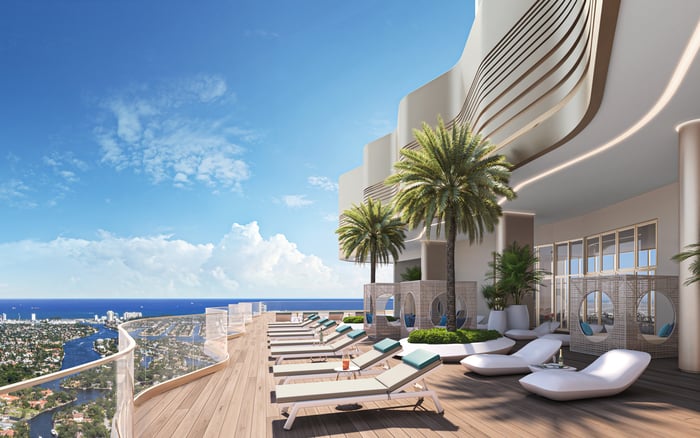
For any South Florida condominium buyer, outdoor living deserves careful attention. If a residence includes a terrace, the question is not only size; it is how the space relates to the main living areas, whether it feels private, and how often it is likely to be used. A practical terrace can become an everyday extension of the home rather than a decorative feature.
Shared amenities should be evaluated the same way. If a pool, wellness area, lounge, or service program is central to a buyer’s lifestyle, the relevant question is how naturally those features fit into daily routines. The value of a residence is not always concentrated in one view. It can be distributed across the full building experience.
This is where lower-floor thinking can be powerful. A buyer may decide that everyday access, comfort, and usability deserve as much attention as altitude.
The lower-floor case is ultimately a risk-adjusted argument. It asks whether the incremental cost of height is fully matched by incremental utility. For some buyers, the answer will be yes. There will always be a market for the highest, rarest, most dramatic residences.
But not every affluent buyer wants to pay primarily for the symbolism of altitude. Some would rather allocate capital toward a preferred floor plan, better furniture, art, travel, or simply a more disciplined ownership basis within the same South Florida luxury context. The quiet-luxury buyer is not necessarily spending less because they can spend less. Often, they are spending with sharper intent.
In that sense, Andare Residences Fort Lauderdale offers a useful lens for evaluating the evolving psychology of condominium ownership. Prestige is no longer only vertical. It can be spatial, private, convenient, and calm.
A thoughtful buyer should begin with sightlines. Ocean, city, and Intracoastal perspectives can vary by orientation, surrounding development, and elevation, so the relevant question is not simply “how high?” but “what do I see, from where, and at what time of day?” The strongest lower-floor residence may be the one with the most satisfying daily composition.
Next, study the plan. Circulation, room proportion, storage, privacy between spaces, and the relationship between interior and exterior areas can shape ownership more than a floor number alone.
Finally, consider building rhythm. Arrival sequence, elevator experience, amenity access, service flow, and the number of residences encountered in daily life all affect how private and composed ownership feels. A lower-floor home in the right setting can feel more exclusive than a higher-floor residence that does not support the way the buyer actually lives.
The quiet-luxury case for lower-floor value at Andare is not about rejecting height. It is about refusing to overpay for status when the more compelling value may be found in livability. In a competitive Fort Lauderdale luxury-condominium market, that distinction is increasingly important.
For the right buyer, a lower or mid-level residence can deliver a sophisticated ownership experience when privacy, proportion, access, and comfort align. The result is a home that feels luxurious because it works beautifully, not because it needs to announce itself.
Why are lower floors worth considering at Andare Residences Fort Lauderdale? They may offer a stronger emphasis on livability, convenience, and relative value for buyers who do not need maximum-height positioning.
Does choosing a lower floor mean sacrificing the luxury experience? Not necessarily. The broader experience depends on the specific residence, plan, privacy, finishes, services, and amenities available to the owner.
Who is the ideal lower-floor buyer? The ideal buyer values discretion, daily comfort, and risk-adjusted ownership more than status based only on elevation.
Are views still important on lower and mid-level floors? Yes. Buyers should evaluate the actual sightline, orientation, and feel of the view rather than relying on floor height alone.
How should buyers compare floor height with floor plan? Floor plan should be central. A better layout with stronger usability may be more satisfying than a higher floor that does not fit the buyer’s lifestyle.
What role can a terrace play in the lower-floor argument? If a residence includes a terrace, its privacy, depth, and connection to the interior can make it an important part of everyday living.
Are penthouse floors still more prestigious? Often, yes. The point is that prestige may not be the only measure of value for every luxury buyer.
What should buyers review before choosing a lower-floor residence? Buyers should review sightlines, floor plan, outdoor space, privacy, service flow, amenity access, and building documents with qualified advisors.
Is lower-floor value mainly a financial decision? It is partly financial, but it is also about lifestyle fit. The right lower or mid-level residence can align capital discipline with daily comfort.
What is the best way to shortlist comparable options for touring? Start with location fit, delivery status, and daily lifestyle priorities, then compare stacks and elevations to validate views and privacy.
For a tailored shortlist and next-step guidance, connect with MILLION.
If branded residences are on your mind — as a home or as an allocation — we would be glad to share what we are seeing, privately.
Begin a quiet conversation