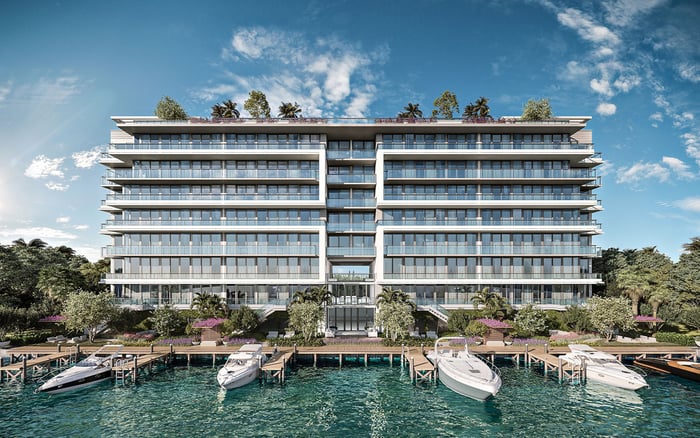
A buyer-focused examination of board authority, owner turnover, association budgeting, reserves, contracts, and document review at Continuum Club & Residences.

At Continuum Club & Residences North Bay Village, the ownership proposition extends beyond a private residence and its Biscayne Bay setting. Association governance will shape how operations, services, amenities, maintenance, and long-term asset preservation are managed after buyers close.
In a compact waterfront setting, traffic, shoreline access, noise, nearby construction, and shared infrastructure can become consequential board matters rather than abstract neighborhood concerns.
Governance should therefore be treated as a core component of acquisition diligence. It is not a substitute for design, views, or service, but the framework that determines how those qualities are funded and protected.
During developer control, buyers should establish how the initial association board is selected, who may serve, and which decisions remain under developer authority. The declaration of condominium, bylaws, offering materials, purchase agreement, and initial association budget should be read together. No single summary should be assumed to contain every material obligation.
The practical questions are precise. Can the developer appoint or remove directors during the initial period? Which contracts may be executed before owners control the board? What approval rights, if any, will owners have over material operating decisions? The answers must come from final project documents and amendments, not general expectations about condominium practice.
The same discipline applies when considering nearby Shoma Bay North Bay Village and Tula Residences North Bay Village. Each condominium requires an independent document review. Similar geography does not establish identical governance, budgets, or owner rights.
The governing documents should identify when and how control transfers from the developer to unit owners. Buyers should look beyond the headline trigger to examine election procedures, the composition of the post-turnover board, notice requirements, and the mechanics for delivering association property and records.
A rigorous turnover review should encompass financial statements, bank authority, association funds, vendor contracts, insurance materials, warranties, maintenance records, and relevant correspondence. It should also identify contracts that remain in force after turnover, together with their duration, termination provisions, and financial effect. The objective is continuity without compromising the owner board's ability to evaluate inherited arrangements.
The timetable, procedures, and deliverables should be distilled into a closing checklist. Because the available project information does not establish a final turnover schedule or developer-control provisions, buyers should obtain the latest recorded and contractual documents through the appropriate transaction professionals.
A polished amenity program can create substantial recurring obligations. Projected assessments should therefore be tested against anticipated staffing, security, maintenance, insurance, utilities, and amenity operations. The central question is not whether an assessment appears attractive, but whether it can credibly support the promised ownership experience.
Recurring expenses should be distinguished from reserves, start-up costs, developer subsidies, and potential special assessments. A subsidy can lower an early operating figure without demonstrating the building's subsequent steady-state cost. Start-up expenses may be temporary, while reserves address longer-term capital needs. Each category requires a separate explanation.
Buyers should request the assumptions underlying major line items, clarify what is included or excluded, and determine how cost increases would reach owners. They should also compare the budget with the service model presented elsewhere in the offering package. Any mismatch between staffing promises and payroll assumptions, or between amenity scope and maintenance allowances, warrants scrutiny.
Waterfront ownership involves more than a view. In North Bay Village's compact setting, the board may need to address access, shoreline conditions, construction effects, noise, circulation, and infrastructure shared with or affected by surrounding properties. The documents should define where association responsibility begins and ends, while the budget should indicate whether foreseeable operating duties have been recognized.
A buyer comparing the village with Onda Bay Harbor should not carry assumptions from one site or set of documents into another. The useful comparison is procedural: identify responsibility, quantify its budget impact, and confirm who holds decision-making authority.
Association governance can influence service consistency, physical upkeep, owner confidence, and the building's ability to respond to future needs. For investment planning, projected carrying costs should be considered alongside the strength of financial controls and the transparency of board processes.
At a new-construction condominium, early budgets may be projections rather than the product of a mature operating history. That makes their assumptions especially important. Buyers should ask how the budget changes after any subsidy ends, what reserve schedule is contemplated, and whether known start-up obligations fall outside recurring assessments.
The final timetable, reserve schedule, assessment level, initial budget, and developer-control terms are not established here. They should be verified against the latest condominium documents, purchase contract, amendments, and closing materials. Sophisticated diligence is less about predicting every future decision than ensuring owners understand the rules, financial architecture, and path to control.
Why does association governance matter to a luxury buyer? It affects control over operations, amenities, maintenance, services, and long-term asset preservation.
Who controls the board before owner turnover? The project documents should explain how the initial board is selected and which decisions remain under developer authority.
Which documents deserve priority review? Review the declaration, bylaws, offering materials, purchase agreement, initial budget, and all current amendments together.
Is the turnover date confirmed? A final project-specific timetable is not established here and must be verified in the governing and contractual documents.
What should be delivered at turnover? Review the requirements for financial records, contracts, warranties, association funds, elections, and other association documents.
How should projected assessments be evaluated? Test whether they realistically cover staffing, security, maintenance, insurance, utilities, and the stated amenity program.
Why separate reserves from operating expenses? They serve different purposes; combining them can obscure recurring costs and longer-term capital planning.
What is the significance of a developer subsidy? It may reduce early owner contributions, so buyers should understand the budget that applies after the subsidy ends.
Could special assessments arise? Buyers should examine the documents, reserve assumptions, start-up obligations, and budget structure for potential exposure.
Can general condominium practice answer these questions? No. Project-specific rights and obligations must be confirmed in the final recorded and contractual documents.
When you're ready to tour or underwrite the options, connect with MILLION.
If branded residences are on your mind — as a home or as an allocation — we would be glad to share what we are seeing, privately.
Begin a quiet conversation