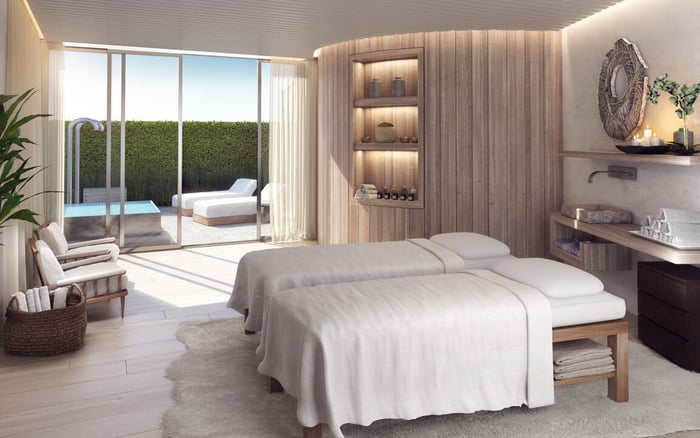
For privacy-minded buyers, the boat show is best treated as a real-world lens on access, discretion, residence management, and the practical rhythm of waterfront ownership.

For a luxury buyer, the Fort Lauderdale International Boat Show can matter without becoming the center of the purchasing decision. Its value is diagnostic: it creates a useful context for considering how a residence might function when the city’s marine identity is especially visible and a buyer’s schedule may include appointments, social commitments, time aboard, and frequent movement between home and waterfront.
That perspective is particularly relevant for purchasers who prize a lock-and-leave routine. These buyers are not simply seeking a beautiful address. They are assessing whether a home can be closed with confidence, reopened without friction, and enjoyed without surrendering privacy. The strongest choice is therefore not necessarily the residence closest to the action, but the one whose location, operating model, arrival sequence, and interior planning align with the owner’s desired level of exposure.
A residence begins before the front door. For privacy-conscious buyers, the route from car to lobby, elevator, corridor, and home deserves the same scrutiny as the kitchen or primary suite. During a high-profile occasion, ordinary circulation patterns can become more consequential. A buyer should consider where guests wait, how deliveries are received, whether arrivals feel composed, and where private and social movement might intersect.
Fort Lauderdale presents several distinct residential contexts for that comparison. St. Regis® Residences Bahia Mar Fort Lauderdale belongs in a conversation centered on the boat-show setting, while Four Seasons Hotel & Private Residences Fort Lauderdale offers another branded-residence reference point for buyers considering a service-oriented ownership style.
The point is not to assume that branding, scale, or proximity guarantees discretion. Buyers should test the complete journey: vehicle approach, pedestrian exposure, lobby visibility, elevator transitions, residence entry, and departure. Privacy is spatial, but it is also operational.
Lock-and-leave is often used as shorthand for convenience, yet sophisticated buyers should define it more precisely. One owner may need a second home that remains ready between seasonal visits. Another may travel weekly and prioritize reliable coordination. A third may want the freedom to move among a yacht, an aircraft, and several residences while keeping household decisions to a minimum.
The due-diligence conversation should therefore focus on responsibilities. Ask how access is authorized, how vendors are handled, what happens to deliveries during an absence, and which residence-care tasks remain with the owner. Request clear explanations of emergency procedures, communication channels, and the limits of available services. The objective is not a promise of effortless ownership, but an operating structure the buyer understands and trusts.
Projects can serve as useful comparison points without being treated as interchangeable. The Ritz-Carlton Residences® Fort Lauderdale may appeal to purchasers exploring branded residential options, while Riva Residenze Fort Lauderdale offers a separate Fort Lauderdale reference for evaluating how a property’s identity fits a buyer’s routine.
Residential privacy should be evaluated at four levels: inside the home, within the building, at the curb, and across the surrounding neighborhood. Interior privacy involves sightlines, separation between entertaining and retreat spaces, and the relationship among bedrooms, terraces, and neighboring residences. Building privacy encompasses circulation, staffing protocols, visitor handling, and shared spaces. Curb privacy concerns arrival visibility. Neighborhood privacy concerns the atmosphere immediately beyond the property.
This layered review helps distinguish seclusion from isolation. Some buyers want quiet interiors with immediate access to the city. Others prefer greater separation, even if it introduces more travel time. A waterfront outlook may be essential, yet direct involvement with a marina may not be. Likewise, Fort Lauderdale Beach may suit one owner’s preferred lifestyle, while another values a more residential transition away from the shoreline.
The correct answer depends on behavior, not prestige. Buyers should map a typical day, then a demanding day, and finally a prolonged absence. If the residence performs across all three, it is more likely to support ownership gracefully.
A boat show can sharpen a buyer’s observations. Schedule property visits at different times and note how the approach feels, whether the arrival is intuitive, and whether the residence still offers a sense of retreat. Observe rather than infer. Ask building representatives to explain procedures instead of relying on broad assurances.
A downtown-oriented option such as Sixth & Rio Fort Lauderdale can broaden the comparison beyond beachfront and branded settings. That contrast matters because privacy is not defined by a single architectural style. It may come from thoughtful thresholds, a well-managed entry sequence, fewer points of friction, or simply a location better matched to the owner’s daily pattern.
Buyers should also distinguish occasional intensity from everyday livability. A prominent event can reveal pressure points, but the purchase must work throughout the ownership calendar. The most persuasive residence feels calm not because the city disappears, but because the home mediates it well.
Begin with practical questions. Who can enter the residence when the owner is away? How are permissions recorded and withdrawn? Where do household staff, contractors, and deliveries enter? What requires advance notice? How does management communicate an incident? Which services are included, and which require separate arrangements?
Then examine the physical residence. Consider exposure from neighboring buildings, terrace visibility, acoustic separation, elevator placement, and the path between entertaining spaces and private rooms. Review storage through the lens of departure and return. A genuine lock-and-leave home should reduce the number of decisions required each time the owner arrives or leaves.
Finally, test the emotional fit. Privacy-minded ownership should feel composed rather than defensive. The aim is not to withdraw from Fort Lauderdale, but to control when and how the city enters one’s day.
Why does the boat show matter to a residential buyer? It offers a useful occasion to evaluate access, circulation, discretion, and the relationship between a residence and Fort Lauderdale’s waterfront rhythm.
Does lock-and-leave simply mean owning a condominium? No. It describes an ownership routine supported by clear access, maintenance, communication, and residence-care arrangements.
Should buyers prioritize proximity to the show? Only if proximity supports their broader routine. Convenience should be weighed against arrival patterns, neighborhood atmosphere, and the desired degree of separation.
What is the first privacy feature to inspect? Begin with the full arrival sequence, from the street or vehicle entrance through the lobby, elevator, corridor, and residence door.
Are branded residences automatically more private? No. Buyers should verify operating practices, circulation, staffing protocols, and the physical relationship between private homes and shared spaces.
How should a frequent traveler evaluate management? Ask for a precise explanation of access permissions, vendor procedures, emergency communication, deliveries, and residence checks during absences.
Is waterfront living the same as marina-oriented living? Not necessarily. A buyer may value views and proximity to the water without wanting the activity or operational considerations associated with a marina setting.
When should a buyer visit a property? Multiple visits at different times can reveal changes in traffic, visibility, noise, staffing rhythm, and the overall quality of arrival.
What should second-home buyers prioritize inside the residence? Favor intuitive storage, separable private areas, controlled sightlines, and layouts that simplify opening, occupying, and closing the home.
What defines the best choice for a privacy-minded owner? It is the residence whose location, physical planning, and operating model consistently match the owner’s actual habits.
If you'd like a private walkthrough and a curated shortlist, connect with MILLION.
If branded residences are on your mind — as a home or as an allocation — we would be glad to share what we are seeing, privately.
Begin a quiet conversation