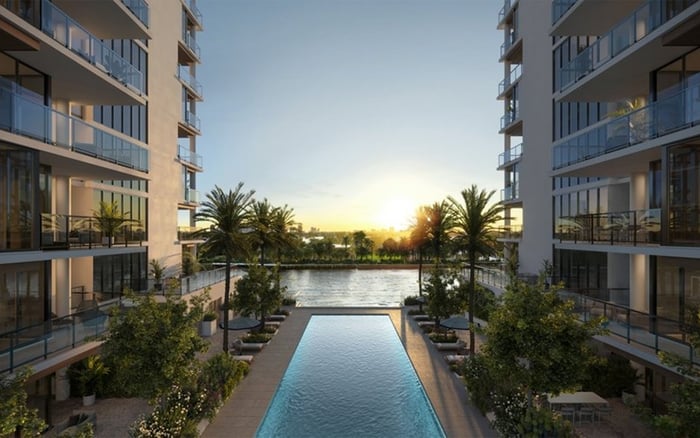
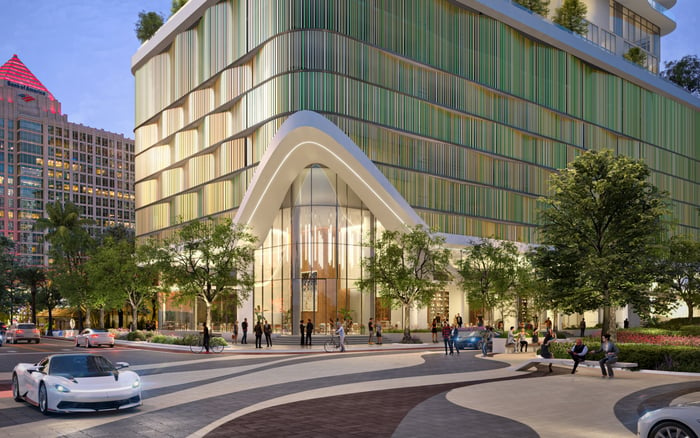
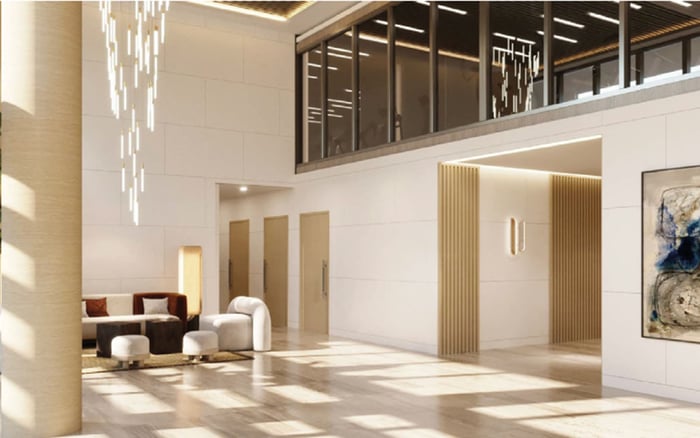
A buyer-focused comparison of Continuum Club & Residences in North Bay Village and Andare Residences in Fort Lauderdale, centered on penthouse scale, roof rights, club service, privacy, and the practical usability of elevated outdoor rooms.
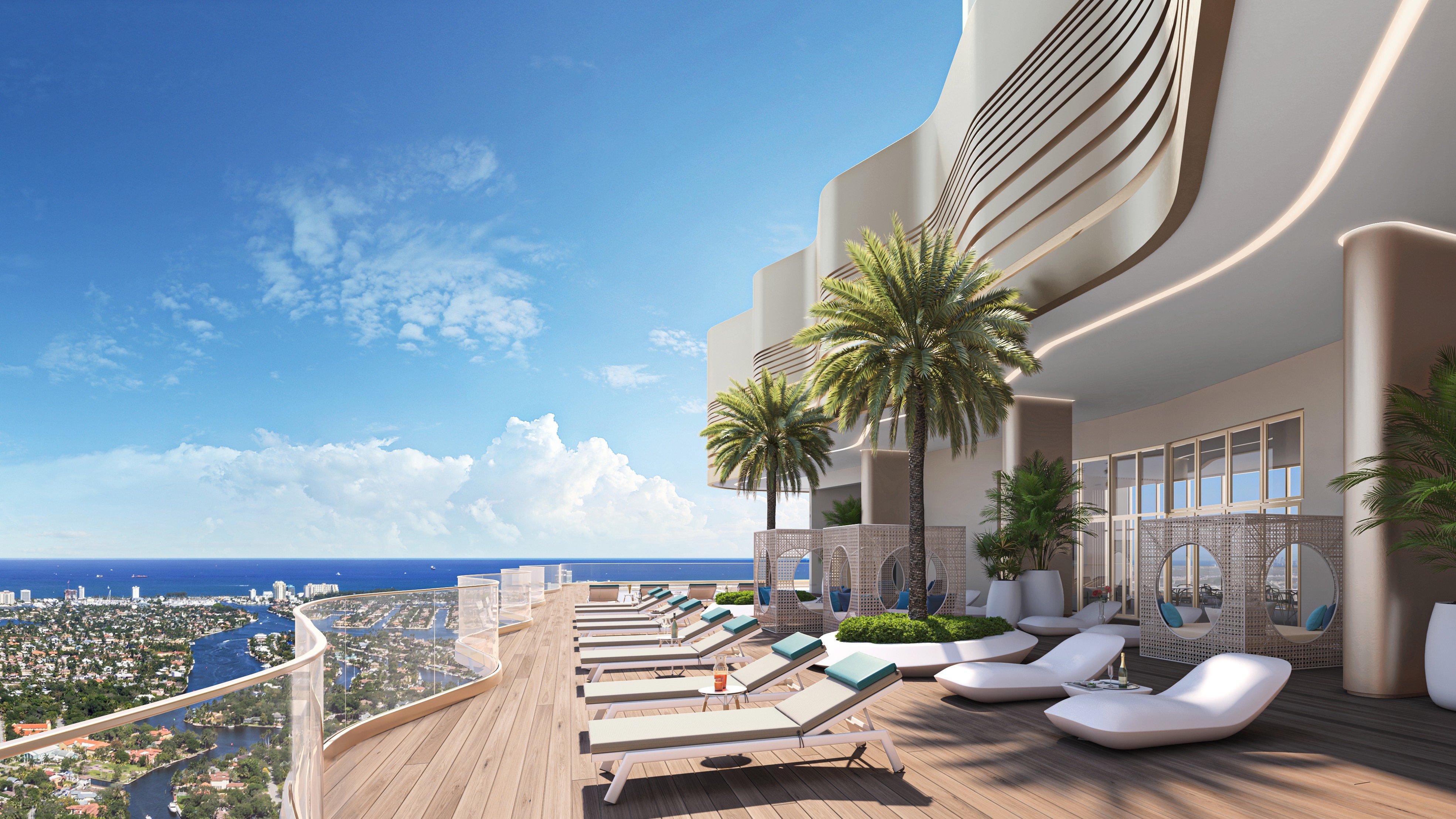
At the top end of South Florida’s condominium market, penthouse scale can be seductive. Larger interiors, elevated views, private terraces, and a sense of separation all matter. Yet the more sophisticated question is not simply how high the residence sits or how generous the outdoor space appears. It is who controls the space, how it can be used, who maintains it, and whether it remains comfortable in a coastal wind environment.
That is the useful distinction between Continuum Club & Residences North Bay Village and Andare Residences Fort Lauderdale. Both speak to buyers thinking beyond a conventional apartment. Both appeal to owners who want a more complete residential experience, not just a floor plan. But their ownership models point in different directions.
Continuum Club & Residences is the more club-centric proposition, shaped around service, amenities, and a curated social setting. Andare Residences is the more boutique high-rise proposition, oriented toward design identity, privacy, and water-facing views. For the buyer considering penthouse scale, the decision is less about a single architectural preference and more about the relationship among legal control, lifestyle rhythm, terrace usability, and ongoing obligations.
Continuum is positioned for buyers who want the residence to feel connected to a broader hospitality-style environment. That can be compelling for an owner who values daily service, amenity access, programmed spaces, and the social ease of a club-like building. In this model, the building is not merely the container for the home. It becomes part of the home’s operating experience.
For large-format and penthouse-oriented buyers, that can be a genuine advantage. A private residence may be used more fully when the building around it supports entertaining, wellness, arrival, guest hosting, and social continuity. The appeal is not only square footage. It is the ability to move from private interiors to elevated shared spaces with a consistent service tone.
The diligence, however, should be equally refined. A buyer should understand how roof decks, cabanas, sky-deck areas, and other elevated outdoor spaces are allocated. Some spaces may be private, some may be limited-common, and others may be common amenities available under building rules. The distinction affects privacy, guest use, maintenance expectations, and long-term value perception.
In a club-centric model, the monthly cost conversation also deserves attention. Service, programming, staffing, amenity management, and guest policies may enhance the ownership experience, but they also belong in the financial analysis. The strongest fit is the buyer who wants to participate in that lifestyle, not merely tolerate it.
Andare Residences Fort Lauderdale sits on the other side of the comparison. Its strongest appeal is the private high-rise residence with a direct relationship to Fort Lauderdale’s waterfront setting. The emphasis is less on the social architecture of a club and more on the feel of an individual home in the sky.
That matters for buyers who prize privacy, design, and a quieter ownership cadence. A boutique high-rise can offer a more discreet residential identity, particularly for owners who prefer fewer lifestyle obligations and a more direct relationship with their own residence. The building experience is still important, but it should not overwhelm the home itself.
For upper-level buyers, Andare’s key question is whether the outdoor rooms perform as real rooms. Renderings can make almost any terrace look effortless. In practice, elevated outdoor space must balance exposure, shade, enclosure, privacy, and views. A beautiful water-facing terrace that is too windy for dining, too exposed for afternoon use, or too visible from neighboring vantage points may function more as a visual amenity than as livable space.
The Andare buyer should also evaluate staff access, rental flexibility, view protection, and resale positioning. These are not secondary details. They shape how private the residence feels, how easily it can be managed, and how future buyers may understand its value.
At this level, terrace size alone is an incomplete metric. A large outdoor area may be less valuable than a smaller, better-protected outdoor room with shade, privacy, and a clear maintenance framework. The penthouse buyer should think like an owner, not a viewer of marketing imagery.
In North Bay Village, Continuum’s elevated spaces should be tested against the realities of club use and coastal wind. If the most compelling outdoor amenities are shared or partly shared, the owner must decide whether that is a benefit or a compromise. A buyer who loves the rhythm of a curated building may see shared sky-level space as an extension of private living. A buyer who wants absolute separation may read the same feature differently.
In Fort Lauderdale, Andare’s upper outdoor rooms should be studied for enclosure, wind protection, sightlines, and all-day usability. Water views are powerful, but usability determines whether the terrace becomes part of daily life. Breakfast, evening cocktails, private dining, quiet reading, and guest entertaining each place different demands on exposure and comfort.
This is where terrace diligence becomes practical. Buyers should ask what is exclusive to the residence, what is subject to association rules, what maintenance sits with the owner, and what access rights exist for building staff. The best penthouse is not simply the one with the most outdoor square footage. It is the one with the clearest rights and the most usable space.
Roof rights are often discussed casually, but they are rarely casual in condominium ownership. The language that matters lives in the condominium documents. A roof deck, cabana, outdoor kitchen, sky lounge, plunge pool, or landscaped upper terrace may be treated differently depending on its legal designation.
Private ownership usually reads differently from limited-common use, and limited-common use reads differently from fully common amenity access. Each category can influence who may enter, who may invite guests, who pays for repairs, who insures what, and how changes can be approved. A buyer focused on penthouse scale should not rely on visual exclusivity alone.
For Continuum, the issue is especially relevant because the project’s appeal includes a club-like amenity and service environment. The more important the shared elevated realm is to the lifestyle story, the more carefully a buyer should understand the boundary between personal control and community access.
For Andare, the emphasis shifts toward whether outdoor areas attached to upper residences are genuinely private and usable. The question is not only legal allocation. It is whether the space performs in real life, with enough protection, shade, and privacy to justify its premium.
A concise way to frame the comparison is this: North Bay Village buyers may be weighing club energy against private control, while Fort Lauderdale buyers may be weighing boutique privacy against the physical realities of exposed high-rise outdoor living.
Continuum is the stronger fit for the owner who wants the building to feel like a private club. This buyer values service, amenity depth, guest experience, and the ease of having a curated social environment close at hand. The residence is important, but the full lifestyle platform is part of the purchase.
Andare is the stronger fit for the owner who wants a boutique luxury tower experience with privacy, design presence, and a strong water-facing orientation. This buyer may entertain selectively, travel frequently, or simply prefer a residence that feels more self-contained.
Neither model is inherently superior. The better choice depends on how the buyer lives. Some owners want the energy of a serviced environment where amenities and programming are central to the daily experience. Others want quiet arrival, private outdoor rooms, and fewer shared lifestyle layers.
For penthouse buyers, the winning answer is the one where the legal documents, service model, and outdoor-room performance all align. Scale should feel effortless. Rights should be clear. The terrace should work on more than one kind of day.
What is the main difference between Continuum and Andare? Continuum is positioned around a club-centric residential experience, while Andare is positioned around boutique high-rise privacy, design, and water-facing views.
Which project is better for a buyer who wants a private club atmosphere? Continuum is the stronger fit for buyers who want service, amenities, programming, and a curated social environment to be central to ownership.
Which project is better for a buyer focused on privacy? Andare is the stronger fit for buyers who want a more private high-rise residence with a direct relationship to Fort Lauderdale’s waterfront setting.
Why do roof rights matter for penthouse buyers? Roof rights determine whether elevated outdoor areas are private, limited-common, or common, which affects control, access, maintenance, and value.
Are large terraces always more valuable? Not necessarily. A smaller outdoor room with better wind protection, shade, privacy, and clear rights may be more usable than a larger exposed terrace.
What should Continuum buyers review most carefully? They should review how roof decks, cabanas, sky-deck areas, amenity access, guest policies, and service costs are handled in the ownership structure.
What should Andare buyers review most carefully? They should focus on privacy, staff access, rental flexibility, view protection, resale positioning, and whether outdoor rooms are truly usable.
Can marketing renderings prove terrace usability? No. Buyers should evaluate wind exposure, shade, enclosure, sightlines, and how the space would function during daily living and entertaining.
Is this mainly an architectural comparison? No. The more important comparison is legal control, service model, outdoor-room performance, maintenance exposure, and lifestyle fit.
What is the best way to shortlist comparable options for touring? Start with location fit, delivery status, and daily lifestyle priorities, then compare stacks and elevations to validate views and privacy.
When you're ready to tour or underwrite the options, connect with MILLION.
If branded residences are on your mind — as a home or as an allocation — we would be glad to share what we are seeing, privately.
Begin a quiet conversation