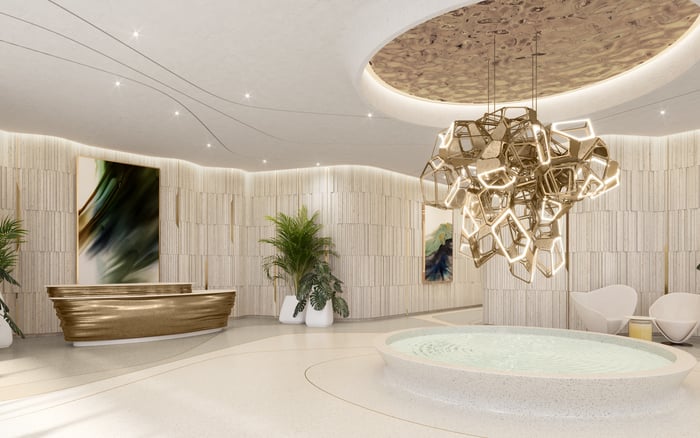
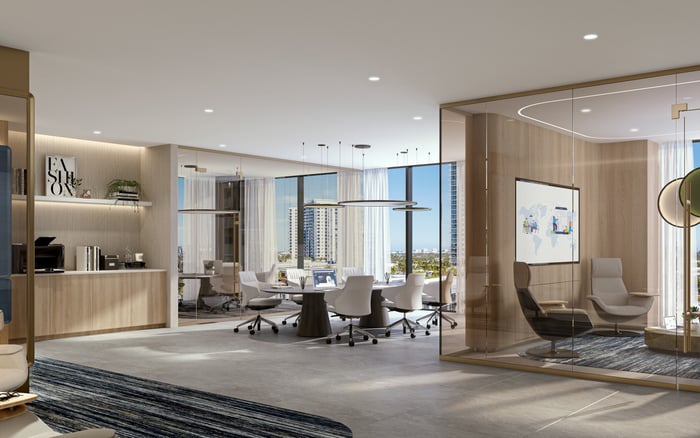
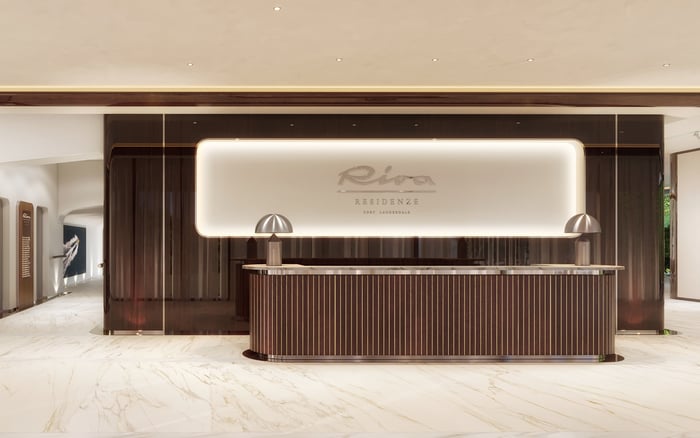
Sixth & Rio Fort Lauderdale is positioned for buyers who want downtown access with a calmer, more residential rhythm than a heavily trafficked tower environment.
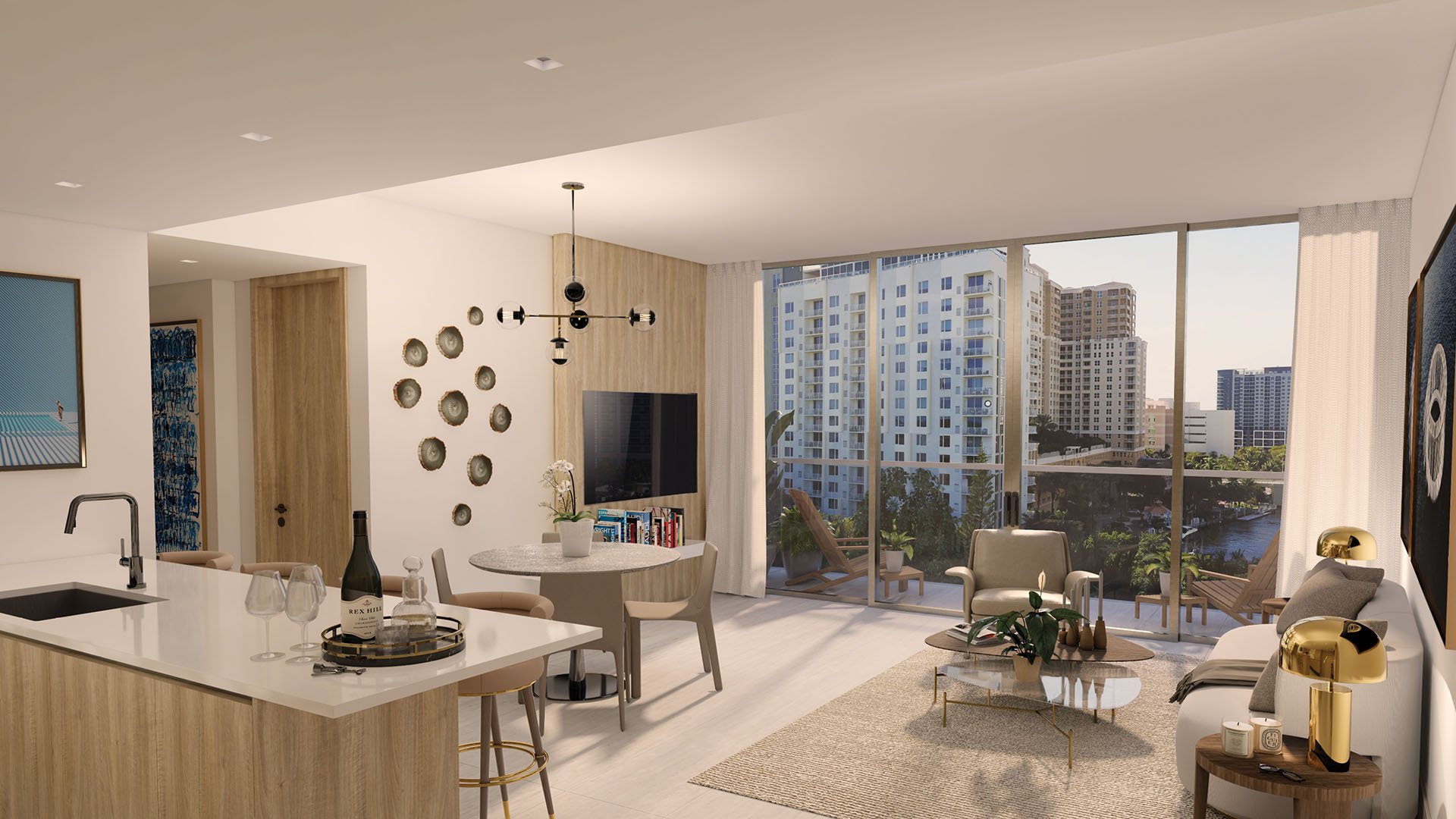
For many affluent buyers, the most compelling Fort Lauderdale address is not necessarily the one placed at the loudest point on the skyline. Increasingly, the preference is for proximity without saturation, and for convenience without constant movement through crowded lobbies, shared amenity corridors, and the round-the-clock pulse of ground-floor commercial activity. That is the appeal at the center of Sixth & Rio Fort Lauderdale, a luxury residential project best understood through downtown-adjacent ease rather than downtown-center density.
The distinction matters. Downtown proximity gives owners access to restaurants, services, cultural life, professional districts, and the broader rhythm of the city. Downtown-center density, by contrast, can bring a busier daily environment, with more foot traffic, more elevator traffic, and more of the public realm pressing directly against private life. Sixth & Rio Fort Lauderdale speaks to the buyer who wants the first condition without being defined by the second.
In South Florida luxury, that is a meaningful shift. Height and skyline visibility still carry prestige, but they are no longer the only signals of value. Privacy, calm, and livability now carry their own authority, especially for buyers who already understand urban convenience and are choosing a more controlled residential setting.
The luxury conversation in Fort Lauderdale is not a simple copy of Miami’s high-density tower culture. Fort Lauderdale has its own cadence, one that often rewards access, waterfront sensibility, neighborhood rhythm, and a more measured approach to daily life. Within that context, a lower-traffic residential environment can feel less like compromise and more like refinement.
The appeal is not anchored in a race for published height, unit count, pricing, or delivery timing. Those details are not the point of the most supportable narrative around Sixth & Rio. The stronger argument is experiential: a residence can sit close to downtown Fort Lauderdale without asking its owners to live inside the city’s busiest expression.
That idea resonates with buyers who have spent time in major urban markets and understand the hidden costs of intensity. A lobby can become a corridor rather than a threshold. Amenities can feel less private when they are in constant circulation with residents, guests, staff, vendors, and visitors. Street-level activity can energize a district while still making home feel less composed. Sixth & Rio’s positioning offers an alternative reading of luxury, where the reward is not withdrawal from the city, but a more elegant relationship to it.
The likely Sixth & Rio buyer is not anti-urban. This is not a suburban argument, nor is it a retreat from Fort Lauderdale’s increasingly sophisticated downtown. Instead, it is a preference for selective access. The buyer values restaurants, services, culture, and the practical convenience of being near the city core, but wants the home environment to remain private, legible, and calm.
That profile may include primary residents who want an efficient daily life without the pressure of constant congestion. It may include second-home buyers who want to enjoy Fort Lauderdale without feeling as if they have moved into a transit zone. It may also include downsizers who have already experienced larger buildings and now prize discretion over spectacle.
The word boutique is useful here, not as a specification, but as a sensibility. In this context, it suggests a more personal scale, a lower-traffic mood, and a lifestyle-oriented approach to ownership. Downtown remains part of the value proposition, but the residence does not need to perform like a public-facing landmark to feel luxurious.
Fort Lauderdale’s luxury residential landscape offers several ways to interpret city living. Andare Residences Fort Lauderdale places another lens on the city’s evolving residential identity, while Riva Residenze Fort Lauderdale speaks to buyers drawn to a different Fort Lauderdale rhythm. Along the coast, Four Seasons Hotel & Private Residences Fort Lauderdale and St. Regis® Residences Bahia Mar Fort Lauderdale frame branded and destination-oriented luxury through distinct lifestyle associations.
Sixth & Rio belongs in this conversation because it clarifies a specific preference: the desire to be close to downtown without adopting the daily feel of a heavily trafficked tower. That makes it especially relevant for Broward buyers who see Fort Lauderdale not merely as a place to visit, but as a long-term lifestyle decision.
This is where downtown becomes a keyword with nuance. For some buyers, downtown means maximum intensity. For others, it means the ability to reach what matters without living in the market’s most congested pocket. Sixth & Rio is most persuasive for the second buyer, the one who defines convenience through time saved and friction reduced, not through spectacle alone.
Privacy in contemporary condominium living is not only about what happens inside the residence. It also concerns the path from car to lobby, lobby to elevator, elevator to front door, and home back into the city. The more complicated and crowded those transitions become, the less serene the residential experience can feel.
A lower-traffic, downtown-adjacent project can sharpen those transitions. It can make arrival feel calmer. It can make leaving home less ceremonial and more effortless. It can allow owners to participate in the city by choice, rather than feeling absorbed into its movement every time they pass through the building.
This is particularly relevant in Fort Lauderdale, where buyers often balance multiple lifestyle priorities at once: access to urban conveniences, proximity to dining and services, the appeal of coastal South Florida, and the desire for a home base that does not feel overexposed. Sixth & Rio Fort Lauderdale is compelling because it does not ask the buyer to choose between city access and residential composure. Its thesis is that those two ideas can coexist.
A thoughtful buyer should evaluate Sixth & Rio through lived experience rather than skyline logic. Consider how often you expect to use downtown restaurants and services. Consider whether you prefer the energy of a larger tower or the edited rhythm of a more controlled residential setting. Consider how much daily traffic, both vehicular and pedestrian, you want at the threshold of home.
It is also important to separate verified positioning from unsupported assumptions. The essential value proposition is not dependent on unconfirmed numbers. Without relying on specific unit counts, pricing, heights, amenity inventories, or timelines, the project can still be assessed clearly: it is a Fort Lauderdale luxury-residential alternative for buyers who want urban convenience with residential ease.
That is a sophisticated position in today’s market. The most discerning buyers are not always asking for the tallest building or the most visible address. They are often asking a quieter question: will this home make daily life feel better?
For the right buyer, Sixth & Rio answers that question through balance. It offers access without overexposure, proximity without density for its own sake, and a Fort Lauderdale lifestyle that feels refined rather than rushed.
What is the central appeal of Sixth & Rio Fort Lauderdale? Its core appeal is downtown proximity with a calmer residential experience than a heavily trafficked tower environment.
Is Sixth & Rio positioned as a downtown-center tower? No. Its stronger positioning is downtown-adjacent convenience rather than downtown-center density.
Who is the likely buyer for Sixth & Rio? The likely buyer values access to restaurants, services, and culture while preferring privacy, calm, and a more controlled home setting.
Does the article rely on specific unit counts or pricing? No. The discussion avoids unsupported specifications such as unit counts, pricing, height, amenities, and delivery timing.
Why does lower-traffic living matter in luxury real estate? Lower-traffic living can make arrival, privacy, and daily movement feel more composed, which many buyers now view as a luxury signal.
How does Sixth & Rio differ from a conventional high-traffic tower lifestyle? It is framed around convenience without the busier atmosphere often associated with crowded lobbies, shared spaces, and ground-floor activity.
Is Sixth & Rio still relevant for buyers who like urban life? Yes. The appeal is not anti-urban; it is urban convenience with residential ease.
How does Fort Lauderdale’s context shape the project’s appeal? Fort Lauderdale supports a luxury lifestyle distinct from Miami-style tower density, with a more measured and residential cadence.
What should buyers focus on when evaluating Sixth & Rio? Buyers should focus on daily livability, privacy, access to downtown, and whether the setting matches their preferred rhythm.
Is Sixth & Rio best understood as a lifestyle decision? Yes. Its strongest case is lifestyle-oriented, centered on proximity, calm, and a refined relationship to the city.
For a tailored shortlist and next-step guidance, connect with MILLION.
If branded residences are on your mind — as a home or as an allocation — we would be glad to share what we are seeing, privately.
Begin a quiet conversation