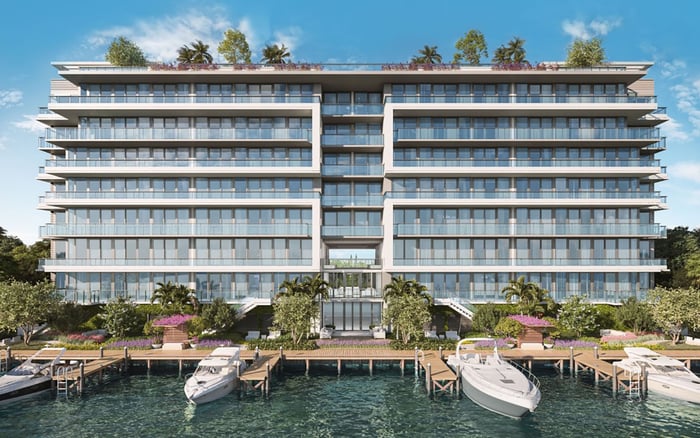
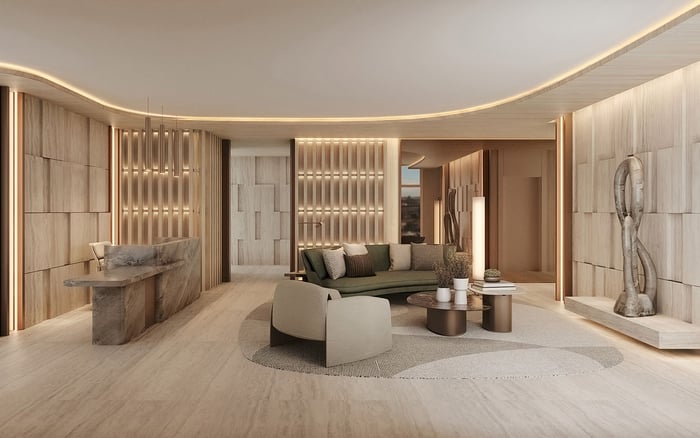
A discreet buyer-focused look at why private-driver waiting areas matter in Bay Harbor Islands, and how Alma can be evaluated through the lens of arrival, privacy, and daily ease.
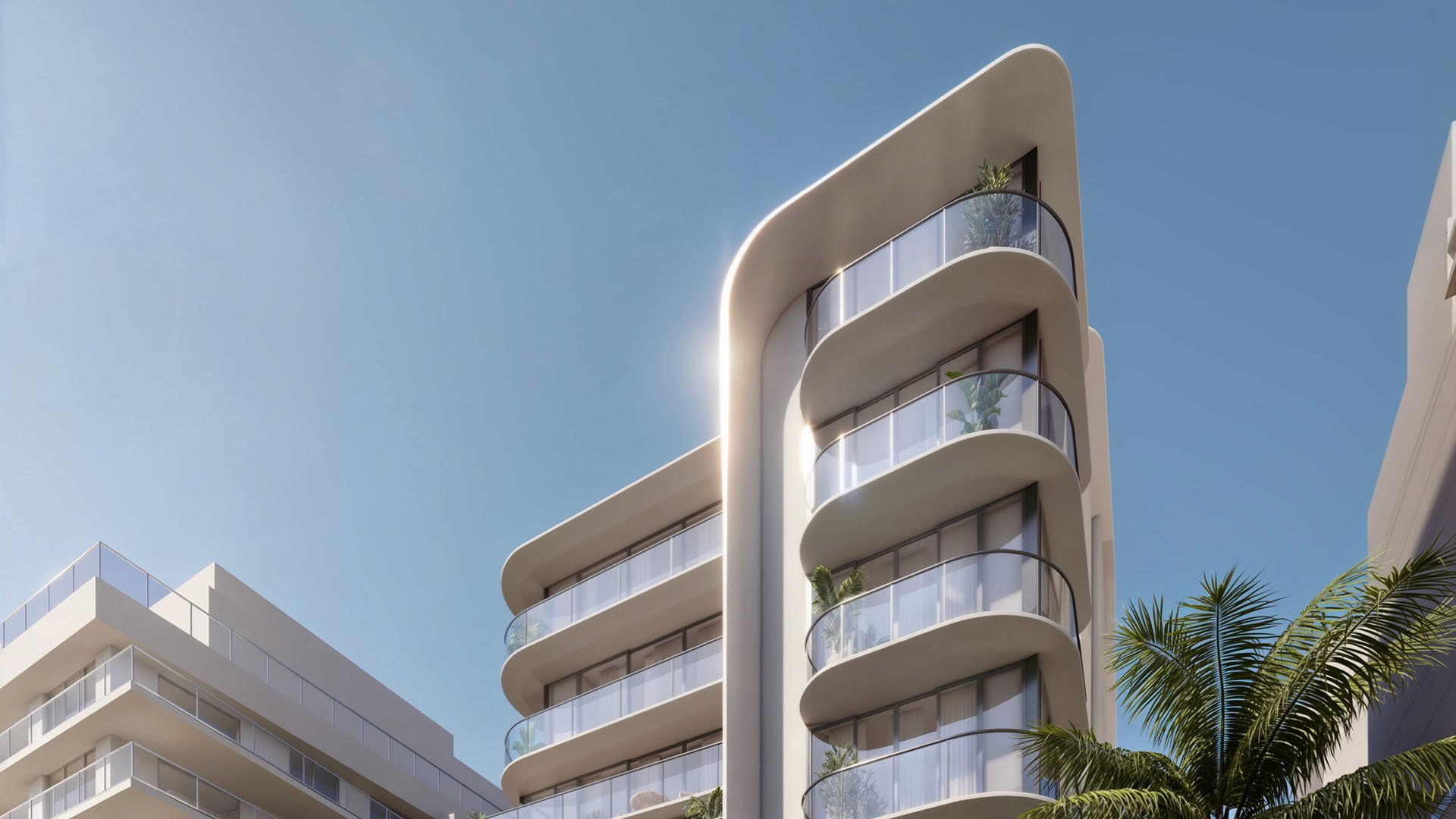
In the upper tier of South Florida residential design, luxury is no longer measured only by skyline views, branded interiors, or the scale of a spa. It is also measured in the minutes before a resident reaches the lobby doors. The car slows. A driver knows exactly where to pause. Guests are not exposed to the street. Luggage moves without drama. A family returns from dinner without interrupting another resident's arrival. This is where private-driver waiting areas become more than logistical convenience. They become a quiet signal of how well a building understands its residents.
Alma Bay Harbor Islands belongs in that conversation because Bay Harbor Islands rewards discretion. The island setting is intimate, residential, and connected, yet it does not rely on the volume of a larger resort district. For buyers who already use private drivers, family chauffeurs, executive transportation, or rotating car service, the question is not simply whether a garage exists. The sharper question is whether the building's arrival choreography protects calm.
That distinction matters. A thoughtfully planned private-driver waiting area can reduce friction at the moments when luxury is most vulnerable: school runs, airport transfers, dinner pickups, medical appointments, yacht-club departures, and the return from a late evening in Miami Beach. It is a modest idea with outsized impact.
Bay Harbor Islands has a particular cadence. It is close to Bal Harbour, Surfside, Indian Creek, Miami Beach, and the mainland, but its appeal is not built on constant spectacle. Its residential value is tied to privacy, walkability, waterfront proximity, and a sense of remove from the louder corners of Miami's luxury market. Alma should be read within that setting: not as a generic urban tower concept, but as a Bay Harbor Islands proposition.
The relevant lifestyle vocabulary includes Bay Harbor, boutique, new construction, exclusive area, water views, and investment. Those terms are not decorative. They point to the reasons affluent buyers study this pocket carefully. They want a place that feels personal, current, and restrained, while still offering practical access to dining, beaches, schools, marinas, airports, and private clubs.
Private-driver infrastructure fits naturally into that lifestyle. In an area where many residents value understatement, the best service spaces are not theatrical. They are legible, shaded where possible, protected from congestion, and positioned so residents can move from car to residence with minimal exposure. The luxury is not in being seen. It is in not having to think about the handoff at all.
The phrase private-driver waiting area may sound operational, but for ultra-premium buyers it touches several emotional and financial considerations. First, it protects time. A resident who can text a driver, descend, and step directly into a waiting vehicle experiences the building as an extension of personal staff. The residence feels managed before a concierge even intervenes.
Second, it protects privacy. In South Florida, the most successful luxury buildings often treat discretion as part of the floor plan. A waiting area can limit unnecessary circling, reduce curbside visibility, and create a more controlled arrival sequence for owners, guests, and household staff.
Third, it protects the tone of the building. A lobby can be beautifully designed, but if the front door is congested by rideshare confusion, valet overlap, delivery vehicles, or multiple drivers waiting without direction, the experience loses polish. The arrival court is where architecture, operations, and etiquette meet.
For Alma Bay Harbor Islands, buyers should treat private-driver accommodation as a precise question, not an amenity to assume. The case is compelling as a design thesis, but the specific presence, dimensions, and operating rules of any such area should be verified directly during due diligence.
The best questions are practical. Where does a private driver wait without interfering with valet circulation? Is there a designated holding position, a covered arrival point, or a managed loading sequence? How are guest vehicles separated from residents, service providers, and deliveries? Can a driver remain onsite briefly during an appointment, or must the vehicle leave and return? How does the building handle peak arrival periods?
These questions may feel granular, but they reveal whether a building has been designed around real residents or idealized renderings. A buyer who travels frequently will care about luggage flow. A family with school-age children will care about morning timing. A principal with security needs will care about exposure. A second-home owner will care about the ease of arrival after a flight. In each case, the driver experience is inseparable from the residence experience.
This is especially true in boutique-scale luxury, where fewer residences can heighten the expectation of personalized service. If a building is intimate, the arrival should feel calm rather than improvised. If the architecture is refined, the operations should match. If the address promises quiet luxury, the car-to-door sequence should not be an afterthought.
Private-driver waiting areas do not always appear as headline amenities, yet they can influence perceived value. They suggest that a building understands the habits of buyers who move through the city with support. For a luxury buyer comparing residences, the difference between a simple curb and a composed arrival environment can be memorable.
This does not mean that a driver waiting area alone creates value. It is one element in a broader matrix that includes location, architecture, residence planning, views, parking, building management, privacy, service culture, and long-term neighborhood desirability. But in the ultra-premium segment, small operational details can become differentiators because baseline expectations are already high.
Bay Harbor Islands is particularly suited to this analysis because its appeal is nuanced. The buyer is often not looking for the loudest address. The buyer may want proximity to Bal Harbour and Miami Beach without living inside their most public corridors. In that context, a discreet, functional arrival sequence supports the entire ownership narrative.
Alma Bay Harbor Islands is best considered through the lens of place and lifestyle rather than unsupported amenity assumptions. Its Bay Harbor Islands positioning is the firm foundation for the conversation. From there, the private-driver waiting area becomes a useful way to evaluate how the project may serve a buyer who values calm, privacy, and highly managed movement.
The strongest luxury buildings tend to make life feel less negotiated. They reduce the number of micro-decisions required throughout the day. Where does the driver stop? Who handles the bags? Can guests arrive without calling twice? Does the building feel composed during peak hours? These questions may not photograph as dramatically as a pool deck, but they shape daily satisfaction.
For buyers considering Alma, the next step is not to assume every detail. It is to ask sharper questions. The quiet luxury case is that arrival infrastructure belongs near the center of the conversation, especially in a market where service expectations are becoming more sophisticated and privacy remains a premium.
Does Alma Bay Harbor Islands have a confirmed private-driver waiting area? Treat it as a point to verify directly, not as a confirmed published amenity. The design argument is relevant, but specific operational details should be checked before purchase.
Why do private-driver waiting areas matter in luxury residential buildings? They make arrivals smoother, more private, and less dependent on improvised curbside coordination. For frequent travelers and staffed households, that convenience can be meaningful.
Is Bay Harbor Islands a good setting for this kind of amenity? Yes, because the area favors discretion, residential calm, and easy access to surrounding luxury districts. A composed arrival sequence aligns with that lifestyle.
Should buyers prioritize this over views or floor plan? No. It should be considered alongside views, layout, parking, service, privacy, and building management. It is a refinement, not a substitute for fundamentals.
What should a buyer ask during a private tour? Ask where drivers wait, how pickup is managed, whether the area is covered, and how valet, deliveries, and guests are separated during peak hours.
Does this amenity appeal only to full-time residents? No. Second-home owners, seasonal residents, and frequent travelers may value it even more because arrivals and departures often involve luggage and tight timing.
Can a building feel luxurious without a formal driver waiting area? Yes, if its valet and arrival operations are exceptionally well managed. The key is whether the resident experience remains calm and predictable.
How does this relate to privacy? A better arrival plan can reduce street exposure and unnecessary vehicle circulation. That helps owners, guests, and household staff move more discreetly.
Is this a resale value factor? It can support perceived value when paired with strong location, design, and service. Buyers in the top tier often remember operational ease.
What is the best way to shortlist comparable options for touring? Start with location fit, delivery status, and daily lifestyle priorities, then compare stacks and elevations to validate views and privacy.
For a tailored shortlist and next-step guidance, connect with MILLION.
If branded residences are on your mind — as a home or as an allocation — we would be glad to share what we are seeing, privately.
Begin a quiet conversation