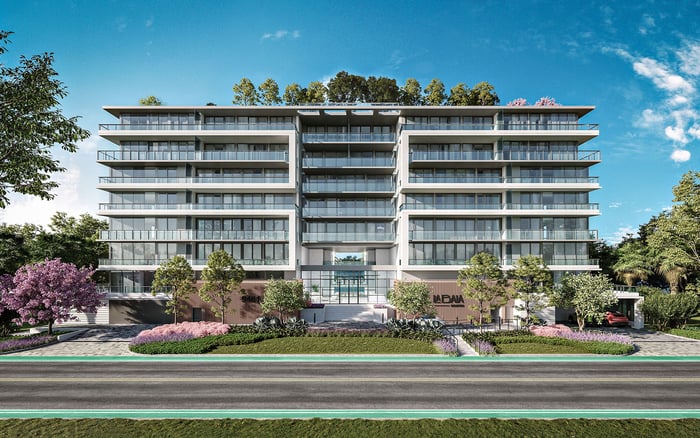
A buyer-focused look at why La Baia North Bay Harbor Islands can be read less as a spectacle purchase and more as a disciplined bayfront ownership proposition.
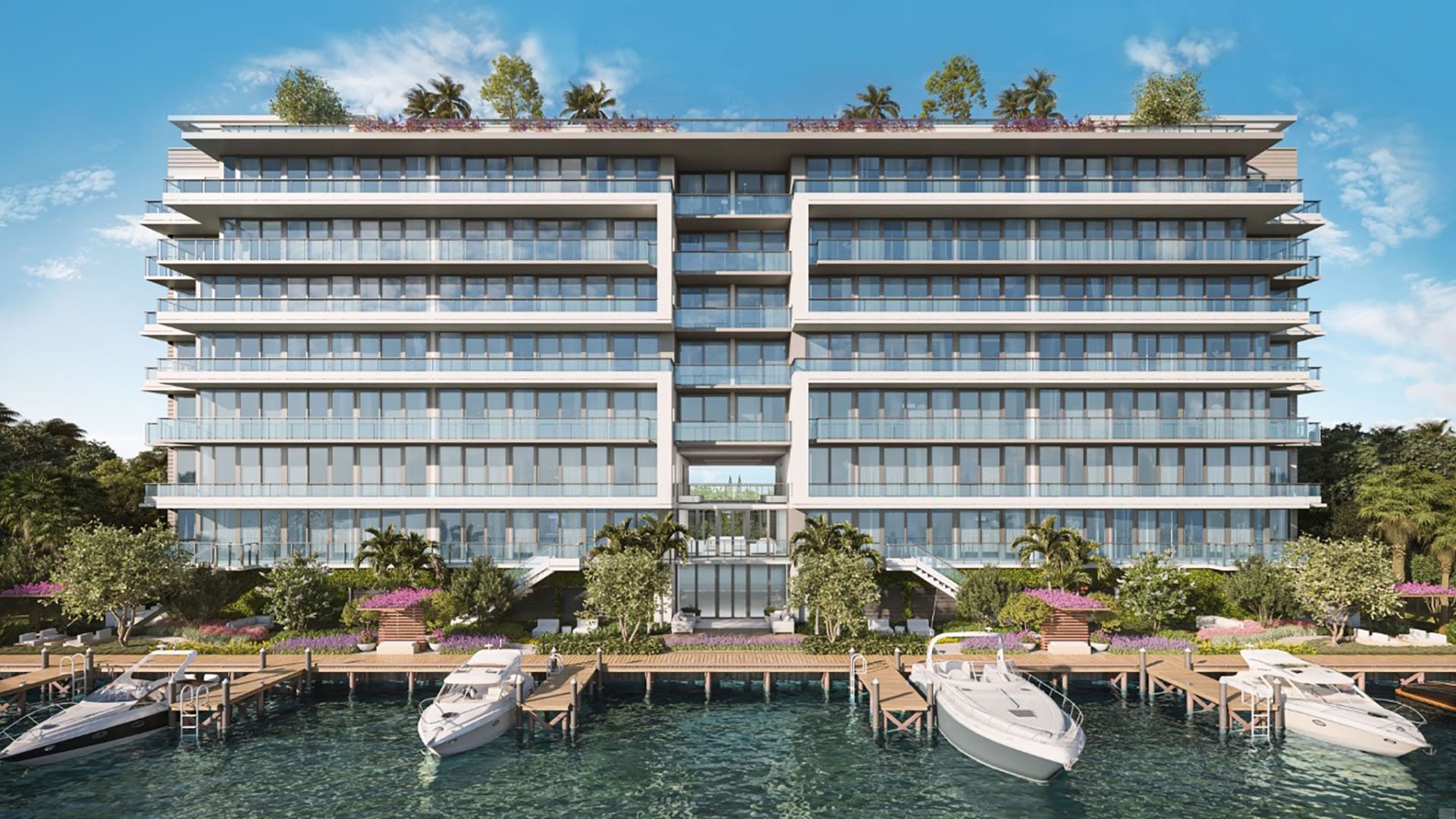
Luxury buyers in South Florida are increasingly separating spectacle from substance. The most durable residences are not always those with the loudest exterior statement or the longest amenity vocabulary. They are the homes that make ownership easier to understand, easier to use, and easier to hold with confidence. That is the lens through which La Baia North Bay Harbor Islands becomes especially compelling.
La Baia North is associated with Bay Harbor Islands, placing it within a village-scale residential conversation rather than a purely resort-driven one. That distinction matters. Bayfront living here is not only about the view. It is about an ownership pattern that can feel more measured, more residential, and more practical for buyers who want proximity to South Florida’s luxury geography without surrendering daily calm.
In many waterfront markets, the purchase decision is dominated by one question: how dramatic is the setting? In Bay Harbor Islands, a more useful question may be: how well does the setting support real life? The answer depends on a buyer’s priorities, but the area’s appeal often rests on discretion, neighborhood scale, and an ownership experience that can feel less seasonal than a trophy-only address.
For high-net-worth buyers, practical does not mean modest. It means legible. It means the residence can be understood not only as an indulgence, but as a functional asset within a broader lifestyle strategy. A bayfront home that supports daily routines, hosting, privacy, and long-term flexibility can be more compelling than one designed only for occasional arrival.
That is where La Baia North Bay Harbor Islands benefits from a more restrained reading of luxury. Without leaning on exaggerated claims, the project’s association with Bay Harbor Islands allows buyers to consider a different form of waterfront ownership: one grounded in a residential enclave rather than a pure destination mindset.
The buyer vocabulary here is familiar: boutique scale, waterview priorities, new-construction expectations, and investment discipline. Those terms are often overused in the market, but they describe the framework sophisticated purchasers bring to this segment. They want beauty, but also usability. They want privacy, but not isolation. They want water, but also convenience and neighborhood coherence.
Bay Harbor Islands has long appealed to buyers who prefer a quieter residential identity. In local shorthand, Bay Harbor often signals a softer alternative to higher-intensity waterfront districts. The setting can speak to those who want a bay-oriented lifestyle without making every part of ownership feel performative.
That difference matters for families, second-home owners, and downsizing buyers alike. A practical ownership proposition usually begins with the ability to use the home comfortably across more than one scenario. It should feel appropriate for a long weekend, a seasonal stay, or a primary-residence rhythm. It should also make sense when viewed beside comparable boutique and waterfront offerings nearby.
This is why buyers looking at La Baia North often benefit from studying the immediate competitive context. A project such as Alana Bay Harbor Islands may appeal to those considering a more intimate Bay Harbor address, while Bay Harbor Towers gives buyers another reference point within the same island conversation. These comparisons are not about declaring one building universally superior. They are about clarifying fit.
The likely La Baia North buyer is not necessarily chasing the most public version of Miami luxury. This buyer may already understand the difference between a headline property and a livable one. They may be focused on whether the residence can carry multiple uses, including privacy, family time, entertaining, and future optionality.
For that buyer, the practical proposition begins with restraint. A residence does not need to announce everything at once. It needs to hold up after the initial impression fades. In a bayfront context, that can mean prioritizing sightlines, arrival sequence, natural light, quiet, and a sense of proportion. Those are not minor details. They are the difference between admiring a property and actually wanting to live in it.
Buyers may also compare La Baia North with nearby projects that frame wellness, waterfront access, or boutique living in different ways. The Well Bay Harbor Islands introduces a distinct wellness-oriented reference point, while La Maré Bay Harbor Islands belongs naturally in the same broader neighborhood evaluation. Together, these projects underscore how Bay Harbor Islands has become a nuanced buyer market, not a one-note location.
The phrase practical ownership should be treated carefully. It should not be reduced to price, nor should it be confused with compromise. In the ultra-premium market, practicality is often about reducing friction. A buyer wants fewer questions after closing, fewer lifestyle mismatches, and fewer reasons the residence feels underused.
For La Baia North, the practical argument starts with the project’s Bay Harbor Islands association. That geography gives the conversation a residential frame. The rest of the analysis should be conducted with discipline: buyers should review residence layouts, exposure, building services, use policies, carrying costs, parking, storage, and the relationship between private space and shared amenities. Those details determine whether the bayfront promise becomes a daily advantage or simply a beautiful backdrop.
This is especially important in South Florida, where luxury buyers often cross-shop multiple waterfront submarkets. The strongest purchase is rarely the one that wins every category on paper. It is the one whose tradeoffs match the owner’s actual life. A quieter bayfront setting may outperform a more theatrical address if it encourages longer stays, easier routines, and more consistent use.
Today’s luxury buyer is more analytical than ever. They are not abandoning emotion, but they are asking better questions before committing. How will the residence live in August as well as January? How private does it feel when fully occupied? Does the building identity match the way the owner wants to be perceived? Can the home support both retreat and connection?
La Baia North Bay Harbor Islands belongs in that conversation because it places bayfront living within a calmer, more residential frame. Its practical proposition is not about lowering the ambition of waterfront ownership. It is about refining that ambition into something more usable, more discreet, and potentially more durable.
For the right buyer, that may be the point. Luxury does not always need to become larger to become better. Sometimes it becomes more valuable when it becomes more precise.
Is La Baia North associated with Bay Harbor Islands? Yes. La Baia North is associated with Bay Harbor Islands, which frames it within a quieter residential waterfront market.
Why does Bay Harbor Islands matter for ownership? The area can appeal to buyers seeking a more residential and discreet setting rather than a purely resort-style address.
Is La Baia North best understood as a primary home or second home? It may suit either use depending on the residence, services, and ownership priorities a buyer confirms during due diligence.
What makes a bayfront purchase practical? Practicality comes from daily usability, privacy, carrying-cost clarity, residence layout, and the way the setting supports real routines.
Should buyers compare La Baia North with other Bay Harbor projects? Yes. Comparing nearby offerings helps clarify whether the buyer values wellness, boutique scale, waterfront orientation, or overall neighborhood fit.
Does practical ownership mean less luxury? No. In the ultra-premium market, practical ownership often means a more disciplined and usable expression of luxury.
What should buyers review before reserving or purchasing? Buyers should review floor plans, exposures, services, use rules, parking, storage, association structure, and total ownership costs.
Is Waterview potential the only reason to consider the project? No. Waterview appeal matters, but privacy, circulation, neighborhood feel, and long-term usability may be equally important.
Can La Baia North be considered from an Investment perspective? It can be evaluated that way, but buyers should ground any investment analysis in verified costs, comparable properties, and intended holding period.
Who is the ideal buyer for this type of residence? The ideal buyer is likely someone who values waterfront calm, discretion, and a residence that can support more than occasional use.
For a discreet conversation and a curated building-by-building shortlist, connect with MILLION.
If branded residences are on your mind — as a home or as an allocation — we would be glad to share what we are seeing, privately.
Begin a quiet conversation