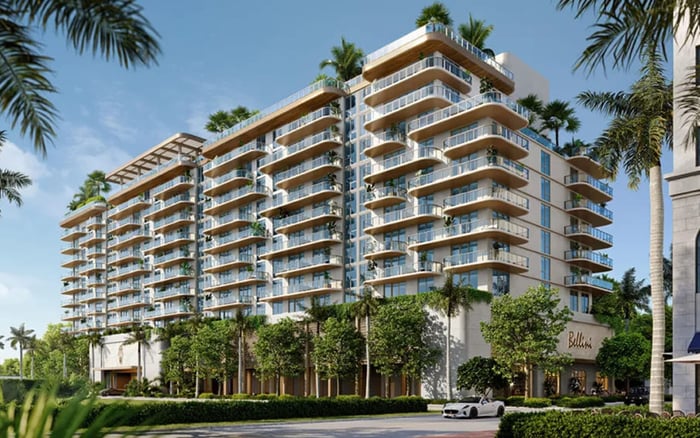
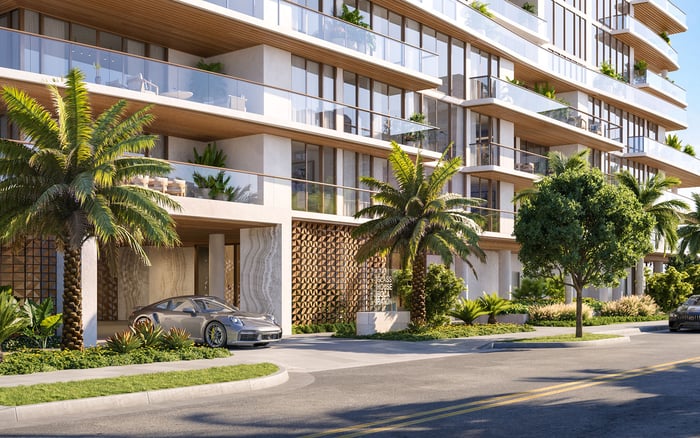
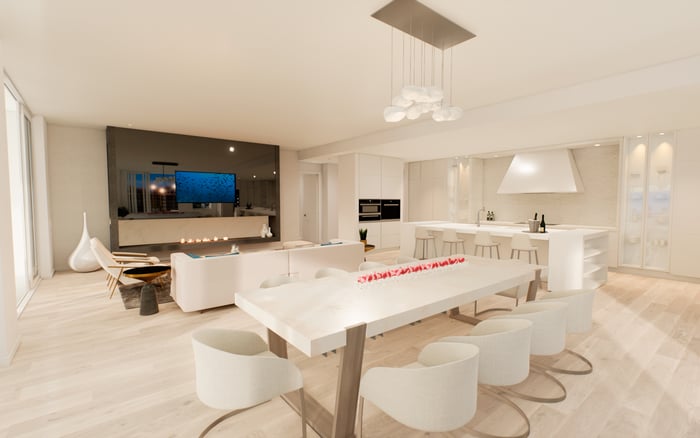
In downtown Boca Ratón, two distinct luxury condo propositions are shaping how buyers think about light, views, and discretion. Glass House Boca Raton is a boutique, 10-story collection of 28 residences defined by a glass-forward modern expression and a rooftop oasis. Alina Residences, a multi-building community on Mizner Boulevard, leans into a broader, resort-style amenity ecosystem and wellness-oriented living, with panoramic views for select residences. This editorial compares the lived realities of floor-to-ceiling glazing, terrace-first plans, and how density and siting influence privacy and exposure in each setting.
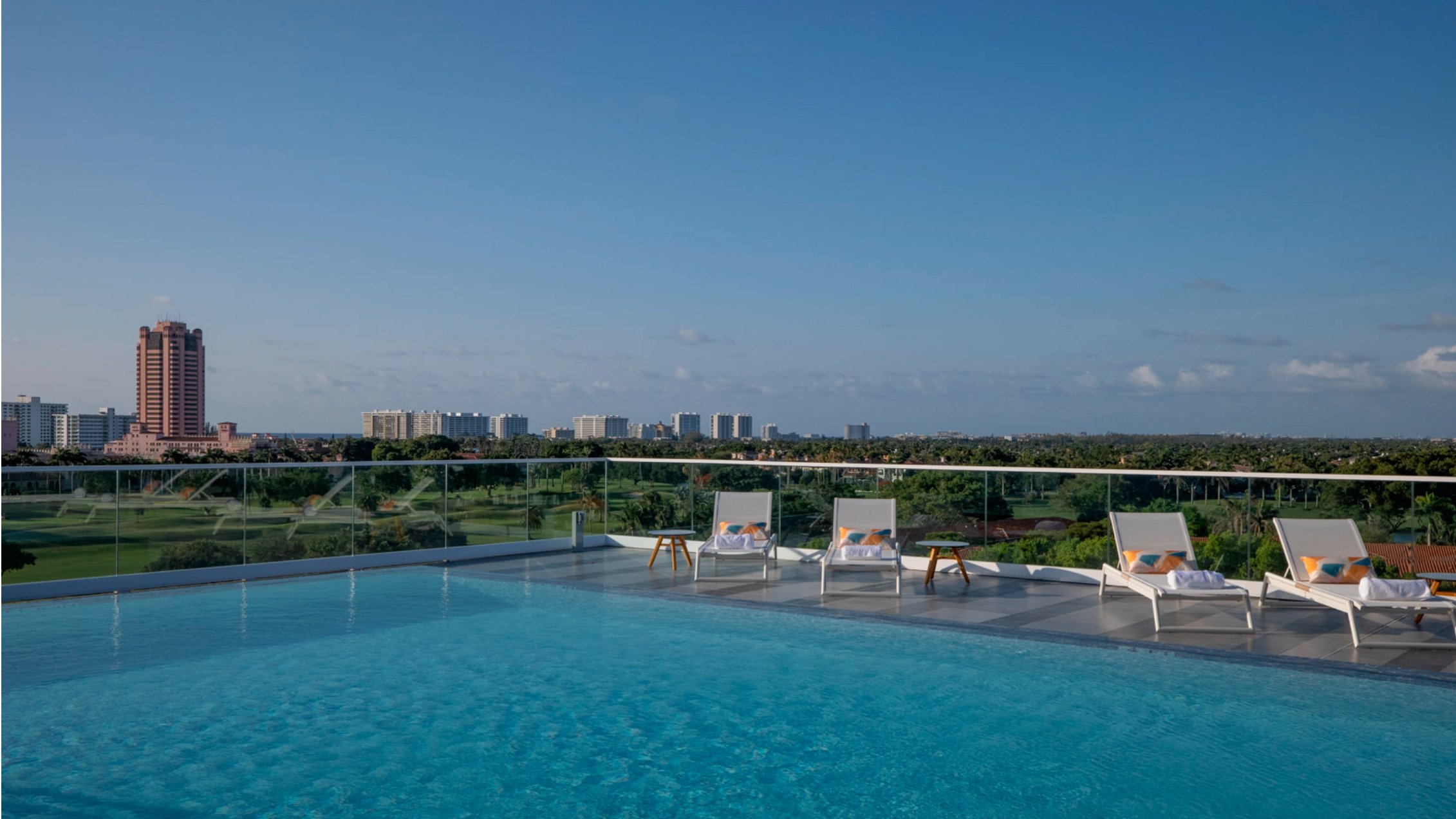
In Boca Ratón’s downtown core, luxury buyers are increasingly deciding less around square footage and more around exposure. The pivot is architectural: floor-to-ceiling glazing, larger terraces, and amenity decks oriented to skyline and horizon. It’s a lifestyle preference-but also a practical one. Glass amplifies daylight and view connectivity while quietly requiring more intention around privacy, shading, and maintenance.
Two developments crystallize that choice. Glass House Boca Raton is a 10-story luxury condominium with 28 private residences, positioned as a modern glass building for downtown. Alina Residences, located on Mizner Boulevard, is a three-building community comprised of ALINA 200, ALINA 210, and ALINA 220, offering panoramic views for select residences and a more expansive, resort-style amenity program.
This isn’t simply “boutique versus big.” It’s a look at how scale changes your day: what you see when you wake up, how you host, what you hear, and how visible you feel.
Glass House is intentionally small. With 28 residences in a single 10-story tower, the promise is intimacy: fewer neighbors, a calmer rhythm in common areas, and an overall sense of curation for owners who value discretion over spectacle.
Architecturally, the project leans into a glass-forward concept. Residences are described with full-height impact windows and sliding glass doors, signaling the core experience: bright interiors, extended sightlines, and a daily connection to the outdoors. Private terraces and balconies reinforce that idea, making indoor-outdoor living less of a weekend habit and more of the default.
Amenity-wise, the rooftop “oasis” is the headline. Rooftop amenities in downtown settings tend to deliver two things exceptionally well: a clear social focal point and the reward of elevation. Here, that translates to a pool and lounge-oriented deck designed to capitalize on views, along with outdoor entertaining zones. In a boutique tower, a rooftop deck reads differently than it does in a multi-building campus-it feels closer to a private club than a resort.
The practical implication: when a building is this concentrated, the amenity mix may feel less sprawling, but often more accessible. You’re not navigating a campus. You’re simply ascending.
Alina Residences sits in the same downtown ecosystem, but it moves at a different cadence. Planned as a three-building community-ALINA 200, ALINA 210, and ALINA 220-its structure supports a broader amenity canvas, emphasizing extensive, resort-style amenities with wellness-leaning programming as a central theme.
Alina also promotes panoramic views for select residences, with sightlines that can include the ocean, downtown, and nearby golf-course areas, depending on unit position and elevation. The operative phrase is “select residences.” In a multi-tower environment, view is inherently stack-specific. Two homes with similar interiors can live entirely differently based on orientation, spacing to adjacent buildings, and how the larger campus shapes view corridors.
Terraces and balconies remain central to the plan language, reinforcing the indoor-outdoor lifestyle that is now table stakes for new luxury in South Florida. But terrace living changes with scale. In a campus setting, it can feel more animated and more varied: you may have more on-property options for wellness and hosting, while also needing to be more aware of adjacent sightlines.
For buyers who want a downtown address paired with an amenity program that can support a full week’s routine, Alina’s ecosystem is designed to feel complete.
When buyers tour glass-rich condos, the reaction is often immediate: clarity. Rooms fill with daylight, and the city becomes part of the interior. Floor-to-ceiling window walls are meant to do exactly that-increase daylight and deepen view connectivity.
But exposure isn’t only about what you see. It’s also about what can be seen.
Floor-to-ceiling glazing can introduce privacy challenges, particularly when nearby buildings, street activity, or lower elevations increase visibility into the home. That’s where the difference between a boutique tower and a multi-building campus becomes more than a planning diagram. Glass House’s smaller scale can mean fewer internal sightline conflicts, simply because there are fewer residences and fewer neighboring façades within the same project.
At Alina, privacy and view corridors can vary more meaningfully by building position and orientation. That variability isn’t a flaw-it’s the selection process. Sophisticated buyers often approach it the way they would a seat in a theater: the show is the same, but the experience changes with angle and distance.
Glass-forward living is aspirational-and operational. Before committing, it’s worth pressure-testing the everyday realities.
First, maintenance. Floor-to-ceiling window walls can raise cleaning demands versus smaller window systems. It’s not only about smudges; it’s about surface area and how often you want your view to look pristine.
Second, comfort. In South Florida’s light and heat, expansive glazing can increase heat gain and glare depending on orientation. Shading strategies, window treatments, and the specifics of glass selection matter because you’re effectively tuning the home’s relationship with the sun.
Third, sound and storm readiness. New coastal construction commonly uses impact-rated windows and doors designed for hurricane protection, and impact glazing can also improve sound attenuation compared to non-impact systems. In downtown Boca Ratón, where street life is part of the appeal, that acoustic performance can register as a quiet luxury.
In both Glass House and Alina, the baseline expectation is modern impact glazing, but the lived experience still turns on elevation, exposure, and how you prefer to live with your blinds open.
Privacy in glass homes is rarely solved by a single feature. It’s a system.
Start with terraces. Large terraces and balconies are signatures in both developments, and they can either increase privacy or reduce it, depending on railing design, landscaping, and proximity to neighboring buildings. A terrace can act as a buffer, adding distance from the street and adjacent structures. Or, in denser contexts, it can become another plane where lines of sight intersect.
Then consider lighting. At night, a glass apartment can read like a lantern. Buyers who entertain frequently may enjoy that effect; others may want the ability to shift the mood instantly. Layered lighting plans and discreet window treatments are often the difference between feeling exposed and feeling in control.
Finally, think about how you actually use the home. If you work from a dining table facing a window wall, you’re living in a visible tableau. If primary seating zones are offset, you can preserve openness without fully closing the home down.
For buyers who want a similarly modern expression with a different neighborhood texture, properties like 2200 Brickell show how glazing and vertical living can play out in a more urban Miami setting, where view corridors and surrounding density follow a different logic.
The most meaningful difference between these two Boca Ratón options isn’t one amenity-it’s how you move through your week.
Glass House’s rooftop oasis suggests a simplified luxury routine: arrive, park, ascend, decompress. Fewer residences typically means fewer competing schedules. The rooftop becomes a reliable extension of the home, ideal for owners who want an amenity that feels genuinely theirs.
Alina’s resort-style amenities and wellness orientation support a broader on-property lifestyle. Buyers who value variety, dedicated spaces for fitness and restoration, and a sense of on-property routine often gravitate to campus environments because they reduce the need to “go out” for every ritual.
A useful mental model: boutique towers tend to privilege calm and control, while multi-building communities tend to privilege choice and energy. Neither is inherently more luxurious-they’re simply different definitions of luxury.
The preference for glass, terraces, and view-led living isn’t unique to Boca Ratón. It reflects a regional shift toward architecture that treats light as a primary material.
On the oceanfront, for example, 57 Ocean Miami Beach speaks to a coastal version of the same impulse: glazing as a frame for horizon and water, with daily routines organized around the outdoors.
In quieter, low-density enclaves, the parallel is often a single-family home that prioritizes privacy while still capturing brightness and indoor-outdoor flow. In Boca Ratón, 749 Bamboo Dr Boca Raton illustrates how luxury buyers can pursue discretion and openness simultaneously, but with different controls and boundaries than a condominium setting.
These comparisons aren’t substitutes for Glass House or Alina. They’re reminders that the “glass lifestyle” is a spectrum-from boutique vertical living, to resort-scale campuses, to private residences where architecture can turn inward.
When two developments satisfy the same core desires, the right choice is usually the one that aligns with your personal tolerances.
Choose Glass House Boca Raton if you value:
Choose Alina Residences if you value:
In both cases, the smartest move is to evaluate the specific residence, not the brand idea. Stand at the window wall. Step onto the terrace. Note the angles to neighboring buildings. Then picture the home at 9 a.m. and 9 p.m. That’s when the decision usually clarifies.
Is Glass House Boca Raton a boutique condominium? Yes. It is a 10-story development with 28 private residences, designed to feel more intimate than larger projects.
Does Glass House emphasize a modern glass design? Yes. It is positioned as downtown Boca Ratón’s first modern glass building with a glass-forward concept.
What kind of windows and doors are featured at Glass House? Residences feature full-height impact windows and sliding glass doors for floor-to-ceiling glazing.
What amenities define Glass House? The signature is a rooftop oasis with a pool and outdoor lounge and entertaining areas oriented to views.
Where is Alina Residences located? Alina is a downtown Boca Ratón condominium community located on Mizner Boulevard.
Is Alina a single tower or a multi-building community? It is planned as a three-building community: ALINA 200, ALINA 210, and ALINA 220.
Do all Alina residences have panoramic views? No. Panoramic views are promoted for select residences, and view quality varies by position and elevation.
Do floor-to-ceiling windows increase privacy concerns? They can, depending on nearby buildings, street activity, and elevation, so privacy planning matters.
Are there drawbacks to floor-to-ceiling window walls besides privacy? Yes. They can increase cleaning demands and may increase heat gain and glare depending on orientation.
Do impact-rated windows help with anything beyond storm protection? Yes. Impact-rated windows and doors are designed for hurricane protection and can also improve sound attenuation.
For a confidential assessment and a building-by-building shortlist, connect with MILLION Luxury.
If branded residences are on your mind — as a home or as an allocation — we would be glad to share what we are seeing, privately.
Begin a quiet conversation