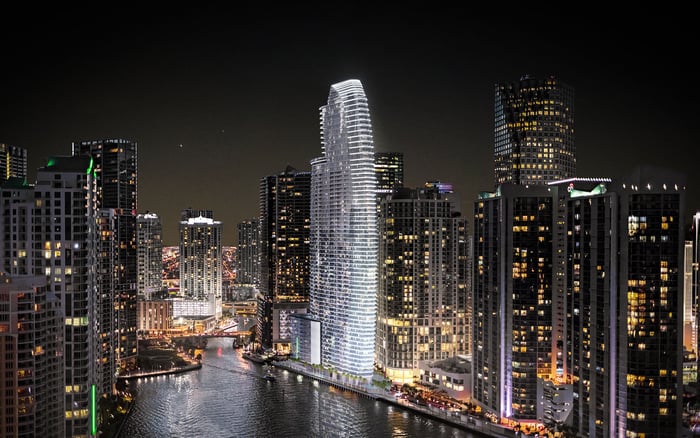
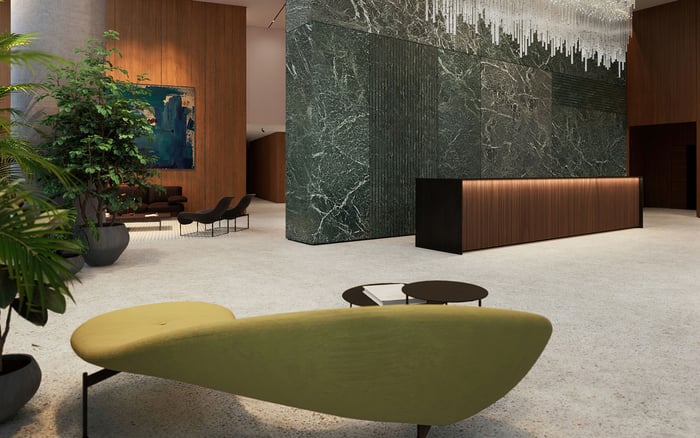
A buyer-focused comparison of 888 Brickell by Dolce & Gabbana and Waldorf Astoria Residences Miami, emphasizing brand identity, location context, and the due diligence questions that matter most for service, elevator privacy, and amenity separation.
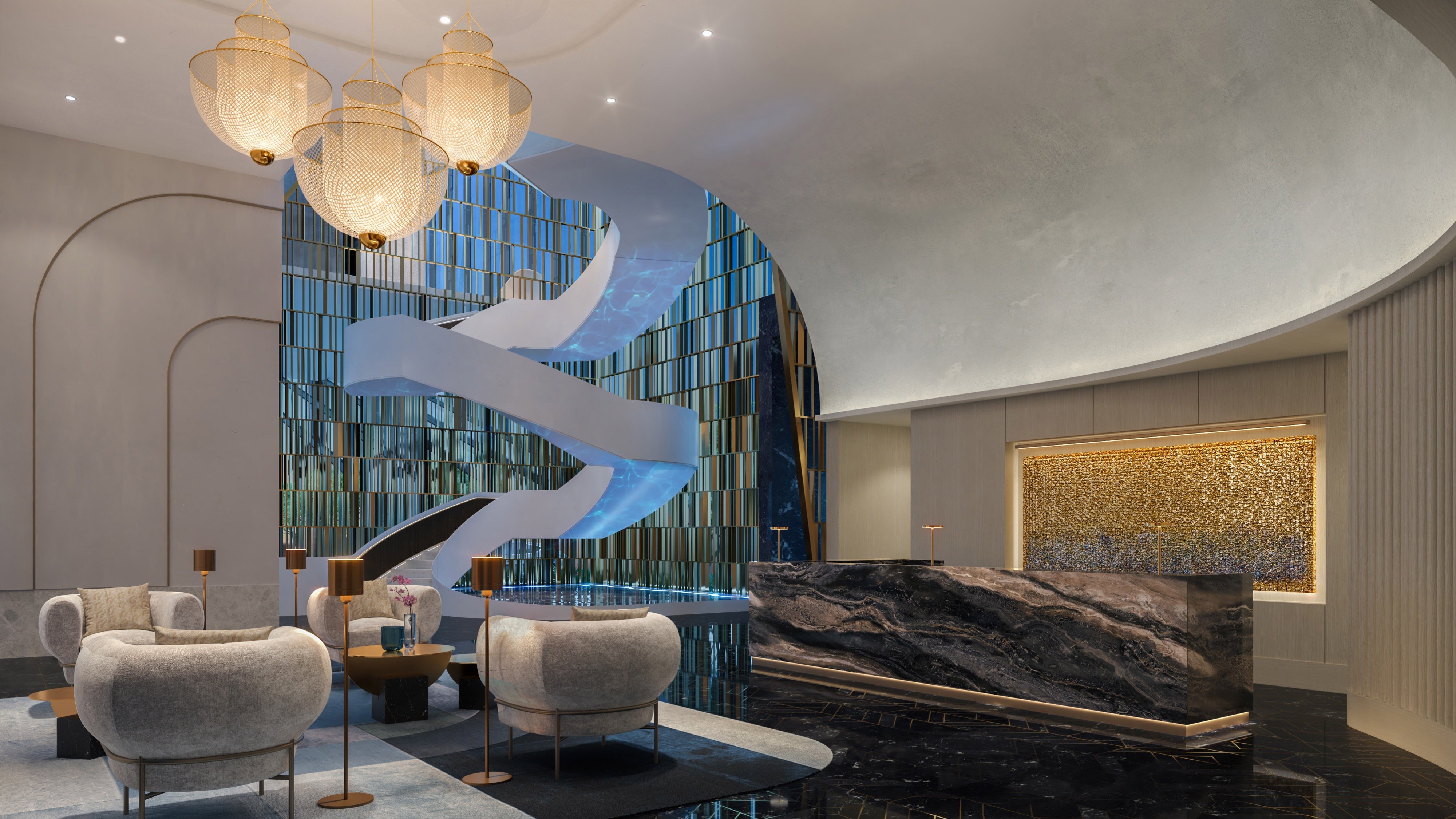
In Miami’s branded-residence market, prestige is no longer scarce. At the top end, buyers can choose among fashion houses, hospitality names, private-club concepts, and design-led residential towers. The more useful question is quieter and more exacting: what kind of prestige will shape daily life after closing?
That is the proper lens for comparing 888 Brickell by Dolce & Gabbana with Waldorf Astoria Residences Miami, often searched by buyers as Waldorf Astoria Residences Downtown Miami. Both occupy the upper register of Miami’s new branded-residential conversation. Both speak to an audience that expects discretion, architecture, and a recognizable name. Yet they are not interchangeable.
888 Brickell by Dolce & Gabbana belongs to the Brickell discussion, where fashion-house identity, urban polish, and design presence matter. Waldorf Astoria Residences Miami belongs to the Downtown conversation, where the brand’s hospitality heritage naturally frames expectations around service culture. For a new-construction buyer, the distinction is not merely cosmetic. It reaches the practical questions that matter once the initial allure fades: who serves the owner, how private the arrival sequence feels, and whether amenities are reserved, shared, or layered in ways that match the buyer’s lifestyle.
The cleanest contrast is location. 888 Brickell by Dolce & Gabbana is the Brickell option in this comparison. Waldorf Astoria Residences Miami is the Downtown Miami option. That difference should not be treated as a minor map note. In luxury real estate, neighborhood context shapes the rhythm of ownership as much as finishes or branding.
Brickell has a more concentrated financial-district identity. Buyers drawn to 888 Brickell by Dolce & Gabbana may be responding to the idea of a highly styled vertical address in a polished urban setting. The appeal is direct: a fashion-house-branded residence in the city’s most recognizable business and luxury-condo corridor. It is a choice that can feel especially compelling for owners who want a strong design statement and a location associated with Miami’s corporate, dining, and residential energy.
Downtown offers a different frame. Waldorf Astoria Residences Miami is better understood in the Downtown Miami context, where skyline presence and hospitality-inflected branding create a distinct ownership proposition. The Waldorf Astoria name carries a hotel-service association, but buyers should still examine the specific residential program rather than assume every hospitality cue translates into unlimited owner services.
For investment conversations, this location split also matters. Brickell and Downtown can attract overlapping, but not identical, buyer profiles. The more refined comparison is not simply which tower is more famous. It is whether a buyer wants the Brickell identity of 888 Brickell by Dolce & Gabbana or the Downtown identity attached to Waldorf Astoria Residences Miami.
Branding is powerful because it compresses a set of expectations into a single name. Dolce & Gabbana signals fashion, surface, theatricality, and design authorship. Waldorf Astoria signals hospitality, ceremony, service memory, and hotel prestige. Both can be compelling, but they promise different emotional experiences.
At 888 Brickell by Dolce & Gabbana, the brand story points toward fashion-house prestige. That does not mean buyers should reduce the project to décor. A fashion brand at this level suggests that presentation, atmosphere, and visual identity are central to the residential experience. The buyer who finds this persuasive may prioritize the feeling of living inside a branded design environment, where the address itself communicates taste and confidence.
At Waldorf Astoria Residences Miami, the brand story begins with hospitality. That may naturally raise expectations around service, arrival, and operational polish. But sophisticated buyers should be careful with assumptions. A hospitality brand can signal a service orientation, but the exact depth of service, the boundaries between residential and any nonresidential components, and the owner experience should be reviewed in the actual residential offering documents and project materials.
This is where top-project language can mislead when it stops at name recognition. Both names can belong in a serious luxury shortlist. The better advisor’s question is sharper: does the buyer want fashion-led identity in Brickell, or hospitality-led identity in Downtown?
Service is one of the most overused words in branded residences. At the ultra-premium level, buyers should move beyond the word itself and ask what service means in practice.
For 888 Brickell by Dolce & Gabbana, the relevant inquiry should focus on the residential program tied to that specific Brickell project. What services are included for owners? Which are à la carte? Who operates them? Are they available around the clock, by reservation, or through a curated concierge model? How are guest arrivals handled, and how much friction is removed from daily ownership?
For Waldorf Astoria Residences Miami, the hospitality association makes service an even more central topic. Buyers should ask how the Waldorf Astoria identity is translated into the residential experience. Is the service model primarily concierge-oriented, hospitality-adjacent, or deeply integrated into daily life? What services are exclusive to residents, and what services, if any, are shared or separately accessed?
The distinction is not academic. Some buyers want a home that feels almost hotel-like in its operational ease. Others want privacy first and service only when requested. The best choice depends on how visible, or invisible, the owner wants that service layer to be.
Elevator privacy is often discussed too narrowly. Buyers may ask whether elevators are private, semi-private, keyed, destination-controlled, or shared, but the more important issue is the complete chain of arrival.
At 888 Brickell by Dolce & Gabbana, a buyer should evaluate how the Brickell arrival experience moves from curb to lobby to elevator to residence. If privacy is a priority, the inquiry should include access control, guest routing, service circulation, and how residents are separated from other users of the building. Without verified project-specific details, it is better to ask precise questions than to assume a particular elevator configuration.
At Waldorf Astoria Residences Miami, buyers should take the same approach in the Downtown context. A hospitality-branded tower may create assumptions about grand arrival and attended movement, but elevator privacy depends on the actual residential plan. Owners should confirm whether residential elevator access is distinct, how visitors are managed, and whether service personnel use separate paths.
The highest level of privacy is rarely one feature. It is a choreography of entry, recognition, vertical movement, and discretion. A buyer comparing these two projects should request clarity before treating elevator privacy as settled.
Amenity discussions can become a numbers game, but in this comparison, separation is the sharper issue. Owners should ask which amenities are genuinely residential, which are owner-only, and which, if any, are connected to broader building uses.
For 888 Brickell by Dolce & Gabbana, the amenity conversation should be understood through the lens of a fashion-house-branded Brickell address. Buyers may reasonably expect a strong aesthetic point of view, but they should still confirm how residential amenities are organized and who may use them.
For Waldorf Astoria Residences Miami, the hospitality brand may make amenities feel naturally tied to a service environment. Even so, a buyer should verify the line between resident-only spaces and any hospitality-influenced spaces. The words “residential” and “exclusive” should be tested carefully, especially by owners who place a premium on quiet, privacy, and predictability.
The question is not which project has the louder amenity story. It is which one gives the owner the right balance of access, separation, atmosphere, and control.
888 Brickell by Dolce & Gabbana is likely to resonate with a buyer who wants Brickell, design identity, and the cultural charge of a fashion-house-branded address. It is the more style-forward frame in this comparison, especially for owners who see the residence as part home, part statement, and part urban calling card.
Waldorf Astoria Residences Miami is likely to resonate with a buyer who wants Downtown Miami and a hospitality-branded context. The name invites expectations of service polish, but those expectations should be converted into specific due diligence: service scope, access control, resident-only spaces, and the daily operating model.
In the end, the prestige is similar enough to justify a serious comparison. The answers are different enough that the final choice should be highly personal.
Is 888 Brickell by Dolce & Gabbana in Brickell? Yes. In this comparison, 888 Brickell by Dolce & Gabbana is the Brickell project and should be evaluated in that neighborhood context.
Is Waldorf Astoria Residences Miami in Downtown Miami? Yes. Waldorf Astoria Residences Miami is the Downtown Miami project in this comparison.
Which project has the stronger fashion identity? 888 Brickell by Dolce & Gabbana carries the fashion-house identity, making design prestige central to its appeal.
Which project has the stronger hospitality identity? Waldorf Astoria Residences Miami carries the hospitality-branded identity, which naturally frames buyer expectations around service.
Can buyers assume private elevators at either project? No. Elevator privacy should be verified directly through project-specific materials before making assumptions.
Can buyers assume all amenities are owner-only? No. Buyers should confirm which amenities are resident-only, which are shared, and how access is controlled.
Is service depth the same at both towers? Not necessarily. The service model should be reviewed project by project, including what is included and what is à la carte.
Which is better for a Brickell-focused buyer? 888 Brickell by Dolce & Gabbana is the more direct fit for a buyer specifically prioritizing Brickell.
Which is better for a Downtown-focused buyer? Waldorf Astoria Residences Miami is the more direct fit for a buyer specifically prioritizing Downtown Miami.
What is the most important due diligence question? Ask how service, elevator access, and owner-only amenities function in daily life, not just how they are described.
When you're ready to tour or underwrite the options, connect with MILLION.
If branded residences are on your mind — as a home or as an allocation — we would be glad to share what we are seeing, privately.
Begin a quiet conversation