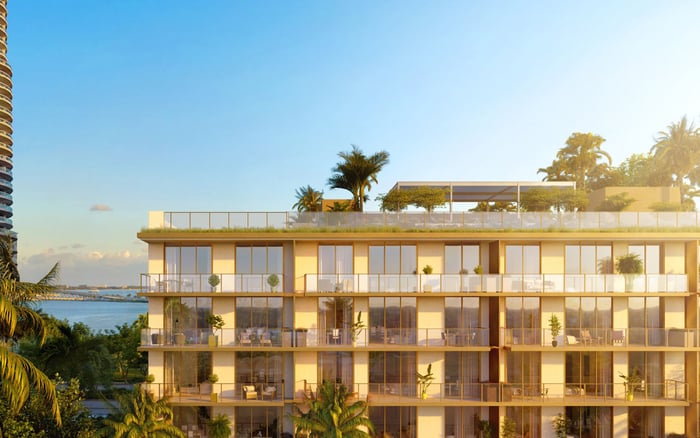
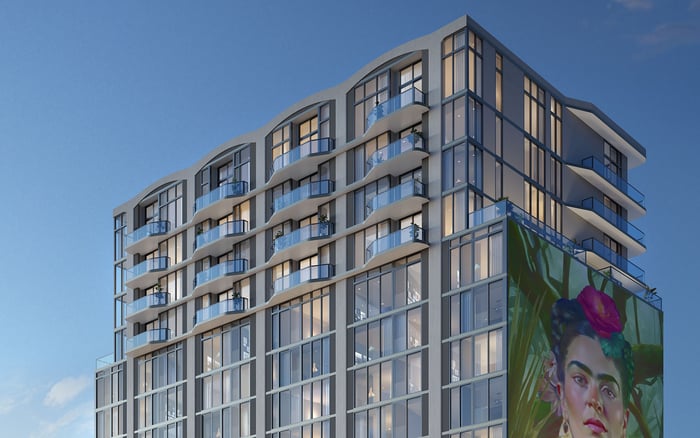
A discreet look at Colette Residences Brickell as a case study in quiet luxury, urban permanence, and ownership-structure planning for high-net-worth buyers.
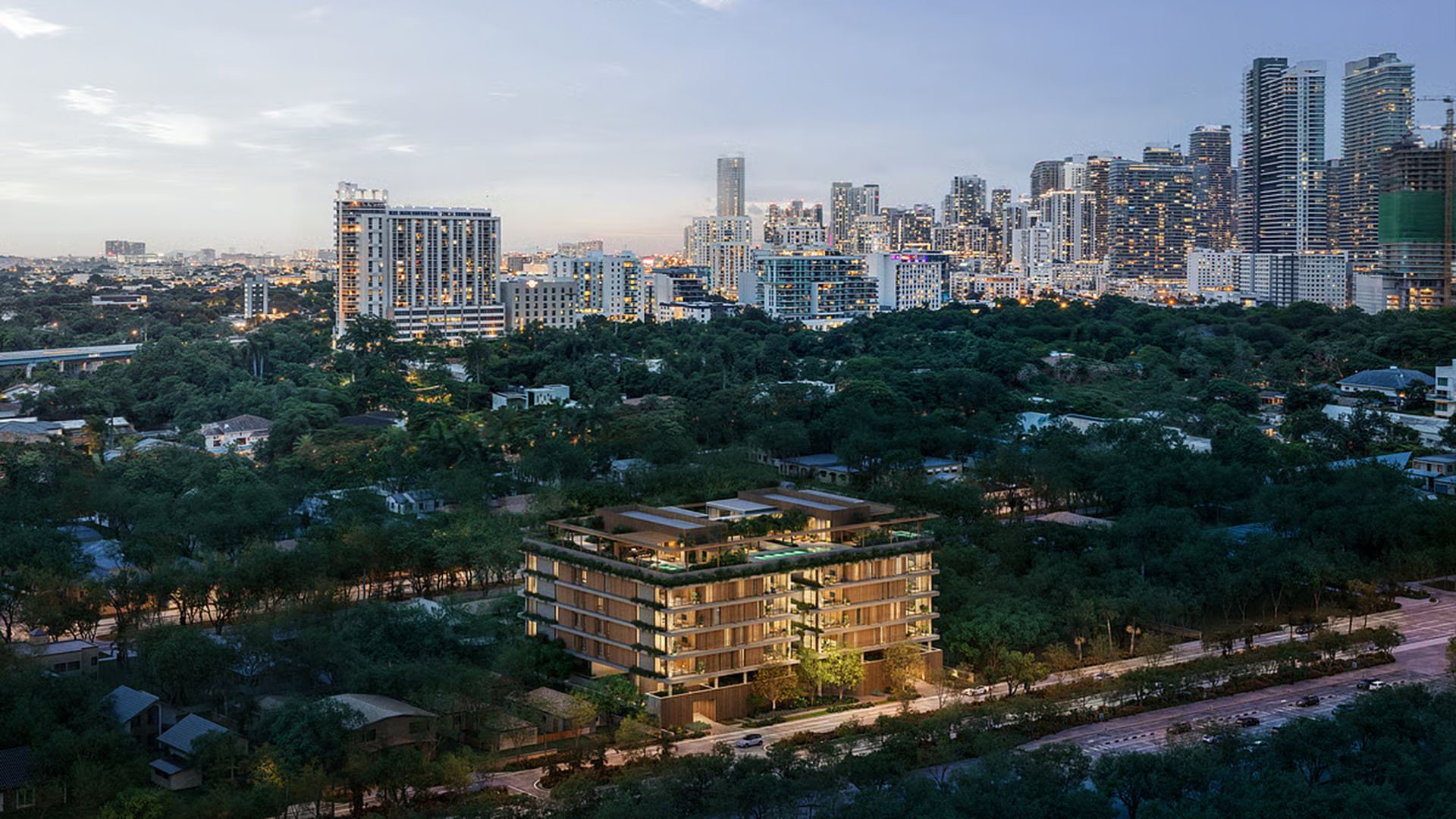
Colette Residences Brickell sits at a precise intersection in Miami luxury: a wealth-hub location, a likely boutique residential posture, and a buyer profile increasingly fluent in ownership structure. The question is not simply whether a residence is beautiful. At the highest tier of the market, the more consequential test is whether a property can support a private, orderly, long-duration life.
That is where Colette becomes compelling. In a district associated with glass towers, financial institutions, dining rooms, private banks, and hotel-branded living, a more restrained residential expression can feel less like retreat and more like strategy. Brickell is Miami’s historic financial district, and now the city’s closest approximation of a walkable, Manhattan-style urban core. It draws capital from Latin America, Europe, the Northeastern U.S., and finance and technology hubs across the country.
For buyers who already understand Miami as a lifestyle market, Colette suggests a narrower thesis: a permanent or semi-permanent Brickell base that favors discretion over spectacle. In MILLION terms, this is where Brickell, Boutique, Investment, New Project, Pre-construction, and New-construction thinking converge in one practical ownership conversation.
Brickell’s appeal is not only visual. It is logistical. For principals, entrepreneurs, executives, professionals, and multi-generational families, proximity has value: offices, private banking relationships, restaurants, wellness routines, and urban services can sit within a compact daily radius. That matters for buyers who do not want their Miami residence to function as a once-a-season trophy.
The neighborhood’s strongest luxury proposition is efficiency. A buyer can live near capital, hospitality, dining, retail, and the transit of daily life without surrendering the urban polish expected at the top of the market. This is why Brickell continues to attract global buyers who want Miami energy without a resort-only framework.
Colette’s relevance is best understood within that context. Rather than competing purely on altitude, spectacle, or amenity volume, a boutique and design-forward property can compete on mood, privacy, service rhythm, and neighborhood fit. For a buyer establishing a Miami base, those qualities can be more valuable than sheer scale.
The current Brickell cycle is moving toward more architecturally distinct projects for sophisticated end-users. Large towers are not disappearing. The market is becoming more segmented, with certain buyers seeking a quieter building culture.
A boutique property can create a different social contract. Fewer residences may mean a more recognizable ownership community, less lobby theater, more predictable governance, and a service team that understands individual patterns. For privacy-conscious buyers, the goal is not isolation. It is controlled exposure.
That distinction is especially relevant in Brickell, where the district’s public energy is part of the appeal. The right residence should provide access to the city without making the owner feel constantly visible within it. Colette is framed as a potential micro-neighborhood within a neighborhood, which is a useful way to understand its case. The buyer is not merely purchasing square footage. The buyer is evaluating a building ecosystem.
Quiet luxury is often reduced to beige rooms and expensive materials. In real estate, the more sophisticated definition is broader: restrained design, minimal external branding, craftsmanship, acoustics, light, proportion, and a service culture that does not need to announce itself.
Applied to Colette, the quiet-luxury thesis should include how the building operates. Access control, visitor management, privacy protocols, staff discretion, package handling, valet choreography, and governance standards all shape daily life. A residence can have beautiful finishes and still feel chaotic if the operational layer is too porous.
For the high-net-worth buyer, these details matter because privacy is cumulative. It is built through hundreds of small frictions removed or controlled. A quiet elevator arrival, a calm lobby, a measured front-desk culture, and limited transient energy can create a sense of composure no oversized amenity deck can replicate.
This is where Colette’s likely positioning as a boutique, design-forward Brickell address feels commercially intelligent. It speaks to buyers who have moved beyond visible status signaling and toward residences that protect time, identity, and peace of mind.
The asset-protection conversation should be handled with discipline. A condominium purchase does not automatically create protection, privacy, tax efficiency, or estate-planning success. Those outcomes depend on the buyer’s facts, domicile, family structure, citizenship, financing, liability profile, and professional advice.
Still, the lens is relevant. Buyers in Brickell often include family-office principals, entrepreneurs, professionals, and multi-generational families. These buyers commonly review how a residence should be titled, whether an entity or trust is appropriate, how homestead considerations may apply, and how a Miami property fits within a broader balance sheet.
The important distinction is that structure is not an afterthought. It should be discussed before contract execution, financing decisions, closing timelines, and family-use arrangements become fixed. A buyer who intends to hold long term may evaluate governance, insurance, reserve discipline, rental rules, privacy norms, and resale positioning alongside legal and tax planning.
Colette’s quiet-luxury thesis reinforces that approach. If the building is meant to serve as a permanent or semi-permanent base, the ownership structure should be reviewed with the same care as the floor plan, view corridor, and service model. The point is alignment: lifestyle, privacy, liability awareness, estate intent, and liquidity planning should not work against one another.
Because final pricing, absorption, and buyer-mix conclusions depend on market data, the more useful buyer exercise is qualitative. Does the building culture fit the intended use? Is the residence for daily living, seasonal presence, family rotation, or long-term wealth storage? Will the owner value a quieter address more than a more animated brand environment?
A serious buyer should also examine how the building may function over time. Boutique projects can be compelling when ownership is aligned, service standards are consistent, and governance remains steady. They can also require buyers to pay close attention to association documents, use restrictions, maintenance philosophy, and rules affecting guests, leasing, pets, staff access, and renovations.
For those evaluating Colette, the key is not to chase a generalized Miami narrative. The sharper question is whether this particular Brickell residence can provide a private urban base with enough design quality, operational discretion, and structural flexibility to justify long-term ownership.
The most durable luxury in Brickell may be calm. Not silence, not withdrawal, but a controlled residential environment inside a high-functioning urban district. That is the promise of a quieter building in a global capital corridor: access without overexposure.
Colette’s potential appeal rests on that balance. It is not positioned here as a speculative conclusion, nor as a guarantee of legal outcome or financial performance. It is better understood as a case study in how South Florida’s upper market is maturing. Buyers are no longer asking only what a building shows. They are asking how it lives, how it is governed, how it protects attention, and how it fits within a broader private architecture of wealth.
For the right buyer, that may be the essence of modern Brickell luxury: not louder, not larger, but more intentional.
What is the main appeal of Colette Residences Brickell? Its appeal is the combination of a Brickell location, a likely boutique residential character, and a quieter luxury posture for long-term owners.
Is Colette Residences Brickell positioned as a speculative investment? The stronger reading is as a design-forward urban base for end-users and long-term holders rather than purely speculative buyers.
Why does Brickell matter for high-net-worth buyers? Brickell combines offices, private banking, restaurants, luxury residences, retail, and urban convenience in Miami’s financial core.
What does quiet luxury mean in this context? It means restrained design, quality materials, privacy, acoustics, light, discreet service, and minimal dependence on overt branding.
How can a boutique building support privacy? A smaller, quieter building can reduce owner visibility, transient energy, and governance volatility when operations are well managed.
Does buying at Colette provide asset protection? No property purchase guarantees asset protection. Ownership structure should be reviewed with qualified legal and tax counsel.
What should buyers discuss with counsel before purchasing? They may review title structure, trust or entity use, homestead issues, financing, liability exposure, and estate-planning goals.
Is final pricing or absorption available for analysis here? No final conclusions should be drawn without current market data, contract terms, and verified project-specific details.
Who is the likely buyer profile for this type of residence? Likely buyers include entrepreneurs, family-office principals, professionals, and multi-generational families seeking lifestyle and structure.
What is the central takeaway for Colette Residences Brickell? The case is about intentional ownership: quiet design, operational discretion, and structure-aware planning in a walkable wealth hub.
For a discreet conversation and a curated building-by-building shortlist, connect with MILLION.
If branded residences are on your mind — as a home or as an allocation — we would be glad to share what we are seeing, privately.
Begin a quiet conversation