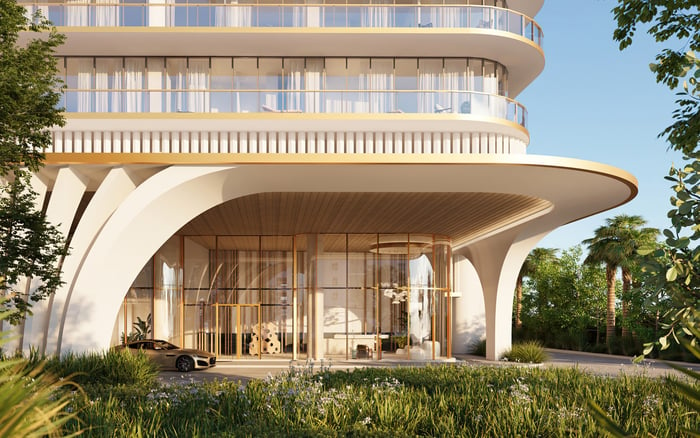
A buyer-focused comparison of 619 Residences and Waldorf Astoria Residences Downtown Miami, examining how architecture, service model, neighborhood context, and brand expression shape two different visions of ultra-luxury urban living in Miami.

In Miami’s top residential tier, buyers are rarely choosing between good and bad. They are choosing between different expressions of prestige. That is what makes the contrast between 619 Residences by Foster + Partners + Nobu Hospitality and Waldorf Astoria Residences Downtown Miami so compelling.
Both projects speak to the ultra-luxury buyer. Both trade in service, design, and a highly edited vision of urban life. Yet they package aspiration differently. One leans toward culinary discretion, architectural pedigree, and a more selective social signal. The other leans toward skyline-icon drama, immediate brand recognition, and the reassurance of a hospitality model that is globally legible.
For MILLION readers, the question is not simply which is better. It is which expression of Miami feels more precise for the life you actually want to lead.
619 Residences is defined first by design authorship. Foster + Partners gives the project a strong architecture-led identity, and that matters in a city where many luxury buyers have become increasingly fluent in the difference between branding and true design pedigree. For a collector-minded purchaser, that distinction can be decisive.
The project is associated with Nobu Hospitality, placing food, ambiance, and curated lifestyle experiences at the center of its appeal. That does not read like a conventional hotel-residence formula. It suggests a more selective proposition: less about broadcasting full-spectrum hotel machinery, more about shaping a private rhythm around refined hospitality cues.
Its setting is framed within Miami’s Arts District and Wynwood orbit, near 619 NE 6th Street, which sharpens the profile further. This is not the same urban proposition as a classic Downtown address. It is more culturally coded, more attuned to buyers who value adjacency to creative energy and a less predictable social geography. In that sense, 619 may appeal to the same sensibility that looks at Villa Miami or Miami Design Residences Midtown Miami and sees not just real estate, but a point of view.
Publicly disclosed details remain limited in some areas, which adds another layer to its profile. For certain buyers, selective disclosure can feel frustrating. For others, it reinforces the sense that the project is intended to be discovered rather than broadly merchandised.
If 619 is the quieter room with the best table, Waldorf Astoria Residences Downtown Miami is the arrival moment everyone notices.
The power of Waldorf Astoria lies in instant comprehension. The name alone conveys a fully formed set of expectations: hotel-style services, concierge-led living, and a globally recognizable standard of branded luxury. That clarity can be profoundly valuable in the ultra-high-end market, particularly for buyers who split time across cities and prefer an experience that translates effortlessly.
The Downtown location reinforces that proposition. This is Miami in its most legible metropolitan form: central, vertical, and visibly tied to the skyline. For buyers who want a residence to function as both home and statement, Downtown carries a different kind of authority than Wynwood. It is closer to the logic that draws attention to Aston Martin Residences Downtown Miami or One Thousand Museum Downtown Miami, where silhouette and recognition are part of the purchase equation.
This is not a subtle form of luxury. It is polished, branded, and intentionally iconic. For many global buyers, that is precisely the point.
The clearest way to understand the comparison is to focus on what each project is trying to make the buyer feel.
619 Residences suggests intimacy, authorship, and curation. The luxury is likely to be experienced through texture rather than scale: architecture as identity, hospitality as atmosphere, and a neighborhood context that feels closer to culture than to a corporate center. Even the Nobu affiliation is meaningful in this respect. It suggests that food and lifestyle are not accessory features but central elements of the residential mood.
Waldorf Astoria Residences Downtown Miami suggests assurance, presence, and a more public expression of success. Here, luxury is reinforced by a familiar five-star flag and a service model built to be understood immediately. Buyers who value procedural ease, broad service expectations, and a residence with an unmistakable skyline role may find this proposition more compelling.
Both are premium. The difference is psychological. 619 whispers. Waldorf Astoria projects.
The right fit depends less on price positioning than on personal operating style.
The buyer most drawn to 619 is likely design-literate and experience-sensitive. This person notices who drew the building, cares how hospitality is edited into private life, and may prefer an address with cultural charge over one with conventional centrality. They are not avoiding status, but they may prefer it encoded rather than announced. In Wynwood, that sensibility carries particular weight.
The buyer most drawn to Waldorf Astoria Residences Downtown Miami is likely seeking certainty alongside prestige. They may travel frequently, entertain international guests, or want the reassurance of a brand with immediate resonance. They may also value Downtown for its directness: this is Miami’s skyline stage, and ownership there communicates a more traditional version of urban luxury. For that buyer, Downtown is not merely a location tag. It is part of the asset’s social readability.
Ultra-luxury residences often appear comparable on the surface, yet the underlying service model shapes daily life in meaningful ways.
At 619, the proposition is framed as experience-forward and selective. That points to a hospitality philosophy built around curation and atmosphere, not simply exhaustive amenity breadth. Buyers who favor tailored, less standardized service often find this approach more emotionally resonant.
At Waldorf Astoria, the proposition is breadth-of-service-forward and hotel-integrated. That typically appeals to purchasers who value seamless support, familiar concierge expectations, and the confidence that comes from a deeply institutional hospitality framework.
This distinction echoes broader patterns across Miami’s new-development landscape. Buyers comparing these two might also recognize related differences when looking at projects such as ORA by Casa Tua Brickell, where dining and social programming shape identity, versus more classically branded towers where service consistency is the headline promise.
Comprehensive public pricing and inventory information are not broadly available in a way that allows for a clean apples-to-apples economic comparison. But even if they were, this matchup would still resist a purely numerical reading.
In ultra-prime Miami, buyers are often underwriting intangibles: brand interpretation, neighborhood energy, design authorship, and the way a residence positions them within the city. A Downtown trophy and a Wynwood-adjacent cultural statement do not perform the same role, even if both occupy the same general luxury bracket.
That is why the smartest evaluation is not to ask which project is objectively superior. It is to ask which one aligns with your preferred form of urban privilege. Do you want your residence to announce itself from the skyline, or reveal its sophistication more gradually through architecture, hospitality, and context?
For the urban buyer choosing between 619 Residences and Waldorf Astoria Residences Downtown Miami, the decision comes down to how prestige should feel.
Choose 619 if you want a residence shaped by architectural authorship, Nobu-linked lifestyle curation, and a more discreet connection to Miami’s creative districts. It is the more nuanced proposition, and likely the more appealing one for buyers who value design credibility over instant brand legibility.
Choose Waldorf Astoria if you want global recognition, Downtown prominence, and a service environment that feels expansive, polished, and immediately understood. It is the clearer fit for the buyer who wants an iconic vertical address with traditional five-star confidence.
Neither choice is generic. That is the luxury. The market is no longer asking buyers to settle for one definition of prestige.
Is 619 Residences more design-driven than Waldorf Astoria Residences Downtown Miami? Yes. 619 is defined primarily by Foster + Partners authorship, while Waldorf Astoria leans more heavily on hospitality brand recognition.
Is Waldorf Astoria Residences Downtown Miami better for buyers who want hotel-style services? In this comparison, yes. Its appeal is closely tied to concierge-led, hotel-integrated luxury living.
Who is the ideal buyer for 619 Residences? A design-conscious purchaser who values curated hospitality, architectural pedigree, and a culturally charged Miami setting.
Who is the ideal buyer for Waldorf Astoria Residences Downtown Miami? A buyer seeking a globally recognized luxury flag, Downtown centrality, and a more visibly iconic urban address.
Is 619 Residences in Downtown Miami? No. It is framed within Miami’s Arts District and Wynwood area rather than the Downtown core.
Does Waldorf Astoria offer a different kind of prestige than 619? Yes. Waldorf Astoria expresses prestige through brand assurance and skyline presence, while 619 expresses it through design and curation.
Are public pricing comparisons easy between the two projects? No. Broad, fully comparable public pricing and inventory data are not consistently available.
Why does neighborhood matter so much in this comparison? Because Wynwood and Downtown signal different lifestyles, social rhythms, and definitions of urban luxury.
Is Nobu Hospitality central to 619’s identity? Yes. The association suggests a residential concept shaped heavily by culinary and lifestyle programming.
Which project is more discreet? 619 Appears to be the more discreet proposition, while Waldorf Astoria is the more overtly iconic one.
For a tailored shortlist and next-step guidance, connect with MILLION.
If branded residences are on your mind — as a home or as an allocation — we would be glad to share what we are seeing, privately.
Begin a quiet conversation