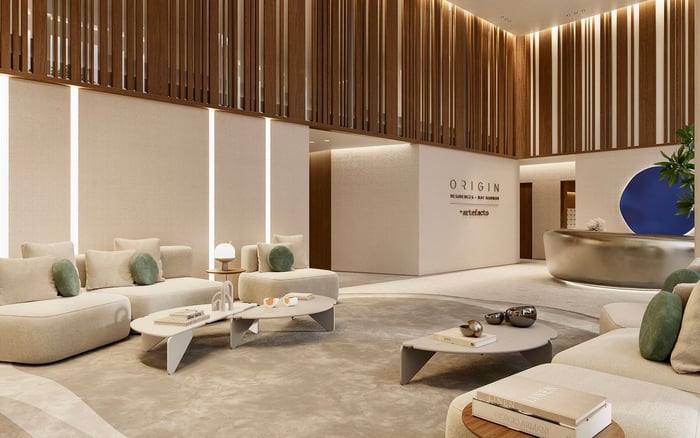
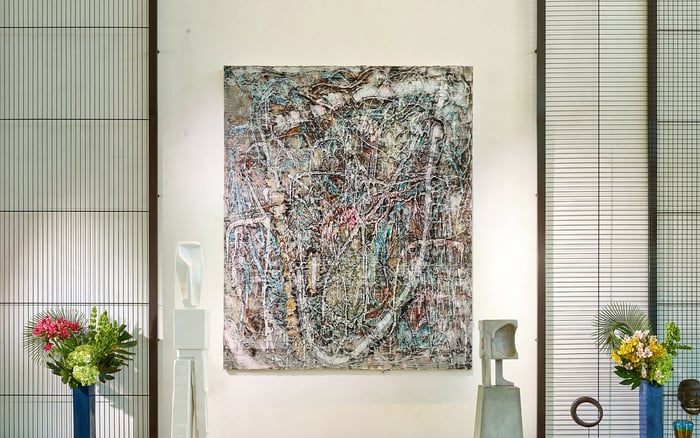
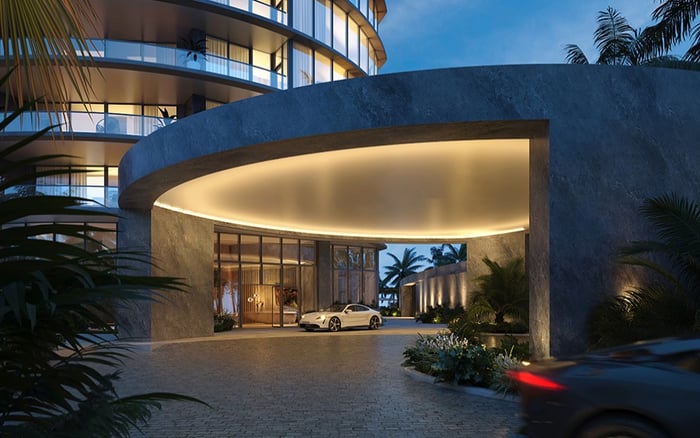
A buyer-focused due-diligence guide for evaluating acoustic comfort, technology infrastructure, and privacy at three premier oceanfront condominium settings in Miami Beach, Surfside, and Bal Harbour.

For the ultra-prime buyer, the appeal of 57 Ocean Miami Beach, Fendi Château Residences Surfside, and Oceana Bal Harbour extends beyond frontage, architecture, or lobby arrival. By 2026, the more revealing question is how each residence supports the private rhythm of a serious life. Can calls remain confidential while staff, family, and guests move through the home? Does the residence stay calm when weather, traffic, amenities, and adjacent households create competing sound? Is the digital backbone resilient enough for work, security, wellness, media, and family operations?
This is where due diligence becomes more intimate. A coastal condominium can be visually spectacular and still require close review of acoustic transitions, technology capacity, and spatial privacy. Buyers comparing 57 Ocean Miami Beach Miami Beach, Fendi Château Residences Surfside, and Oceana Bal Harbour should approach each tour less as a viewing than as a controlled rehearsal of daily living.
For search and internal reference, this comparison sits naturally within Miami Beach, Surfside, and Bal Harbour, three submarkets that appeal to buyers who want ocean proximity without identical lifestyles.
Sound is one of the least photographed and most important dimensions of residential luxury. Buyers should listen across three categories: exterior sound, vertical sound, and internal sound. Exterior sound includes surf, wind, traffic, service activity, valet areas, pool decks, and nearby pedestrian movement. Vertical sound includes footsteps, furniture movement, mechanical vibration, and the subtle transmission that can occur between residences. Internal sound includes noise from laundry rooms, kitchens, media rooms, primary suites, staff areas, elevators, and corridors.
At 57 Ocean Miami Beach, the due-diligence conversation should focus on how the residence balances an active Miami Beach setting with restorative interior calm. At Fendi Château Residences Surfside, the emphasis may shift to boutique intimacy and whether a smaller residential environment enhances quiet or concentrates activity. At Oceana Bal Harbour, buyers should study how amenity energy, arrival sequences, and oceanfront exposure interact with the specific line and floor under consideration.
Do not treat acoustic comfort as a binary question. The better test is temporal. Visit at different times if possible. Stand quietly in the primary bedroom, office area, kitchen, terrace threshold, and entry gallery. Ask how impact noise is handled, how glazing performs in practice, and whether mechanical systems can operate without intruding on sleep or calls.
Luxury buyers increasingly run their homes as complex environments. Connectivity supports remote work, climate control, lighting, audio, security, wellness equipment, entertainment, and the invisible coordination of family life. In 2026, a beautiful residence with weak connectivity feels dated faster than one with a more modest finish package but stronger infrastructure.
The review should begin with distribution. Buyers should understand where wiring pathways, equipment closets, access panels, and network points are located. A residence that looks seamless may still need a plan for routers, repeaters, backup connectivity, smart-home controls, and cybersecurity segmentation. Large floor plans, dense concrete, expansive glass, and specialty finishes can all affect signal reliability.
Ask practical questions. Where would a primary network rack live? Can a dedicated office support video calls, encrypted work, and high-bandwidth media at the same time? Are there clean locations for backup power solutions serving essential technology? Can lighting, shades, climate, and audio be integrated without visible clutter? For residences in 57 Ocean Miami Beach, Fendi Château Residences Surfside, and Oceana Bal Harbour, the answer will vary by individual unit, renovation history, and the owner’s desired level of automation.
The most sophisticated buyers do not ask whether a home is smart. They ask whether it can be made intelligent without compromising design.
A home office is not enough. True remote-work privacy depends on acoustic separation, sight lines, service circulation, digital security, and the ability to host simultaneous uses. One spouse may be on a board call while another entertains guests. Children may be studying. Staff may be preparing the residence. A vendor may need access. A confidential call should not require the entire household to freeze.
The best layouts create hierarchy. Public spaces can absorb guests and family activity. Semi-private spaces allow informal work or reading. Private rooms support calls, documents, and extended concentration. Buyers should look for a room that can function as a protected study, not merely a decorative den. Ideally, this space has a door, controlled natural light, predictable acoustics, and distance from elevator entries, powder rooms, kitchens, and entertainment areas.
At Oceana Bal Harbour, the privacy review may include how a residence handles artful entertaining and household separation. At Fendi Château Residences Surfside, buyers may assess whether boutique living supports discretion and low-friction arrival. At 57 Ocean Miami Beach, the question may be how to preserve professional calm in a more dynamic coastal context.
Due diligence should extend beyond the residence itself. The building’s operating culture can materially affect acoustic comfort and privacy. Consider elevator patterns, amenity scheduling, contractor rules, guest procedures, delivery management, service entries, pet movement, pool activity, and how management handles maintenance communication.
For some buyers, a lively building is part of the appeal. For others, the ideal building is nearly invisible, with staff that anticipates without overexposure and amenities that feel available without becoming theatrical. Neither preference is objectively superior. The key is alignment.
Ask how the building manages renovations, move-ins, large deliveries, and private events. Ask whether quiet-hour rules exist and how they are enforced. Ask how residents receive package, visitor, and service notifications. These operational details reveal whether privacy is supported by systems or left to improvisation.
A disciplined comparison begins with use cases. Imagine a Monday morning call, a Friday dinner, a stormy afternoon, a visiting family weekend, and a month when you are away but staff must access the residence. Then walk each property through those scenarios.
57 Ocean Miami Beach may appeal to the buyer who wants a refined oceanfront setting with proximity to the energy associated with Miami Beach. Fendi Château Residences Surfside may suit a buyer drawn to a branded, more intimate Surfside environment where discretion and design identity carry weight. Oceana Bal Harbour may resonate with buyers who want the established prestige of Bal Harbour living and a residence capable of supporting both display and retreat.
The strongest decision will not come from a generic ranking. It will come from understanding which building, line, exposure, and plan best protects the buyer’s actual life.
Before moving from admiration to commitment, buyers should request a focused review of acoustic performance, technology readiness, and privacy function. This may include a specialist walk-through, contractor input, smart-home consultation, and a candid discussion with building representatives about operations.
The goal is not to find perfection. Every residence has constraints. The goal is to identify which constraints are acceptable, which can be improved, and which would alter the daily experience of ownership.
A 2026 buyer should treat silence, bandwidth, and discretion as core luxury criteria. Finishes can be upgraded. Furnishings can evolve. But the bones of quiet, infrastructure, and privacy are harder to retrofit elegantly.
Why does acoustic comfort matter so much in oceanfront condominiums? It affects sleep, work, entertaining, and the overall sense of calm. Prestige does not automatically guarantee silence in every room.
Should buyers test sound during a showing? Yes. Spend quiet time in bedrooms, terraces, work areas, and entries, ideally at different times of day when possible.
Is technology infrastructure now part of luxury due diligence? Yes. Connectivity, automation, media, security, and backup planning increasingly shape the livability of a premium residence.
What makes a home office truly private? It needs acoustic separation, a door, controlled light, strong connectivity, and distance from active household circulation.
How should buyers compare 57 Ocean Miami Beach and Surfside alternatives? Compare daily rhythm, privacy expectations, building scale, and proximity preferences rather than relying only on visual appeal.
What should buyers ask about building operations? Ask about renovation controls, guest access, deliveries, quiet hours, service procedures, and amenity management.
Can weak connectivity be corrected after purchase? Often it can be improved, but the ease depends on wiring pathways, construction conditions, equipment locations, and design tolerance.
Does a boutique building always provide more privacy? Not always. Smaller scale can feel discreet, but operations, circulation, and resident culture determine the real experience.
Why include Bal Harbour in this comparison? Bal Harbour offers a distinct ownership rhythm for buyers evaluating discretion, oceanfront living, and established prestige.
What is the most important takeaway for 2026 buyers? Evaluate how the residence performs on an ordinary workday, not only how it photographs during a curated showing.
For a discreet conversation and a curated building-by-building shortlist, connect with MILLION.
If branded residences are on your mind — as a home or as an allocation — we would be glad to share what we are seeing, privately.
Begin a quiet conversation