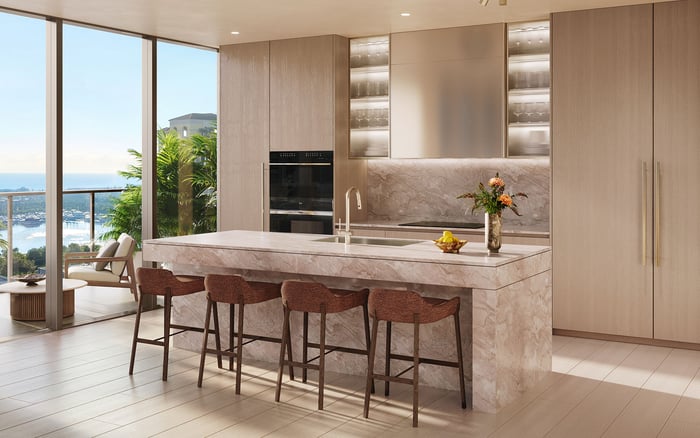
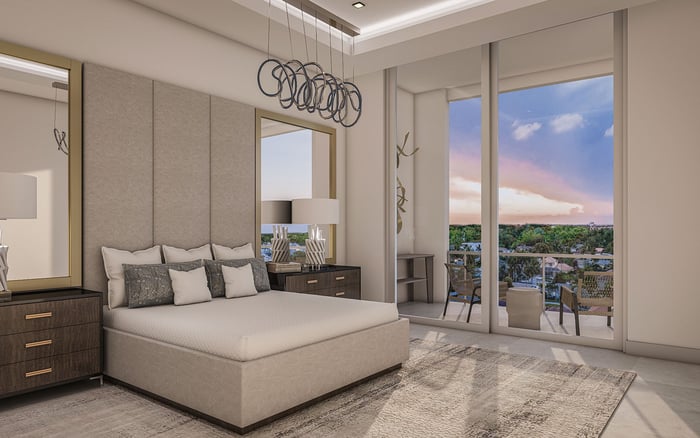
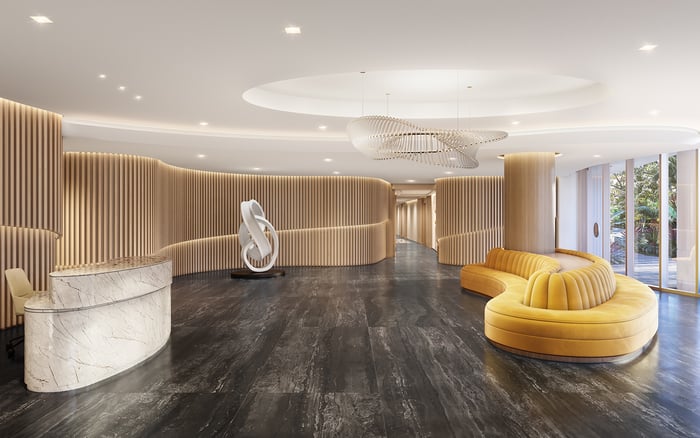
A buyer-focused look at how hospitality minimalism, fashion maximalism, and European estate refinement shape perceived value in South Florida branded residences.
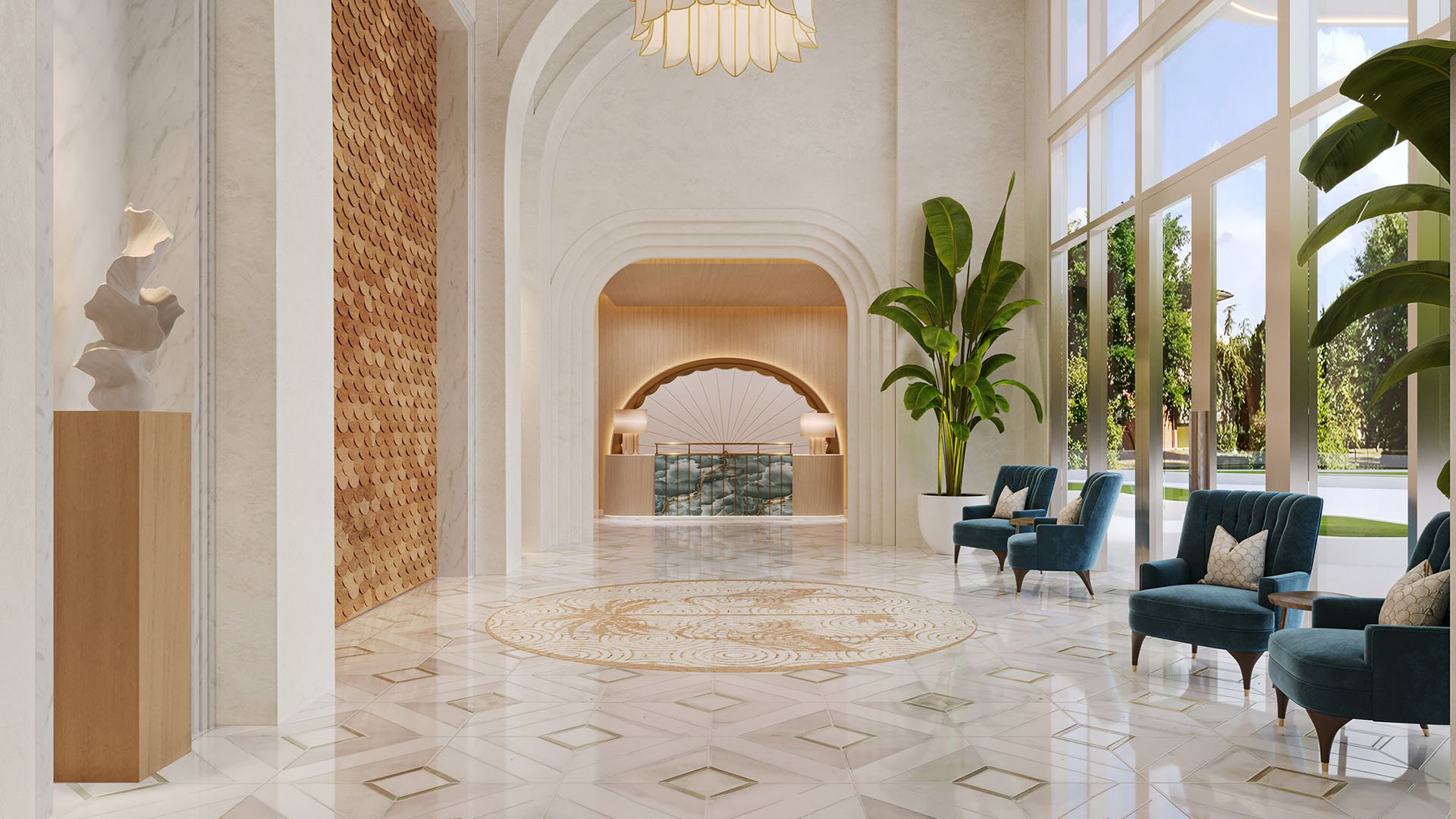
In South Florida’s upper tier, a residence is rarely judged by square footage alone. The most sophisticated buyers read buildings the way collectors read design houses: through provenance, tone, restraint, spectacle, service culture, and the durability of the idea behind the address. That is why projects such as 619 Residences by Foster + Partners + Nobu Hospitality, 888 Brickell by Dolce & Gabbana, and Maison D'Or South Flagler are not simply selling apartments. They are translating a recognizable language into a residential promise.
The value question is not whether a brand name is famous. It is whether that name gives the home a coherent point of view. A compelling branded residence should clarify how the lobby feels, how private spaces behave, how amenities are curated, and how the building sits within its neighborhood. When the translation is disciplined, brand becomes more than ornament. It becomes a filter for taste, a guide for experience, and, for certain buyers, a reason to choose one address over another.
This is a Branded Residences conversation, but it is equally a Design & Architecture and Lifestyle conversation. In Brickell and West Palm Beach, the same broad category can produce very different forms of value.
The comparison begins with three distinct archetypes. A Foster + Partners and Nobu Hospitality association suggests an architectural and hospitality-driven reading of luxury, with appeal rooted in composure, service, and cultivated minimalism. The buyer drawn to that language is often less interested in decorative drama than in atmosphere, operational ease, and the feeling that the building has been edited with intention.
888 Brickell by Dolce & Gabbana represents a different model. The Brickell project’s language is positioned around Italian glamour, couture identity, and fashion-forward residential presentation. Here, the brand acts as a visible signal. It tells the market that the residence is not generic luxury; it is a stage for a curated, expressive life.
Maison D’Or South Flagler belongs to a quieter register. In West Palm Beach, its language is framed around European manor elegance and old-world refinement translated into a contemporary South Florida setting. Its buyer is likely responding to atmosphere, privacy, and the suggestion of estate-like continuity rather than fashion spectacle.
Brickell has become one of South Florida’s strongest settings for urban luxury because it supports a narrative of finance, nightlife, restaurants, and high-rise skyline living. In that context, 888 Brickell by Dolce & Gabbana reads naturally. Its brand language aligns with the area’s velocity and visual confidence. The Dolce & Gabbana association can function as shorthand for fashion, status, and a highly curated lifestyle, giving the project a different emotional charge than a building marketed primarily through materials or floor plans.
For the right buyer, maximalist brand recognition is not a liability. It is the point. The value lies in immediate legibility. Guests understand it. The market understands it. The residence communicates before anyone studies the finishes. In a skyline where many towers compete through height, glass, and amenity programming, a couture identity can create separation.
That separation must still feel residential. The most successful fashion-house residences avoid becoming showrooms by translating glamour into livability: proportion, texture, lighting, sequence, and a sense of arrival that can be enjoyed daily. If the identity overwhelms the home, it risks becoming decorative marketing. If it is controlled, it becomes a residential signature.
Maison D’Or South Flagler stands on a different promise. Its South Flagler and West Palm Beach positioning gives it a quieter, Palm Beach-adjacent identity compared with Brickell’s urban energy. That distinction matters. Not every luxury buyer wants constant visibility. Some prefer a residence that suggests permanence, privacy, and old-world refinement without resorting to spectacle.
The project’s value story is tied less to fashion and more to estate-like atmosphere. In Palm Beach County’s branded-residence landscape, that makes Maison D’Or part of an estate-style offering where the brand language should feel settled rather than performative. European manor elegance, when handled well, gives buyers a sense of continuity: a home that appears to belong to a longer tradition of domestic luxury.
This does not mean nostalgia alone creates value. The decisive question is whether European-inspired positioning is perceived as durable lifestyle value rather than decorative styling. Buyers should ask whether the architecture, public spaces, and private interiors create a coherent residential character. If the answer is yes, Maison D’Or’s restraint can become its own form of status.
The presence of 619 Residences by Foster + Partners + Nobu Hospitality in this comparison introduces a third way to think about branded value. Rather than fashion maximalism or manor-inspired refinement, the conceptual appeal sits at the intersection of architecture and hospitality. Foster + Partners signals design authorship, while Nobu Hospitality evokes service culture, culinary sophistication, and calm, edited luxury.
For buyers, that kind of brand language can be powerful precisely because it is less overt. It does not need to announce status through exuberance. It can communicate through rhythm, arrival, material discipline, and the expectation that the building experience will be carefully managed. In South Florida, where branded residences range from fashion houses to hotel groups to design-led collaborations, this quieter hospitality model can appeal to residents who want recognition without theatricality.
The investment logic is also psychological. Some buyers want a home that feels like an extension of a global hospitality routine, with familiar cues and a strong sense of curation. Others want the expressive impact of a fashion house or the composure of an estate-style address. The right choice depends on which brand language feels most likely to remain desirable in daily use.
The most disciplined way to evaluate a branded residence is to separate name recognition from residential execution. A globally known name can create initial attention, but long-term value depends on whether the promise has been translated into the experience of living there.
First, study coherence. Does the brand influence more than the sales presentation? A true branded residence should have consistency from arrival to amenity spaces to private interiors. Second, study fit with place. Dolce & Gabbana’s fashion-forward glamour is well matched to Brickell’s urban energy, while Maison D’Or’s European refinement suits a quieter West Palm Beach reading. Third, study personal alignment. A home that feels impressive but not natural to the owner’s daily life may lose its appeal quickly.
Finally, consider social legibility. Branded residences carry value partly because they are easy for the market to understand. 888 Brickell by Dolce & Gabbana communicates fashion and status. Maison D’Or communicates estate-like refinement. 619 communicates architecture and hospitality. Each can be compelling, but each speaks to a different buyer.
South Florida’s branded-residence market is maturing. The strongest projects are no longer relying on a logo alone. They are building value through a precise relationship between brand, place, and residential character.
For 888 Brickell, the advantage is the confidence of a fashion-house model in an urban luxury setting. For Maison D’Or, it is the promise of old-world refinement in a Palm Beach-adjacent environment. For 619, the conceptual appeal is the fusion of architectural authorship with hospitality intelligence. None of these languages is universally superior. The better question is which one creates the most believable life for the buyer who will actually inhabit it.
What is brand language in a luxury residence? It is the design, service, atmosphere, and lifestyle vocabulary that turns a brand name into a lived residential experience.
Why does brand language affect value? It helps buyers understand what a building stands for, which can make the residence feel more distinctive than generic luxury inventory.
How does 888 Brickell by Dolce & Gabbana define its identity? Its positioning centers on Italian glamour, couture identity, and fashion-forward residential presentation in Brickell.
Why is Brickell important to 888 Brickell’s appeal? Brickell supports an urban luxury narrative tied to finance, restaurants, nightlife, and Miami’s high-rise skyline.
How is Maison D’Or South Flagler different? Maison D’Or emphasizes European manor elegance, old-world refinement, privacy, and a quieter West Palm Beach character.
Is a louder brand always more valuable? No. Some buyers value visible fashion identity, while others prefer restraint, privacy, and long-term residential calm.
Where does 619 Residences fit conceptually? It represents a more architecture- and hospitality-led interpretation, associated with Foster + Partners and Nobu Hospitality.
What should buyers test before choosing a branded residence? They should test whether the brand is coherently expressed in the building and genuinely compatible with daily life.
Can European-inspired design create lasting value? It can when buyers perceive it as durable lifestyle value rather than decorative marketing.
Which buyer is best suited to each project type? The fashion buyer may prefer 888 Brickell, the estate-minded buyer may prefer Maison D’Or, and the hospitality-focused buyer may prefer 619.
If you'd like a private walkthrough and a curated shortlist, connect with MILLION.
If branded residences are on your mind — as a home or as an allocation — we would be glad to share what we are seeing, privately.
Begin a quiet conversation