Walkability becomes a true luxury feature when it enhances privacy, time, daily rituals, and long-term residential desirability rather than merely shortening distances.
Walkability is often treated as simple convenience: a shorter route to dinner, coffee, a private fitness appointment, or the waterfront. In the luxury market, that definition is too narrow. The real value is not being close to everything. It is being close to the right things, in a setting that preserves calm, discretion, and the feeling of residential control.
A poorly chosen walkable neighborhood can feel exposed. Too much nightlife at the front door, too many delivery conflicts, too little shade, or a lack of visual order can turn proximity into compromise. A correctly chosen neighborhood does the opposite. It allows an owner to leave the car behind without surrendering privacy, elegance, or ease.
For South Florida buyers, the distinction matters. The region offers many versions of luxury: waterfront towers, garden districts, village centers, resort-style enclaves, and urban addresses with immediate services. Walkability adds value only when it fits the owner's actual life.
The most valuable walkable amenities are not always the most obvious. Dining is useful, but daily rhythm is the real test. Can an owner take a short morning walk that feels pleasant? Is there a place for a quiet lunch, not only a scene? Can errands be handled without disrupting the day? Is there enough neighborhood texture to make a second home feel lived in rather than simply visited?
A luxury walk should feel intentional. The route should have scale, shade, safety, and a sense of arrival. It should move through spaces that feel cared for. The best walkable addresses make ordinary moments feel frictionless: coffee before a meeting, a quick return home between appointments, a stroll after dinner, or a guest's ability to explore without constant coordination.
This is why a buyer should evaluate walkability as part of a complete residential ecosystem. The building matters, but so does what happens immediately beyond the lobby.
Brickell is one of the clearest examples of why walkability must be judged carefully. Its appeal is not only that an owner can reach restaurants, offices, services, and social settings without a long drive. The more important question is whether the building creates a private threshold between the energy outside and the residence within.
A buyer considering 2200 Brickell is not simply buying proximity. The decision is whether the address supports an efficient, urban South Florida lifestyle while still allowing home to feel composed. That balance is the luxury.
The same principle applies when evaluating ORA by Casa Tua Brickell. In a walkable district, hospitality, food, design, and daily services can become part of the residential experience, but only if the building's internal world remains distinct from the public one.
For buyers who move between business, travel, wellness, and entertaining, Brickell can be compelling. Still, the right fit depends on how the surrounding streets feel at the hours the owner will actually use them.
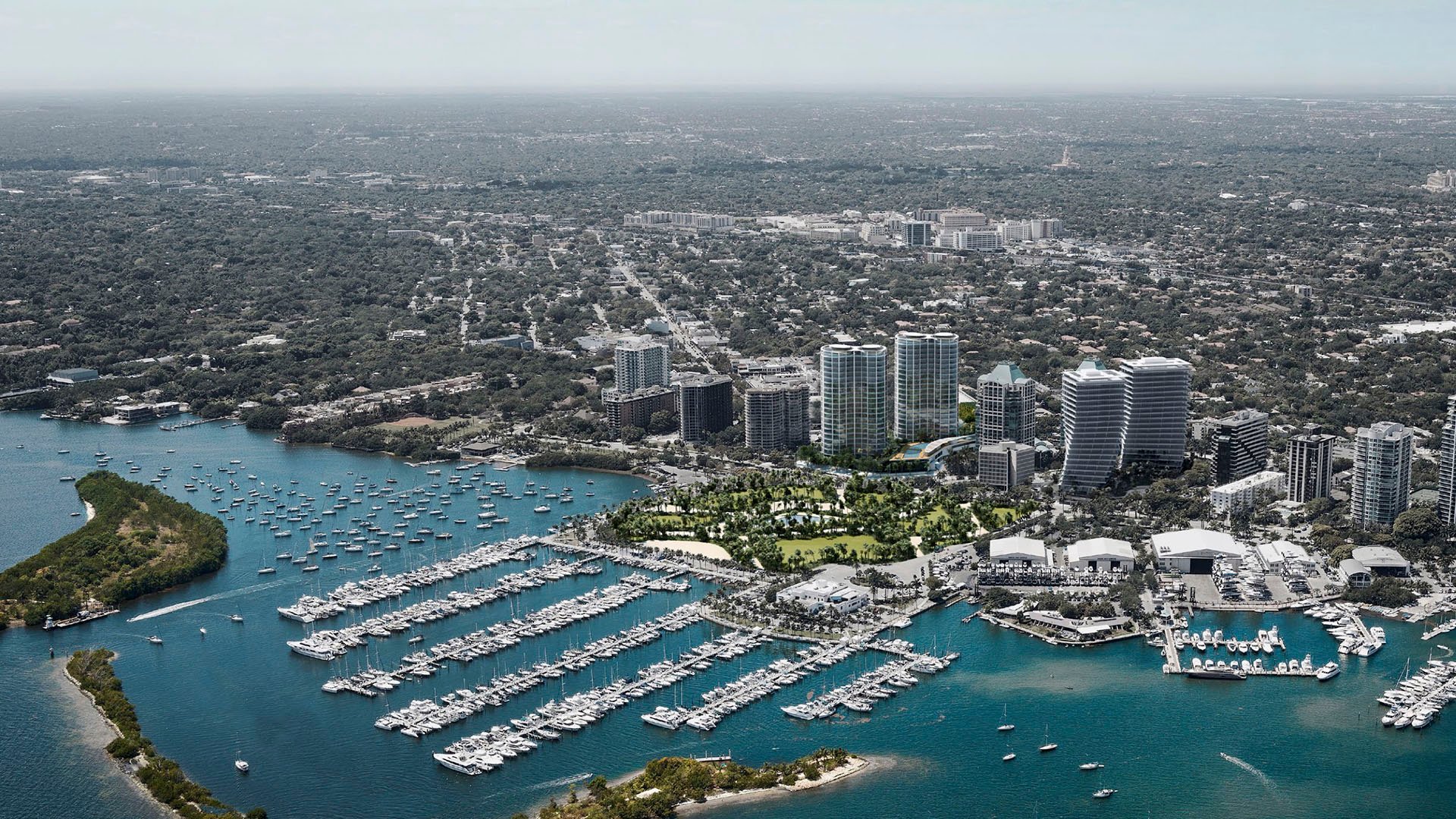
Not every walkable luxury buyer wants an urban tempo. Some prefer village scale, where value is measured in softness rather than speed. Coconut Grove and Coral Gables are often considered through this lens because buyers tend to weigh greenery, neighborhood character, and everyday ease alongside architecture.
A residence such as The Well Coconut Grove speaks to a buyer who may view walkability through a wellness and daily-life lens. The question becomes whether the neighborhood supports rituals: a morning walk, a low-key meal, an afternoon errand, or a guest-friendly evening without the feeling of overexposure.
In Coral Gables, The Village at Coral Gables suggests another version of walkable luxury, one tied to neighborhood composition and architectural continuity. The appeal is less about intensity and more about coherence. For many owners, that coherence is what makes a walkable setting feel enduring.
This is where walkability becomes emotional. A neighborhood that encourages small, repeatable pleasures can have more lasting value than one that simply offers a dense map of destinations.
The walkability conversation is not limited to Miami. In West Palm Beach, buyers may evaluate the relationship between residential privacy, cultural access, dining, waterfront movement, and a more measured urban rhythm. A building like Alba West Palm Beach can be considered within that broader question: does the location support daily convenience while still feeling residentially refined?
For seasonal owners, walkability can also reduce the operational burden of ownership. Guests need fewer instructions. Family members can move independently. A short stay can feel more complete because less time is spent arranging transport or navigating unfamiliar patterns.
For full-time residents, the benefit is more subtle. Walkability can make a large city feel personal. It can turn a luxury residence from an impressive private object into a true base for daily living.
A sophisticated buyer should test walkability in person, at different times of day. Morning, afternoon, evening, weekday, and weekend conditions can each reveal a different neighborhood. The most polished address on paper may not feel equally refined after dinner, during school traffic, or at peak arrival hours.
Pay attention to the first five minutes outside the building. That immediate radius matters more than broad neighborhood reputation. Are sidewalks comfortable? Are crossings intuitive? Is there noise from service areas? Does the valet sequence conflict with pedestrians? Is the lobby approach dignified when the surrounding streets are active?
Also consider privacy gradients. The best walkable buildings create a layered transition: public street, arrival, lobby, elevator, residence. If that sequence feels abrupt, the owner may enjoy the convenience but not the luxury.
Finally, consider whether the neighborhood has enough depth. A walkable address should offer more than one routine. If every outing depends on the same two venues, the novelty can fade. If the area supports multiple daily patterns, the residence is more likely to remain satisfying over time.
In luxury real estate, walkability should never be evaluated as a checkbox. It is not a universal premium. It is a feature that becomes valuable only when the neighborhood has been correctly chosen for the buyer's lifestyle, pace, privacy needs, and sense of beauty.
For some, the right answer is Brickell, where access and efficiency define the appeal. For others, it is a gardened village rhythm, a coastal setting, or a quieter urban district with cultural depth. The best choice is the one that makes life feel easier without making home feel less private.
That is the essence of walkability as luxury: not distance, but discernment.
Is walkability always a luxury feature? No. It becomes luxury only when the surrounding neighborhood adds ease, privacy, and quality to daily life.
What should buyers prioritize in a walkable neighborhood? Prioritize the first few minutes outside the building, including shade, noise, crossings, arrival sequence, and the quality of nearby routines.
Why is Brickell often part of this conversation? Brickell appeals to buyers who value urban access, but the best fit depends on whether the residence still feels calm and private.
Can a quieter neighborhood be walkable? Yes. Walkability can be village-like and discreet, especially when daily rituals are close without creating an overly public atmosphere.
How should second-home buyers think about walkability? It can make short stays easier by reducing coordination, transportation needs, and the effort required for guests to enjoy the area.
Does walkability matter for resale? It can support desirability when the neighborhood feels durable, refined, and aligned with the expectations of future luxury buyers.
Should buyers visit at different times before deciding? Yes. A neighborhood can feel very different in the morning, at peak traffic times, in the evening, and on weekends.
What is the biggest mistake buyers make? They focus on distance rather than experience. A short walk has little value if the route feels noisy, exposed, or inconvenient.
Can walkability coexist with privacy? It can, but the building must create a strong transition between public street life and the private residential environment.
Is new construction better for walkable living? Not automatically. The more important question is whether the building and neighborhood work together in a composed, livable way.
For a discreet conversation and a curated building-by-building shortlist, connect with MILLION.
If branded residences are on your mind — as a home or as an allocation — we would be glad to share what we are seeing, privately.
Begin a quiet conversation