A buyer-focused editorial on how California entrepreneurs can weigh branded hospitality, privacy, staffing rhythm, and residential discretion when selecting a South Florida home.
For a California entrepreneur evaluating South Florida, the choice between formal hospitality and quiet residential service is rarely about abundance. At the upper end of the market, both can be beautifully executed. The more useful question is whether the home should feel like a private hotel with an elevated public rhythm, or like a discreet residence where service recedes into the background.
That distinction matters because entrepreneurs do not use homes uniformly. Some need a residence that can receive investors, partners, family, and friends with confidence at almost any hour. Others want the opposite: a protected environment that absorbs pressure, reduces friction, and does not turn every arrival into a performance. The better choice depends on how visible the owner wants daily life to feel.
Formal hospitality signals readiness. Quiet service signals restraint. Both are luxuries, but they produce very different ways of living.
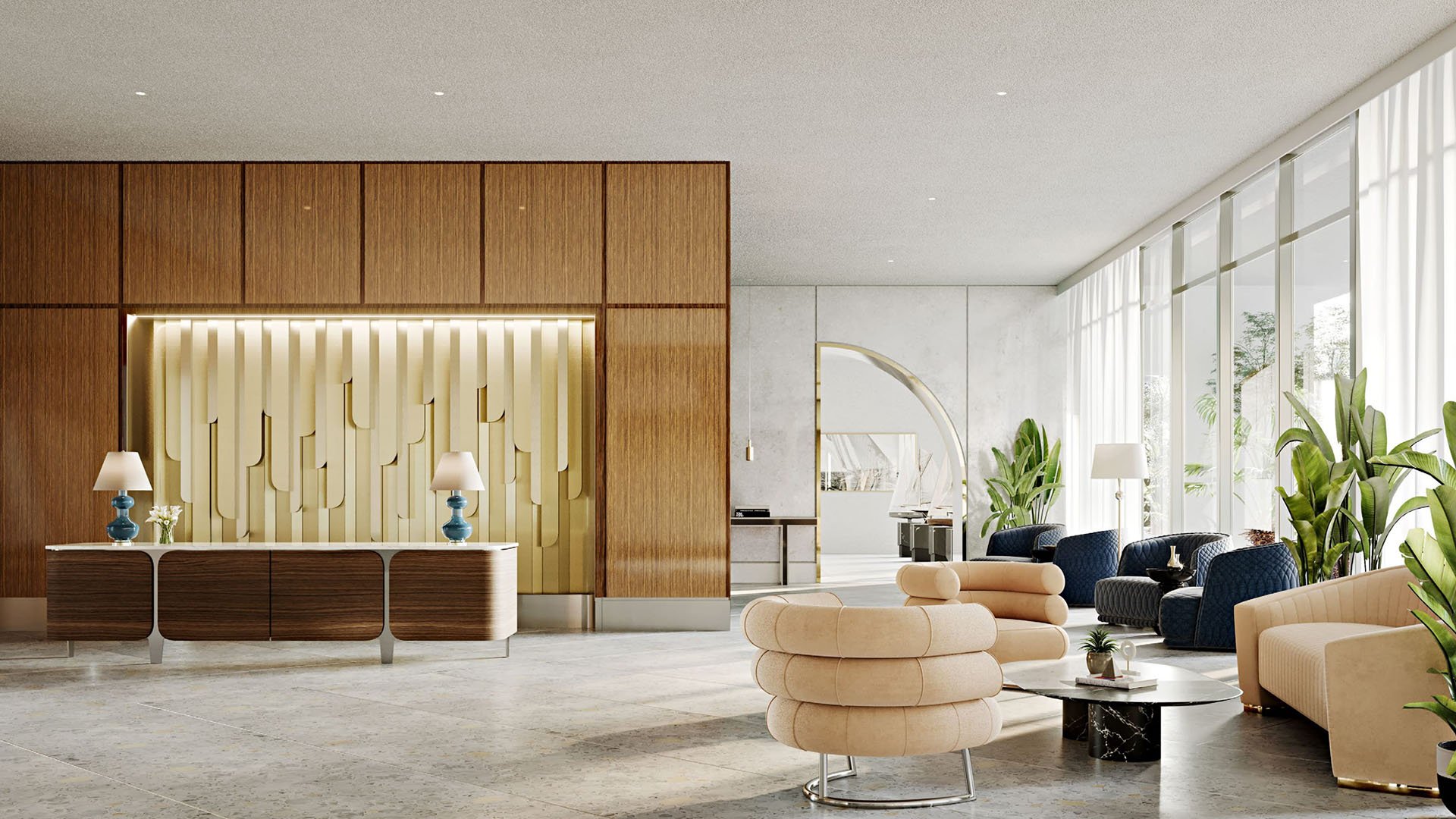
Formal hospitality works best when the residence is part home, part stage. It suits the founder who hosts dinners, receives out-of-town guests, works across time zones, and appreciates the reassurance of an organized front-of-house presence. A gracious lobby, polished reception, and attentive amenity culture can make the transition from airport, office, marina, or dinner table feel seamless.
In Brickell, this preference can be especially relevant for buyers who want an urban cadence and an address that supports a high-contact schedule. A project such as 2200 Brickell may appeal to those who want the city close without giving up the residential expectation of order. Nearby, ORA by Casa Tua Brickell speaks to a buyer who values a more social interpretation of home, where hospitality is not hidden but woven into the daily experience.
For some California entrepreneurs, that formality is not vanity. It is operational clarity. Guests know where to arrive. Staff know how to receive them. The residence has a recognizable protocol. When life moves quickly, that choreography can be valuable.
Quiet service is less about being impressed and more about being protected. It is the art of making life work without turning service into spectacle. The best version feels intuitive: packages are handled, arrivals are smooth, maintenance is unobtrusive, and the owner does not need to explain preferences repeatedly.
This model often attracts buyers who are already highly visible in professional life and want the home to offer contrast. They may still expect excellence, but they prefer a residential tone over a hotel tone. They want to know who is in the building, how privacy is maintained, how staff communicate, and whether the environment stays calm at peak hours.
Coconut Grove can align naturally with this mindset because the appeal is often tied to atmosphere as much as amenity. The Well Coconut Grove can be considered by buyers who want wellness, privacy, and neighborhood texture to coexist. The point is not to withdraw from South Florida life, but to choose a softer daily rhythm.
California entrepreneurs often arrive with a sophisticated understanding of lifestyle design. Many have already lived through homes that overperform visually and underperform operationally. They know that a beautiful residence is only truly valuable if it supports the calendar, the family, and the way decisions are made.
Formal hospitality offers control through systems. There is a place for the car, a person at the desk, a protocol for guests, and a shared amenity culture that can make the building feel animated. Quiet service offers control through discretion. The staff presence is still meaningful, but less theatrical. The building feels more like a private address than a hospitality environment.
Neither model is inherently superior. The wrong match, however, becomes noticeable quickly. A highly social building can feel intrusive to a buyer seeking retreat. A deeply private building can feel underactivated to someone who wants energy, convenience, and a sense of occasion.
The service model should be read alongside location. In Brickell, formal hospitality may complement the pace of meetings, dining, and movement. In Miami Beach, service can become part of a broader resort-minded lifestyle, especially when owners expect the home to accommodate guests elegantly. In Boca Raton, the calculus may shift toward privacy, family comfort, and a quieter residential hierarchy. In West Palm Beach, buyers may look for a composed environment that balances cultural access with a calmer sense of arrival.
That is why a residence such as Alina Residences Boca Raton belongs in a different conversation than a more urban Brickell property. The expectation is not necessarily less service. It is a different emotional register. Similarly, The Ritz-Carlton Residences® West Palm Beach may resonate with buyers who want recognized residential poise without losing the sense of a private home.
The most successful purchase aligns the residence, neighborhood, and service culture. A mismatch among those three elements is where disappointment usually begins.
Before committing, buyers should evaluate the building at the times they are most likely to use it. A lobby can feel serene in the late morning and very different during evening arrivals. Amenity spaces can feel expansive when empty and less private when fully activated. The tone of staff interaction, the pace of valet, and the sound level in shared areas all reveal more than a brochure ever can.
Entrepreneurs should also ask how much hospitality they actually want to consume. Some buyers are drawn to formal amenities in theory, then rarely use them. Others underestimate how much value they place on being recognized, assisted, and hosted. The decision should come from lived patterns, not from prestige alone.
For primary users, quiet service may matter more than dramatic amenity programming. For frequent hosts, formal hospitality may be indispensable. For part-time South Florida residents, the ideal answer may be a hybrid: a building with strong service standards, but enough residential restraint that the home still feels personal.
At the highest level, service is not a checklist. It is a philosophy of living. Formal hospitality is ideal when the home is meant to extend a public life with grace. Quiet residential service is ideal when the home must defend privacy, time, and attention.
For California entrepreneurs, the winning choice is the one that reduces cognitive load. If every arrival, guest request, delivery, and maintenance issue is handled in a way that matches the owner’s temperament, the residence is doing its job. If the service style feels misaligned, even extraordinary architecture can lose some of its power.
The most refined South Florida purchase is not necessarily the one with the most visible service. It is the one where service appears at precisely the right moment, in precisely the right measure.
Is formal hospitality better for entrepreneurs who entertain often? It can be, especially when guests, meetings, and social occasions are part of regular residential use.
Is quiet service the same as less service? No. Quiet service can be highly attentive, but it is delivered with more privacy and less visible ceremony.
Should Brickell buyers prioritize hospitality? Brickell buyers often value convenience and pace, so formal hospitality can be useful if it matches their lifestyle.
Can a private residence still feel highly serviced? Yes. The best private buildings often deliver strong service without making it feel performative.
What should California entrepreneurs observe during a tour? Arrival flow, staff tone, lobby activity, amenity use, and the overall sense of privacy are all important.
Does a branded residence always mean formal hospitality? Not always. Branding can influence service style, but each residence should be judged by its actual daily rhythm.
Is Coconut Grove more suited to quiet service? It can appeal to buyers seeking a softer residential atmosphere, though each building has its own personality.
How should families weigh the choice? Families may prioritize privacy, consistency, and ease of daily movement over a highly social service model.
Can one residence offer both styles? Yes. Some buildings balance polished arrival experiences with discreet residential service beyond public areas.
What matters most in the final decision? The service model should match how the owner lives, hosts, rests, and protects time.
When you're ready to tour or underwrite the options, connect with MILLION.
If branded residences are on your mind — as a home or as an allocation — we would be glad to share what we are seeing, privately.
Begin a quiet conversation