A practical framework for evaluating dockage rights, vessel fit, navigation constraints, operating obligations, and contract protections before buying in South Beach.
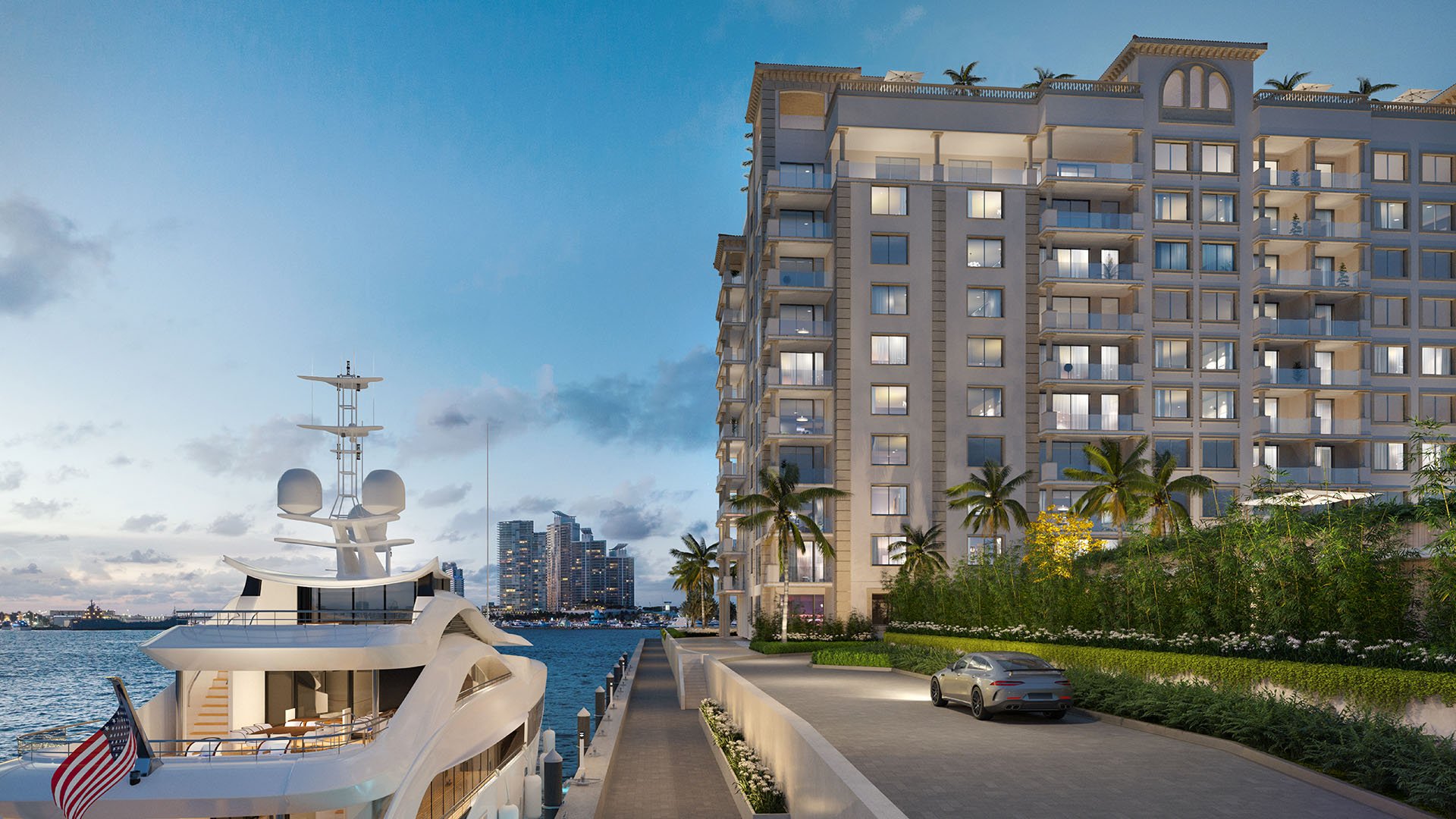
In South Beach, a beautiful water outlook and workable boating access are separate propositions. Buyers should begin with the vessel’s operating profile, then test the residence, berth, route, and governing documents against it. This reverses the usual sequence: falling for a home first and investigating the marine details later.
Record the vessel’s overall length, maximum beam, draft under realistic loading, height above the waterline, tender arrangement, shore-power requirements, and boarding preferences. Include anticipated future vessels. A berth that accommodates today’s center console may not suit tomorrow’s larger yacht.
This framework belongs among MILLION Buyer's Guides because dockage can shape both lifestyle and investment decisions. It is not merely an amenity. It is a combination of rights, dimensions, access, operating rules, and recurring obligations-all of which must work together.
Waterfront marketing language can describe markedly different arrangements. The relevant question is not whether boating appears possible, but precisely what the owner receives: a deeded interest, an assigned berth, a revocable license, a lease, a wait-list position, or access through an unrelated operator. The purchase file should answer that question in writing.
Ask whether the right transfers with the residence, requires separate approval, can be reassigned, is limited to owner use, or may be suspended under stated conditions. Confirm who controls the marina, who maintains it, and which document prevails if sales materials and governing instruments differ.
For a buyer comparing Apogee South Beach with Continuum on South Beach, project prestige should never substitute for asset-specific review. Request the current documents and written confirmation applicable to the exact residence and any associated berth.
A nominal slip length is only the beginning. The buyer’s marine professional should evaluate usable length, clear width, controlling depth, pilings, dock geometry, lift equipment, fender placement, utility pedestals, and boarding conditions. Measurements should reflect the actual configuration, not a generic plan.
Consider maneuvering room as carefully as static fit. Turning space, neighboring vessels, currents, wind exposure, and approach angle can determine whether a technically adequate berth is comfortable in routine use. The review should also address tide-sensitive depth, propeller clearance, and the vessel’s loaded draft.
In the buyer’s internal file, “boat slip” should be treated as a diligence category-not as proof of compatibility. Retain photographs, plans, measured dimensions, professional observations, and written management responses together.
Bridge clearance is a route calculation, not a neighborhood assumption. Map the intended path from the berth to open water, identifying every fixed bridge, movable bridge, overhead line, narrow channel, shallow segment, and controlled passage. Then compare the vessel’s maximum air draft with the most restrictive point, allowing a prudent margin.
Movable bridges require a distinct review. Confirm operating procedures, opening constraints, communication protocols, and the practical effect of delays on a typical departure. A route may be navigable yet inconvenient for the owner’s preferred schedule.
Water levels and vessel loading can alter the usable envelope. The conclusion should therefore come from a qualified captain, surveyor, or other appropriate marine specialist working with current field conditions. Do not rely solely on an owner’s prior experience with a different boat.
The practical value of dockage depends on its daily management. Review fueling options, waste handling, water and electrical service, security, lighting, guest access, crew parking, loading procedures, tender storage, and permitted maintenance. Ask how emergency preparation is handled and who is responsible for moving or securing a vessel.
Financial diligence should cover every recurring and contingent charge associated with the berth. Determine whether utilities are metered, marina expenses are included in residential assessments, and separate charges or capital obligations may apply. Insurance review should encompass the residence, berth interest, vessel, liability, and any requirements imposed by the association or operator.
The ideal purchase supports the entire journey from front door to helm. Trace the route through elevators, garages, service areas, gates, docks, and boarding points. Evaluate privacy, carrying distance, provisioning, crew circulation, and late-arrival access. These details often distinguish effortless ownership from a compromised routine.
When considering The Ritz-Carlton Residences® South Beach, assess how the exact property under consideration aligns with the owner’s marine plan rather than assuming proximity settles the issue. Apply the same discipline to Shore Club Private Collections Miami Beach or any other Miami Beach residence. Project selection and dockage selection may require separate but coordinated decisions.
Before the diligence period expires, assemble a marine file containing title materials, berth instruments, governing documents, rules, budgets, insurance requirements, measured dimensions, route findings, and written answers from the relevant decision-makers. Identify early any approval required for the vessel or purchaser.
Qualified counsel should tailor the contract language. Depending on the transaction, the buyer may seek sufficient time and access to verify legal transferability, physical suitability, operational approval, costs, insurance availability, and route feasibility. Document material representations rather than leaving them to conversation.
The best closing condition is clarity. The residence, dockage right, vessel, and route should function as one ownership system, with no critical assumption left untested.
Does a water view guarantee boating access? No. View, shoreline proximity, legal access, and usable dockage are distinct matters.
Is a listed slip length enough to confirm vessel fit? No. Beam, draft, air draft, maneuvering room, dock geometry, and rules also matter.
What is the most important bridge measurement? Compare the vessel’s maximum air draft with the route’s most restrictive clearance, using professional verification and a prudent margin.
Should movable bridges be treated differently from fixed bridges? Yes. Review opening procedures and the practical effect of waiting on normal trips.
Can dockage rights transfer automatically with a residence? Do not assume so. The controlling documents should establish transferability and approval requirements.
Who should inspect the proposed berth? Use an appropriate marine professional familiar with vessel dimensions, docking geometry, depth, and route constraints.
Which dockage costs deserve review? Examine assessments, utilities, maintenance charges, insurance obligations, and potential capital expenses.
Should a future yacht be considered during diligence? Yes. Testing a plausible future vessel can reveal limitations hidden by the current boat.
When should the navigation route be tested? Complete route diligence before the applicable contractual deadline, not after closing.
What should remain in the buyer’s permanent file? Keep governing documents, berth instruments, measurements, approvals, route findings, insurance terms, and written confirmations.
If you'd like a private walkthrough and a curated shortlist, connect with MILLION.
If branded residences are on your mind — as a home or as an allocation — we would be glad to share what we are seeing, privately.
Begin a quiet conversation