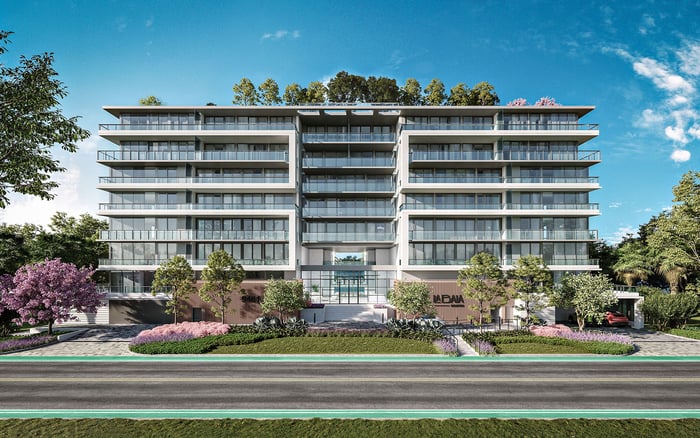
A buyer-focused guide to evaluating La Baia North as a boating base, including dockage diligence, vessel fit, bridge clearances, bay navigation, marina alternatives, and storm-season planning.
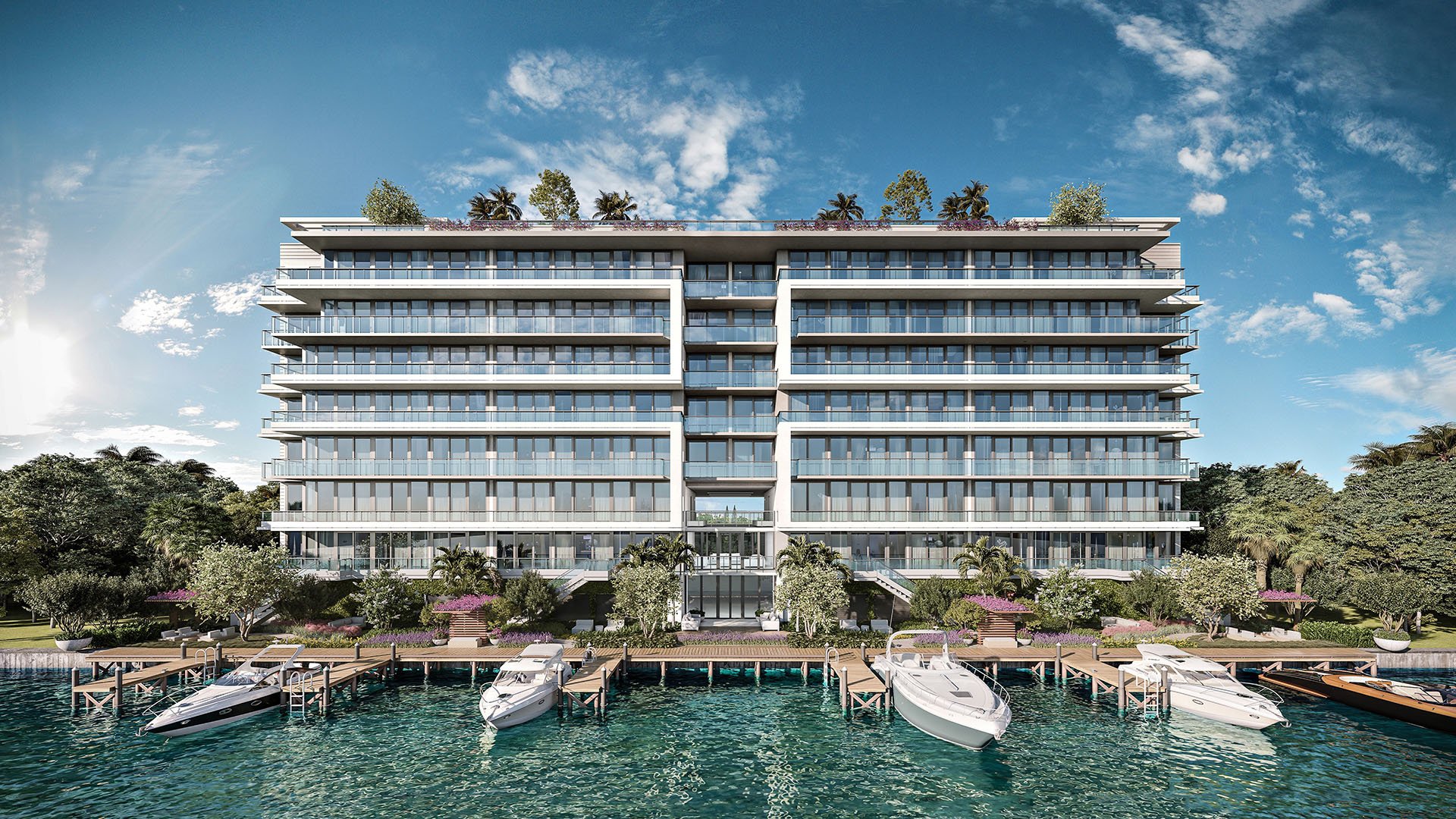
For boat owners considering La Baia North Bay Harbor Islands, the essential shift is conceptual. The residence should not be evaluated solely as waterfront real estate. It should be evaluated as a boating base, with the same discipline an owner would bring to a marina berth, yacht club arrangement, or seasonal storage plan.
That distinction matters in Bay Harbor Islands because the lifestyle promise is unusually compelling: calm bayfront living, refined residential scale, and proximity to the broader Biscayne Bay boating network. Yet practical access, not scenery alone, determines whether a boat owner will use the property as intended. A water view may set the tone, but navigability defines the routine.
The strongest buyers in this category ask operational questions early. Can the vessel be kept on site or nearby? How direct is the route toward open water? What limits apply to draft, height, beam, wake, and speed? These are not secondary questions. They determine how easily an owner moves from residence to water, and from water to the cruising, fishing, or entertaining the boat was purchased to support.
Primary due diligence begins with dockage and water-access specifics. Boat owners should confirm all project-level details directly through official La Baia North sales or management channels, including whether any on-site or nearby arrangements suit the vessel in question. If the answer is not clear, it should remain unresolved until confirmed in writing through the appropriate property channels.
The next question is route quality. A boat owner should understand the practical path from the property area to nearby channels and ocean access points. This is not about relying on optimistic travel-time assumptions. It is about studying the actual operating environment, including slow-speed zones, wake restrictions, local protected-water rules, and the behavior of traffic around residential shorelines.
For a Bay Harbor buyer, convenience is not measured only in distance. It is measured in how often the boat can be used with minimal friction. If every outing requires careful tide timing, a remote storage plan, or repeated bridge concerns, the residence may still be beautiful, but it may not function as the right marine platform for that owner.
Every boat has a personality, and that personality should be matched against the property’s access profile. Prospective owners should verify whether the waterfront access aligns with the size, draft, beam, height, and storage needs of their specific vessel. A center console, dayboat, sailing vessel, flybridge yacht, sportfisher, and larger yacht can each create a very different set of requirements.
Draft and under-keel clearance deserve particular attention. Shallow water, shifting conditions, and the need to remain within marked channels can affect the ease and safety of movement near Biscayne Bay-area waterfronts. Owners should check current charts and local conditions before assuming that any boat can operate comfortably near a residence simply because the property sits on the water.
Height matters as well. Bridge clearances should be treated as a core due-diligence item, especially for flybridge boats, sportfishers, sailing vessels, or yachts with high fixed structures. The issue is practical, not theoretical. A boat that is too tall for a convenient route may force the owner into a less efficient path, a different storage strategy, or a different asset altogether.
Environmental sensitivity also belongs in the conversation. Biscayne Bay boating often requires awareness of shallow areas, seagrass, and marked channels. The most sophisticated owners do not see this as an inconvenience. They understand it as part of owning on a highly desirable, ecologically sensitive bay system.
The boat-slip conversation should begin with the owner’s actual vessel, not with a generic idea of waterfront luxury. If residential dockage, slip availability, or water access does not fit the boat, owners should compare the convenience of the property with nearby marina or yacht-club options. For some buyers, an off-site arrangement can be elegant and efficient. For others, the absence of direct vessel storage may materially change how the property is valued.
This is where Bay Harbor Islands becomes interesting. The neighborhood offers a refined residential feel while remaining connected to Miami’s broader waterfront geography. Nearby projects such as Onda Bay Harbor, Origin Bay Harbor Islands, and Alana Bay Harbor Islands help illustrate why buyers are studying this pocket with increasing seriousness: it is intimate, coastal, and oriented toward a quieter version of Miami waterfront living.
Still, no buyer should generalize from one project to another. Each building can differ in its relationship to the water, its management structure, and its policies. For La Baia North specifically, the critical task is to confirm the details that govern daily use, not simply to admire the bayfront setting.
A serious boating plan in South Florida also includes insurance, storm preparation, hurricane-season storage, and secure dockage. These considerations should be part of the acquisition discussion, not an afterthought handled after closing. The issue is not only where the boat sits on a perfect winter afternoon. It is where the boat goes when conditions require action.
Owners should evaluate how quickly a vessel can be secured, relocated, or protected under the rules and logistics available to them. They should also consider whether their insurer has requirements tied to named storms, storage locations, haul-out plans, or marina standards. A residence that feels effortless in season should still be stress-tested for summer weather and peak hurricane planning.
This discipline is especially relevant for new-construction buyers who may be comparing design, amenities, and waterfront prestige before operational details are fully internalized. A polished sales presentation can describe the lifestyle, but the owner’s captain, insurance advisor, and marine specialist should help test the boating reality.
La Baia North’s Bay Harbor Islands setting places boating practicality at the center of its lifestyle value for marine-focused buyers. The residence may appeal to those who want a more discreet, bayfront alternative to larger high-rise districts, while still remaining connected to the waterborne rhythm of Miami.
That does not mean every boat owner will reach the same conclusion. A buyer with a smaller, lower-profile vessel may prioritize immediate convenience and calm-water access. A buyer with a larger yacht, deeper draft, wider beam, or higher fixed structures may care more about off-site marina strategy, bridge routing, and the ability to reach open water without compromise.
The broader neighborhood context reinforces the importance of precision. Projects such as Bay Harbor Towers and The Well Bay Harbor Islands sit within the same buyer conversation about scale, privacy, and proximity to the bay, but the correct purchase decision depends on the specific property and the specific vessel.
For boat owners, the best question is not simply, “Is it waterfront?” The better question is, “Will this address make my boating life easier, safer, and more consistent?” At La Baia North, that answer comes from verifying dockage, routes, clearances, depth, regulations, storage, and storm planning before treating the water view as a complete marine solution.
Should boat owners view La Baia North as more than waterfront real estate? Yes. The property should be evaluated as a boating base, with attention to dockage, routes, vessel fit, and operating rules.
Can every boat owner assume on-site dockage will work? No. Owners should confirm all dockage, slip, and water-access details directly through official property sales or management channels.
Why does vessel draft matter near Bay Harbor Islands? Draft affects under-keel clearance, especially around shallow bay areas, changing conditions, and marked navigation channels.
Are bridge clearances important for La Baia North buyers? Yes. They are especially important for flybridge boats, sportfishers, sailing vessels, and yachts with high fixed structures.
Do speed zones affect boating convenience? Yes. Local speed limits, wake restrictions, and protected-water rules can influence how quickly owners move between residence and open water.
Should buyers rely on general travel-time assumptions? No. Practical timing depends on vessel type, route, water conditions, bridge issues, speed zones, and local navigation rules.
What if a vessel is too large for available residential access? The owner should compare nearby marina or yacht-club options against the convenience and lifestyle value of the residence.
Why is environmental awareness part of the decision? Biscayne Bay-area boating requires attention to shallow areas, seagrass, protected waters, and marked channels.
Should insurance and storm planning be reviewed before purchase? Yes. Hurricane-season storage, secure dockage, relocation plans, and insurer requirements should be evaluated early.
What is the best way to judge whether La Baia North works for a boat owner? Match the exact vessel to confirmed access details, route conditions, clearance needs, storage plans, and storm procedures.
For a discreet conversation and a curated building-by-building shortlist, connect with MILLION.
If branded residences are on your mind — as a home or as an allocation — we would be glad to share what we are seeing, privately.
Begin a quiet conversation