The Delmore Surfside stands out for buyers who evaluate luxury through privacy, direct movement, and controlled arrival rather than amenities alone.
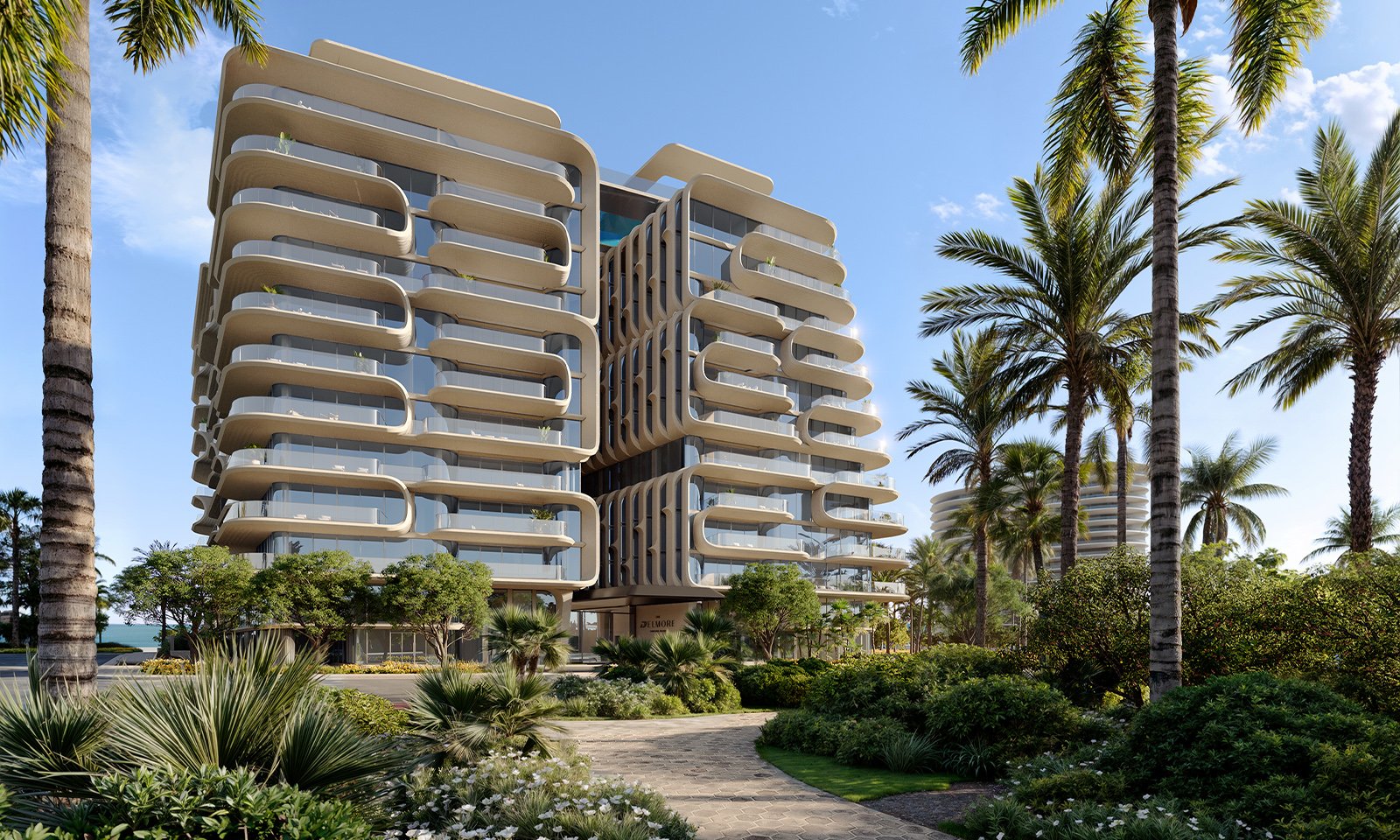
For a certain tier of South Florida buyer, the first impression of a residence is not the lobby chandelier, the valet choreography, or even the ocean breeze. It is the degree of control between the street and the front door. That is why The Delmore Surfside belongs in the conversation for buyers who place private elevators and controlled arrival at the center of their search.
Surfside occupies a particularly strategic position for this kind of evaluation. Set between Bal Harbour and Miami Beach, it gives buyers proximity to the region’s most recognized luxury corridors without requiring them to live inside the market’s highest-intensity zones. For many high-net-worth families, that balance is precisely the point: access without overexposure, convenience without constant visibility, and a residential rhythm that feels composed rather than performative.
Arrival is often treated as a secondary detail after architecture, views, ceiling heights, finish packages, and brand cachet. For privacy-focused buyers, that hierarchy is changing. The route from car to residence can reveal how a building truly functions day to day. Who shares the elevator bank? How much time is spent in public or semi-public space? Are vendors, guests, event traffic, and residents moving through the same choke points? These questions are not cosmetic. They shape security, discretion, and daily predictability.
Private elevator access, where offered and confirmed, is best understood as a circulation feature rather than a trophy line item. Its value lies in reducing uncontrolled encounters between arrival and residence. For buyers with children, public profiles, household staff, or frequent travel patterns, that reduction can matter more than a long list of shared amenities.
The most meaningful version is direct vertical circulation to a private residential foyer. Buyers should confirm whether the elevator opens into a dedicated foyer, how that foyer is separated from service or shared areas, and how guests are received. The difference between a private-elevator label and a truly controlled arrival sequence can be significant.
At The Delmore Surfside, the buyer question is not simply whether private elevator access exists in a brochure sense. It is whether the arrival sequence aligns with the buyer’s privacy threshold. The strongest due diligence should map the actual path: vehicle arrival, entry point, lobby or motor court transition, elevator access, foyer, and residence. Every handoff matters.
Boutique positioning is especially relevant in this category because smaller-scale luxury buildings can reduce the number of daily friction points between public and private zones. Fewer residences can mean fewer overlapping arrivals, fewer elevator interactions, and a calmer relationship among residents, staff, guests, and vendors. Buyers should still verify the operational details, but scale can support a more discreet residential experience.
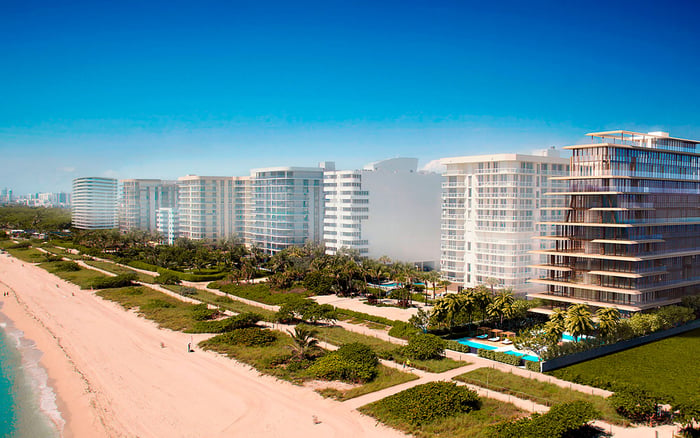
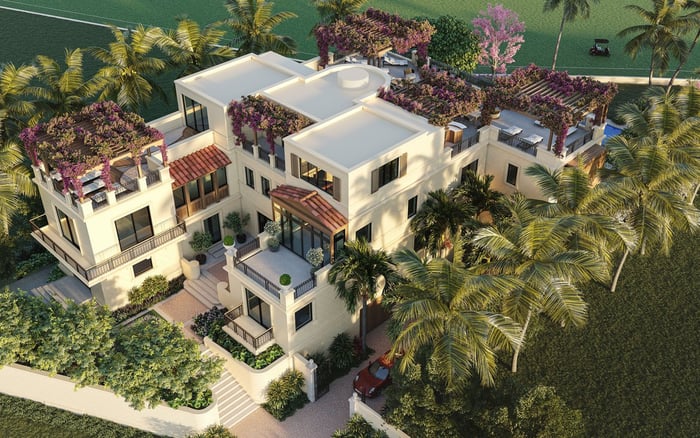
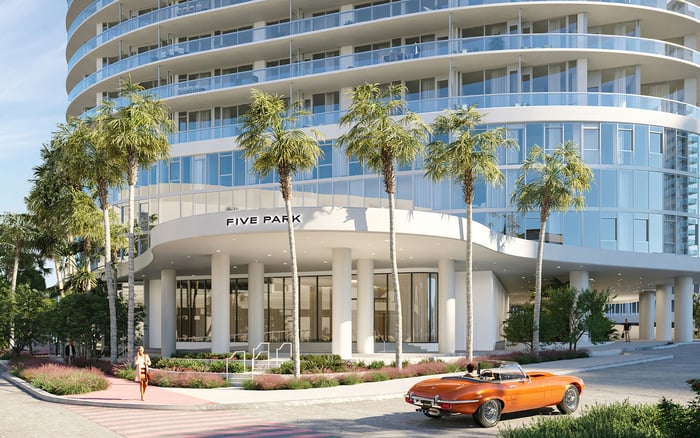
This is why Surfside’s boutique luxury inventory is often evaluated differently from larger resort-style towers. Buildings such as Arte Surfside, Fendi Château Residences Surfside, and Ocean House Surfside attract attention not only because they sit within a coveted coastal enclave, but because buyers in this segment tend to care about how private life is buffered from public movement.
The Delmore Surfside should be viewed through that same lens. Boutique does not automatically mean private, and private does not automatically mean seamless. But a building with a smaller, more controlled residential cadence can give privacy-led buyers a stronger foundation for the living pattern they are trying to preserve.
In larger buildings, residents may share elevator banks with a wider mix of guests, vendors, service providers, and amenity traffic. That does not make those buildings less luxurious. It simply creates a different arrival profile. Some buyers enjoy the energy of a grand lobby and a more social residential environment. Others are actively trying to avoid it.
Controlled arrival is about boundaries. The best luxury residences create a legible sequence between public, semi-private, and private spaces. A resident should understand where visibility begins, where it narrows, and where it ends. For families who value predictability, the daily movement from car to residence should not feel improvised.
The Delmore Surfside’s relevance comes from this precise buyer calculus. A residence can have ocean adjacency, sophisticated architecture, and refined interiors, yet still fall short for a purchaser who does not want repeated exposure in shared elevator areas. Conversely, a building that clarifies movement can become more compelling even before the buyer turns to finishes and views.
A practical comparison should begin with the arrival map. Buyers should ask how vehicles enter, whether arrivals are visible from public-facing areas, and how quickly residents can move from the point of entry to their private residence. If private elevator access is central to the decision, it should be confirmed in writing along with the foyer configuration and any shared conditions.
Next, buyers should evaluate staff and service circulation. A controlled arrival experience is strongest when resident movement is not constantly crossing paths with deliveries, maintenance activity, or event traffic. The question is not whether a building has service functions. Every building does. The question is how well those functions are separated from the resident’s daily path.
Finally, buyers should consider the emotional dimension. Ultra-prime real estate is often discussed in terms of measurable attributes, but privacy is felt in moments: a late return from the airport, a child coming home from school, a quiet dinner arrival, or a guest being received without unnecessary exposure. If those moments matter, The Delmore Surfside deserves careful attention.
Surfside’s appeal is not only geographic. Its location between Bal Harbour and Miami Beach gives residents access to dining, shopping, beaches, and the broader Miami lifestyle while retaining a more residential posture. That makes it especially compelling for buyers who want coastal proximity without constant density.
The neighborhood’s luxury context also supports comparison shopping. A buyer may look at The Delmore Surfside alongside The Surf Club Four Seasons Surfside to understand how different buildings handle privacy, arrival, and resident flow. The goal is not to declare one format universally superior. It is to identify which building’s circulation logic best matches the buyer’s life.
For a buyer prioritizing discretion, boutique scale, oceanfront adjacency, and controlled residential movement may sit at the top of the criteria list. The Delmore Surfside belongs on that shortlist if its private elevator and arrival-control details, once verified, align with the buyer’s threshold for privacy.
The strongest case for The Delmore Surfside is not that controlled arrival is a luxury flourish. It is that controlled arrival can shape the entire residential experience. For the right buyer, fewer public interfaces, clearer movement, and a more predictable transition home are not extras. They are the architecture of privacy.
Buyers should approach The Delmore Surfside with the same rigor they apply to views, floor plans, exposure, and finish quality. Confirm the private elevator condition. Walk the arrival sequence. Understand who shares which spaces and when. If the answers support the desired level of discretion, The Delmore Surfside becomes one of Surfside’s most relevant considerations for privacy-first living.
Why does controlled arrival matter in a luxury condo? It affects how residents move from public space to private residence, which can influence privacy, security, and daily comfort.
Is The Delmore Surfside positioned for privacy-focused buyers? Yes, it is relevant for buyers evaluating Surfside through the lens of private elevators, controlled movement, and reduced lobby exposure.
Should buyers verify private elevator access? Yes. Buyers should confirm whether private elevator access is offered, how it functions, and whether it opens to a private foyer.
What should be reviewed during an arrival walkthrough? Buyers should review the path from vehicle arrival to entry, elevator access, foyer, and residence.
Does boutique scale automatically mean more privacy? Not automatically, but smaller-scale luxury buildings can reduce daily friction between residents, guests, staff, and vendors.
Why is Surfside attractive for this buyer profile? Surfside offers a coastal setting between Bal Harbour and Miami Beach with a more discreet residential rhythm.
How does controlled arrival compare with views or finishes? For privacy-led buyers, arrival quality can rank alongside views, architecture, ceiling heights, and interior finish levels.
What is the main risk in relying on brochure language? Terms like private elevator can vary, so buyers should verify the exact configuration and shared-space conditions.
Who is the ideal buyer for The Delmore Surfside? It suits buyers who prioritize discretion, family security, predictable movement, and fewer uncontrolled public interfaces.
Should The Delmore Surfside be compared with other Surfside residences? Yes. Comparing arrival sequences across nearby buildings can clarify which residence best supports the buyer’s privacy threshold.
When you're ready to tour or underwrite the options, connect with MILLION.
If branded residences are on your mind — as a home or as an allocation — we would be glad to share what we are seeing, privately.
Begin a quiet conversation