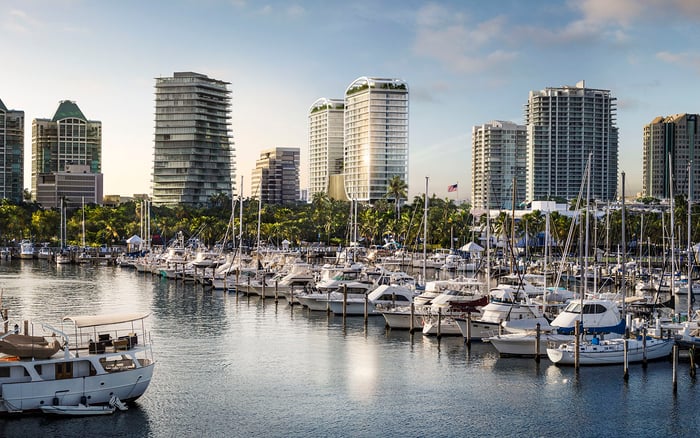
A discreet buyer’s guide to aligning a South Florida residence with a disciplined marina strategy, from vessel logistics and privacy to island living and long-term usability.
For a Geneva-based buyer considering South Florida, the most disciplined approach is to reverse the usual sequence. Do not begin with the penthouse terrace, the sunset exposure, or the building name. Begin with the boat. A serious marina strategy starts with what the vessel needs on an ordinary Tuesday, how the owner wants to arrive on a Friday evening, and what must happen quietly before guests ever step aboard.
That shift changes the search. A residence is no longer simply waterfront or near the water. It becomes part of a larger operating system: dockage, tender movement, crew access, storage, service coordination, ground transport, aviation rhythm, privacy, and the social tone of the surrounding enclave. The correct home is the one that allows the owner to enjoy the yacht without turning the yacht into a logistical burden.
For many European buyers, the question is not whether South Florida is attractive. It is which version of South Florida best matches the family’s habits. Fisher Island, Miami Beach, Fort Lauderdale, Bay Harbor, Coconut Grove, and Palm Beach each imply a different cadence. The right answer is rarely the loudest one.
A proper marina brief should be written before any property tour. It should define the primary yacht, any tender or chase boat, the expected frequency of use, the need for captain and crew proximity, preferred provisioning style, and the owner’s tolerance for friction. If the owner plans to use the boat socially, the residence must support guest arrival with grace. If the yacht is private family space, discretion moves higher on the list.
This is where buyers should distinguish ownership romance from operational reality. A beautiful residence can disappoint if access is awkward, association rules are restrictive, or daily service requires too many separate approvals. Conversely, a less theatrical address can become the smarter base if the route from residence to vessel feels effortless.
In practice, boat-slip planning should be considered alongside parking, elevator access, staff circulation, and security. The ideal arrangement is not always the closest dock. It is the one that works during real use: luggage, catering, children, pets, guests, and last-minute weather changes.
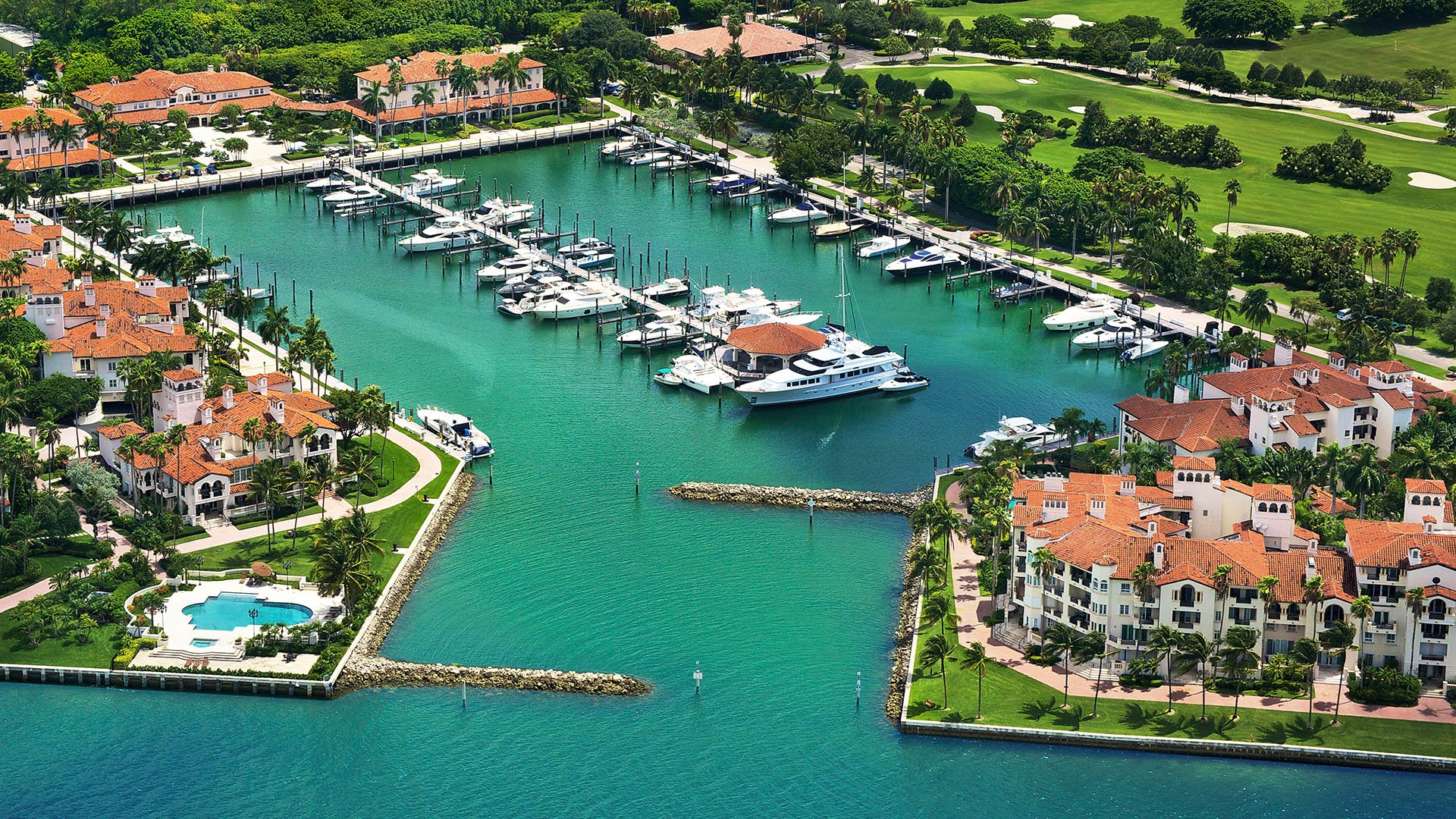
Fisher Island appeals to buyers who value separation. Its appeal is not merely geographic or architectural; it is behavioral. The island format creates a sense of arrival and removal, which can be especially compelling for owners moving between Europe, New York, the Caribbean, and South Florida. For a Geneva buyer, the comparison is intuitive: privacy is not a feature, but an atmosphere.
For those studying the island’s residential language, The Residences at Six Fisher Island offers a useful lens into the ultra-private lifestyle many buyers associate with the enclave. Nearby, The Links Estates at Fisher Island is another reference point for buyers considering a more estate-oriented expression of island living.
The marina-minded buyer should ask a specific question: does the home make yachting feel natural, or ceremonial? On Fisher Island, ceremony can be part of the appeal. Arrival, hosting, and departure may feel more intentional. That suits owners who want privacy, curated access, and a strong sense of address.
Miami Beach works differently. It is often chosen by buyers who want the yacht to support a broader lifestyle: restaurants, beach clubs, wellness routines, design culture, and a more immediate social rhythm. The marina strategy here should be balanced against daily life. A buyer may not require the vessel at the doorstep if the residence places the family in the right cultural and coastal orbit.
This is where the residential choice becomes subtle. A buyer looking at The Ritz-Carlton Residences® Miami Beach may be thinking less about a single dock and more about the combination of privacy, service, and access to the broader Miami Beach lifestyle. The yacht becomes one layer of a larger South Florida week.
For owners who entertain frequently, Miami Beach can also simplify the guest experience. The most important questions are not about glamour. They are about control: where guests arrive, how they move from car to residence to boat, whether staff can prepare the day unobtrusively, and how much exposure the owner accepts.
Fort Lauderdale often enters the conversation when the yacht is not an accessory, but a central part of the household’s identity. For this buyer, the property search should focus on operational fluency. The home must support repeated use, captain coordination, maintenance conversations, and flexible departures without making each outing feel like an event.
A residence such as St. Regis® Residences Bahia Mar Fort Lauderdale can be relevant for buyers who want the Fort Lauderdale boating lifestyle paired with a polished residential environment. The priority is not simply proximity to boats. It is choosing an address where the boating culture feels integrated rather than improvised.
Fort Lauderdale may appeal to the buyer who thinks like an owner-operator, even when a professional captain handles the details. The right property should make conversations about service, scheduling, and access feel ordinary. That ease is a form of luxury.
The marina strategy also determines the property type. A full-service condominium can be ideal for a buyer who wants lock-and-leave simplicity, controlled access, and professional management. An estate can suit the owner who wants more autonomy, staff presence, and a domestic environment that expands around the vessel. A hybrid approach, with a primary residence in one enclave and dockage strategy in another, may work for families who separate lifestyle from yacht operations.
The wrong move is to treat the boat as a line item after the purchase. A residence with spectacular interiors but poor marine practicality will eventually feel compromised. The better move is to test each property against real days: early departure, dinner aboard, bad weather, guest turnover, provisioning, and quiet return.
Buyers should also consider household composition. Children, older relatives, pets, security teams, and visiting guests all change the usefulness of an address. A marina strategy is not only about the vessel. It is about the people moving around it.
Before committing to a South Florida home, the buyer should ask a focused set of questions. How often will the yacht be used? Will the owner sleep aboard, entertain aboard, or simply depart from it? Is the captain local? Does the crew need nearby housing or predictable access? Should the residence feel removed, social, resort-like, or private-club quiet?
Then comes the property test. Can luggage move discreetly? Can provisions arrive without disrupting the household? Are there clear procedures for guests? Does the residence still work when the yacht is away? The last question matters. A great marina strategy should enhance the home, not make the home feel incomplete without the vessel.
For a Geneva buyer, the best choice may be Fisher Island if privacy and separation dominate. It may be Miami Beach if culture, beach life, and entertaining matter most. It may be Fort Lauderdale if the yacht sits at the center of the decision. The art is not choosing the most impressive address. It is choosing the one that behaves correctly.
Should a yacht owner choose the home or marina first? Start with the marina strategy. The residence should support the vessel’s practical use, not compete with it.
Is Fisher Island best for privacy-focused buyers? Fisher Island is often considered by buyers who prioritize discretion, separation, and a strong sense of arrival.
Does a waterfront residence always solve the boating question? No. Waterfront appeal is different from operational suitability, especially for serious yacht use.
Why would a Geneva buyer consider Miami Beach? Miami Beach can suit buyers who want coastal living, social access, and a yacht as part of a broader lifestyle.
When does Fort Lauderdale make the most sense? Fort Lauderdale may suit buyers whose yacht usage is central, frequent, and operationally important.
Is a condominium practical for a serious boat owner? It can be, if the building’s access, service culture, and daily logistics align with the owner’s boating habits.
What should be reviewed before relying on a boat slip? Review access, rules, service coordination, guest movement, and how the slip works during real use.
Can the best residence be separate from the primary dockage? Yes. Some buyers prefer a lifestyle address with a separate marina solution that better serves the vessel.
What is the biggest mistake in a marina-led search? Treating the yacht as an afterthought after falling in love with a view or interior package.
What is the best way to shortlist comparable options for touring? Start with location fit, delivery status, and daily lifestyle priorities, then compare stacks and elevations to validate views and privacy.
To compare the best-fit options with clarity, connect with MILLION.
If branded residences are on your mind — as a home or as an allocation — we would be glad to share what we are seeing, privately.
Begin a quiet conversation