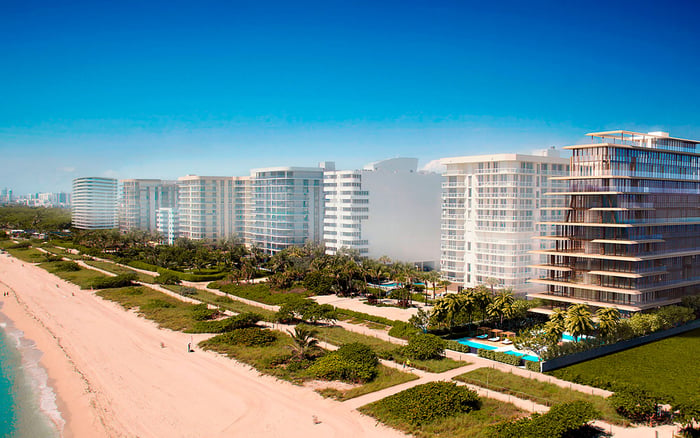
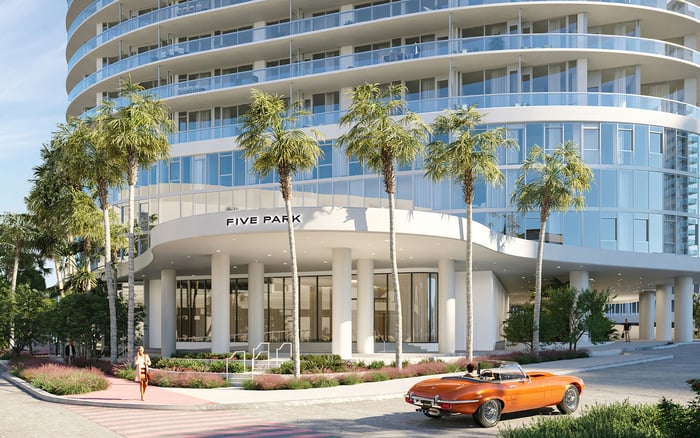
Ocean House Surfside reflects a privacy-first evolution in South Florida luxury, where controlled access, discreet movement, and operational discipline shape the value proposition as much as the oceanfront setting.
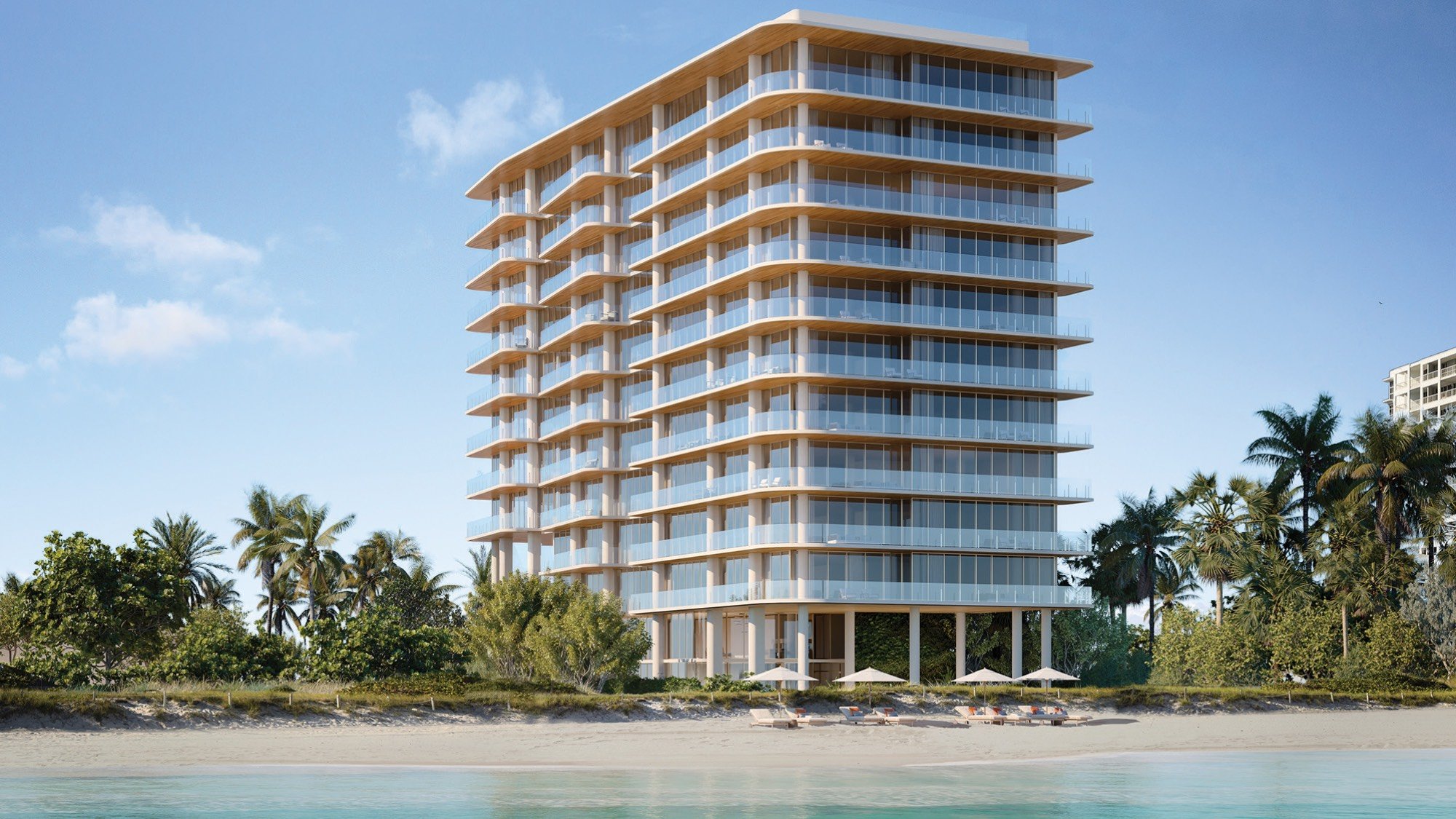
At the top of South Florida’s residential market, privacy is no longer a background expectation. It is a design brief, an operational standard, and often the first filter through which ultra-high-net-worth buyers evaluate a building. Ocean House Surfside sits squarely within that shift, positioned as a luxury oceanfront residential project in Surfside, Florida, with security, discretion, and controlled access at the center of its appeal.
That distinction matters. In this segment, security is not simply a front desk, a camera, or a lobby credential. It is the choreography of how residents arrive, how guests are received, how staff move through a property, and how the building protects the quiet separation between public visibility and private life. The more prominent the buyer, the more important that choreography becomes.
For Ocean House Surfside, the oceanfront setting sharpens the equation. Beach proximity is a privilege, but it also creates a natural tension between openness and seclusion. A successful privacy-first residence must allow residents to enjoy the water, light, and horizon while managing exposure, movement, and access with uncommon care.
Surfside has long appealed to buyers who want the benefits of an oceanfront address without the constant intensity associated with busier Miami Beach corridors. Its quieter, more residential character gives projects like Ocean House Surfside a distinct advantage: the location itself supports discretion before the building experience even begins.
This does not mean isolation. Surfside remains connected to the broader ultra-luxury map, including nearby Bal Harbour and Miami Beach, but it offers a softer cadence. For many buyers, that balance is the point. The address can be highly desirable without feeling performative, visible without feeling exposed, and refined without depending on spectacle.
That same sensibility informs the broader Surfside market. Buyers looking at The Delmore Surfside and Arte Surfside are often weighing more than architecture or amenity programming. They are evaluating scale, circulation, arrival experience, and the degree to which a residence can support a private life with minimal friction.
In most buildings, controlled access is treated as infrastructure. At Ocean House Surfside, it is better understood as part of the resident experience. The appeal lies in the idea that access is intentional, not casual, and that daily operations are shaped around resident control.
For privacy-focused owners, that distinction is essential. A residence may be beautiful, but if its circulation is confusing, its arrival experience is too exposed, or its guest management feels informal, the home does not meet the buyer’s needs. Controlled access is not about creating inconvenience. It is about removing uncertainty.
That principle applies across multiple layers. Physical planning can help separate public, resident, guest, and service movements. Technology can support verification and oversight without becoming intrusive. Staffing can create continuity and judgment. Operational culture can determine whether a building feels merely managed or genuinely protective.
The strongest buildings in this category understand that privacy is felt in small moments. A resident does not want every arrival to feel like an event. A guest should be welcomed without disrupting the building’s calm. Staff should be accommodated with structure and dignity. Security teams, when involved, need a property culture that understands professional discretion.
For high-profile residents, arrivals and departures can be among the most sensitive parts of daily life. Ocean House Surfside’s positioning recognizes this directly, treating discretion as a practical concern rather than a vague luxury adjective.
The best arrival sequence is often the one that feels quiet. It avoids unnecessary exposure, reduces waiting, and gives residents confidence that the transition from public realm to private residence is controlled. This is especially important for owners who travel frequently, entertain selectively, or maintain complex household operations.
A privacy-first building also needs to think beyond the owner. Family members, invited guests, household staff, drivers, and outside service providers each create access scenarios that must be handled consistently. In that context, guest and staff management become central elements of the privacy strategy, not back-of-house details.
The same thinking has become more relevant across South Florida’s ultra-premium coastline. At Fendi Château Residences Surfside and other boutique oceanfront addresses, buyers increasingly evaluate how a building feels in motion: arrival, elevator transition, amenity use, service coordination, and departure.
The words Oceanfront and Boutique are often used loosely in luxury real estate, but at this level they carry specific implications. Oceanfront living introduces rare beauty and daily immediacy, while boutique scale can support a more controlled residential atmosphere. Ocean House Surfside is framed within Surfside’s boutique ultra-luxury market, where those two ideas converge.
For privacy-driven buyers, boutique does not simply mean fewer residences. It suggests the possibility of more personal recognition, fewer unnecessary encounters, and a building culture where staff can understand resident preferences over time. When paired with controlled access, that scale can make the property feel less like a destination and more like a private address.
The beach component adds complexity. A building must balance direct enjoyment of the shoreline with the reality that oceanfront properties are naturally visible. Privacy, therefore, depends on the full composition: access points, resident pathways, guest protocols, staff training, and the tone set by management.
This is where Ocean House Surfside’s positioning becomes especially relevant. It is not selling privacy as absence. It is presenting privacy as control: control over who enters, how people move, when interactions occur, and how quietly the building supports its residents.
Ocean House Surfside is described as catering to ultra-high-net-worth buyers with elevated privacy and security expectations. That audience may include residents who use security teams, corporate ownership structures, or other privacy-preserving arrangements. The residence must therefore be legible to both the owner and the professionals who support that owner’s life.
That does not require a cold or fortress-like environment. In fact, the most successful ultra-luxury residences make security feel almost invisible. The atmosphere should remain gracious, calm, and residential. The systems behind that calm must be disciplined enough to inspire confidence without turning daily life into procedure.
This is the nuance sophisticated buyers look for. They are not only asking whether a building is secure. They are asking whether it is discreet. They are asking whether staff understand confidentiality. They are asking whether guests can be handled elegantly. They are asking whether the property’s culture matches the level of personal and financial privacy they require.
Within Surfside, The Surf Club Four Seasons Surfside represents another example of how the area attracts buyers who value a polished residential setting near the water. Ocean House Surfside enters that same buyer conversation with a sharper focus on access, discretion, and privacy-first living.
A buyer evaluating Ocean House Surfside should look past surface luxury and study the lived experience. How does arrival feel at different times of day? How are guests anticipated and received? How are staff and service providers coordinated? How does the building maintain privacy while preserving warmth?
These questions are not secondary. They go directly to long-term satisfaction. A residence that handles access well can feel effortless for years. A residence that handles it poorly can become frustrating quickly, even if the views and finishes are exceptional.
Ocean House Surfside reflects a broader South Florida movement toward residences designed around resident control. In that environment, security is not a single amenity. It is a layered promise made through planning, technology, staffing, and culture. For the right buyer, that promise may be just as valuable as the ocean itself.
What is Ocean House Surfside? Ocean House Surfside is positioned as a luxury oceanfront residential project in Surfside, Florida, with a strong emphasis on privacy and controlled access.
Why is security central to the project’s appeal? The project is framed for privacy-focused residents who expect security, discretion, and resident control to shape the daily living experience.
Does controlled access mean the building is difficult to use? Not necessarily. In a luxury context, controlled access is meant to reduce uncertainty while keeping daily movement smooth and discreet.
Why does Surfside matter for privacy? Surfside offers a quieter, more residential character than busier Miami Beach areas, supporting a more discreet ownership profile.
How does the oceanfront setting affect privacy? Oceanfront living offers beach access and visibility, so the building experience must balance openness with careful residential privacy.
Who is the likely buyer for Ocean House Surfside? The project is relevant for ultra-high-net-worth buyers with elevated privacy expectations, including those using security teams or privacy-preserving ownership structures.
Are exact security systems publicly detailed? Specific systems and protocols are not the focus here; the stronger lens is how physical planning, technology, staffing, and culture work together.
Why are guest and staff protocols important? Guests, household staff, and service providers all affect privacy, so their movement and access must be managed with consistency and discretion.
Is Ocean House Surfside part of a broader luxury trend? Yes. It reflects a South Florida shift toward residences designed around privacy, security, and stronger resident control.
What should buyers evaluate during due diligence? Buyers should study arrival sequences, guest handling, staff coordination, and whether the building culture feels discreet as well as polished.
For a tailored shortlist and next-step guidance, connect with MILLION.
If branded residences are on your mind — as a home or as an allocation — we would be glad to share what we are seeing, privately.
Begin a quiet conversation