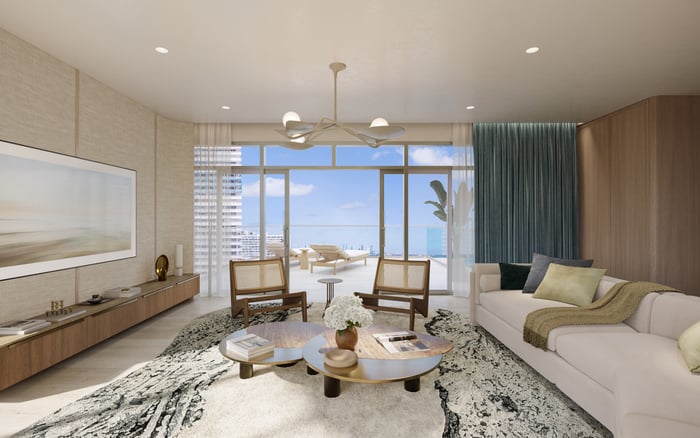
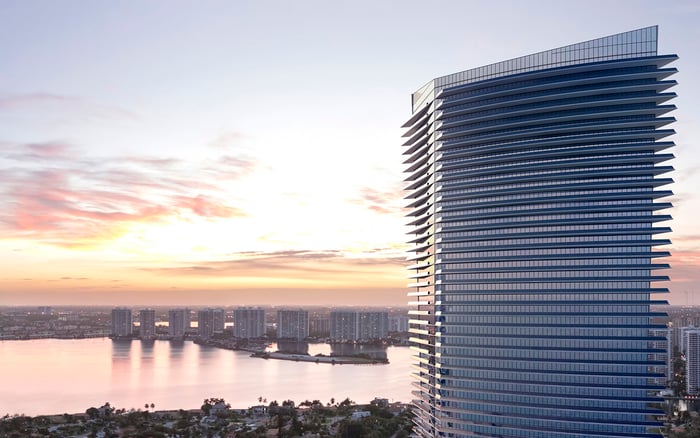
Seasonal buyers should evaluate hallway exposure with a higher standard because privacy, sound, service movement, and arrival quality are felt most sharply when a residence is used as a second home.
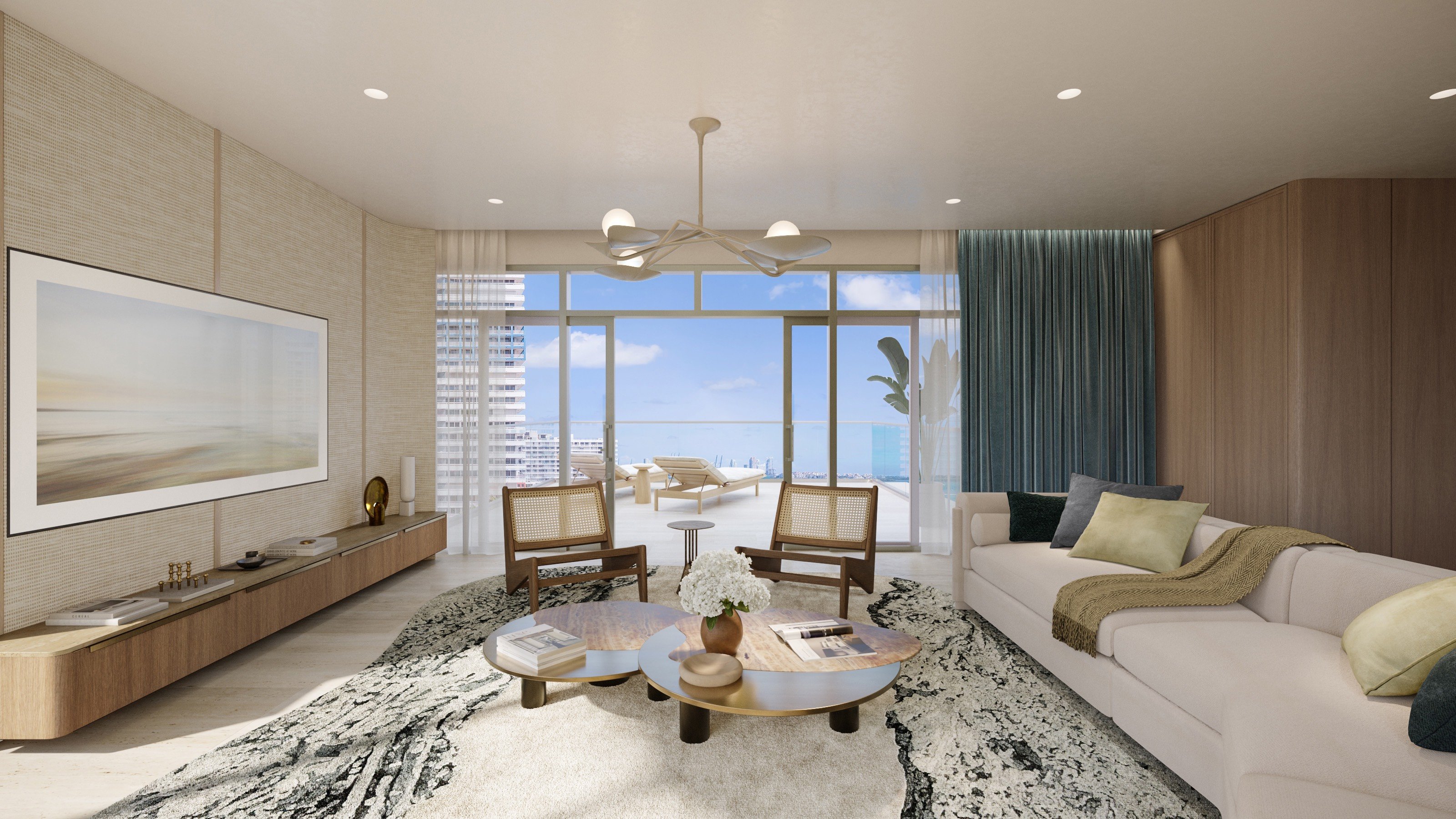
For a seasonal buyer, the hallway is not simply the passage between elevator and residence. It is the first private threshold after the lobby: the place where luggage pauses, guests orient themselves, service providers arrive, and the mood of the home begins. In a full-time residence, minor corridor compromises may fade into routine. In a second home, they are felt with unusual clarity because every arrival carries an expectation of ease.
Hallway exposure refers to how visible, audible, and operationally connected a residence entry is to shared circulation. It includes distance from elevators, sightlines from elevator banks, proximity to trash rooms or service doors, neighboring entry density, acoustic conditions, and the way staff, deliveries, and other residents move past the door. For South Florida buyers comparing Brickell, Aventura, oceanfront settings, or waterfront enclaves, the view may dominate the tour. Yet the corridor often determines whether the home feels quietly owned or constantly shared.
The correct standard begins with arrival. A seasonal owner may land after a flight, arrive late, bring guests, or return after the residence has been prepared by staff. The hallway should make that transition feel composed. A short, direct route from elevator to entry can be valuable, but only when it preserves discretion. If the residence door sits in direct view of the elevator opening, every arrival becomes more visible than it needs to be.
A more refined condition is a protected approach: enough separation from the elevator to avoid a public-facing entry, but not so much distance that luggage or guests become inconvenient. The buyer should stand at the elevator, look toward the residence door, and ask a simple question: would this feel elegant with suitcases, family, and a driver waiting below? If the answer is no, the floor plan may be asking too much of the owner.
This is especially important for owners who use the residence in concentrated periods. A corridor that feels slightly busy during one showing can feel much busier during holidays, long weekends, and peak building activity. The seasonal buyer is not just buying the interior. They are buying a recurring entrance ritual.
Private elevator access is often treated as the gold standard, but privacy should be judged more broadly. A residence can have a strong elevator sequence and still suffer from exposure if the door is near a service zone, a back-of-house route, or a cluster of neighboring entries. Conversely, a shared corridor can feel highly private when doors are well spaced, sightlines are controlled, and circulation is calm.
Buyers should pay attention to what can be seen when the residence door opens. Is the living room visible from the hall? Is there a foyer that buffers the interior? Does the entry allow guests to step inside before the home reveals itself? A good seasonal residence should support hospitality without turning the hallway into part of the social space.
The same standard applies to deliveries and staff coordination. A second-home owner may rely on housekeepers, property managers, stylists, private chefs, or maintenance teams. If all movement is forced through a highly visible front corridor, the residence can feel operational rather than serene. The better condition allows service to occur gracefully, without making the main entry feel exposed.
Sound is one of the most overlooked elements of hallway exposure. Buyers often test views, ceiling heights, finishes, and balcony depth, but they rarely spend enough time listening near the front door. Elevator chimes, conversations, rolling luggage, cleaning carts, pets, and service doors can all shape the experience of a home, especially in the morning and evening.
For seasonal buyers, the issue is not only decibel level. It is interruption. A home used for rest, hosting, or escape should not announce every movement on the floor. The ideal hallway condition gives the owner acoustic separation without creating inconvenience. Distance from elevators can help, but only if the corridor itself is not a thoroughfare.
Trash rooms, mechanical closets, and service elevator doors deserve particular attention. They may seem minor during a quiet tour, but they shape daily impressions. A door that opens frequently beside the residence entry can change how private the home feels. A buyer should study the plan, then revisit the corridor with the same scrutiny applied to a terrace, kitchen, or primary suite.
Different owners need different hallway standards. A couple seeking a lock-and-leave pied-à-terre may prioritize a clean, direct path and strong security sightlines. A family using the residence for school breaks may want fewer neighboring doors, wider circulation, and space to manage beach bags, luggage, and visiting relatives. A host who entertains frequently should care about how guests arrive, where they gather before entering, and whether the entry sequence feels ceremonial or congested.
Waterview and oceanfront residences can create a particular distraction during tours. The eye moves immediately to the horizon, and the corridor becomes secondary. The stronger buyer discipline is to reverse the sequence: evaluate the hallway first, then enjoy the view. If the entry condition is weak, the view may compensate emotionally, but it will not remove the friction of repeated arrivals.
In dense urban settings such as Brickell, elevator strategy and corridor exposure can be as important as elevation. In quieter residential markets such as Aventura, the buyer may focus more on floor density, service movement, and the calmness of the approach. Neither setting has a single correct answer. The right standard is the one that supports how the owner actually lives when in residence.
A polished model residence rarely tells the full hallway story. Buyers should request the floor plate, identify the elevator bank, locate service rooms, count neighboring entries, and understand how deliveries, staff, and building operations move through the level. The goal is not to eliminate all shared circulation. It is to ensure that the shared realm does not dilute the privacy of ownership.
Timing also matters. A quiet midday tour may not reveal the true character of the corridor. If possible, a buyer should experience the approach at different moments, including early evening, weekend periods, or times when residents are more likely to be moving through the building. The hallway should still feel composed when the building is alive.
Finally, the entry should be judged as part of the residence’s architecture. A gracious foyer, a slight turn from the door, a wall that blocks direct views, or a vestibule-like pause can transform the entire experience. These are not decorative details. They are the difference between a home that starts at the front door and a home that begins too publicly in the corridor.
The most discerning seasonal buyers understand that luxury is not only what is inside the residence. It is also the absence of friction around it. Hallway exposure affects privacy, sound, service, guest arrival, and the subtle feeling of being at home the moment the elevator doors open.
A different standard is therefore not excessive. It is appropriate. Seasonal ownership compresses experience into fewer, more meaningful days, and every point of contact matters. The best residences protect the owner from the building’s activity while still providing effortless access to it. That balance is quiet, practical, and deeply luxurious.
What is hallway exposure in a condominium? It is the degree to which a residence entry is visible, audible, or affected by shared corridor activity, elevators, service rooms, and neighboring doors.
Why does it matter more for seasonal buyers? Seasonal owners experience the home through arrivals and departures more intensely, so corridor friction can feel magnified.
Is being close to the elevator always better? Not always. Proximity is convenient, but direct sightlines, noise, and traffic can reduce the feeling of privacy.
Should I avoid residences near service rooms? They deserve careful review. Frequent staff movement, doors, carts, or operational noise may affect the entry experience.
Can a shared hallway still feel private? Yes. Good spacing, limited sightlines, acoustic control, and a calm floor plate can make a shared corridor feel discreet.
What should I check during a tour? Stand at the elevator, walk to the door, listen near the entry, and note what is visible when the residence door opens.
Does a private elevator solve hallway exposure? It can help, but buyers should still assess service routes, foyer design, and any shared circulation near the residence.
How does hallway exposure affect hosting? A composed entry sequence makes guest arrival feel gracious, while a busy corridor can make the home feel less private.
Is hallway exposure more important than the view? It is not more important, but it should be evaluated separately because a strong view cannot fix a poor arrival sequence.
What is the ideal standard for a second home? The best standard combines convenience, discretion, acoustic calm, and an entry that feels private before the door opens.
For a tailored shortlist and next-step guidance, connect with MILLION.
If branded residences are on your mind — as a home or as an allocation — we would be glad to share what we are seeing, privately.
Begin a quiet conversation