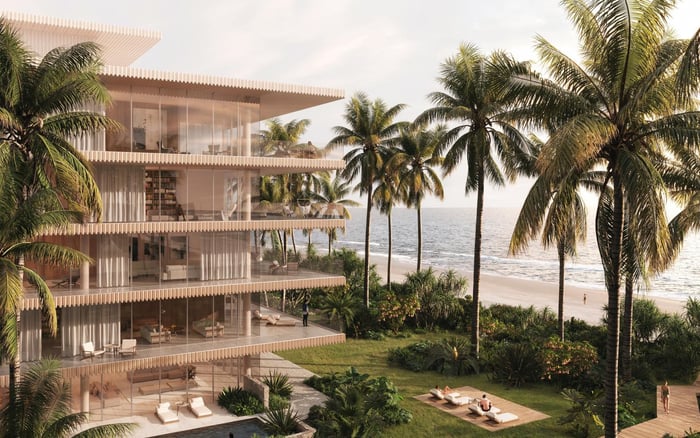
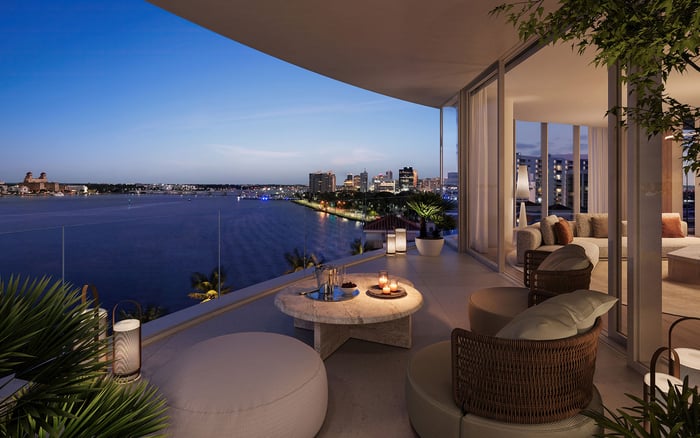
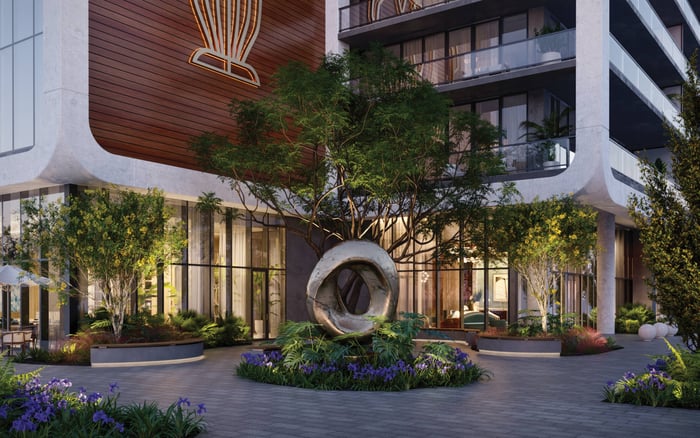
Palm Beach Gardens can be a compelling next move for owners leaving large waterfront homes, provided the building operates with the discretion, service depth, maintenance discipline, and governance standards that make a lock-and-leave lifestyle feel genuinely effortless.

For buyers leaving large waterfront homes, Palm Beach Gardens can be persuasive for reasons that extend well beyond square footage. The appeal is not simply a smaller residence, a fresher plan, or a more convenient lock-and-leave address. It is the possibility of trading the constant orchestration of a major private property for a building that can absorb complexity without compromising privacy.
That distinction matters. A large waterfront home often carries its own invisible infrastructure: exterior care, security habits, vendor schedules, storm preparation, staff coordination, dock or water-facing maintenance, guest arrivals, deliveries, and the endless rhythm of ownership. A condominium or serviced residential building becomes a credible alternative only when its operations feel as capable as the private household it is replacing.
In Palm Beach Gardens, the most discerning buyer is often not downsizing in identity. They are resizing responsibility. They may still want volume, views, storage, easy parking, graceful pet accommodation, proper guest reception, and a sense of arrival that does not feel compromised. The right building can deliver that shift, but only when management, staffing, rules, reserves, and resident culture are designed for people who notice details.
Palm Beach Gardens sits in a different emotional register from the denser vertical markets farther south. It can feel calmer, more residential, and more aligned with buyers who want refinement without constant spectacle. For an owner accustomed to a substantial home, that matters. The move must feel like a simplification, not a retreat.
This is where The Ritz-Carlton Residences® Palm Beach Gardens becomes relevant in the broader buyer conversation. The name alone does not answer every due diligence question, but it points to what this buyer profile is seeking: a residence where service expectations, privacy, and daily operations are central to the proposition, not afterthoughts.
The Palm Beach Gardens buyer leaving a large waterfront home is usually evaluating continuity. Will the transition preserve dignity? Will guests know where to go without friction? Will packages, cars, pets, maintenance access, and seasonal absences be handled with discretion? Will the building feel calm in high season and attentive in quieter months? These are operational questions, and they determine whether the move feels liberating or limiting.
A polished lobby is not a management plan. Buyers should look closely at staffing patterns, access control, service protocols, maintenance standards, and the tone of governance. The goal is to understand how the building performs on an ordinary Tuesday, not only during a sales presentation.
Ask how service requests are handled, who supervises vendors, how resident communications are delivered, and how the building prepares for prolonged owner absences. Review rules with the same seriousness one would apply to architectural plans. A former estate owner may be used to personal discretion and rapid response. If the building culture is rigid without being refined, or casual without being accountable, the daily experience will disappoint.
Parking and arrival deserve equal attention. Buyers leaving large homes are often accustomed to private garages, multiple vehicles, and effortless guest movement. A building must solve this choreography elegantly. The best operations make arrival feel intuitive, secure, and unhurried. The weakest ones turn every visit into a negotiation.
The word lifestyle is often used casually in luxury real estate, but for this audience it has a precise meaning. It means the owner no longer has to personally manage every recurring task, yet still feels fully in control of the residence. It means privacy is protected without isolation. It means help is present, but never performative.
This is why comparisons beyond Palm Beach Gardens can be useful. A buyer may study The Ritz-Carlton Residences® West Palm Beach to understand how a branded residential environment positions service expectations in a more urban West Palm Beach context. Others may consider Alba West Palm Beach when they want to compare a West Palm Beach address with a different residential rhythm.
These comparisons are not about declaring one market superior. They are about calibrating fit. Palm Beach Gardens may appeal to the buyer who wants a quieter daily base, while West Palm Beach may appeal to those who want closer urban energy. Palm Beach itself may remain the emotional benchmark for legacy ownership. The practical question is which location and building operation best replace the private-home ecosystem.
For estate owners, rules can feel unfamiliar at first. Yet strong governance is often what protects both building value and daily serenity. The issue is not whether rules exist. The issue is whether they are intelligent, consistently enforced, and compatible with the way the buyer actually lives.
Pet policies, renovation rules, delivery procedures, guest access, seasonal occupancy patterns, leasing restrictions, and amenity expectations all shape the experience. A building with beautiful finishes but weak governance can become stressful. A building with disciplined operations can feel more private than a single-family property that requires constant oversight.
For buyers considering the Palm Beach Gardens transition, the principle is simple: do not evaluate the residence without evaluating the institution around it. The association, management structure, staffing culture, and reserve posture are part of the purchase. They are not background details.
The right Palm Beach Gardens residence should make the owner feel lighter, not smaller. The daily burden should decline, while standards remain intact. That is a difficult balance, and it is why operational due diligence should be as serious as design review.
Some buyers will still want the formality and prestige associated with Palm Beach. Others will compare the ease of Palm Beach Residences with newer options in adjacent markets. A buyer who values water proximity, service, and modern living may also study Forté on Flagler West Palm Beach as part of a wider search across the northern luxury corridor.
Palm Beach Gardens works when the building can meet the emotional standard of the home being left behind. That means the residence must feel generous, the service must feel natural, and the operations must be reliable enough that the owner stops thinking about them. When that happens, the move is not a compromise. It is a sophisticated reallocation of time, attention, and energy.
Is Palm Beach Gardens a practical move after owning a large waterfront home? It can be, if the building replaces private-home complexity with dependable service, privacy, and maintenance discipline.
What should buyers evaluate beyond the residence itself? Staffing, governance, access control, vendor procedures, parking, guest arrival, and long-term maintenance culture should all be reviewed carefully.
Why are building operations so important for this buyer profile? Former estate owners are used to control, privacy, and responsiveness, so weak operations can make a luxury building feel inconvenient.
Does a branded residence automatically solve operational concerns? Not automatically. Branding can signal service intent, but buyers should still review management structure, rules, and daily execution.
How should buyers compare Palm Beach Gardens with West Palm Beach? Palm Beach Gardens may feel quieter and more residential, while West Palm Beach may offer a more urban rhythm depending on the address.
What is the biggest adjustment after leaving a large home? The main adjustment is shared governance, which can be positive when rules are clear, consistent, and aligned with resident expectations.
Should buyers prioritize amenities or operations? Operations should come first. Amenities matter most when they are supported by service standards that keep them calm, clean, and accessible.
Can a condominium feel as private as a single-family estate? It can feel highly private when access, staffing, circulation, and resident culture are handled with discretion and consistency.
What makes the transition feel successful? The owner should feel less burdened without feeling less accommodated, with daily details handled quietly and reliably.
Who is best suited to this Palm Beach Gardens move? It suits buyers who want to reduce household management while preserving comfort, privacy, and a refined residential pace.
For a tailored shortlist and next-step guidance, connect with MILLION.
If branded residences are on your mind — as a home or as an allocation — we would be glad to share what we are seeing, privately.
Begin a quiet conversation