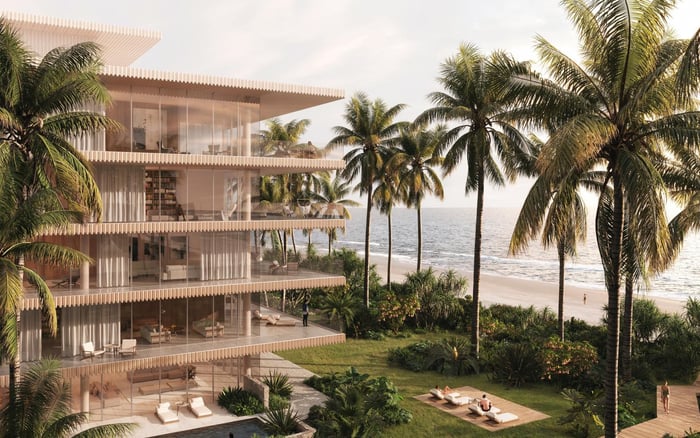
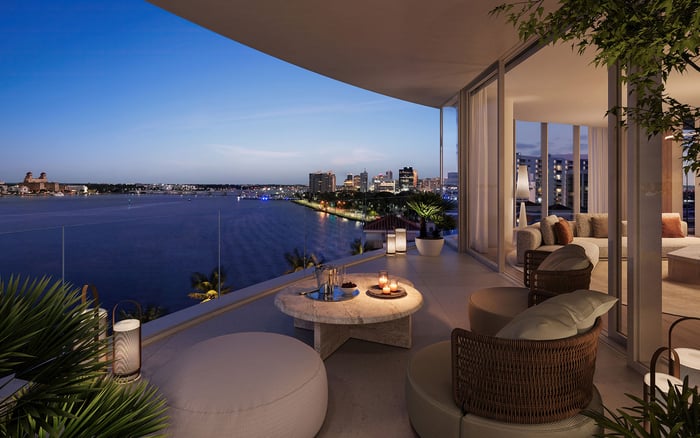
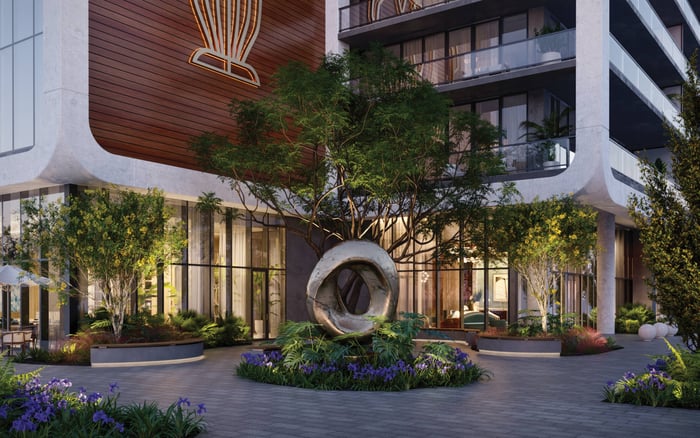
Design Miami’s influence can be read less as a seasonal spectacle and more as a buyer lens for Palm Beach homes, where art, materiality, privacy, and hospitality-grade service increasingly define what feels truly collectible.
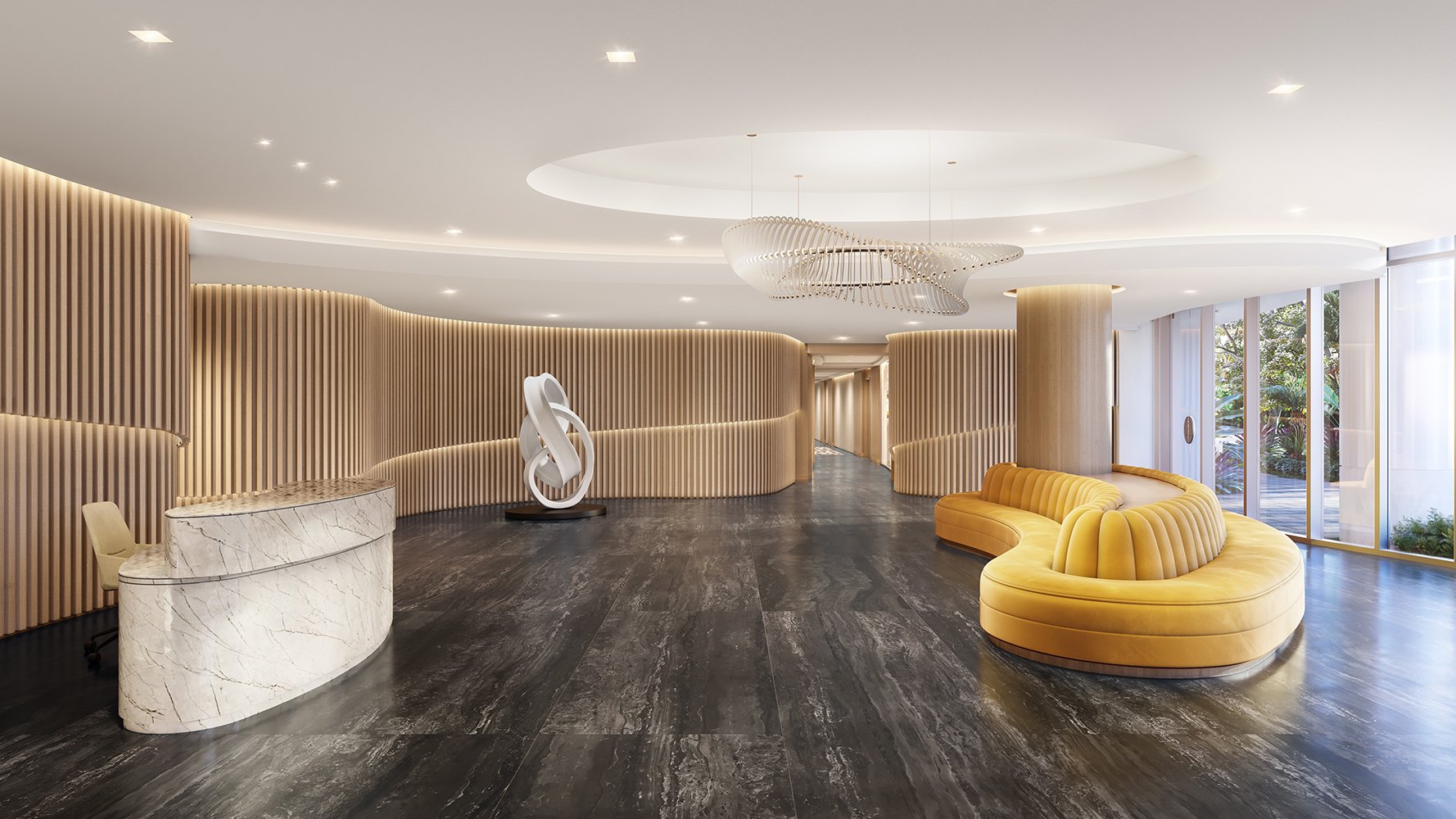
Design Miami can influence Palm Beach real estate not because every buyer is pursuing the same chair, table, or collectible object, but because the fair sharpens the eye. It encourages a more disciplined reading of rooms, where proportion, craftsmanship, lighting, and narrative matter as much as square footage. For a luxury-home buyer, that shift is significant. A residence is no longer judged only by its address or view. It is evaluated as a complete environment.
Palm Beach has long favored discretion, privacy, and architectural character. The Design Miami lens adds another layer: the home should feel curated without feeling staged. It should support serious art, family rituals, seasonal entertaining, and quiet retreat. In that sense, design culture is not a decorative afterthought. It becomes a practical framework for identifying which homes have lasting relevance.
For buyers comparing established estates, boutique condominiums, and new-construction residences, the question is increasingly direct: can this property support a refined life without constant compromise? That answer often begins with design.
In the ultra-premium segment, Design & Architecture can function like due diligence. A buyer may love a view, yet hesitate if ceiling heights feel compressed, if walls are difficult for art, or if lighting cannot shift from morning calm to evening entertaining. These are not minor preferences. They shape daily experience and long-term satisfaction.
The most persuasive Palm Beach homes tend to offer calm order. Circulation should feel natural. Public rooms should have enough presence to receive guests without overpowering the private areas. Bedrooms should feel sheltered. Kitchens should be beautiful enough for open living, yet efficient enough for real use. Outdoor spaces should read as extensions of the interior, not leftover terraces.
This is where the design fair mentality becomes useful. It teaches buyers to study joinery, stone, hardware, glazing, and the relationship between furniture and architecture. In a mature luxury market, the strongest properties often win through refinement rather than excess.
Palm Beach buyers who collect art, design, or rare objects need homes that can receive those pieces gracefully. That does not mean every wall must become a gallery. It means the architecture should give important works room to breathe. Wall scale, natural light control, ceiling planes, and sightlines become essential.
A living room with generous proportions may look impressive, but the more meaningful test is whether it can hold a conversation among art, furniture, landscape, and people. A foyer should create anticipation without feeling theatrical. A dining room should support both intimacy and ceremony. Even corridors matter, because they can become moments of transition rather than wasted space.
This sensibility is visible in the way buyers evaluate residences across Palm Beach and West Palm Beach. A project such as Palm Beach Residences may enter the conversation not simply as an address, but as part of a broader search for spaces that balance coastal ease with design intention.
Luxury buyers have become more fluent in the difference between expensive finishes and good materials. Design Miami reinforces that distinction. A rare surface can be less compelling than a quiet material used with restraint. A sculptural fixture can feel less valuable than a room with excellent daylight, careful acoustics, and tactile consistency.
In Palm Beach, this preference aligns naturally with the local mood. The strongest interiors do not need to announce themselves. They often rely on limestone, plaster, warm woods, woven textures, soft metals, and a coastal palette handled with discipline. The goal is not minimalism for its own sake. It is permanence.
That distinction matters because a home dependent on trend can date quickly. A home built around proportion, light, and materials can evolve. Furniture can change. Art can rotate. The architecture remains composed.
Waterfront has always been a powerful word in South Florida, but design-conscious buyers are asking more precise questions. Is the view framed well from the rooms where people actually live? Does the terrace have enough depth to function as a room? Is there a graceful transition from interior flooring to exterior surface? Can outdoor seating feel private even in a condominium setting?
The waterfront priority is no longer only about seeing blue from a distance. It is about inhabiting the edge. Morning coffee, shaded lunches, evening drinks, and quiet reading all require different conditions. A beautiful exposure without usable outdoor space may feel less compelling than a subtler view paired with a better terrace.
This is why projects along the broader coastal corridor remain relevant for Palm Beach buyers who are design fluent. Alba West Palm Beach can be considered through that lens, as part of the larger conversation about how water, light, and daily living should meet.
The rise of Branded Residences has changed expectations. Buyers who spend time in well-run hotels and private clubs often want that same fluency at home, but without losing the feeling of privacy. Service should be present, not performative. Amenities should reduce friction, not create social obligation.
Design Miami’s influence is useful here because it reminds buyers that lifestyle is not only about access. It is about atmosphere. A lobby, library, spa, dining room, or garden should have a point of view. The best shared spaces feel edited, not generic. They support daily rituals and occasional entertaining without making the residence feel public.
For Palm Beach-oriented buyers evaluating West Palm Beach options, The Ritz-Carlton Residences® West Palm Beach represents the type of branded environment that invites a deeper question: how much of a buyer’s life should be handled by the building, and how much should remain private and self-directed?
The most design-aware homes are not rigid. They allow owners to live differently over time. A library may become a listening room. A guest suite may need to function as a study. A formal dining space may host a collector dinner one evening and a family breakfast the next morning. Flexibility is not the same as generic openness. It is the ability of well-proportioned rooms to accept multiple uses without losing dignity.
This matters in Palm Beach because many residences serve layered lives. Owners may host adult children, visiting friends, advisors, chefs, stylists, art handlers, and wellness professionals, yet still expect the home to feel serene. Good planning separates service from sanctuary. It lets the public areas perform while the private rooms remain protected.
A residence such as South Flagler House West Palm Beach can sit within this broader buyer conversation, where the appeal is not only the residence itself, but how intelligently it may support the rhythms of refined South Florida living.
A design-led search should begin before the showing. Buyers should define what must be protected: art, privacy, entertaining, wellness, staff flow, family visits, or seasonal ease. Once inside a property, the evaluation should move from the emotional to the exacting. Look at where art could hang. Notice where sunlight lands. Stand in the kitchen and ask how a dinner would unfold. Step onto the terrace and consider whether it will be used every day or admired only in passing.
The best homes do not force a buyer to choose between beauty and function. They make both feel inevitable. In that respect, Design Miami’s greatest influence may be restraint. It encourages buyers to reject novelty when novelty is not supported by craft, and to favor homes that can mature gracefully.
For those considering a more intimate Palm Beach address, The Berkeley Palm Beach may be part of the same evaluation: not simply what is new, but what feels considered, livable, and capable of holding value in taste as well as in location.
Why does Design Miami matter to Palm Beach homebuyers? It sharpens attention to craftsmanship, proportion, lighting, and the relationship between architecture and collectible objects.
Should art collectors prioritize wall space over views? Not necessarily. The strongest homes balance view corridors with walls, lighting, and rooms that can properly support a collection.
Are design-led homes always contemporary? No. A design-led home can be traditional, transitional, or modern if the proportions, materials, and planning are strong.
What is the biggest mistake buyers make with interiors? They can focus on surface finishes while overlooking ceiling height, circulation, light control, and room usability.
How important is outdoor space in Palm Beach? It is central when it functions as true living space, with privacy, shade, depth, and a natural connection to the interior.
Do Branded Residences fit the Palm Beach lifestyle? They can, particularly for buyers who value service, security, and hospitality polish while preserving private residential calm.
Is new-construction always better for design-conscious buyers? Not always. New-construction can offer modern systems and planning, but established homes may offer character and scale.
What should buyers look for in a primary suite? Privacy, morning light, acoustic comfort, storage, and a bathroom that feels serene rather than merely decorative.
How does lifestyle influence the purchase decision? Lifestyle determines whether a home supports daily rituals, entertaining, wellness, family visits, and seasonal living with ease.
Can a design-focused home hold long-term appeal? Yes, when it is rooted in proportion, quality materials, flexible planning, and a restrained point of view.
For a tailored shortlist and next-step guidance, connect with MILLION.
If branded residences are on your mind — as a home or as an allocation — we would be glad to share what we are seeing, privately.
Begin a quiet conversation