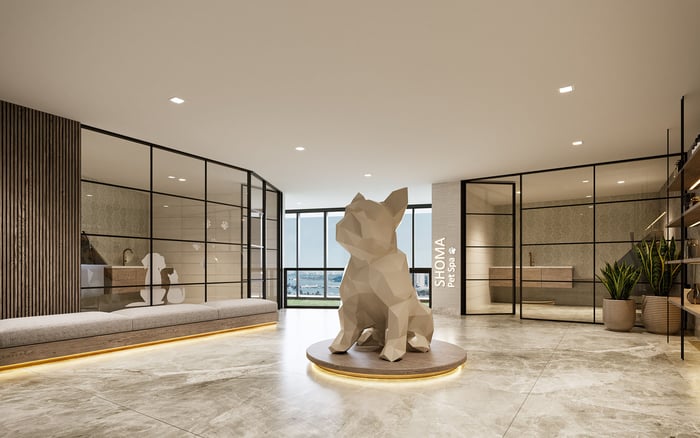
A discreet look at why owner-only treatment rooms are becoming a meaningful marker of full-time luxury living, especially for buyers who prioritize privacy, routine, and residential calm.

In South Florida luxury real estate, the most meaningful amenities are often the least theatrical. A dramatic pool, cinematic lobby, or sky-level terrace can command attention in a sales gallery. Yet for full-time owners, daily life is defined by quieter privileges: privacy, predictability, ease, and the ability to maintain personal routines without negotiating the rhythms of short stays, visiting guests, or seasonal crowds.
That is why owner-only treatment rooms deserve serious attention. They are not simply spa rooms with better finishes. At their best, they reflect a different philosophy of residential service, one centered on people who live in the building as a primary home. For the owner who spends most of the year in Brickell, Miami Beach, Coconut Grove, Palm Beach, or another high-demand South Florida enclave, the value is less about novelty than continuity.
Seasonal guests may experience a treatment room as an occasional indulgence. Full-time owners experience it as infrastructure. It becomes part of the cadence of a life lived in residence, not a vacation itinerary.
A seasonal guest often evaluates amenities through a compressed lens. The question is immediate: what can be enjoyed during a long weekend or winter stay? Full-time owners ask a more demanding question: will this building support the way I want to live every week?
That distinction matters. A treatment room reserved for owners can protect access when demand is highest, but its deeper value is psychological. It tells residents that the building recognizes a hierarchy between permanent ownership and transient use. In a market where branded hospitality, flexible occupancy, and resort-style programming all have their place, full-time owners increasingly look for signs that home will still feel like home.
This is especially relevant for buyers moving from single-family estates into vertical living. They may welcome the convenience of staff, security, and maintenance-light ownership, but they do not want to surrender discretion. A private treatment room helps recreate the controlled environment of an estate wellness suite while preserving the lock-and-leave advantages of a condominium.
For a penthouse buyer, the issue becomes even sharper. The residence may offer volume, views, and a private sanctuary upstairs, but the building’s shared spaces still define the overall experience. If the wellness program feels overcrowded or too public, the promise of privacy is diminished.
The word “treatment” can undersell what is actually being purchased. The premium is not merely the ability to schedule a facial, massage, recovery session, or wellness appointment within the building. The premium is the ability to do so without the friction of public exposure.
For high-profile owners, privacy is not vanity. It is a practical requirement. Arrival patterns, service appointments, wellness habits, and personal routines can reveal more than many residents wish to share. A room reserved for owners, ideally positioned with thoughtful circulation and acoustic separation, can make the difference between an amenity that is admired and one that is genuinely used.
The same logic applies to families, executives, and owners who host often. A person may be entirely comfortable socializing at dinner, on a pool deck, or in a residents’ lounge. Wellness is different. It is personal, sometimes restorative, sometimes medical-adjacent, and often tied to vulnerability. The more private the setting, the more naturally it becomes part of everyday life.
A boutique building can have an advantage here because fewer residences may support a more intimate amenity culture. Still, scale alone is not enough. The key is how access is governed, how appointments are managed, and whether the space feels like a true residential extension rather than a leftover room with spa branding.
Full-time owners are sensitive to scheduling because they live with the building’s operating reality throughout the year. A seasonal guest may accept a limited appointment window. A primary resident may want recurring access before work, after training, following travel, or during quieter parts of the day.
Owner-only treatment rooms can support that rhythm. They reduce the risk that the most useful time slots are absorbed by temporary demand. They also allow management to build service standards around residents who return consistently, rather than one-time users who may never establish an ongoing relationship with staff.
This has a subtle but important effect on quality. When a wellness environment serves regular owners, preferences can be remembered. Lighting, music, table setup, practitioner access, and entry protocol can be refined over time. The experience feels less like booking an appointment and more like continuing a relationship with the building.
For residents with pets, children, travel schedules, board obligations, or demanding professional calendars, that consistency carries real value. It turns wellness from a special occasion into a dependable layer of household management.
Not every owner-only room delivers the same value. Buyers should look beyond renderings and ask how the amenity is governed. Who can reserve it? Can guests use it when accompanied by owners? Are outside practitioners allowed? How is access handled during peak holiday periods? What prevents the room from becoming an informal overflow spa for visitors?
These questions are not adversarial. They are the due diligence of serious ownership. Rules determine whether the amenity remains a private residential asset or gradually becomes diluted by exceptions. In the luxury market, dilution is rarely dramatic at first. It begins with small permissions, soft enforcement, and a tendency to accommodate every request until the original purpose is blurred.
Full-time owners should also consider staffing philosophy. A beautiful treatment room without disciplined operations may disappoint. Conversely, a modestly sized room with excellent scheduling, privacy protocols, and maintenance standards can become one of the building’s most valued spaces.
Acoustics, entry sequence, linen storage, restroom proximity, and service elevator strategy also matter. These details are not glamorous, but they determine whether the room feels serene in practice.
Amenities communicate values. A building that prioritizes owner-only wellness is making a statement about permanence. It suggests that the residence is not merely a stage set for peak-season enjoyment, but a home environment built around repeated use.
That signal can shape buyer perception. Full-time owners often seek neighbors who share a similar commitment to the property. They may prefer a culture where the front desk recognizes residents, amenity spaces are respected, and common areas do not feel like extensions of a hotel lobby. Owner-only treatment rooms align with that preference.
This does not mean seasonal ownership lacks value. South Florida will always attract second-home buyers, and many communities are designed to serve them beautifully. The distinction is that full-time owners carry the building’s experience across every month, including quiet weeks, stormy afternoons, school schedules, workdays, and family routines. They need amenities that perform outside the postcard moment.
A treatment room reserved for owners is one such amenity. It supports the owner who wakes up in the residence on an ordinary Tuesday as much as the one entertaining guests during season.
When comparing residences, buyers should treat owner-only treatment rooms as part of a broader wellness and privacy ecosystem. Study how the room connects to fitness areas, locker rooms, spa spaces, elevators, and residential corridors. Consider whether the path from residence to treatment feels discreet or exposed.
Ask whether the room is truly owner-only in policy and practice. Clarify reservation windows, cancellation rules, practitioner approval, cleaning standards, and guest limitations. If the building has multiple ownership profiles, understand how management balances primary residents, second-home users, family members, and visitors.
Also weigh the amenity against the residence itself. A magnificent private bath, sauna, gym, or treatment area within the unit may reduce reliance on shared wellness rooms. Even then, an owner-only building amenity can remain valuable for professional services that require equipment, staffing, or separation from the household.
The best version feels effortless. It does not ask the owner to plan around crowds, explain preferences repeatedly, or compromise privacy. It simply supports life at home.
What is an owner-only treatment room? It is a private wellness room intended for use by owners rather than the broader guest or transient population of a building.
Why does it matter more to full-time owners? Full-time owners rely on amenity access as part of weekly life, so privacy and scheduling consistency become more important than occasional convenience.
Is this different from a regular spa room? Yes. The distinction is not only design, but access control, operating rules, and the sense that the room is reserved for residents with ownership priority.
Should buyers ask about guest access? Yes. Guest policies determine whether the room remains genuinely private or gradually functions like a broader shared amenity.
Does the size of the building matter? It can, but governance matters more. A smaller building can still feel crowded if access is poorly managed.
What design details are most important? Acoustic privacy, discreet circulation, proper storage, easy scheduling, and separation from busy amenity areas are especially important.
Can seasonal owners still benefit from the feature? Yes. Seasonal owners may value the convenience, although they may not use it frequently enough to experience its full lifestyle impact.
How does this affect resale appeal? It can strengthen appeal among buyers who prioritize privacy, wellness, and a residential culture oriented toward long-term use.
Should the treatment room replace in-residence wellness space? Not necessarily. The strongest homes often combine private in-residence comfort with well-managed shared amenities.
What is the key buyer takeaway? Look past the rendering and focus on rules, access, staffing, and whether the amenity will remain calm during peak demand.
For a tailored shortlist and next-step guidance, connect with MILLION.
If branded residences are on your mind — as a home or as an allocation — we would be glad to share what we are seeing, privately.
Begin a quiet conversation