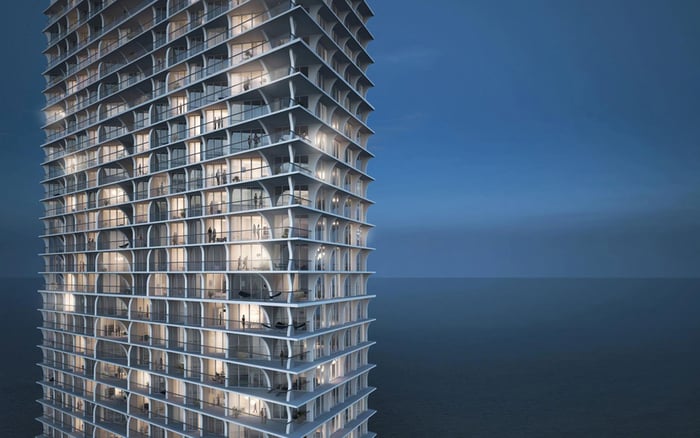
A practical buyer guide to evaluating commercial-tenant noise at Muse Residences Sunny Isles Beach, with questions for documents, acoustics, enforcement, lifestyle fit, and resale.

For a buyer considering Muse Residences Sunny Isles Beach, the conversation around commercial-tenant noise should begin before the view, the floor plan, or the finishes take over. In an ultra-premium building, quiet is not simply the absence of disturbance. It is part of the residential experience, part of perceived privacy, and ultimately part of how the property will be judged by the next discerning buyer.
Commercial activity can coexist with refined residential living when it is clearly governed, physically separated, and thoughtfully operated. The risk is not the mere presence of non-residential use. The risk is ambiguity. Vague rules, weak enforcement language, uncertain hours, or poorly understood mechanical and service areas can turn a beautiful residence into a more complicated ownership story.
This is especially relevant for buyers comparing Sunny Isles inventory, where oceanfront lifestyle, balcony exposure, terrace use, commercial adjacency, and resale expectations often intersect. The most sophisticated approach is to treat noise diligence with the same seriousness as view protection, association budgets, and building condition.
The first question is straightforward: what commercial uses are permitted, where are they located, and how are they restricted? A buyer should review the condominium documents, rules and regulations, bylaws, declaration provisions, and any amendments addressing commercial space, common areas, loading, signage, music, trash removal, deliveries, venting, and access.
The language matters. A document that merely permits commercial use tells a different story from one that defines operating standards, limits nuisance conditions, and gives the association practical enforcement rights. Buyers should look for standards governing sound transmission, odors, late-hour operations, exterior speakers, private events, amplified music, service corridors, and after-hours vendors.
It is also worth asking whether any commercial space is owned separately, leased long term, controlled by the association, or subject to a master arrangement. Each structure can affect responsiveness if a resident later raises a concern. In a luxury building, governance is part of the architecture.
Noise is not a single category. A buyer should separate airborne sound, impact vibration, mechanical hum, loading activity, voices, music, traffic, and service operations. The character of sound can matter more than its loudness. A faint recurring bass note, a rolling cart, or a compressor cycling late at night may be more disruptive than brief daytime activity.
Ask whether commercial areas have dedicated mechanical systems, separate exhaust paths, independent service access, and acoustical separation from residential floors and amenity areas. If a commercial tenant uses kitchen equipment, refrigeration, fitness equipment, event audio, or high-frequency deliveries, the diligence should become more specific.
The buyer should also ask how sound travels vertically and laterally through the building. A residence several floors above a commercial area may feel removed, yet sound can move through structural paths, shafts, vents, terraces, garage openings, and shared service zones. The right question is not only, “Can I hear it?” It is, “When, from where, and under what conditions might I hear it?”
In South Florida, buyers often think first about elevation for view, light, and prestige. When commercial noise is part of the diligence, floor height also becomes an acoustic variable. Lower residences may be closer to entrances, porte-cochère movement, retail frontage, loading, or amenity activity. Higher residences may be more insulated from street-level sound, but more exposed to wind-carried music or rooftop mechanical conditions, depending on the building configuration.
Exposure matters as well. A residence facing an active edge of the property may have a different sound profile from one oriented toward a quieter side. A deep balcony or terrace can be a sanctuary, but it can also reveal outdoor sound patterns more honestly than an interior showing. Buyers who entertain outside should consider how the home feels at breakfast, sunset, and late evening, not only during a brief daytime tour.
If possible, visit more than once and at different hours. Listen from the primary bedroom, main living area, terrace line, elevator corridor, and parking approach. The goal is not to prove a problem. The goal is to understand the residence as it will actually be lived.
Commercial-tenant noise often comes from operations rather than customers. Deliveries, trash removal, cleaning crews, rolling bins, service elevators, valet patterns, and back-of-house activity can shape the sound environment. A polished storefront may be quiet while its logistical life is less discreet.
Buyers should ask about approved hours of operation, delivery windows, waste handling, loading locations, service routes, and whether commercial staff use separate entrances or elevators. If rules exist, ask how they are enforced and who receives complaints. If rules do not yet exist or remain vague, that uncertainty should be weighed in the offer strategy.
It is also sensible to ask whether temporary events are allowed. Even in an elegant setting, special events can alter the acoustic profile. A buyer should know whether music, catering, extended hours, promotional gatherings, or private functions are subject to prior approval.
Luxury ownership depends on confidence that standards will be maintained. A buyer should ask what remedies are available if a commercial tenant creates a nuisance. Can fines be imposed? Can hours be restricted? Can access be modified? Can the association require mitigation? Who documents violations, and what evidence is needed?
The distinction between a right on paper and a remedy in practice is important. A strong enforcement framework gives residents a path to resolution. A weak or unclear structure may leave owners relying on goodwill. For an ultra-premium residence, goodwill is not enough.
Prospective buyers should also ask whether insurance, indemnity, and maintenance obligations are clearly allocated between commercial and residential interests. While this may sound legalistic, these provisions influence how quickly operational problems are addressed and who pays for solutions.
Quiet enjoyment should be priced as part of the asset. A residence with a serene acoustic profile, strong documents, disciplined service routing, and predictable operations may command greater confidence than one with unanswered questions. In a market where buyers compare subtle differences in privacy, arrival sequence, view corridor, and finish quality, sound can become a meaningful differentiator.
This is particularly true for resale. Future buyers may ask the same questions, and they may discount uncertainty. A current buyer who resolves the issue thoroughly can later present the residence with greater clarity. The file should include relevant documents, written answers, inspection notes, and any professional acoustic input obtained during diligence.
The most elegant purchase is not the one that ignores risk. It is the one that understands risk, assigns it properly, and proceeds with discretion.
Before contract deadlines pass, buyers should ask a concise set of questions: What commercial uses are permitted? What uses are prohibited? Where are service areas located? What are the hours of operation? Are deliveries restricted? Are amplified sound, outdoor speakers, or events allowed? What mechanical systems serve the commercial areas? What acoustic assemblies separate commercial and residential spaces? What enforcement remedies exist? Who has authority to act if a nuisance occurs?
The answers should be specific. “It should be fine” is not a diligence standard. “The documents restrict hours, require separate service access, prohibit exterior amplified sound, and allow association enforcement” is a more useful answer. In luxury real estate, precision is the quietest form of confidence.
Should buyers assume commercial space will be noisy? No. The better approach is to evaluate permitted uses, operating rules, separation, and enforcement structure before making assumptions.
What documents should a buyer review first? Review the declaration, bylaws, rules and regulations, amendments, and any provisions addressing commercial use, nuisance, deliveries, and operating hours.
Is floor height enough to avoid commercial-tenant noise? Not always. Sound can move through structural paths, shafts, terraces, service areas, and open exterior conditions, so exposure and building design matter too.
Should a buyer visit the residence more than once? Yes. Different times of day can reveal delivery patterns, evening activity, mechanical sounds, and outdoor conditions that a single showing may miss.
Are balconies and terraces important in noise diligence? Yes. Outdoor areas often reveal the true sound environment, especially for buyers who plan to dine, work, or entertain outside.
What commercial uses deserve extra attention? Uses involving music, food preparation, refrigeration, fitness equipment, frequent deliveries, events, or late hours usually merit more detailed questions.
Can association rules protect residents? They can, if the rules are specific and enforceable. Buyers should confirm who has authority to act and what remedies are available.
Should an acoustic consultant be considered? For highly noise-sensitive buyers or lower-floor residences near active areas, a specialist can add useful technical perspective during diligence.
Does commercial-tenant noise affect resale? It can. Future buyers may value documented quiet, clear restrictions, and strong enforcement more highly than unresolved uncertainty.
What is the best overall strategy? Treat sound as part of the asset, ask precise questions early, and make the purchase decision with the same discipline used for legal and financial review.
When you're ready to tour or underwrite the options, connect with MILLION.
If branded residences are on your mind — as a home or as an allocation — we would be glad to share what we are seeing, privately.
Begin a quiet conversation