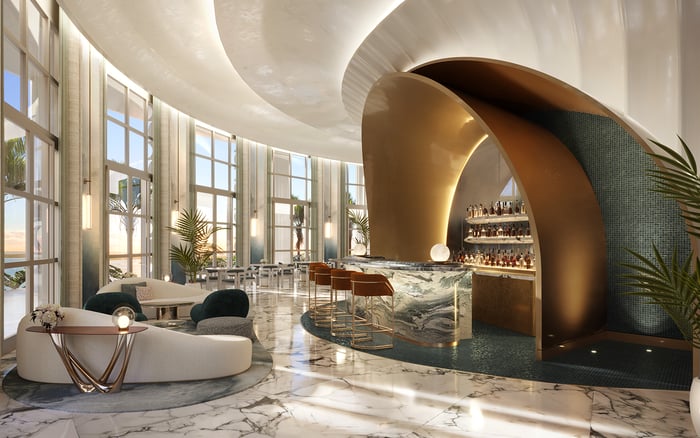
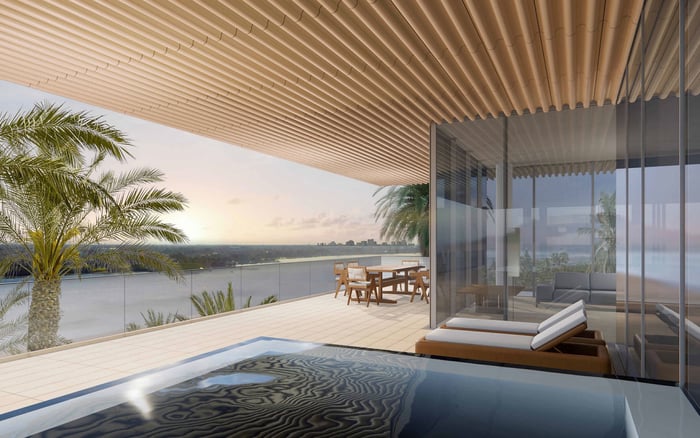
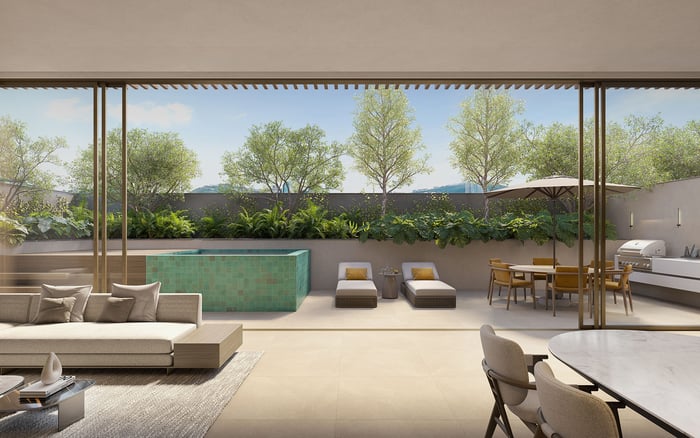
A refined buyer’s guide to the Miami luxury buildings that best support private dining, discreet hosting, and polished entertaining without sacrificing privacy.
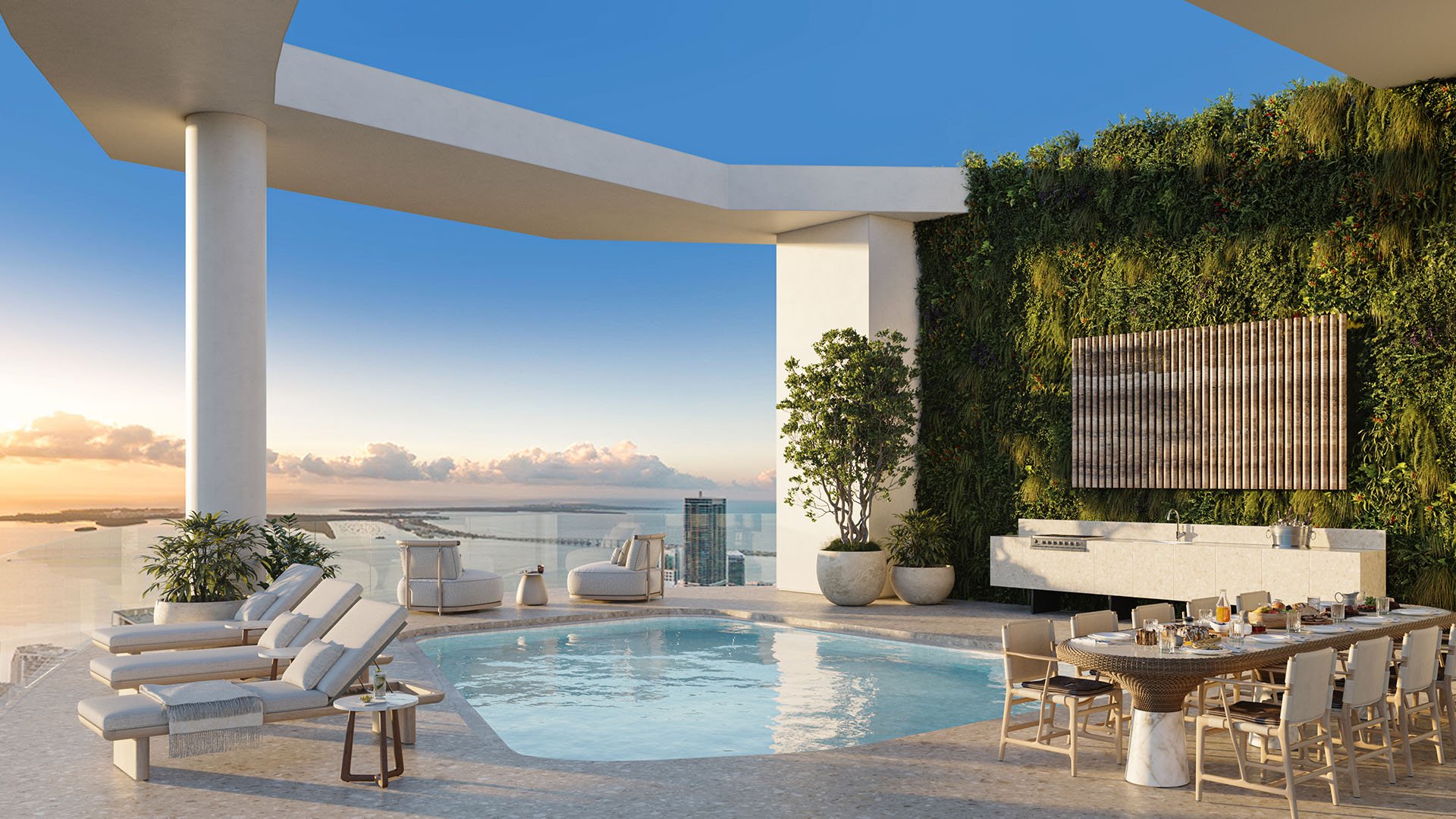
For Miami’s most selective buyers, entertaining is no longer limited to a formal dining room inside the residence. The most compelling luxury buildings now treat hosting as an extension of private life, with spaces that let an owner move effortlessly from cocktails to dinner to a quiet after-hours conversation without the atmosphere of a public venue.
The appeal is not simply convenience. It is control. A refined private dining program allows residents to host family celebrations, board-level dinners, philanthropic gatherings, art-week evenings, and chef-led meals with a level of discretion that a restaurant rarely provides. In a city where social calendars are dense and privacy is a true luxury, the best buildings understand entertaining as both architecture and choreography.
The strongest buildings for private dining and entertaining share a few consistent qualities. First, the amenity spaces feel residential rather than commercial. A dining salon should offer warmth, proportion, acoustic comfort, and lighting that can move from daytime brunch to formal evening service. If the room feels like a banquet hall, it rarely satisfies the expectations of an ultra-premium buyer.
Second, circulation matters. Guests should be able to arrive, be received, and move to the dining or lounge area without crossing too much of the building’s everyday residential life. This is where subtle planning becomes valuable. Separate service access, discreet elevator movement, and intuitive guest flow can make a private event feel composed rather than improvised.
Third, the building’s team must understand service without theatrics. The ideal experience is polished, quiet, and anticipatory. Owners do not want to manage the mechanics of a dinner party from the table. They want a building that can support the occasion while allowing the host to remain present.
Brickell remains one of Miami’s most natural settings for private dining in a residential context. Its appeal lies in immediacy. Residents can gather guests after meetings, host visiting executives, or move from a private dinner to a nearby cultural or social engagement with ease. The best Brickell buildings for entertaining tend to emphasize arrival experience, skyline views, and amenity suites suited to a cosmopolitan audience.
For buyers comparing buildings in Brickell, the question is not only whether a private dining room exists. It is whether the space has the right temperament. A successful room in this market should feel elegant enough for a formal dinner yet relaxed enough for a last-minute evening with close friends. The surrounding lounge, bar, kitchen support, and terrace access often determine how often the space will actually be used.
Brickell entertaining also benefits from vertical drama. High-floor rooms and residences can create a memorable backdrop, especially when paired with thoughtful lighting and interiors that do not compete with the city view. The most desirable settings allow the skyline to become atmosphere rather than spectacle.
Waterfront living changes the mood of entertaining. In a building with bay, ocean, or intracoastal orientation, private dining often becomes less about formality and more about ease. Guests arrive into a setting where the view carries much of the emotional weight. This is especially valuable for dinners that begin before sunset and continue into the evening.
Oceanfront buildings can be particularly persuasive for owners who entertain seasonally. A lunch, tasting menu, or intimate celebration gains a stronger sense of place when the dining experience is connected to light, breeze, and horizon. The challenge is ensuring that outdoor beauty is matched by indoor comfort. The best entertaining buildings create continuity between dining rooms, lounges, terraces, and pool areas without making the experience feel exposed.
Pool decks can also play an important supporting role when designed with restraint. A poolside event should not feel like a resort promotion. In the most elegant buildings, outdoor entertaining zones are layered, with shaded seating, quiet edges, and enough separation for residents who are not part of the gathering.
Boutique buildings can be exceptional for private entertaining because they often feel more personal. Fewer residences may mean a calmer lobby, less competition for amenity reservations, and a stronger sense of residential intimacy. For owners who host small dinners or family gatherings, this can be more valuable than a long list of amenities.
Larger luxury towers, by contrast, may offer more elaborate spaces and a broader service platform. They can be advantageous for owners who entertain often or require flexible rooms that can support different formats. The tradeoff is scale. A buyer should evaluate whether the building’s entertainment spaces feel genuinely private or simply impressive.
Boutique does not automatically mean better, and large does not automatically mean impersonal. The deciding factor is execution. A smaller building with an underdeveloped dining room may be less useful than a larger tower with a well-managed entertaining suite. Conversely, a grand amenity floor can lose its appeal if reservation policies are restrictive or the atmosphere feels too public.
The building matters, but the residence itself remains central. The best private hosts often want both options: amenity-level dining for larger occasions and a residence that can receive guests beautifully. Open living areas, properly scaled kitchens, service pantries, powder rooms near entertaining zones, and terraces with usable depth all contribute to how well a home functions.
Terrace proportions matter more than many buyers realize. A narrow balcony may photograph well but offer little practical value for hosting. A true entertaining terrace should accommodate seating, circulation, and the natural movement of guests without feeling crowded. In Miami, where indoor-outdoor living defines much of the luxury experience, this is not a secondary detail.
Penthouse residences add another dimension. Their privacy, ceiling heights, view corridors, and outdoor space can make them natural entertaining environments. Yet the same principles apply: elegant circulation, acoustic comfort, and service practicality matter more than sheer size.
Before assigning value to a building’s private dining and entertaining program, buyers should ask practical questions. How far in advance can the dining room be reserved? Are private chefs permitted? What is the guest policy? Are there restrictions on music, hours, vendors, florals, or outside service teams? Is there a catering kitchen, and is it designed for real use or merely presentation?
Operational details can determine whether an amenity is a signature advantage or a rarely used showroom. A beautiful private dining room with difficult rules may be less valuable than a quieter, better-run space with flexible access. For high-net-worth owners, discretion is also essential. Staff training, guest registration, elevator protocol, and parking experience all contribute to whether an event feels seamless.
Buyers should also consider the character of the resident community. Some buildings are naturally social, while others are more reserved. Neither is inherently superior. The right fit depends on whether the owner wants a lively amenity culture or a more private address where entertaining remains occasional and highly controlled.
The best luxury buildings in Miami for private dining and entertaining are not defined by a single amenity checklist. They are defined by how gracefully they support the owner’s way of living. A buyer who hosts formal dinners twice a month may need a different building than one who prefers intimate family meals, sunset cocktails, or discreet business gatherings.
For some, the ideal address is in Brickell, with energy, skyline views, and immediate access to the city. For others, it is a waterfront building where the setting softens the evening. Some will prefer the discretion of a boutique property, while others will value the service depth of a larger tower. The common denominator is not size or spectacle. It is the feeling that every part of the experience has been considered.
In Miami’s highest tier, entertaining is not about showing more. It is about hosting better.
What makes a Miami luxury building good for private dining? The best buildings combine an elegant dining room, strong service support, privacy, guest flow, and practical rules for reservations and events.
Is a private dining room more valuable than a large residence dining area? They serve different purposes. A residence dining area is ideal for intimate hosting, while a building dining room can support larger or more formal gatherings.
Should buyers prioritize Brickell for entertaining? Brickell is compelling for urban hosts who value skyline views, business access, and a social setting close to restaurants, offices, and cultural venues.
Are waterfront buildings better for private events? Waterfront buildings can create a more relaxed and memorable atmosphere, especially when indoor dining connects naturally to terraces or outdoor lounges.
What should I ask about amenity reservations? Ask about advance booking, guest limits, fees, vendor rules, hours, alcohol policies, and whether residents can bring private chefs or outside service teams.
Do smaller buildings offer more privacy for entertaining? They often can, especially when there are fewer residents competing for shared spaces. The quality of management still matters as much as scale.
Why do acoustics matter in private dining rooms? Good acoustics allow conversation to feel natural. A visually beautiful room can disappoint if sound carries poorly or becomes too loud during dinner.
Is outdoor entertaining practical in Miami? Yes, when spaces include shade, usable depth, comfortable seating, and a graceful connection to indoor rooms for weather flexibility.
How important is staff discretion? It is essential for high-level entertaining. Guest arrival, service access, elevator movement, and privacy protocols all shape the experience.
What is the best way to shortlist comparable options for touring? Start with location fit, delivery status, and daily lifestyle priorities, then compare stacks and elevations to validate views and privacy.
For a confidential assessment and a building-by-building shortlist, connect with MILLION.
If branded residences are on your mind — as a home or as an allocation — we would be glad to share what we are seeing, privately.
Begin a quiet conversation