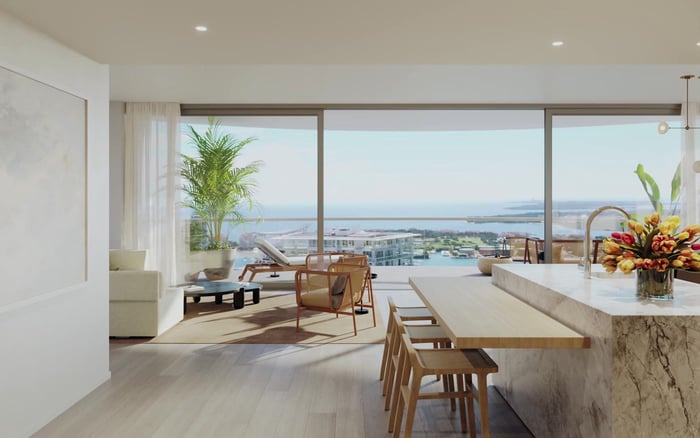
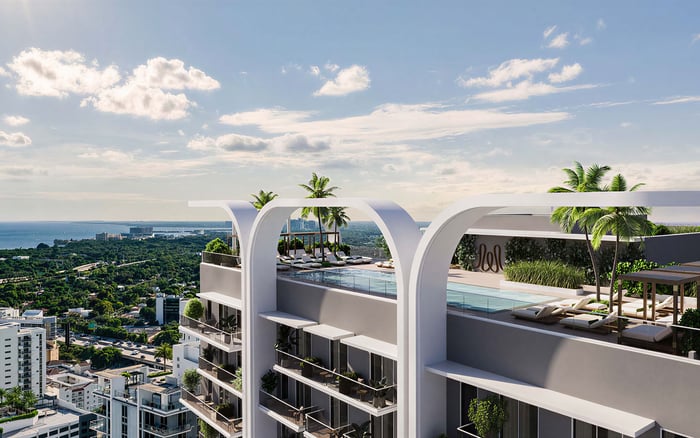
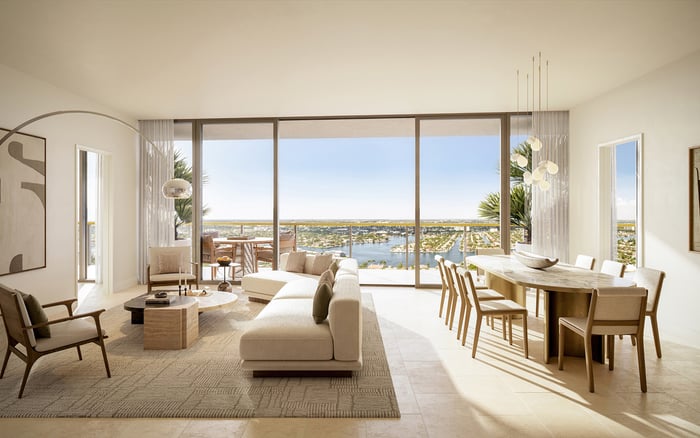
A discreet buyer’s guide to understanding how association documents frame double-height ceilings in South Florida luxury condominiums, from ownership boundaries and design approvals to maintenance, insurance, and resale considerations.
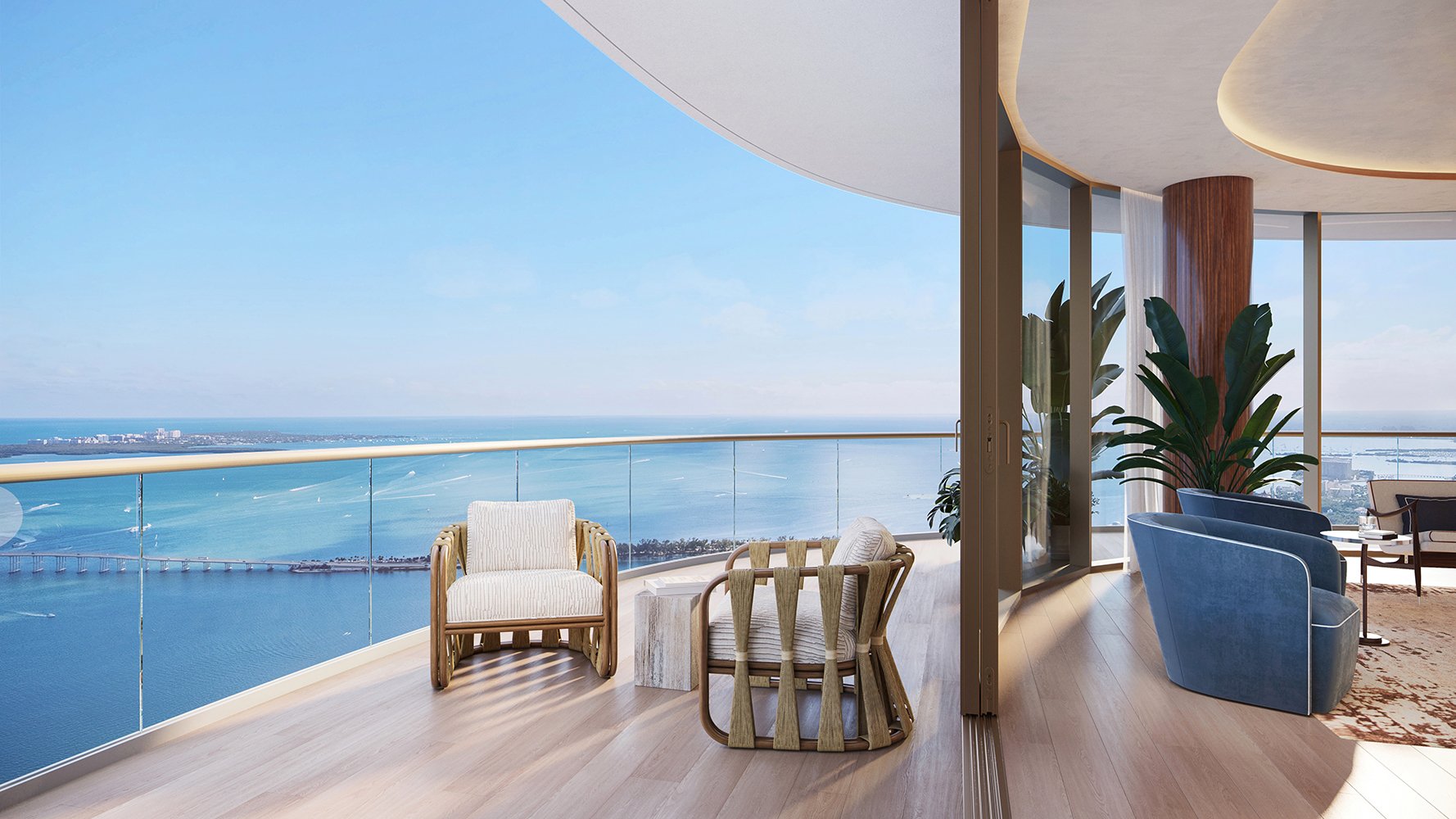
In South Florida’s upper tier of condominium living, double-height ceilings have a distinct magnetism. They change how light enters a room, how art is installed, and how a residence feels the moment the elevator doors open. For a buyer considering a Penthouse, a dramatic duplex, or a residence with a lofted living room, the first impression is often emotional. The second should be documentary.
Association documents can reveal whether that vertical drama is simply a design feature or a more complex part of the condominium’s legal and operational framework. The distinction matters. A double-height living room may involve taller glass, structural transitions, balcony alignments, mechanical pathways, or portions of volume near common or limited common elements. The documents do not replace professional review, but they help define the questions a buyer should ask before treating ceiling height as a straightforward lifestyle upgrade.
For the luxury audience, the point is not to drain romance from the room. It is to protect it. A residence with extraordinary volume should be understood with the same precision as its view corridor, parking allocation, storage rights, and Terrace use.
The declaration is often the first place to understand how a condominium defines the unit itself. In residences with double-height spaces, this is especially important because value is tied not only to floor area, but also to air, light, and proportion. A buyer should examine how the unit boundaries are described vertically, and whether ceilings, slabs, exterior glass, structural components, and adjacent voids are treated as part of the unit, common elements, or limited common elements.
That language can be subtle. A soaring living room may feel entirely private, yet certain components that make it possible may remain under association control. Exterior window systems, façade elements, structural columns, and shared infrastructure may not be freely altered by an owner. If the residence includes a loft condition, internal stair, or upper-level overlook, the documents may also clarify what belongs to the original permitted design and what would require formal approval to modify.
This is where elegance meets governance. The more architecturally distinctive the residence, the more important it becomes to understand what the owner controls directly and what remains subject to the broader building regime.
Double-height ceilings invite customization. Owners envision sculptural lighting, large-format art, custom millwork, acoustic treatments, automated shades, or a gallery-style wall. Association documents, rules, and architectural guidelines can influence each of those decisions.
The central question is whether a proposed change affects common elements, building systems, exterior appearance, noise transmission, fire or life-safety systems, or structural integrity. Even work that appears interior may require association approval if it touches sprinkler locations, electrical runs, window treatments visible from outside, or ceiling assemblies. In luxury buildings, design review can be both protective and exacting, preserving the overall architecture while allowing individual residences to remain distinctive.
A buyer should not assume that volume equals unlimited design freedom. The better assumption is that the space deserves a carefully sequenced plan: document review, professional consultation, association approval where required, and only then execution. That order helps avoid delays, redesigns, and disputes after closing.
A double-height room can elevate daily living, but it can also raise practical questions. Who maintains tall exterior glass? Who is responsible for interior finishes that interface with shared systems? If an automated shade system is integrated near the façade, is it an owner improvement, a building-standard component, or something in between? If water intrusion, condensation, or finish damage appears near a high window wall, which party investigates first?
Association documents can help identify maintenance responsibilities, though the answers may require careful reading across multiple instruments. Declarations, rules, maintenance standards, and insurance provisions may each contain relevant language. For a Resale buyer, minutes, alteration records, or prior approval letters may also be valuable if the residence has been modified from its original condition.
The goal is not to search for problems. It is to understand stewardship. In a premium residence, the most impressive spaces are also the ones that deserve the clearest maintenance map.
In markets such as Brickell, Oceanfront corridors, island enclaves, and established waterfront neighborhoods, ceiling volume is frequently tied to view and identity. A tall living room can frame Biscayne Bay, the Atlantic, a marina, or the skyline with uncommon grace. Yet South Florida ownership also rewards discipline. Coastal exposure, building standards, association governance, and long-term upkeep all converge in the documents.
For an Investment-minded buyer, double-height ceilings may support differentiation, especially when paired with a compelling view, generous outdoor space, or a highly finished interior. Still, distinction should be measured alongside carrying costs, alteration flexibility, maintenance obligations, and the expectations of future buyers. The most durable luxury is not merely spectacular on a showing day. It is understandable, maintainable, and transferable.
New-construction buyers should be equally attentive. Early enthusiasm around renderings and model residences should be paired with a review of the governing structure that will shape ownership after turnover. A completed building, meanwhile, may offer a clearer record of how the association has treated alterations, façade matters, and owner responsibilities over time.
A double-height space deserves a focused set of questions before contract. What exactly are the unit boundaries? Are the windows, exterior walls, slabs, and structural elements owner-controlled or association-controlled? Are there rules for window treatments visible from the exterior? Have any lighting, stair, mezzanine, or shade modifications already been approved? Are there restrictions on drilling, mounting, or suspending fixtures from ceiling areas?
Buyers should also ask how maintenance access is handled. A dramatic wall of glass may require specialized cleaning or service planning. A chandelier may need professional access for installation and maintenance. Large-format art may require reinforcement or association review if walls interface with building systems. These are not reasons to avoid the residence. They are reasons to buy it with sophistication.
The strongest review combines legal, architectural, and practical perspectives. A real estate attorney can interpret the governing documents. A designer or contractor can identify the physical implications of the space. A seasoned advisor can connect both to marketability and the long-term ownership experience.
Double-height ceilings are among the most seductive features in South Florida luxury real estate, but they are also among the most document-sensitive. The association file can clarify ownership, approvals, maintenance, insurance alignment, and future flexibility. It can also reveal whether the residence has been handled with care by prior owners and whether contemplated improvements are realistic.
For the buyer, the opportunity is to move beyond the obvious. A spectacular room is only the beginning. The deeper value lies in knowing how that room functions within the building, how it can be improved, and how it will be explained to the next buyer when the time comes to sell.
Why do association documents matter for double-height ceilings? They may define which parts of the space are privately owned and which are governed by association control.
Can I change lighting in a double-height living room? Possibly, but changes may require approval if they affect building systems, ceiling assemblies, or exterior appearance.
Are tall windows usually mine to alter? Exterior window systems are often treated differently from interior finishes, so the documents should be reviewed carefully.
Do double-height ceilings affect insurance questions? They can, especially when finishes, glass, fixtures, or owner improvements interact with shared building components.
Should a Resale buyer ask about prior alterations? Yes. Prior approvals, plans, and contractor records can help clarify whether the current condition is properly documented.
Is a Penthouse with double-height space always more flexible? Not necessarily. Premium position does not remove association rules or building-system constraints.
Can association rules affect window treatments? Yes. Many luxury buildings care about exterior uniformity, so shades and visible treatments may be regulated.
Does a Terrace change the review? It can. When indoor volume connects to outdoor space, buyers should understand boundaries, drainage, façade, and use rules.
Are these concerns only relevant in Brickell or Oceanfront buildings? No. They apply across luxury condominium markets, though coastal and high-rise settings can make document clarity especially valuable.
What should I review before making an offer? Review the declaration, rules, alteration policies, maintenance obligations, and any records tied to previous improvements.
When you're ready to tour or underwrite the options, connect with MILLION.
If branded residences are on your mind — as a home or as an allocation — we would be glad to share what we are seeing, privately.
Begin a quiet conversation