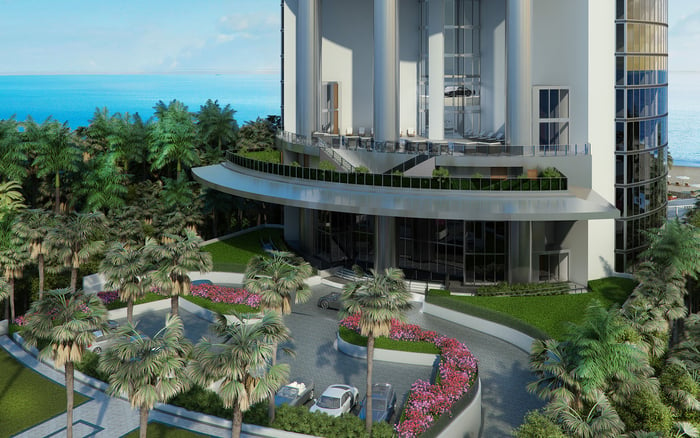
For financed condo buyers in South Florida, valet capacity is not a minor convenience. It can shape daily livability, guest access, closing confidence, and long-term resale appeal.

In South Florida luxury real estate, the motor court is often the building’s first room. It is where residents arrive after dinner, where guests form their earliest impression, and where a weekday schedule either remains composed or begins to fray. For financed buyers, valet capacity deserves attention before signing because the purchase is not merely a lifestyle decision. It is a timed transaction, with underwriting, appraisal, association review, insurance review, and contractual deadlines moving in parallel.
A cash buyer may have more room to absorb an operational surprise after contract execution. A financed buyer often has less flexibility. If the building’s parking and valet arrangement creates uncertainty, frustration, or added cost, it can complicate decision-making precisely when deposits, financing contingencies, and closing preparations become most consequential.
That is why valet capacity belongs in the same early conversation as maintenance, reserves, insurance, rental rules, and assessments. It is not glamorous, but in a vertical market shaped by waterfront land constraints and dense urban districts, it can materially influence daily quality of life.
Valet capacity is more than the number of attendants visible at the porte cochere. It includes the geometry of the arrival court, the number of vehicles that can queue without blocking circulation, the path from curb to garage, the staffing plan, guest parking procedures, vendor access, ride-share overlap, and the building’s rules for residents with multiple cars.
In Brickell, where arrival patterns can be shaped by workday traffic, restaurant activity, and evening social calendars, a buyer touring 2200 Brickell or another urban address should think beyond the lobby. Ask how cars are handled during peak periods, what happens when residents host guests, and whether the valet operation has a distinct rhythm for residents, visitors, deliveries, and service providers.
The same principle applies in Miami Beach, where hospitality expectations are high and buildings often balance residents, visitors, beach access, and nearby restaurant reservations. A buyer considering The Perigon Miami Beach should view the arrival sequence as part of the residence itself. If the entry experience feels constrained on a quiet afternoon, it deserves careful questioning before a deposit becomes difficult to unwind.
Financed buyers have a calendar that can make small unknowns feel larger. A lender may need time to review the building, the association, the buyer’s financial profile, and the collateral. The buyer may also be coordinating an appraisal, insurance, inspections, legal review, and contract milestones. Parking questions that surface late can create avoidable pressure.
The issue is not that valet capacity will automatically affect loan approval. It is that uncertainty can affect confidence. If a buyer discovers after signing that guest parking is limited, that vehicles are retrieved through a congested bottleneck, or that staffing costs may be revisited, the buyer may need to reassess the full cost and usability of the residence while the financing clock is already running.
For buyers relying on a mortgage, the cleanest path is to bring valet into due diligence before the contract becomes emotionally and financially sticky. That means asking for rules, asking management direct questions, visiting at more than one time of day, and confirming how the building handles holidays, events, storms, deliveries, and peak return hours.
New-construction buyers should be especially attentive because the showroom version of valet is often conceptual. Renderings can communicate elegance, but operations are proven in repetition: morning departures, school runs, dinner returns, visiting family, contractors, and seasonal guests.
In Sunny Isles Beach, where oceanfront and near-oceanfront towers often attract owners with multiple vehicles and frequent visitors, valet performance is part of the luxury promise. A buyer studying Bentley Residences Sunny Isles should ask how the project intends to separate resident convenience from guest and service traffic. The question is not merely whether parking exists. It is whether the choreography feels worthy of the architecture.
For pre-completion purchases, ask whether valet operations are expected to be handled in-house or through a third-party operator, how staffing costs are budgeted, where guest vehicles will be staged, and what happens if the resident mix includes more vehicles than originally anticipated. The answers may not be final, but the quality of the response can reveal how seriously the building is treating its arrival experience.
A refined arrival court should feel calm under pressure. Look for stacking space, sight lines, pedestrian safety, weather protection, and the ease with which a vehicle can enter and exit without awkward reversals. Notice whether ride-share vehicles compete with valet lanes. Watch how delivery drivers are directed. Ask where vendors park. A beautiful lobby cannot compensate for a daily arrival sequence that feels improvised.
Fort Lauderdale buyers should make the same assessment in waterfront and marina-adjacent settings, where boats, restaurants, beach traffic, and seasonal visitors can all influence access. At St. Regis® Residences Bahia Mar Fort Lauderdale, and in comparable coastal locations, a financed buyer should understand how arrival flow is intended to support both privacy and practicality.
The strongest buildings understand that discretion requires capacity. Residents should not have to negotiate every arrival. Guests should not feel uncertain about where to go. Staff should not be forced to solve with personality what should have been solved with design, staffing, and policy.
Start with ownership: Is parking assigned, deeded, licensed, valet-only, self-park, or a combination? Then move to operations: How many vehicles can queue before circulation is affected? Are there separate lanes for residents and guests? What are the guest parking rules? Are there limits on overnight guests? How are oversized vehicles handled? Is electric charging integrated into the parking plan, and does it affect valet flow?
Next, ask about money. How are valet staffing and parking operations reflected in association expenses? Could changes in staffing, insurance, security, or operating hours affect monthly costs? A financed buyer does not need to predict every future expense, but should understand whether the building’s lifestyle promise depends on a service model that may require continuing investment.
Finally, test reality. Visit during an evening return window, a weekend, or a high-activity period in the neighborhood. Speak with management when appropriate. Read the condominium documents. Ask your advisor to flag parking and valet language before the inspection or review period expires.
Valet capacity can influence resale because it touches something buyers feel immediately. Views, finishes, and floor plans may create desire, but friction at arrival can quietly reduce enthusiasm. In the luxury segment, small inconveniences are not always small. They become part of the building’s reputation.
This is especially relevant for second-home owners, seasonal residents, and buyers who entertain often. A residence that functions beautifully only when the building is quiet may not carry the same emotional value as one that remains composed during peak demand. For financed buyers, that matters because the purchase should be defensible not only on closing day, but also years later when the next buyer evaluates the same approach, lobby, garage, and valet desk.
The broader principle is simple: look closely at the practical details that protect the elegance of ownership. Valet capacity is one of those details. It sits at the intersection of architecture, service, finance, and resale psychology.
Why should financed buyers care about valet capacity before signing? Because financing adds timing and review layers to the purchase, and late discoveries about parking or valet operations can create avoidable pressure.
Can valet capacity affect loan approval directly? It is not usually a standalone loan issue, but it can influence the buyer’s comfort with the building, budget, and closing decision.
What is the first valet question a buyer should ask? Ask whether parking is assigned, deeded, licensed, valet-only, self-park, or a hybrid arrangement.
Should buyers visit the building more than once? Yes. A quiet midday tour may not reveal the same arrival conditions as an evening, weekend, or seasonal peak period.
Is valet-only parking a negative? Not necessarily. It depends on staffing, queue design, retrieval times, guest procedures, and the expectations of the resident profile.
What should new-construction buyers request? They should ask for the intended parking plan, valet operating assumptions, guest procedures, and how service vehicles will be handled.
Why does guest parking matter in luxury buildings? Guest arrival is part of the hospitality experience, and weak procedures can make entertaining feel less effortless.
Can valet costs change after purchase? Operating costs can evolve, so buyers should review association budgets and ask how staffing and parking services are funded.
Does valet capacity matter more in dense areas like Brickell or Miami Beach? It can, because dense districts often place more pressure on arrival courts, curb access, and guest movement.
Who should review valet and parking language before signing? Buyers should involve their real estate advisor, attorney, and lender early so practical questions are addressed before key deadlines.
If you'd like a private walkthrough and a curated shortlist, connect with MILLION.
If branded residences are on your mind — as a home or as an allocation — we would be glad to share what we are seeing, privately.
Begin a quiet conversation