For South Florida finance executives, reserve study assumptions have moved from background governance to front-line acquisition risk, shaping assessments, financing eligibility, disclosure quality and long-term asset confidence.

For a finance executive evaluating a South Florida condominium, the reserve study should not read like an engineering appendix. It is a capital plan, a liquidity signal and, increasingly, a governance document that can influence both the carrying cost and future marketability of a residence.
At its simplest, a reserve study pairs a physical inventory of common components with a financial plan for future repair and replacement. The sophistication is in the assumptions: replacement cost, remaining useful life, inflation, interest earnings, project timing, component scope and contingency. A modest shift in any one input can materially change the annual reserve contribution required from owners.
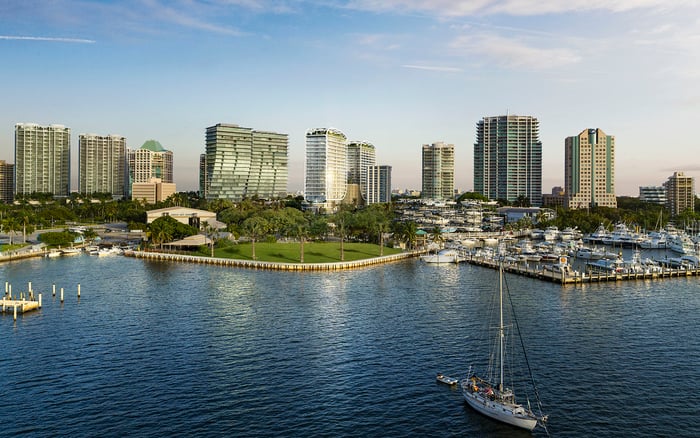
That matters in a market where the buyer pool often includes principals who understand balance sheets, deferred liabilities and covenant-like restrictions. In Brickell, where towers such as The Residences at 1428 Brickell compete for globally mobile capital, reserve discipline is not merely administrative. It is part of the asset story.
Florida condominium budgets must include reserve accounts for capital expenditures and deferred maintenance, including roof replacement, building painting, pavement resurfacing and any item with deferred maintenance or replacement cost above $10,000. That traditional reserve framework is broad and financial in nature.
Florida’s structural integrity reserve study requirements are more specific. They apply to condominium and cooperative buildings that are three stories or higher, with a focus on major structural and life-safety-related components. Covered items include roofs, load-bearing walls, floors, foundations, fire protection systems, plumbing, electrical systems, waterproofing, exterior painting and windows.
A structural integrity reserve study must state estimated remaining useful life, estimated replacement or deferred maintenance cost and recommended annual reserve funding for covered components. The visual inspection portion must be performed or verified by a licensed engineer or architect. For unit-owner-controlled associations, reserves for covered structural integrity items generally cannot be waived or reduced. In practical terms, assumption quality flows directly into mandatory funding.
South Florida’s climate gives reserve assumptions a sharper edge. Saltwater exposure, hurricane risk, humidity, water intrusion and long-term relative sea-level rise can change the useful life of exterior systems, waterproofing, windows, structural components and mechanical infrastructure. A spreadsheet that underestimates coastal deterioration may look elegant in year one and punitive in year five.
The issue is not limited to older properties. Newer luxury buildings can offer more current systems and modern design intent, but buyers still need to understand what the association assumes about future component life and replacement pricing. Along Miami Beach, where projects such as The Perigon Miami Beach are part of a highly scrutinized coastal market, reserve assumptions sit beside architecture, service and location in serious due diligence.
The regional compliance backdrop adds another layer. Miami-Dade requires building recertification for qualifying buildings at 30 years and every 10 years afterward. Broward also has a building safety inspection program for many buildings at 30 years and every 10 years thereafter, with earlier deadlines for some coastal buildings. Florida milestone inspections generally apply to condominium and cooperative buildings of three stories or more at 30 years, recurring every 10 years, and local enforcement may require inspections as early as 25 years when environmental conditions such as proximity to saltwater justify it.
A reserve study is not just about whether the roof is listed. Finance executives should evaluate whether the underlying assumptions behave like a defensible capital model.
Replacement cost should reflect realistic project conditions, not merely a historical number. Remaining useful life should reconcile with actual condition, coastal exposure and inspection history. Inflation and escalation should be explicit enough to test against construction cost volatility. Interest earnings should be conservative rather than used to disguise underfunding. Timing should align with inspection triggers and known maintenance cycles. Component scope should be broad enough to capture the true common-element exposure. Contingency should not be treated as optional decoration.
These variables drive owner assessments, special assessment risk and reserve adequacy. They also influence how a buyer reads association records. Florida condominium associations must maintain official records that include structural integrity reserve studies, making the assumptions discoverable to owners and relevant to buyer due diligence. For a sophisticated purchaser, this is not buried paperwork. It is part of the underwriting file.
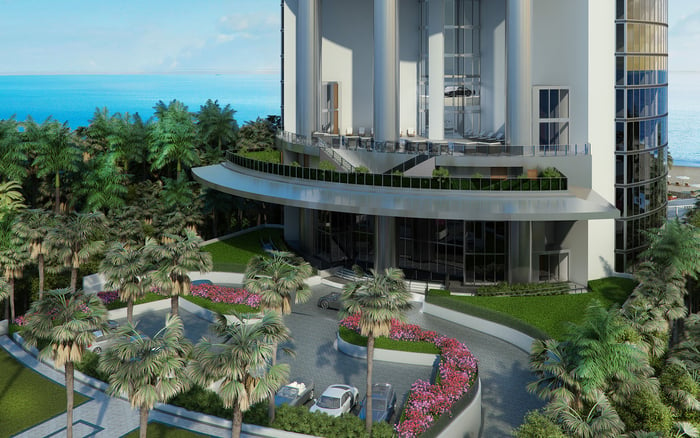
Investment discipline becomes especially important in trophy markets such as Sunny Isles Beach, where high-service towers and oceanfront exposure coexist. A buyer comparing St. Regis® Residences Sunny Isles with older inventory is not only comparing views and amenities. The analysis should include how reserve funding supports the building’s future condition and financing profile.
Weak reserve assumptions can affect more than annual dues. Project-review standards for condominium lending consider budgets, reserve funding, significant deferred maintenance, unsafe conditions and unresolved inspection issues. Projects with serious unresolved concerns can become difficult or impossible for many buyers to finance through standard channels.
That financing friction can reduce the depth of the buyer pool, even for cash-capable sellers and purchasers. In luxury real estate, optionality has value. A residence that remains financeable for a broad pool can preserve liquidity better than one burdened by unresolved maintenance questions or opaque funding.
This is why the post-Surfside governance environment matters. Since the Surfside condominium collapse, structural maintenance, reserve funding and board-level assumptions have become more visible, more sensitive and more consequential across Florida condominiums.
Before signing, a finance executive should request the latest reserve study and, where applicable, the structural integrity reserve study. The key is not simply whether the documents exist. It is whether the assumptions are current, specific and internally consistent.
Ask when the study was last updated, because component conditions, costs and financial conditions change over time. Ask who performed or verified the visual inspection for covered structural items. Ask whether the study separates ordinary reserve components from statutory structural integrity components. Ask how the association treats inflation, contingency and project timing. Ask whether any milestone inspection, recertification or repair issue could accelerate spending.
In Fort Lauderdale and broader Broward, where waterfront and coastal conditions can affect maintenance cycles, the same discipline applies to boutique and branded projects alike. A buyer considering a residence near Auberge Beach Residences & Spa Fort Lauderdale should think beyond amenity programming and ask how the building’s capital plan addresses the realities of its environment.
What is a reserve study? It is a capital-planning analysis that pairs a physical inventory of common components with a financial plan for future repair and replacement.
How is a structural integrity reserve study different? In Florida, it applies to many three-story or taller condo and co-op buildings and focuses on major structural and life-safety components.
Why do assumptions matter so much? Assumptions for cost, useful life, inflation, timing and contingency drive the annual funding recommendation and potential owner assessments.
Can owners waive structural integrity reserves? For unit-owner-controlled associations, Florida restrictions limit waiving or reducing reserves for covered structural integrity reserve study items.
Who must handle the visual inspection portion? The visual inspection portion of a Florida structural integrity reserve study must be performed or verified by a licensed engineer or architect.
How does this affect resale? Strong reserve assumptions can support confidence, while weak funding or unresolved inspection issues may reduce financing options and buyer depth.
Why is South Florida different? Saltwater exposure, hurricanes, humidity and water intrusion can accelerate wear, making useful-life and cost assumptions especially important.
Do newer buildings still require review? Yes. Newer systems may be advantageous, but buyers should still examine future funding assumptions and component scope.
What records should a buyer request? Buyers should review the latest reserve study, any structural integrity reserve study, budgets, inspection history and known repair obligations.
What is the executive takeaway? Treat reserve assumptions like underwriting inputs, because they shape assessments, liquidity, legal exposure and long-term asset quality.
For a discreet conversation and a curated building-by-building shortlist, connect with MILLION.
If branded residences are on your mind — as a home or as an allocation — we would be glad to share what we are seeing, privately.
Begin a quiet conversation