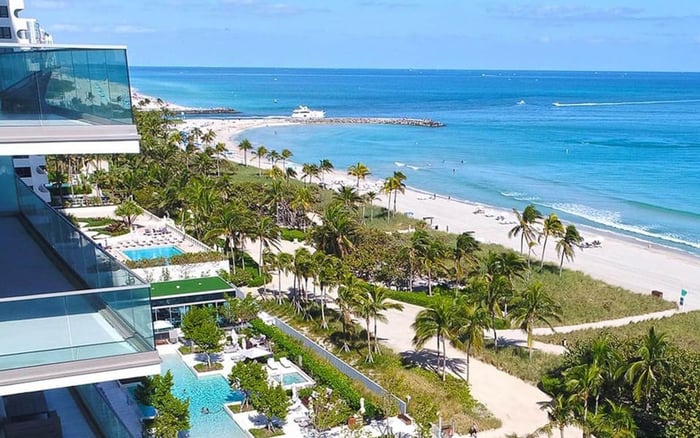
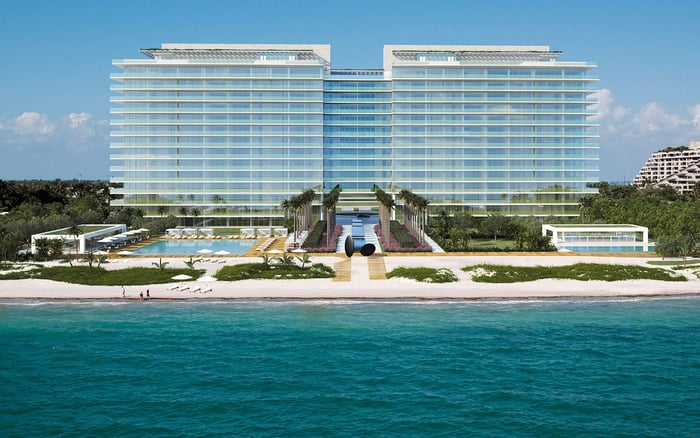
In South Florida, the distinction between a private residential tower and a public-facing mixed-use address is often decided at the points of contact: arrival, elevators, amenities, parking, and service circulation. This buyer-focused MILLION guide explains how to evaluate whether hotel guests and restaurant traffic will materially change the living experience once a waterfront building is fully operational.
A waterfront address can look serene from the terrace and still feel unexpectedly public once the building is fully active. For buyers in South Florida, the more important question is not whether a tower includes hospitality or dining, but whether those uses are physically and operationally separated from daily residential life.
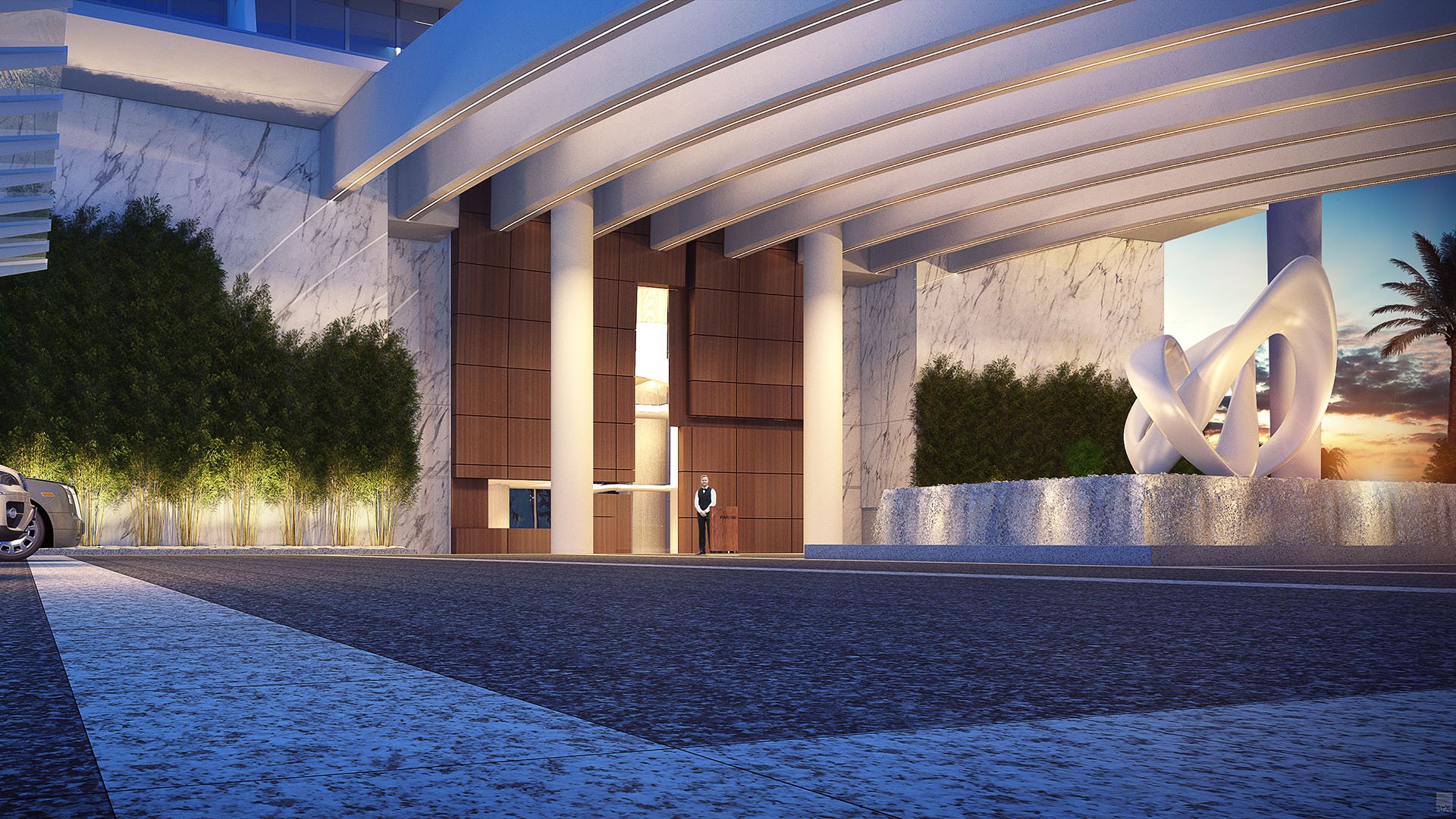
The first test is the arrival sequence. If residents enter through the same grand lobby used by hotel guests, restaurant patrons, and event visitors, the building is likely to feel more public than its branding suggests. Shared lobbies become pressure points during dinner rushes, weekend brunches, and hotel checkout windows. A separate resident vestibule, dedicated doormen, and a clearly independent drop-off lane are far stronger indicators of privacy than decorative partitions or a nominally reserved corner of the main entrance.
This is why discreetly planned residential projects such as 2200 Brickell or 57 Ocean Miami Beach tend to appeal to buyers who prioritize a controlled arrival experience. The lesson is not stylistic. It is operational. When public and residential movement meet at the front door, privacy begins to erode immediately.
In a mixed-use waterfront tower, few details matter more than vertical circulation. Dedicated residential elevator banks generally preserve a more private atmosphere than shared elevators used by hotel guests or restaurant visitors. Even strong access control does not fully solve the issue if non-residents are constantly visible in the same waiting areas, lift lobbies, or transfer levels.
Ask a simple question: from curb to residence, how many moments of contact occur with non-residents? If the answer includes the main lobby, the elevator queue, and a shared podium corridor, the building may feel active in a way some owners will find inconsistent with a luxury home.
Residences that begin higher above hotel rooms, restaurants, and public podium levels also tend to feel more insulated. Height reduces casual contact, softens sight lines into private areas, and creates distance from the bustle below. In markets such as Brickell and Downtown, where hospitality intensity can be high, this distinction is especially relevant for buyers comparing branded or service-rich towers like 888 Brickell by Dolce & Gabbana with more purely residential alternatives.
Not all food and beverage concepts affect privacy equally. A ground-floor restaurant beside the main residential entry will usually generate the steadiest stream of visitors, deliveries, valet interactions, and ambient noise. The floors directly above that activity often feel the impact most, especially in the evening and on weekends.
By contrast, a restaurant that is more isolated from the residential arrival path, or positioned in a way that does not force public circulation through the same core spaces, generally creates less daily friction. The concept itself also matters. Casual or all-day dining tends to produce more turnover than a formal dinner-only room, which means more comings and goings throughout the day.
Buyers should be particularly attentive to balcony orientation. A secure residence can still feel exposed if its outdoor space looks directly onto a hotel pool deck, a restaurant terrace, or a busy courtyard. On the water, where terraces are central to the lifestyle proposition, these sight-line issues can matter as much as interior security. This is one reason highly private oceanfront addresses such as The Perigon Miami Beach or Rivage Bal Harbour attract buyers seeking a more insulated living environment in Miami Beach and Bal Harbour settings.
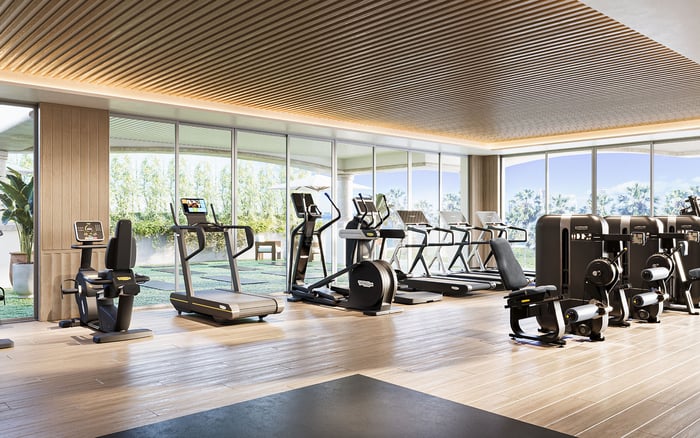
A tower can promise privacy in its marketing and still dilute it through shared amenity planning. The strongest indicator of true exclusivity is a resident-only amenity package with its own pool, fitness areas, lounges, and support staff. If the wellness areas, food service zones, or leisure decks are heavily shared with hotel users, the property will often feel more like a sophisticated resort than a private home.
That distinction is not inherently negative. Some buyers want animation, services, and a social atmosphere. Others want near-invisible operations and minimal contact outside the residential community. The key is knowing which experience you are buying.
In areas like Surfside, Sunny Isles, and Brickell, this question often separates trophy purchases from satisfying day-to-day ownership. A beautifully appointed amenity deck loses some of its appeal if access lines, guest traffic, or public-facing programming make it difficult to use spontaneously and privately.
Luxury buyers often focus on the visible spaces and overlook the practical ones. Yet parking and service logistics are among the clearest clues to how public a building will feel after opening. Shared valet is a recurring red flag. When residents repeatedly interact with hotel guests, restaurant visitors, drivers, and service teams during everyday arrivals, the experience becomes less residential regardless of finish quality.
Dedicated residential parking decks or separate vehicle entries are worth verifying before contract. They preserve rhythm and discretion, especially during high-volume weekends. The same goes for loading. Underground loading areas and dedicated service elevators are materially better than relying on screens, decorative walls, or staff choreography to conceal activity.
Watch for visible trash movement, food deliveries, linen carts, or back-of-house traffic anywhere near the resident route. These are not minor inconveniences. They are signs that the building’s operational skeleton is more public than private.
Visual privacy is only part of the story. In mixed-use towers, acoustic separation can be just as important. A residence may have restricted access and still absorb the effects of restaurant music, terrace activity, pool noise, deliveries, or event operations. This matters especially for low floors, units over podium levels, and residences near arrival courts or loading areas.
Buyers should ask for sound-isolation specifications or testing information whenever a unit sits near hospitality or service uses. If a tower contains public venues, a quiet weekday sales visit is not enough to judge the real experience. The true measure is whether the residence remains calm when the rest of the building is fully alive.
A weekday tour can flatter almost any mixed-use building. The more revealing visit is Friday evening, Saturday at peak dining hours, or Sunday morning during hotel departures. At those moments, you can see whether the lobby still feels composed, whether elevators remain resident-oriented, and whether valet lines spill into the arrival sequence.
Also ask for traffic studies, occupancy projections, and building operations plans when they are available. Hospitality intensity is often underestimated during presales, and operating conditions can shift after delivery. A building that feels quiet in its first chapter may become notably more public later if restaurant programming expands or hotel volume ramps up.
For buyers weighing condo-hotel or highly serviced formats in Downtown, Brickell, or on the oceanfront, this is where discipline matters. Beauty, branding, and waterfront positioning are compelling. But privacy is usually determined by circulation, separation, and management long after the brochure is gone.
Before purchasing, verify these points in order:
First, confirm a separate residential entrance or vestibule.
Second, confirm dedicated residential elevators from arrival to upper residential levels.
Third, check whether amenities are genuinely resident-only or partly shared.
Fourth, study restaurant placement, terrace adjacency, and expected dining intensity.
Fifth, verify separate parking, valet, and service circulation.
Sixth, ask where loading, deliveries, and back-of-house functions occur.
Seventh, review the starting level of the residences and the unit's balcony orientation.
Eighth, request acoustic specifications if the unit is near active shared zones.
Ninth, visit on a weekend when both hotel and restaurant traffic are peaking.
Tenth, consider whether the building's future operating model may become more public over time.
A waterfront tower does not need to be silent or secluded to be exceptional. It simply needs to align with the level of privacy you expect. In South Florida, the most sophisticated buyers know that exclusivity is rarely a matter of branding alone. It is built into the paths people take, the spaces they share, and the activity they never have to notice.
What is the clearest sign a tower will feel private? A separate resident entrance and dedicated elevator bank usually tell you more than the marketing package.
Are hotel-branded residences always too public? No. The outcome depends on how completely residential circulation and amenities are separated from hotel activity.
Does key-card access solve the privacy issue? Not entirely. It improves security, but it does not remove the sense of publicity if core spaces are shared.
Why does restaurant placement matter so much? Restaurants near the main arrival path create recurring visitor traffic, noise, and service activity that residents feel every day.
Should I avoid units on low floors in mixed-use towers? Not automatically, but lower residences above podium or dining zones need closer scrutiny for noise and privacy.
What should I watch for at valet? Look for shared queues, heavy visitor turnover, and whether residents have a separate vehicle entry or parking deck.
Do separate amenities really change the experience? Yes. Resident-only pools, gyms, and lounges can preserve exclusivity even within a service-rich building.
When is the best time to tour a tower like this? Visit during weekend peak periods, especially dinner hours and hotel checkout windows.
Can operations change after I buy? Yes. A building may feel quieter early on and become more public as occupancy or programming intensifies.
What is the smartest final test before purchase? Trace your exact path from curb to unit and note every point where you may intersect with guests, diners, or service traffic.
For a confidential assessment and a building-by-building shortlist, connect with MILLION.
If branded residences are on your mind — as a home or as an allocation — we would be glad to share what we are seeing, privately.
Begin a quiet conversation