Downtown Miami offers California entrepreneurs a polished South Florida base shaped by urban convenience, waterfront living, and discreet residential optionality.
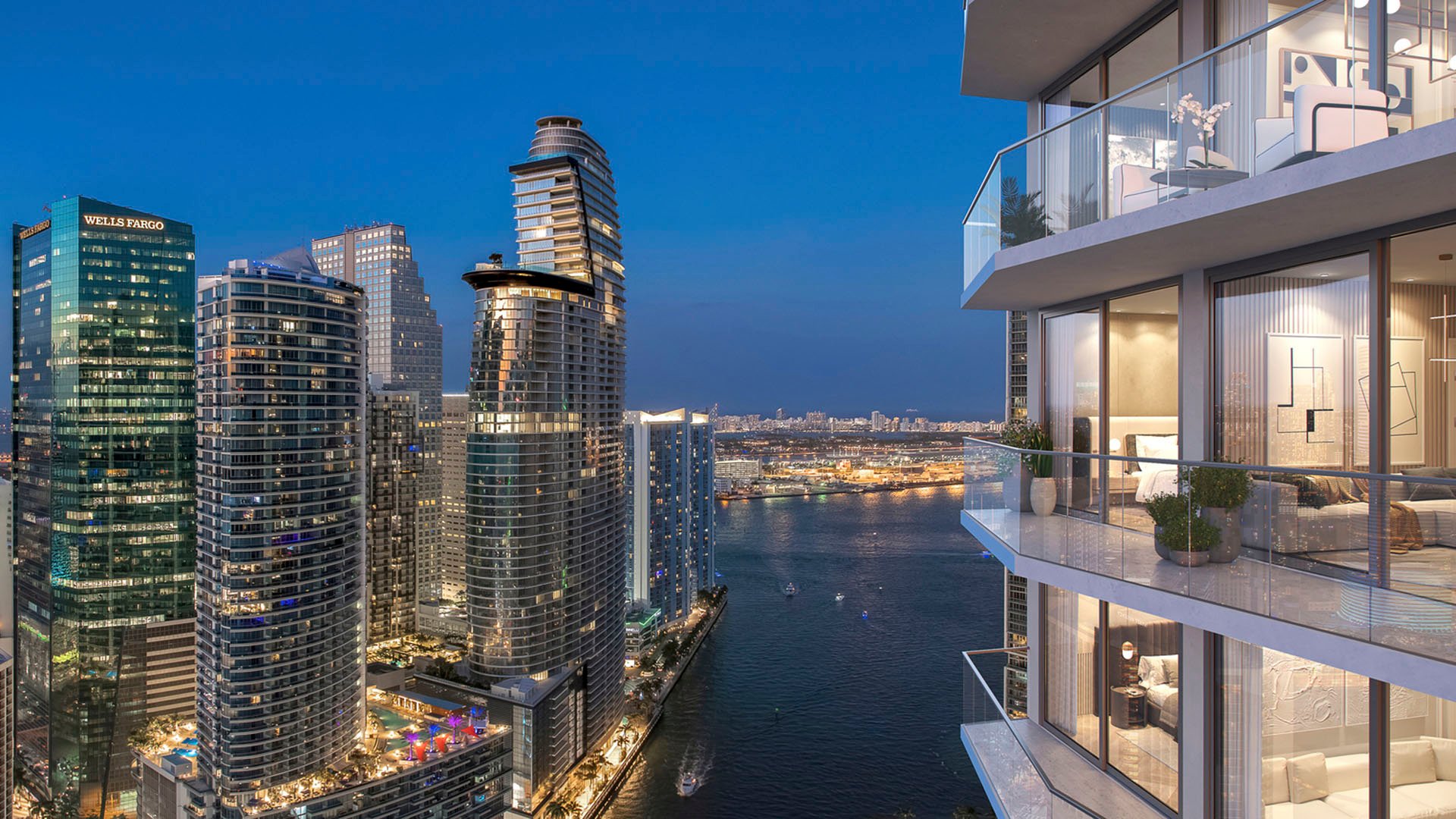
For California entrepreneurs, Downtown Miami is most compelling when viewed with restraint. It is not merely an escape narrative, a tax headline, or a sunlit counterpoint to the West Coast. At its best, it functions as a refined South Florida base for founders, investors, and family-office principals who want an urban address with access to culture, hospitality, private services, and a growing residential skyline.
The appeal is less about replacing one life with another than creating optionality. A founder may keep deep ties to California while seeking a more fluid East Coast rhythm. A partner may want a residence that can support board meetings one week, family visits the next, and quiet recovery time in between. A second-home buyer may want a place substantial enough for extended stays, yet efficient enough to leave without friction.
That is where Downtown Miami becomes interesting. It offers density without the formality of older financial centers, water views without resort isolation, and a level of residential ambition that speaks directly to globally mobile buyers. For an entrepreneur accustomed to design, service, and time efficiency, the district can feel less like a compromise and more like a strategic edit.
The founder routine is rarely linear. It includes early calls, late dinners, visiting partners, legal reviews, wellness appointments, airport days, and moments when the home must become both sanctuary and command center. Downtown Miami supports that blended pattern because it sits within the city’s central business and cultural orbit while remaining close to adjacent neighborhoods that serve different moods.
Downtown Miami gives the owner a true urban base. Brickell extends the corporate and dining radius. Edgewater and the bayfront bring softer light and residential calm. Miami Beach remains close enough to be part of the lifestyle equation without requiring the buyer to live inside a resort environment. For many California entrepreneurs, that balance matters. They are not seeking novelty alone. They are seeking a daily system that can absorb movement.
The most successful purchases begin with a disciplined question: what kind of Miami day is the residence meant to support? If the answer is a polished vertical lifestyle with hotel-level ease, projects such as Waldorf Astoria Residences Downtown Miami speak to the buyer who wants a statement address in the heart of the skyline. If the answer is automotive elegance, sculptural architecture, and a downtown waterfront sensibility, Aston Martin Residences Downtown Miami belongs in the conversation.
Waterfront living in Downtown Miami is not a beach-house posture. It is more metropolitan, more vertical, and more connected to an active week. The view becomes part of the workday, not merely a vacation backdrop. For California owners used to the Pacific Coast’s drama, Biscayne Bay offers a different kind of calm: blue, open, and immediate, yet embedded in a city that moves.
This matters for entrepreneurs who do not want their South Florida home to feel occasional or ornamental. A well-chosen residence can make Miami useful. It can host colleagues discreetly, simplify a long stay, and create a setting where family members feel equally considered. The right building matters because the residence must carry a large share of the experience: arrival, privacy, amenity, staff interaction, parking, storage, and the ability to transition from work to leisure without ceremony.
Downtown’s residential language also allows buyers to choose between visibility and understatement. Some will want a skyline-defining tower. Others will prioritize interiors, service, and layout over exterior recognition. In either case, the best decision is rarely the loudest one. It is the one that matches how the owner actually lives.
For many California entrepreneurs, Brickell operates as Downtown Miami’s adjoining business layer. It is close enough to feel integrated, yet distinct enough to expand the practical choices. A founder may choose Downtown for its skyline and cultural proximity while relying on Brickell for meetings, dining, banking relationships, and a more corporate daily rhythm.
That makes Brickell residences relevant even when the original search begins downtown. Baccarat Residences Brickell offers a hospitality-inflected lens for buyers who value brand experience, service, and a polished arrival sequence. The Residences at 1428 Brickell may appeal to the buyer studying architecture, privacy, and a more tailored urban profile.
The Brickell question is ultimately one of tempo. If the owner expects frequent business entertaining, a stronger corporate atmosphere, and quick movement between appointments, Brickell may feel natural. If the owner wants a slightly broader civic and cultural identity, Downtown Miami may carry the greater emotional pull. Many sophisticated buyers study both rather than treating them as separate markets.
New-construction can be especially appealing to California entrepreneurs because it reduces the number of compromises they must solve after closing. Contemporary layouts, wellness programming, arrival sequences, security expectations, and amenity design are often central to the purchase. The buyer is not merely acquiring square footage. The buyer is acquiring a system for living efficiently.
Still, investment discipline matters. A refined residence should be evaluated through more than renderings and finishes. Consider the developer’s execution profile, the building’s operating logic, the depth of services, the likely owner mix, the parking and access experience, and the way the unit will live during both short and extended stays. A residence that photographs beautifully but complicates daily life is not a founder-friendly asset.
California buyers should also separate lifestyle motivation from planning advice. Questions around residency, taxation, entity structure, estate planning, and business presence belong with qualified legal and tax professionals. Real estate can be part of a larger strategic picture, but it should not be asked to answer every question alone.
Lifestyle is often treated as a soft category, but for entrepreneurs it can be deeply practical. Time, privacy, wellness, food, design, and access all affect performance. A residence that makes the day smoother has value beyond aesthetics.
Downtown Miami’s strongest proposition is that it can compress the week. The owner can work, entertain, train, dine, and retreat within a relatively focused urban radius. That compression is particularly useful for founders arriving from long-haul schedules or dividing life among several cities. The home does not need to be the only base. It needs to be a base that works immediately.
For California entrepreneurs who appreciate architecture and interiors, Casa Bella by B&B Italia Downtown Miami adds another design-led reference point. It demonstrates how Downtown Miami’s residential conversation is increasingly about taste, not merely height or view.
The best Downtown Miami search begins with use case. Will the residence be a primary home, a second home, a pied-à-terre, or a family gathering point? Will the owner host colleagues, bring staff, travel with children, or prioritize lock-and-leave simplicity? The answers narrow the field quickly.
The second filter is building culture. Some towers feel social and hospitality-forward. Others are more private and residential. Neither is inherently superior. The right fit depends on temperament. A California entrepreneur accustomed to discretion may prefer a building where service is precise but not theatrical, and where the public areas feel calm rather than performative.
The third filter is neighborhood fit. Downtown Miami is not one-note. The experience can shift by orientation, view corridor, access pattern, and proximity to adjoining districts. A buyer should study the day and night rhythm around the building as carefully as the floor plan.
The result, when chosen well, is a South Florida base that feels intentional. It can hold business energy, personal restoration, and design credibility in one address. For the California entrepreneur, that is the real luxury: not a louder life, but a better-edited one.
Is Downtown Miami a good fit for California entrepreneurs? It can be, especially for buyers seeking an urban South Florida base with residential polish, business access, and lock-and-leave convenience.
Should buyers compare Downtown Miami and Brickell? Yes. Downtown Miami and Brickell are closely connected, but each has a different tempo, residential character, and daily-use profile.
Is Downtown Miami mainly for primary residences or second homes? It can support both. The right choice depends on how often the owner will be in Miami and how much service, privacy, and flexibility are required.
What should California buyers evaluate first? Start with use case, then study building culture, access, views, amenity quality, and how the residence will function during real stays.
Are branded residences relevant for entrepreneurs? They can be relevant when the brand translates into service quality, design consistency, and a smoother ownership experience.
How important is waterfront positioning? Waterfront positioning can shape light, privacy, and emotional value, but it should be balanced against access, layout, and building operations.
Does new-construction always make sense? Not always. New-construction is attractive when it offers better planning, service, and efficiency, but execution quality remains essential.
Should tax considerations drive the purchase? Tax considerations should be reviewed with qualified counsel. The residence should still stand on its own as a lifestyle and real estate decision.
Is investment potential the main reason to buy? Investment potential matters, but ultra-premium buyers should also weigh privacy, usability, design, and long-term personal relevance.
How discreet can a Downtown Miami search be? A careful search can be highly discreet when representation, showings, negotiations, and building selection are handled with precision.
If you'd like a private walkthrough and a curated shortlist, connect with MILLION.
If branded residences are on your mind — as a home or as an allocation — we would be glad to share what we are seeing, privately.
Begin a quiet conversation