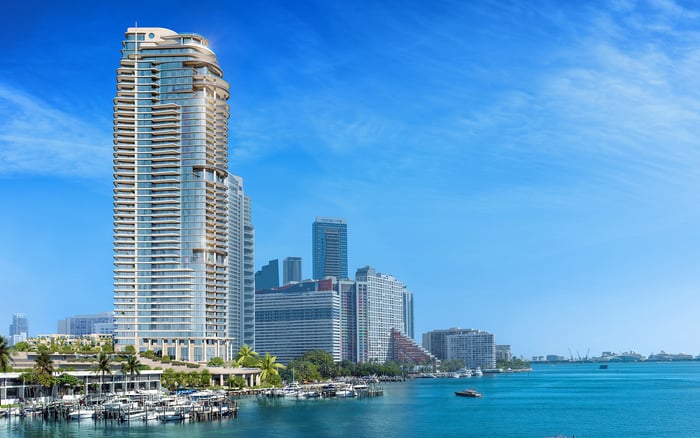
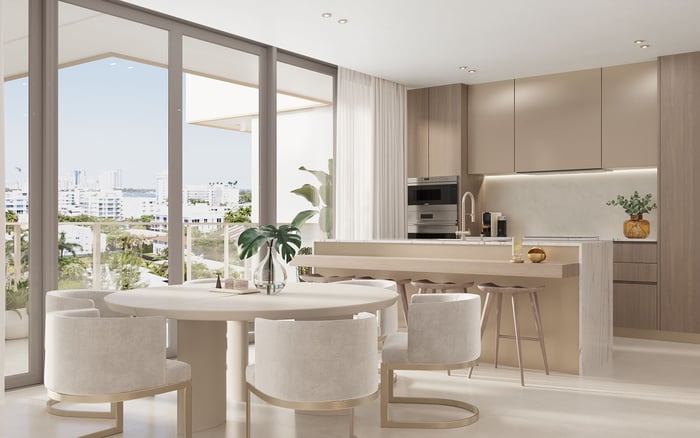
A buyer-focused guide to assessing private elevators, controlled arrival, service circulation, privacy, daily convenience, and long-term value before purchasing in Brickell.
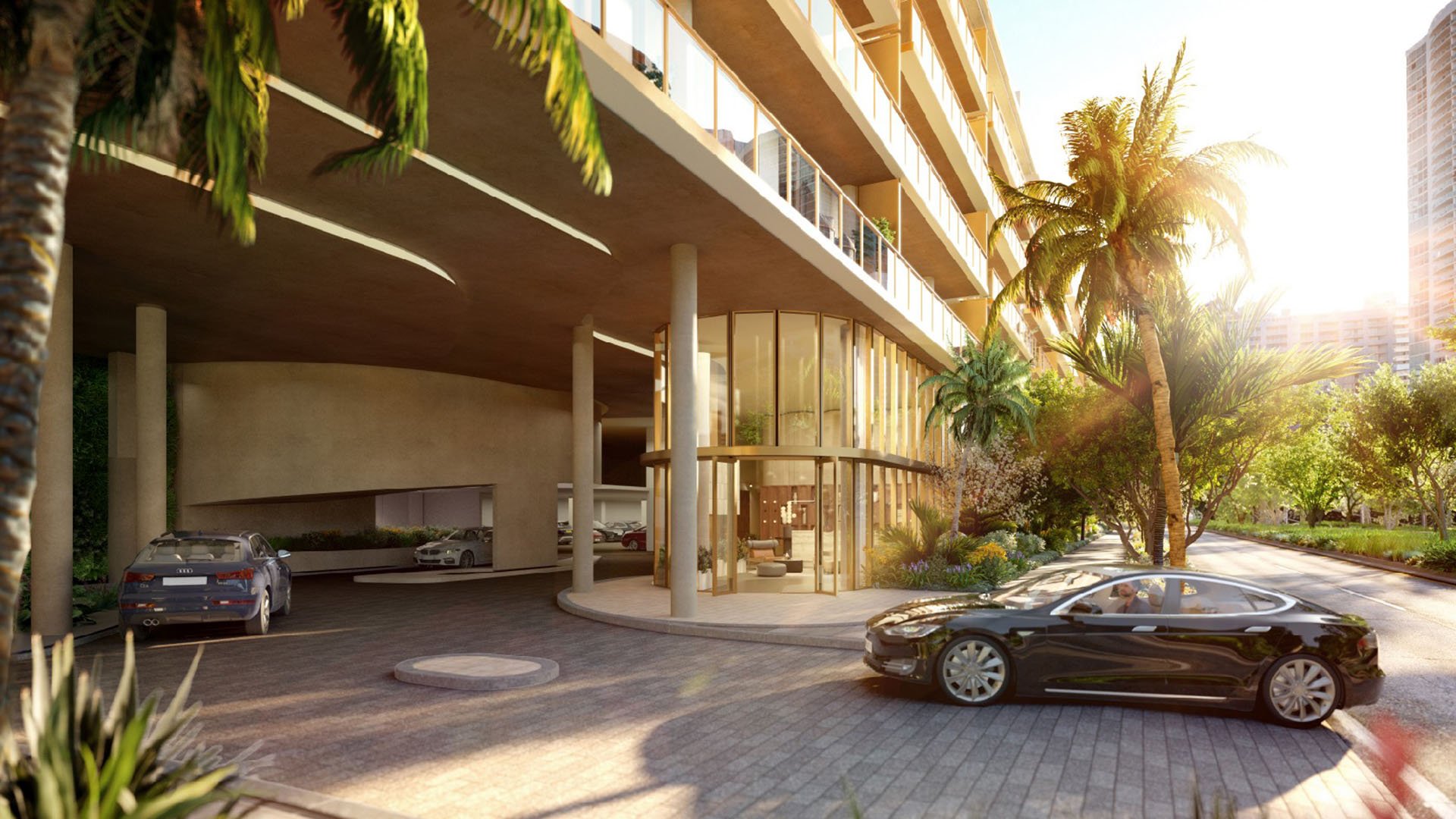
In Brickell, the purchase decision often begins before the front door. A private elevator, a controlled lobby, a discreet valet path, and a calm corridor can shape how a residence feels long before anyone sees the view. For a luxury buyer, the question is not whether a building advertises private elevators. It is whether the entire arrival sequence protects privacy, reduces friction, and supports the way the owner actually lives.
Private elevator access can be one of the most meaningful features in a vertical residence, but it is also one of the most misunderstood. Some systems open directly into a private foyer. Others serve a limited number of residences. Some feel seamless, while others depend heavily on staff coordination, programming, and daily building protocols. The difference becomes clear during a careful tour.
For buyers comparing Brickell residences such as The Residences at 1428 Brickell, Cipriani Residences Brickell, and Baccarat Residences Brickell, the most useful evaluation is experiential. Walk the route from car to residence. Ask who sees you, who can follow, where guests pause, and how deliveries, staff, and service traffic are separated.
A private elevator should create a sense of controlled transition. Ideally, the owner moves from the building’s public realm into a more residential, protected environment with minimal exposure. The system should feel intuitive, not theatrical. If the doors open to a foyer, that foyer should have the proportions, lighting, and finish level to feel like part of the home rather than leftover circulation space.
Buyers should distinguish between privacy of access and privacy of experience. Access may be restricted by key, fob, biometric system, or staff control, but experience depends on sound, sightlines, waiting areas, and the number of people sharing the vertical path. A beautiful elevator bank can still feel compromised if too many users converge at the same time or if the path from garage to cab passes through busy common areas.
Ask direct questions. How is elevator access assigned? Can guests be sent directly to the residence? Does staff need to release the elevator? What happens during peak hours? How are service providers routed? How does the system operate during maintenance? A premium building should be able to explain these details with clarity.
Controlled arrival is broader than the elevator. It begins at the property edge, with how vehicles enter, how valet is staged, how residents are greeted, and how visitors are screened. In Brickell, where urban energy is part of the appeal, the best arrivals create a perceptible shift from city intensity to residential calm.
Tour the entry sequence at different times if possible. A lobby that feels serene in the middle of the day may perform differently during dinner hours, school pickup, or major social evenings. Observe whether staff members recognize residents, whether guests are held discreetly, and whether the waiting area feels gracious rather than exposed.
This is where buildings with a strong hospitality sensibility often resonate with lifestyle buyers. Residences such as St. Regis® Residences Brickell invite buyers to think about service culture as part of the ownership experience, while Una Residences Brickell can be considered within the broader conversation about waterfront arrival, privacy, and daily ritual in the neighborhood.
Many buyers focus on the lobby and overlook the garage. That is a mistake. For owners who drive, the true arrival sequence begins where the car stops. The most private residence can feel less controlled if the garage path is confusing, overly public, poorly lit, or dependent on a long walk through shared areas.
During a tour, ask to enter the way an owner would enter. Do not simply start in the sales gallery or front lobby. Follow the route from vehicle drop-off or parking to the elevator. Notice cameras, staffing, lighting, signage, sightlines, and how easily someone unfamiliar with the building could reach the residential elevator area.
If the residence is a penthouse or one of the high-floor homes, vertical efficiency matters even more. Longer travel distances, elevator changeovers, and peak-time demand can affect daily convenience. The best systems feel quiet and predictable, even when the building is active.
A luxury residence depends on invisible logistics. Housekeeping, private chefs, florists, stylists, dog walkers, maintenance teams, and delivery personnel all need access without diluting the owner’s sense of control. Private elevators are only part of the solution. Service elevators, back-of-house routes, loading areas, package rooms, and staff protocols are equally important.
Ask how large deliveries are handled. Ask whether service providers enter through a separate path. Ask how food delivery is managed. Ask whether staff can access the private elevator or must be escorted. The answers reveal whether privacy has been designed as a system or merely marketed as an amenity.
For new-construction buyers, these conversations should happen before contract signing, not after closing. Floor plans, condominium documents, building rules, and management protocols can help clarify how arrival works in practice. This is why buyers should treat elevator and arrival design as due diligence, not decoration.
Controlled arrival should not feel like a checkpoint. In the best luxury buildings, security is layered and calm. Residents feel protected without feeling watched. Guests are guided without feeling interrogated. Staff members know when to be visible and when to recede.
Buyers should look for a balance between technology and human judgment. Digital controls can restrict access, but staff culture determines how gracefully the system works. A residence may have private elevator access, but if guest authorization is awkward or inconsistent, the experience can feel less refined than expected.
Also consider household composition. A frequent host may need guest flow that is secure but fluid. A frequent traveler may prioritize monitoring and lock-and-leave confidence. A family may care about how children, tutors, drivers, and household staff move through the building. A seasonal owner may value the ability to coordinate access remotely and reliably.
Private elevators can support long-term desirability, but only when they function as part of a coherent ownership experience. Future buyers will not simply ask whether the residence has private access. They will notice whether the approach feels elegant, whether the foyer is useful, whether the elevator is quiet, and whether the building’s systems still feel current.
The strongest properties make arrival feel effortless. There is no confusion at the curb, no congestion at the elevator, no awkward overlap between service and social traffic, and no sense that privacy depends on luck. That type of design can be felt immediately during a serious showing.
A buyer should treat the arrival path with the same seriousness as views, ceiling heights, terrace depth, finishes, and parking. In Brickell, where urban living is vertical and highly serviced, the route home is not incidental. It is part of the architecture of ownership.
Before purchasing, walk every route: valet to residence, garage to residence, lobby to residence, guest entry to residence, and service entry to residence. Ask who controls each door, each elevator call, each guest release, and each delivery handoff. If the answers are vague, keep asking.
Stand in the private foyer and consider whether it feels like an extension of the home. Can art be placed there? Is the lighting flattering? Is there enough space for guests to arrive comfortably? Does the elevator door open into an intimate residential moment, or does it feel abrupt?
Finally, imagine an ordinary week. Morning departures, evening returns, dinner guests, deliveries, staff visits, travel days, and quiet nights all test the system. The right private elevator and controlled arrival should disappear into daily life. That is the highest form of luxury.
Is a private elevator always better in Brickell? Not automatically. It is valuable when the full route from curb, garage, lobby, and elevator protects privacy and feels effortless.
What should I ask during a private elevator tour? Ask who can call the elevator, how guests are released, how service providers enter, and what happens during maintenance.
Does a private foyer matter? Yes. A well-designed foyer creates a gracious transition into the home and can make the elevator feel truly residential.
Should I test the garage route? Absolutely. Many owners arrive by car, so the garage path is central to privacy, security, and daily convenience.
How important is staff protocol? Very important. Even strong access technology depends on trained staff who manage guests and service traffic discreetly.
Can controlled arrival affect resale? It can support desirability when the system feels elegant, reliable, and aligned with expectations for premium Brickell living.
What is the biggest mistake buyers make? They evaluate the elevator as a feature rather than testing the entire arrival sequence as a lived experience.
Are private elevators only relevant for penthouses? No. They can matter for many residences, especially for buyers who value discretion, hosting, or lock-and-leave comfort.
Should service access be separate? Ideally, yes. The best buildings reduce overlap between owner circulation and deliveries, maintenance, or household staff.
When should I review elevator and arrival details? Review them before signing, alongside floor plans, building rules, parking arrangements, and management protocols.
When you're ready to tour or underwrite the options, connect with MILLION.
If branded residences are on your mind — as a home or as an allocation — we would be glad to share what we are seeing, privately.
Begin a quiet conversation