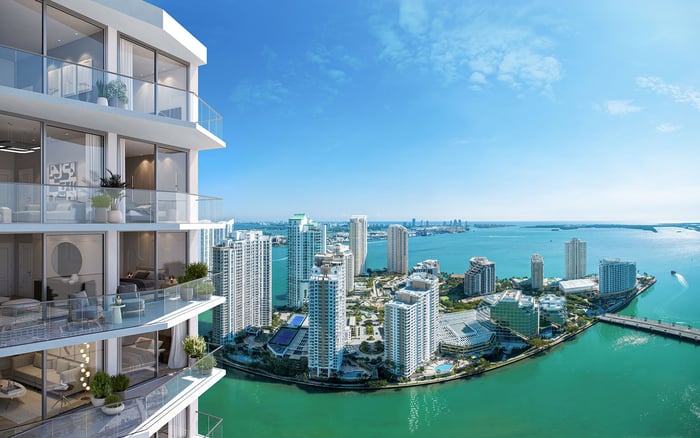
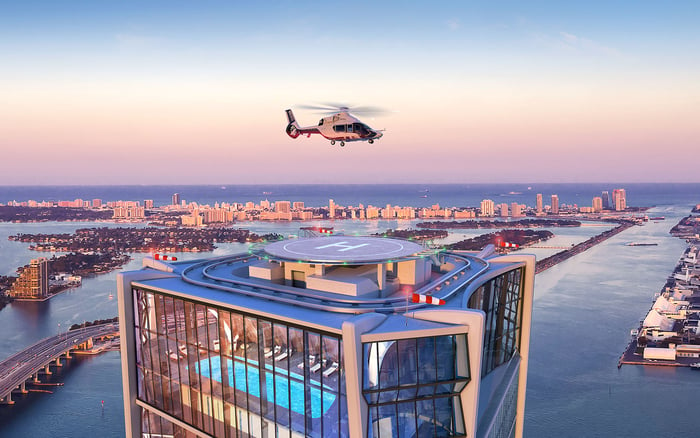
Downtown Miami draws luxury buyers who want the visual calm of water, the convenience of a central address, and a lifestyle that can move easily between privacy, dining, culture, and work.
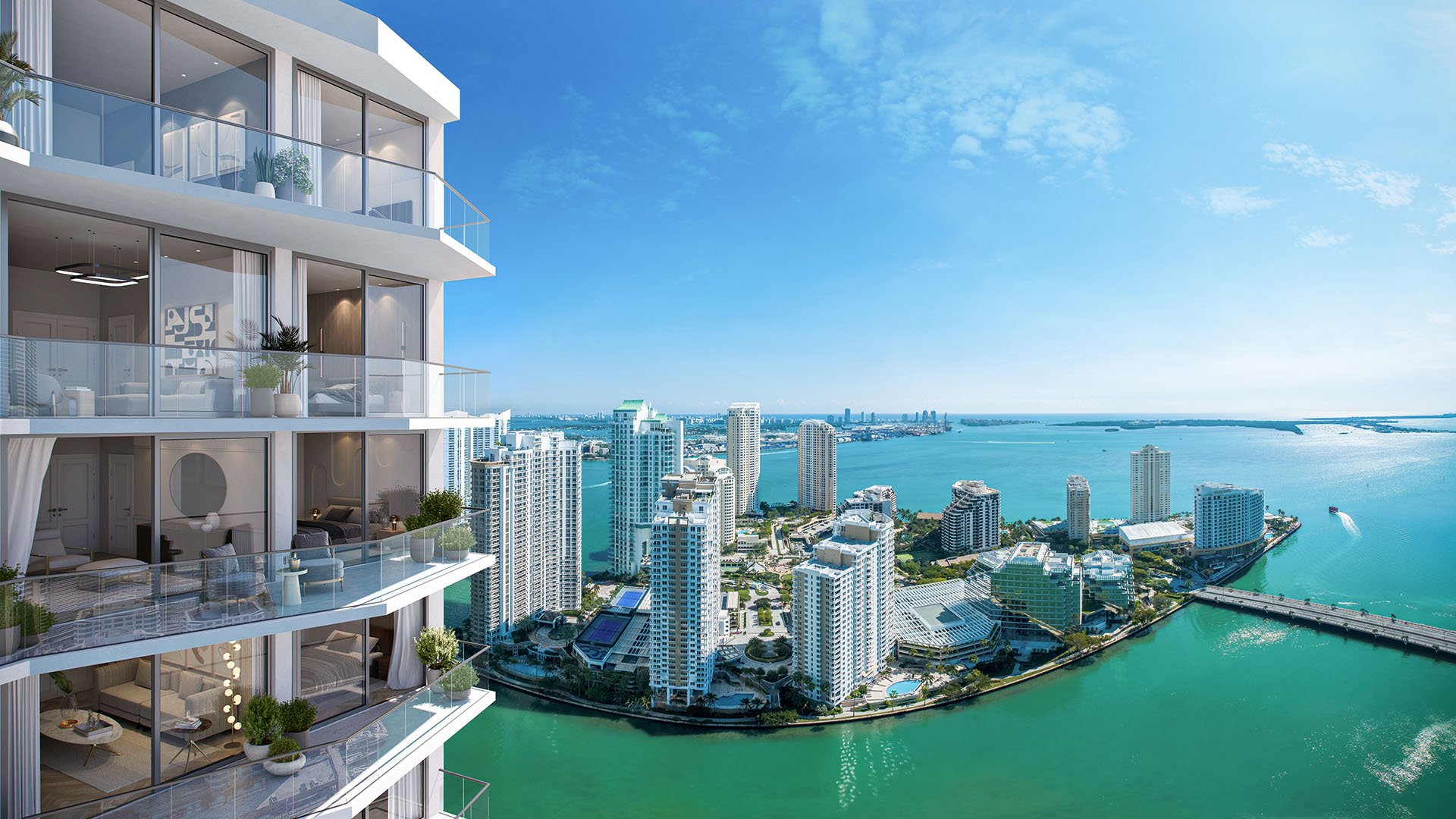
For a certain South Florida buyer, the ideal residence is not removed from the city. It is poised above it, oriented toward water, with Miami’s daily theater held at a comfortable distance. Downtown Miami answers that brief with unusual clarity. It delivers the atmospheric calm of a waterview residence while keeping restaurants, offices, cultural venues, hotels, and social circuits close enough to feel effortless.
This is not the same proposition as a purely resort-driven address. The appeal is more nuanced. Buyers are not simply chasing a postcard view. They are seeking a private visual horizon, a sense of openness, and the practical freedom to live without choosing between quiet and access. In that context, Downtown becomes a compelling middle ground: central, vertical, and emotionally softened by water.
Search language often narrows quickly: Downtown for address, Brickell for adjacency, Waterview for outlook, High-floors for separation, Balcony for air, and New-construction for delivery standards. Those terms reveal what many affluent buyers are really prioritizing. They want the city, but not the pressure of the city inside the home.
Downtown Miami’s luxury appeal is inseparable from its verticality. In a high-rise residence, the experience of the neighborhood changes dramatically from the street to the upper levels. The movement, density, and energy below can become cinematic distance above. For buyers who value calm, that distinction matters. The home becomes an observatory, not a retreat that requires withdrawal from urban life.
That is why projects such as Aston Martin Residences Downtown Miami fit naturally into the conversation. The draw is not only location. It is the idea of a residence that can participate in the city’s rhythm while maintaining a composed interior life. Downtown buyers often understand that the most valuable amenity may be the ability to look outward, breathe, and be downstairs within moments.
The neighborhood’s appeal also comes from its ability to serve different versions of Miami life. A primary resident may value proximity to work and dining. A seasonal owner may want a lock-and-leave setting with strong urban identity. A frequent traveler may prefer a central base that feels connected without feeling exposed. The water view becomes the constant: a quieting counterpoint to the city around it.
In South Florida, water is often treated as a trophy. In Downtown Miami, it can function more like a daily utility. It brings light into the residence. It creates visual depth. It changes the mood of rooms throughout the day. It offers a sense of privacy that does not depend solely on walls, gates, or distance.
That distinction is important for buyers comparing waterfront, bay-facing, and urban-view residences. A calm water outlook can make a city home feel larger and less compressed. It can turn a living room into a place of pause, not just presentation. It can make a morning routine feel resort-like, even when the address remains unmistakably urban.
This is one reason Downtown’s most visible new addresses are often evaluated through orientation, elevation, and sightline. A residence at Waldorf Astoria Residences Downtown Miami, for example, enters buyer conversations as part of a broader preference for highly serviced, vertically oriented city living. The details of an individual home still matter, but the larger desire is consistent: water, height, and access in one address.
The strongest case for Downtown Miami is not that it is quiet in the conventional suburban sense. It is that it can offer quiet where luxury buyers most need it: inside the residence, on the terrace, in the view corridor, and in the transition between public life and private space.
This is where the neighborhood differs from destinations that require a longer psychological commute. In Downtown, access is part of the lifestyle promise. Dining, wellness, culture, business, and hospitality can be folded into the day without making the home feel secondary. A buyer can entertain, work, meet, retreat, and reset within a compact urban radius.
Nearby Brickell adds another layer to that logic. The connection between Downtown and Brickell gives buyers a broader urban field, especially for those who want refined residential options near the financial and social core of the city. Baccarat Residences Brickell and The Residences at 1428 Brickell are often considered by buyers comparing service, skyline presence, and proximity. The decision may come down to the exact mood a buyer wants at home: more Downtown drama, more Brickell polish, or a residence that blends both sensibilities.
The first question is not simply whether a residence has a view. It is whether the view supports the way the buyer wants to live. A direct water outlook may feel serene, while a layered view that includes city lights can feel more dynamic. Some buyers prefer the purity of blue and sky. Others want a composition that changes from morning to evening.
Elevation is equally important. High-floors can create the separation buyers seek, but the best choice depends on comfort, exposure, terrace usability, and the desired relationship to the city below. A Balcony can be a meaningful extension of daily life when it feels protected and proportionate, not merely decorative.
Buyers should also consider the arrival sequence. In a dense urban environment, the experience from curb to residence affects how calm the home feels. Lobby design, privacy, service culture, parking flow, and elevator experience all contribute to the transition from city energy to residential composure.
Finally, the building’s identity should match the owner’s temperament. Casa Bella by B&B Italia Downtown Miami may appeal to buyers who place design language at the center of the decision, while other Downtown and Brickell addresses may prioritize brand, service, height, or architectural presence. The right choice is rarely about one feature. It is about coherence.
Downtown Miami’s advantage is that it does not ask luxury buyers to choose one Miami over another. It can be urban without being relentless, scenic without being isolated, and practical without feeling ordinary. That balance is increasingly important for buyers who use their homes as both personal sanctuaries and points of connection.
For the right purchaser, calm water views are not an escape from Miami. They are the way to experience Miami more elegantly. The city remains close, but the home feels composed. The view opens the day, softens the evening, and gives a central address the emotional quality of a retreat.
Why do buyers like Downtown Miami for calm water views? Downtown can combine vertical living, open outlooks, and immediate access to city amenities, creating a quieter residential experience within an urban setting.
Is Downtown Miami only for full-time residents? No. It can also suit seasonal owners, frequent travelers, and buyers who want a central Miami base with strong lock-and-leave appeal.
How does Brickell compare with Downtown for luxury buyers? Brickell often feels more business-oriented and polished, while Downtown can offer a broader mix of civic, cultural, and waterfront energy.
Are High-floors always better for water views? Not always. Higher residences may offer more separation, but buyers should also consider exposure, terrace comfort, and the specific sightline.
What makes a Waterview residence feel calm? Visual openness, natural light, distance from street activity, and a well-framed outlook can make a city residence feel more serene.
Should buyers prioritize a Balcony in Downtown Miami? A Balcony can be valuable when it is usable, well proportioned, and positioned to enhance the view rather than simply add outdoor space.
Is New-construction important in this segment? Many buyers value New-construction for contemporary layouts, service expectations, and building systems, though individual quality should be reviewed carefully.
Can Downtown Miami work for buyers who want privacy? Yes, if the residence offers thoughtful arrival, controlled access, strong service, and a floor plan that separates public and private zones.
What should buyers compare beyond the view? They should evaluate orientation, ceiling height, terrace usability, service culture, parking flow, and how the building feels at arrival.
Is Downtown Miami a good fit for a refined urban lifestyle? For buyers who want water, height, and proximity in one address, Downtown can offer a sophisticated balance of calm and access.
For a tailored shortlist and next-step guidance, connect with MILLION.
If branded residences are on your mind — as a home or as an allocation — we would be glad to share what we are seeing, privately.
Begin a quiet conversation