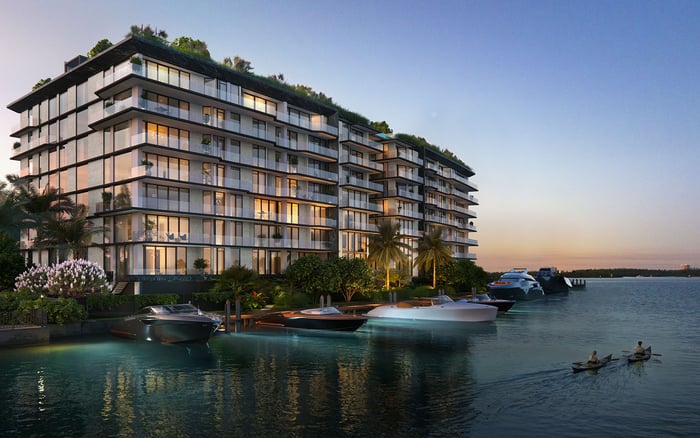
A buyer-focused guide to evaluating leak-detection coverage, water-management responsibilities, and contract protections before purchasing at Alma Bay Harbor Islands.

At Alma Bay Harbor Islands, leak detection should be evaluated first as asset protection, not as a convenience feature. In a South Florida coastal setting, water risk is not limited to a burst supply line beneath a vanity. Humidity, wind-driven rain, tidal conditions, stormwater intrusion, roof drainage, terrace waterproofing, window-wall interfaces, risers, mechanical areas, and HVAC condensate pathways all belong in the same due-diligence conversation.
For a luxury buyer, the concern is not simply whether a sensor sounds when moisture appears. Water can compromise custom finishes, millwork, wardrobes, art, electronics, floor assemblies, neighboring residences, and common elements. In a condominium, one owner’s leak can become a building-wide operational issue, with implications for insurance, maintenance budgets, owner disputes, and resale confidence.
That is why the strongest contract posture is specific, written, and testable. A vague assurance that the building will have leak detection is not enough. Buyers should ask what is being installed, where it is being installed, who receives alerts, what happens automatically, and who remains responsible after closing.
A sophisticated review begins by separating three forms of exposure. The first is environmental water intrusion: wind-driven rain, exterior waterproofing, balcony or terrace conditions, roof drainage, and window-wall performance. These risks may never touch a traditional plumbing line, yet they can produce some of the most consequential water events in a coastal condominium.
The second category is building-system leakage. Buyers should ask whether the plan addresses domestic water risers, common-area plumbing, mechanical rooms, roof drains, condensate lines, and other shared systems. In a high-value building, the owner should understand where unit-level responsibility ends and association responsibility begins.
The third category is owner-use risk. Second-home residences can sit vacant for extended periods, making slow leaks more dangerous because they may go unnoticed. Second-home buyers should focus closely on real-time alerts, building-staff notification, access protocols, and whether a leak response can occur while the owner is away.
This Bay Harbor due-diligence framework is also relevant when comparing nearby boutique offerings such as Alana Bay Harbor Islands, where buyers may be weighing similar coastal exposure questions while reviewing finishes, operations, and ownership responsibilities.
Before contract, the most important document is a clear leak-detection specification. It should identify product names if available, monitored zones, sensor locations, whether sensors are hardwired or otherwise connected, what triggers an alert, and whether the system includes automatic shut-off valves or only passive moisture detection.
In a luxury residence with multiple baths, tubs, showers, kitchen areas, laundry equipment, terraces, and possible outdoor water features, sensor placement matters. A buyer should not assume that every fixture, drain, appliance, or wet wall is monitored. Ask for a sensor map. If a map does not yet exist, ask whether one will be delivered before closing and whether it will become part of the owner’s manual or association records.
Automatic shut-off requires a separate line of inquiry. Does the system close a valve when water is detected, or does it only send an alert? If it closes a valve, which valve is controlled: the unit main supply, an individual fixture zone, an appliance line, or another point? If it sends an alert, who receives it: the owner, building management, concierge desk, association representative, or all of them?
These questions are not adversarial. They are the normal language of premium condominium ownership. A buyer comparing Alma with other Bay Harbor Islands projects such as La Maré Bay Harbor Islands should expect the same discipline used to evaluate architecture, views, and amenities to be applied to hidden building systems.
Leak detection is often discussed as a plumbing feature, but many water events begin at the building envelope. Before signing, buyers should request the opportunity to review roof, balcony, terrace, window-wall, waterproofing, drainage, and mechanical details at a level appropriate for a purchaser’s consultants.
For most buyers, this means engaging an independent engineer, waterproofing consultant, or building-envelope specialist. The objective is not to redesign the project. It is to identify gaps between the promised lifestyle and the practical water-management plan. A consultant may help frame questions about balcony slope, drainage pathways, thresholds, roof penetrations, condensate routing, or how moisture events are detected in mechanical spaces.
If technical plans are available, the buyer’s team can ask whether leak-detection coverage aligns with the actual risk points. A sensor under a sink does not address water entering through a terrace door during a severe rain event. A moisture alert in a laundry closet does not necessarily protect against a roof drain issue affecting common elements. In premium residences, hidden details often shape the long-term ownership experience as much as visible design.
The same principle applies across waterfront and near-water luxury inventory, from Onda Bay Harbor to newer boutique projects where terraces, glass, and coastal conditions are part of the appeal.
The strongest buyer position is to move from conversation to documentation. Contract protections may include written representations about installed systems, access to technical plans, walk-through testing rights, punch-list remedies, and post-closing warranty obligations. These are practical protections, not cosmetic edits.
A buyer may request confirmation of what leak-detection equipment will be delivered, whether it will be operational at closing, and whether testing will be available during the walk-through. If a sensor is not working, if a shut-off function is unclear, or if an alert is not routed properly, the issue should be eligible for punch-list treatment when appropriate.
Warranty language deserves particular attention. Ask whether the system itself is covered, whether installation defects are covered, and whether water damage caused by failure of a component is treated differently from the component failure. Buyers should also clarify whether software, monitoring subscriptions, battery replacement, calibration, or periodic testing are owner responsibilities after closing.
For buyers comparing Origin Bay Harbor Islands with Alma, this contract-level discipline can make the difference between a beautiful acquisition and a well-governed one.
A leak-detection system is only as valuable as the response protocol behind it. Buyers should ask whether alarms are integrated with building management, concierge procedures, access policies, or broader alarm systems. If the owner is traveling, who is allowed to enter? Who shuts off water? Who documents the event? Who contacts remediation vendors? Who notifies neighboring residences if necessary?
The division of responsibility should be clear among the unit owner, condominium association, and building management. In some cases, the owner may maintain in-unit sensors while the association handles common systems. In others, responsibilities may vary by equipment location. Governing documents, owner manuals, and management protocols should align, because ambiguity after a water event can be costly.
Red flags include no sensor map, no explanation of automatic shut-off capability, no maintenance protocol, unclear alert routing, and broad sales language that does not translate into a technical specification. A buyer should also be cautious if the documentation does not distinguish between in-unit leaks and common-element water events.
Before contract, ask for a documented leak-detection specification, including equipment names if available, sensor locations, monitored zones, response procedures, warranty terms, and maintenance obligations. Confirm whether the plan covers in-unit plumbing only or also building-wide systems such as risers, roof drainage, mechanical areas, and HVAC condensate pathways.
Request clarity on automatic shut-off valves, real-time alerts, and building-staff notification. Review roof, balcony, terrace, window-wall, and waterproofing details with qualified advisers. Ask whether walk-through testing will be allowed and whether deficiencies can be addressed through a punch list.
Most importantly, make the conversation written. In a luxury condominium, confidence comes from specificity. Leak detection is not merely about preventing inconvenience. It is about protecting finishes, neighboring residences, common elements, insurance stability, and the building’s reputation over time.
Why should Alma buyers review leak detection before contract? Because water damage can affect finishes, contents, neighboring residences, and common elements, the system should be understood before obligations are finalized.
Is leak detection only about plumbing? No. Buyers should also review roof drainage, terraces, window-wall conditions, waterproofing, mechanical areas, and HVAC condensate pathways.
What should a sensor map show? It should identify monitored zones, sensor locations, fixture coverage, and whether any high-risk areas are excluded.
Should buyers ask about automatic shut-off valves? Yes. A passive moisture alert is different from a system that can shut off water automatically or notify staff in real time.
Who should receive leak alerts? Buyers should clarify whether alerts go to the owner, building management, concierge staff, the association, or multiple parties.
Why is this especially important for second homes? Vacant residences may not reveal slow leaks quickly, so remote alerts and response protocols can be essential.
Should an independent consultant review the plans? Buyers should consider an engineer, waterproofing consultant, or building-envelope specialist before signing.
What contract protections are useful? Written specifications, technical-plan access, walk-through testing rights, punch-list remedies, and warranty obligations can all help.
What are common red flags? Vague promises, no sensor map, no shut-off explanation, no maintenance protocol, and unclear responsibility divisions are warning signs.
Does leak detection affect long-term value? Recurrent water issues can influence insurance, maintenance costs, owner disputes, resale confidence, and perceived building quality.
For a confidential assessment and a building-by-building shortlist, connect with MILLION.
If branded residences are on your mind — as a home or as an allocation — we would be glad to share what we are seeing, privately.
Begin a quiet conversation