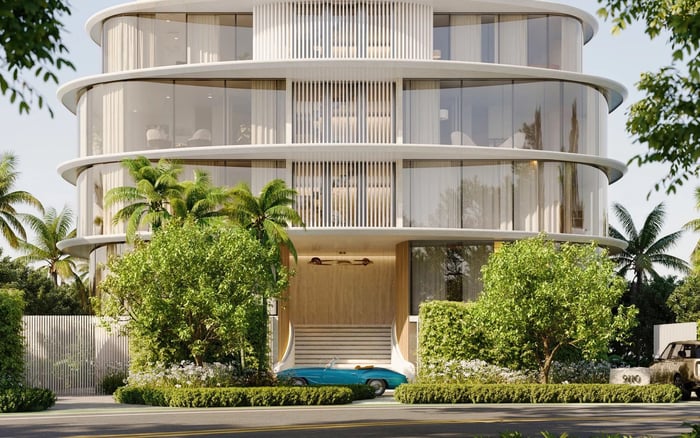
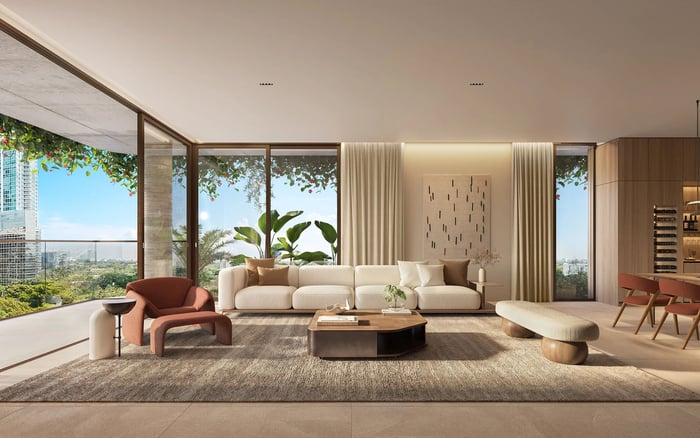
Ceiling height is not a single luxury metric. In South Florida residences, it changes meaning depending on scale, floor plate, view geometry, and the way a home is meant to be lived in.

In luxury real estate, ceiling height is often reduced to a specification. Higher sounds better, and often it is. Yet the most sophisticated buyers in South Florida understand that vertical volume is never an isolated amenity. It belongs to a larger architectural equation: floor plate, light, furniture scale, view corridor, privacy, and the emotional rhythm of arrival.
A penthouse, a half-floor residence, and a boutique building can each deliver a compelling sense of space, but each does so differently. The same ceiling height that feels cinematic in a sky residence may feel overly formal in a smaller plan. A modestly taller ceiling can feel exceptional in a tightly edited boutique home when the proportions are balanced, the windows are well placed, and the rooms breathe naturally.
For buyers comparing Brickell, Miami Beach, Sunny Isles, Surfside, and quieter waterfront enclaves, the question is not simply, “How high are the ceilings?” The better question is, “What does the height do for the home?” That is where ceiling height becomes a true luxury signal.
In a penthouse, ceiling height carries symbolic weight. It reinforces the idea that the residence is not merely above the building, but apart from it. The entry sequence, living room volume, terrace connection, and skyline exposure all gain power when the interior has enough vertical space to frame them properly.
This is why penthouse buyers often respond to height emotionally before they analyze it technically. A taller ceiling can create a sense of arrival that begins at the front door and continues through the main entertaining spaces. It can make art feel more important, windows feel more expansive, and evening light feel more theatrical. In high-floor residences, the sky itself becomes part of the interior composition.
In Brickell, where vertical living is central to the lifestyle, a buyer considering The Residences at 1428 Brickell may think about ceiling height through the lens of skyline presence, entertaining, and the transition between private interiors and the city beyond. The same consideration applies differently in oceanfront settings, where the horizon, rather than the skyline, becomes the visual anchor.
The caution is scale. Height without proportion can feel like empty volume. A penthouse should not merely be tall. It should feel resolved, with furniture groupings, lighting, millwork, and window placement that keep grandeur from turning cold.
Half-floor residences require a more disciplined reading of ceiling height. These homes often sit between the intimacy of a private residence and the breadth of a larger condominium plan. Because the floor plate is shared with fewer neighbors than a standard stack, buyers tend to expect privacy, flow, and a more residential sensibility.
Here, ceiling height matters less as a dramatic gesture and more as a proportional tool. It should support room widths, corridor lengths, and window openings without overwhelming them. A slightly taller ceiling can make a dining area feel gracious, a primary suite feel calmer, and a family room feel less compressed. But if the plan is narrow or the windows are not aligned with the volume, additional height may not translate into a better living experience.
This is especially important for buyers who intend to use the residence as a primary home. Daily comfort depends on how rooms connect. The ceiling should create ease, not spectacle at every turn. A half-floor home succeeds when vertical volume gives each room dignity while preserving human scale.
In Miami Beach, the calculus can shift toward light, breeze, and the softer relationship between interior space and outdoor living. A buyer touring The Perigon Miami Beach might read ceiling height through its effect on serenity rather than theatricality. The goal is not always to impress at first glance. Often, it is to make the home feel composed over time.
Boutique buildings ask a different question. Instead of using height to announce status, they often use it to refine atmosphere. In a smaller building, luxury may come from discretion, privacy, detail, and the feeling that every residence has been carefully considered.
For the boutique buyer, ceiling height should serve craft. It should make millwork feel tailored, lighting feel intentional, and rooms feel quietly elevated. Too much height in a compact boutique plan can dilute intimacy. Too little can undercut the promise of exclusivity. The best result is a proportion that feels calm, personal, and architecturally clear.
This is where the buyer should slow down. Stand in the living area and look toward the windows. Sit where the dining table would go. Imagine the height of the headboard, the scale of the pendant, the placement of art, and the relationship between the ceiling plane and the terrace doors. If the home feels serene from multiple positions, the ceiling is doing its job.
In Surfside, a residence such as The Delmore Surfside can be evaluated through this more intimate lens, while in Sunny Isles, a buyer looking at Bentley Residences Sunny Isles may weigh vertical volume against views, privacy, and the overall sense of arrival. The buyer language often overlaps across penthouse, boutique, high-floor, Brickell, Miami Beach, and Sunny Isles considerations.
The most useful test is experiential. Enter the residence and pause before looking at finishes. Does the main room feel naturally balanced, or does the ceiling call too much attention to itself? Does daylight reach deep into the plan, or does the height sit above a darker interior? Do window heads, doors, and soffits feel aligned, or does the space feel interrupted?
Next, consider furniture. A high ceiling can make standard pieces appear underscaled. That may require larger art, stronger lighting, taller drapery, and more deliberate interior design. For some buyers, that is part of the appeal. For others, especially those seeking a low-maintenance second home, a more moderate but beautifully proportioned ceiling may be preferable.
Finally, listen to the room. Sound behaves differently in taller spaces. Entertaining areas can feel lively, while bedrooms should remain restful. A luxury residence should not only photograph well. It should feel gracious at breakfast, quiet at night, and effortless when guests arrive.
Ceiling height matters because it affects everything else. It changes how light moves, how views are framed, how furniture reads, and how a buyer experiences privacy. But its meaning depends on the residence type. In a penthouse, it may deliver drama. In a half-floor home, it may perfect proportion. In a boutique building, it may create intimacy.
The most discerning buyers do not chase height for its own sake. They look for alignment between architecture, lifestyle, and atmosphere. When that alignment is present, ceiling height becomes more than a specification. It becomes part of the home’s identity.
Does a penthouse always need the tallest ceilings? Not always. A penthouse needs ceiling height that supports drama, views, and scale without making the interiors feel impersonal.
Why is ceiling height different in a half-floor residence? A half-floor home depends heavily on proportion, so ceiling height should enhance room flow rather than dominate the plan.
Can a boutique building feel luxurious without extreme ceiling height? Yes. Boutique luxury often comes from privacy, detail, and balance, so the right proportion can matter more than maximum height.
Should buyers compare ceiling height across buildings directly? Direct comparison is useful, but only if the floor plan, window placement, and room scale are considered at the same time.
How does ceiling height affect views? It can strengthen the way windows frame skyline, ocean, bay, or garden outlooks, especially when the openings are well proportioned.
Can very high ceilings create design challenges? Yes. Taller rooms may require larger lighting, art, drapery, and furniture to feel complete and properly scaled.
Is ceiling height more important in living rooms or bedrooms? Living rooms benefit most from height and volume, while bedrooms usually need calm proportion and a more restful atmosphere.
What should buyers notice during a private tour? Buyers should observe light, acoustics, window alignment, furniture scale, and whether the home feels balanced from different positions.
Does higher always mean better resale appeal? Not necessarily. Buyers often respond to the overall experience of space, and poor proportion can weaken the effect of extra height.
How should a buyer decide what ceiling height is right? The right height is the one that supports the intended lifestyle, whether that means entertaining, privacy, serenity, or daily ease.
For a tailored shortlist and next-step guidance, connect with MILLION.
If branded residences are on your mind — as a home or as an allocation — we would be glad to share what we are seeing, privately.
Begin a quiet conversation